Upper Endoscopy vs Colonoscopy: Which Test Looks at What?

Upper endoscopy looks at the esophagus, stomach, and first part of the small intestine. Colonoscopy examines the rectum and the entire colon, and sometimes the end of the small intestine.
Key Takeaways
- Upper endoscopy looks at the esophagus, stomach, and first part of the small intestine.
- Colonoscopy examines the rectum and the entire colon, and sometimes the end of the small intestine.
- Both tests can help diagnose symptoms, take biopsies, and sometimes treat problems during the procedure.
- Preparation is different: upper endoscopy usually requires fasting, while colonoscopy requires bowel cleansing.
- The right test depends on symptoms, age, medical history, and the doctor’s clinical concern.
Upper endoscopy and colonoscopy are different endoscopic tests that examine different parts of the digestive system. Understanding what each test looks at, why it is done, and how to prepare can help patients feel more informed and comfortable.
Overview: How Upper Endoscopy and Colonoscopy Differ
Upper endoscopy and colonoscopy are both common procedures used to examine the digestive tract, but they do not look at the same area. An upper endoscopy, also called an esophagogastroduodenoscopy or EGD, checks the upper part of the digestive system. This includes the esophagus, stomach, and duodenum, which is the first part of the small intestine.
A colonoscopy examines the lower digestive tract. It allows the doctor to see the rectum and colon, also called the large intestine. In some cases, the scope may also be advanced slightly into the end of the small intestine, known as the terminal ileum.
Both procedures use a thin, flexible tube with a light and camera. The doctor watches real-time images on a screen and can look for inflammation, bleeding, ulcers, polyps, or other abnormal changes. Small tissue samples, called biopsies, can also be taken during either test.
These procedures are often grouped together because both are forms of gastrointestinal endoscopy. Still, they answer different medical questions. The choice between upper endoscopy vs colonoscopy depends mainly on where symptoms are coming from and what condition the doctor suspects.
What an Upper Endoscopy Looks At
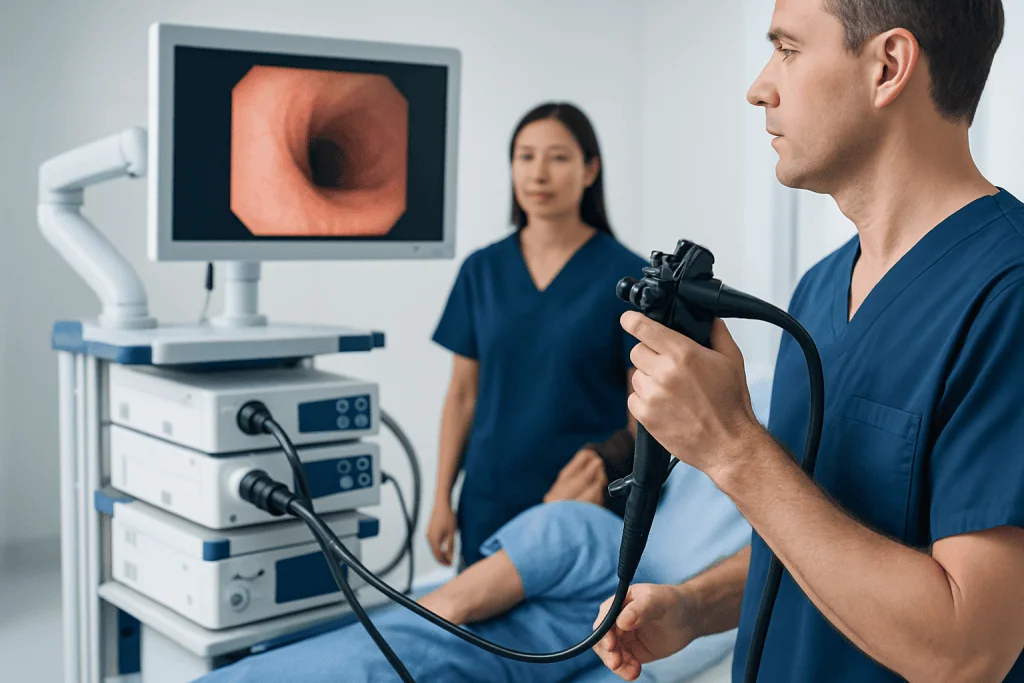
An upper endoscopy is designed to evaluate the upper digestive tract. The scope passes gently through the mouth and throat into the esophagus, stomach, and duodenum. This helps doctors directly inspect the lining of these structures for visible changes.
It is commonly used when a person has symptoms such as ongoing heartburn, difficulty swallowing, upper abdominal pain, nausea, unexplained vomiting, or possible bleeding from the upper digestive tract. It may help identify conditions such as gastritis, ulcers, celiac disease, narrowing of the esophagus, or changes related to acid reflux.
During the procedure, the doctor may also remove small samples of tissue for laboratory testing. Biopsies can help confirm inflammation, infection, celiac disease, or other microscopic changes that may not be obvious on camera alone. Some treatments can also be performed through the endoscope, such as stopping bleeding or stretching a narrowed area.
In clinical practice, upper endoscopy can be especially helpful when symptoms suggest a problem above the stomach or in the stomach itself. It may also be used to assess complications of reflux or investigate causes of persistent indigestion that do not improve with standard treatment.
What a Colonoscopy Looks At
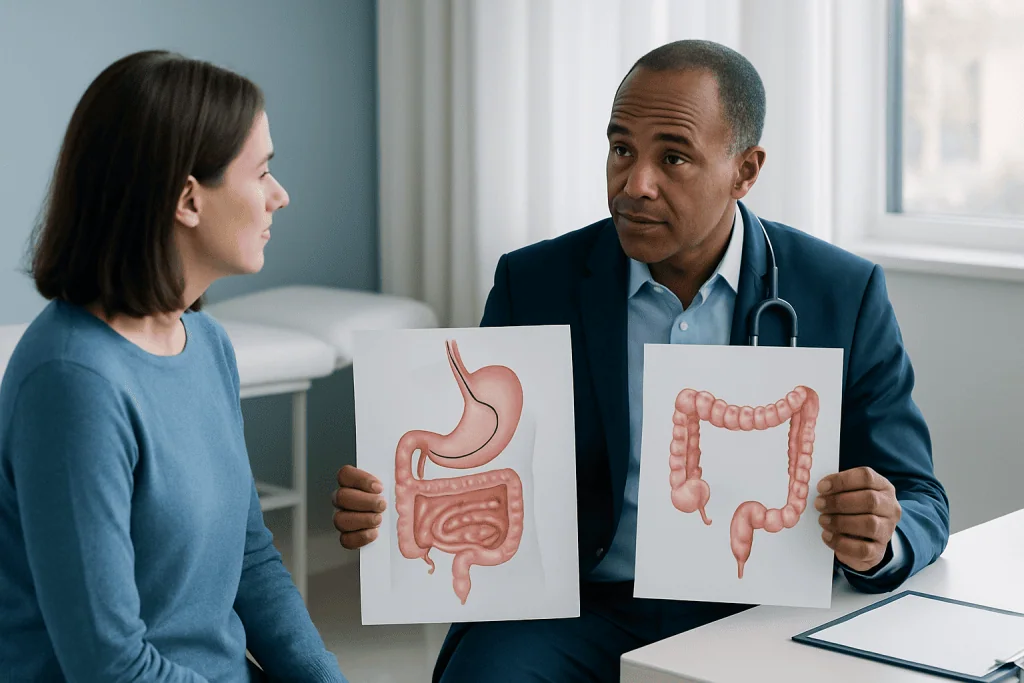
A colonoscopy evaluates the lower digestive tract. The scope is inserted through the rectum and advanced through the colon so the doctor can examine the inner lining of the large intestine. This makes it one of the most important tools for assessing bowel symptoms and for screening for colorectal cancer.
Doctors may recommend colonoscopy for symptoms such as rectal bleeding, unexplained anemia, ongoing diarrhea, chronic constipation, abdominal pain, or a change in bowel habits. It is also used in people who have a family history of colorectal cancer or polyps, or who are due for routine cancer screening based on age and risk factors.
One major advantage of colonoscopy is that it can detect and remove polyps during the same procedure. Polyps are growths in the colon lining, and some types may develop into cancer over time. Removing them early can prevent future disease.
Colonoscopy may also help diagnose inflammation and other bowel conditions. For example, when symptoms suggest chronic intestinal inflammation, the test can support the evaluation of Crohn’s disease or other inflammatory bowel disorders by allowing biopsies to be taken from different parts of the colon.
When Doctors Choose One Test, or Both
The decision between upper endoscopy vs colonoscopy is based on symptoms and medical history. If symptoms involve swallowing, acid reflux, persistent nausea, vomiting, or pain in the upper abdomen, an upper endoscopy is often the more appropriate test. If symptoms involve bowel habits, rectal bleeding, unexplained weight loss, or lower abdominal concerns, colonoscopy may be the better choice.
Sometimes both procedures are recommended, either on the same day or at different times. This may happen if a person has signs of bleeding without a clear source, iron deficiency anemia, unexplained weight loss, or symptoms affecting both the upper and lower digestive tract. In older adults or people with multiple risk factors, evaluating both areas can provide a more complete picture.
Doctors also consider age, family history, prior test results, medicines, and any known digestive conditions. For example, someone with persistent upper digestive symptoms may need an upper endoscopy even if imaging tests are normal. A person due for screening may need a colonoscopy even without symptoms.
In some situations, one test may lead to another. If an upper endoscopy does not explain anemia or ongoing symptoms, a colonoscopy may be added. Likewise, if colonoscopy findings do not fully explain a patient’s condition, upper endoscopy may still be useful to rule out a separate upper digestive cause.
How the Procedures Are Performed and Prepared For
Although both tests use flexible cameras, preparation and the route of the scope are different. Upper endoscopy is done through the mouth, while colonoscopy is done through the rectum. In both cases, patients usually receive sedative medication so they are relaxed and comfortable, though the exact approach may vary by hospital and the patient’s health.
Preparation for upper endoscopy is usually simpler. Most patients need to avoid food and drink for several hours beforehand so the stomach is empty. This improves visibility and helps reduce the risk of aspiration during sedation.
Preparation for colonoscopy is more involved because the bowel must be clean. Patients are usually asked to follow a special diet for a short period and take a bowel-cleansing solution or laxative preparation. A well-prepared colon allows the doctor to see small polyps and subtle changes that could otherwise be missed.
Many people worry about discomfort, but both procedures are generally well tolerated. Patients should always tell their care team about pregnancy, allergies, heart or lung conditions, blood thinners, diabetes medicines, or previous reactions to sedation. In advanced endoscopy units, tests such as upper gastrointestinal endoscopy are performed with careful monitoring before, during, and after the procedure.
What Doctors Can Find and Treat During These Tests
Both upper endoscopy and colonoscopy can do more than simply look inside the digestive tract. They can help identify the cause of symptoms and often allow immediate action. This makes them valuable diagnostic and therapeutic tools.
During upper endoscopy, doctors may detect ulcers, inflammation, narrowing, irritation from acid reflux, celiac-related changes, bleeding sites, or growths. During colonoscopy, they may find polyps, inflammation, diverticula, bleeding, hemorrhoid-related changes near the rectum, or signs of cancer. Biopsies may be collected even if the lining looks nearly normal because microscopic changes can still be important.
Some issues can be treated during the same session. Doctors may remove polyps, stop bleeding, widen a narrowed passage, or retrieve certain swallowed objects. This can reduce the need for additional procedures and provide quicker answers.
Not every symptom is explained by endoscopy, and normal findings can still be helpful. A normal examination may rule out serious structural disease and guide the next steps in care. If needed, a doctor may recommend additional tests such as stool studies, imaging, breath tests, or other gastroenterology evaluations to understand ongoing symptoms.
Risks, Recovery, and What Results Mean
Upper endoscopy and colonoscopy are generally safe when performed by trained teams, but no procedure is completely risk-free. Possible complications include bleeding, infection, reaction to sedatives, or a tear in the digestive tract wall, called perforation. These events are uncommon, and the care team takes steps to reduce risk.
After either procedure, patients usually rest in a recovery area until the effects of sedation begin to wear off. Mild bloating, gas, or a sore throat can occur for a short time. Because judgment and reflexes may be affected, patients are often advised not to drive or make important decisions until the sedative has fully worn off.
Doctors may discuss some results immediately after the procedure, especially visible findings such as ulcers or polyps. Biopsy results often take longer because tissue samples must be examined in a laboratory. The full meaning of the results depends on symptoms, medical history, and any pathology findings.
If the exam identifies a condition needing ongoing management, follow-up care may include medicines, repeat surveillance, dietary changes, or referral to a specialist. Near the end of the care pathway, some international patients may choose centers such as Acibadem International, where multidisciplinary specialists in JCI-accredited hospitals diagnose and treat digestive conditions.
When to See a Doctor and How to Prepare Questions
A person should speak with a doctor if they have ongoing digestive symptoms, especially trouble swallowing, persistent heartburn, vomiting, black stools, rectal bleeding, unexplained anemia, or changes in bowel habits that do not go away. Symptoms do not always mean a serious disease, but they deserve proper evaluation when they continue or worsen.
It is also important to ask about screening recommendations even without symptoms. Colonoscopy may be advised based on age, family history, or previous polyps. An upper endoscopy is not usually a routine screening test for the general population, but it may be needed in people with certain risk factors or warning signs.
Before the appointment, it may help to write down symptoms, how long they have been present, what makes them better or worse, and any medicines being taken. Patients can also ask practical questions about sedation, preparation, recovery time, and whether a biopsy or polyp removal might be done.
Understanding the difference between upper endoscopy vs colonoscopy helps patients take part in shared decision-making. The right test is the one that best matches the person’s symptoms, risk factors, and medical needs, as determined by a qualified healthcare professional.
Frequently asked questions
Is upper endoscopy the same as colonoscopy?
No. Both are endoscopic procedures, but they examine different parts of the digestive tract. Upper endoscopy looks at the esophagus, stomach, and duodenum, while colonoscopy looks at the rectum and colon.
Which test is used for heartburn or trouble swallowing?
Upper endoscopy is usually the more appropriate test for persistent heartburn, difficulty swallowing, or upper abdominal symptoms. It allows the doctor to inspect the upper digestive tract directly and take biopsies if needed. A doctor will decide based on the full symptom pattern and medical history.
Which test is used for rectal bleeding or bowel habit changes?
Colonoscopy is commonly used for rectal bleeding, unexplained changes in bowel habits, chronic diarrhea, or concern about colon polyps or colorectal cancer. It helps doctors examine the colon lining in detail and remove polyps during the same procedure when appropriate.
Can upper endoscopy and colonoscopy be done on the same day?
Yes, in some cases both tests can be done during the same visit, often under the same sedation plan. This may be recommended when symptoms or test results suggest a need to examine both the upper and lower digestive tract. The decision depends on the patient’s condition and the doctor’s judgment.
Are these procedures painful?
Most patients tolerate both procedures well, especially when sedation is used. They may feel pressure, bloating, or mild throat discomfort afterward, but significant pain is not typical. The care team monitors comfort and safety throughout the procedure.
How should a patient prepare for each test?
Upper endoscopy usually requires fasting for several hours before the procedure. Colonoscopy requires bowel preparation so the colon is clean, which often includes a special diet and prescribed cleansing solution. The exact instructions vary, so it is important to follow the hospital’s guidance carefully.
References
- National Institute of Diabetes and Digestive and Kidney Diseases
- American College of Gastroenterology
- American Society for Gastrointestinal Endoscopy
- National Health Service
- World Gastroenterology Organisation
This article is for general information only and is not a substitute for professional medical advice. Please consult a qualified doctor about your individual situation.
Persistent digestive symptoms? Get evaluated in Turkey
JCI-accredited · board-certified surgeons · reply within 24h
Add us as a Preferred Source to see more of our trusted health content across Google Search, AI Overviews and Discover.