Urocuff Procedure: An Evidence-Based Patient Guide

UroCuff combines urine-flow measurements with temporary penile cuff pressure to estimate bladder pressure without a catheter in the bladder. It is commonly used in men with lower urinary tract symptoms, including weak stream, straining, incomplete emptying, or frequent urination.
Key Takeaways
- UroCuff combines urine-flow measurements with temporary penile cuff pressure to estimate bladder pressure without a catheter in the bladder.
- It is commonly used in men with lower urinary tract symptoms, including weak stream, straining, incomplete emptying, or frequent urination.
- The test is usually performed in an outpatient setting and does not require anesthesia, needles, or recovery time.
- Patients generally need to arrive with a comfortably full bladder, following the clinic’s individual drinking instructions.
- Results are interpreted alongside symptoms, examination findings, urinalysis, ultrasound or post-void residual testing, and other appropriate assessments.
- UroCuff is a diagnostic test, not a treatment, and its results can help guide discussions about medication, monitoring, or procedures.
The UroCuff procedure is a noninvasive test that measures urine flow while a small cuff briefly applies pressure around the penis. It can help a urologist assess whether urinary symptoms may be related to bladder outlet obstruction, often associated with an enlarged prostate.
What Is the UroCuff Procedure?
The UroCuff procedure, also called a penile cuff test, is a noninvasive urinary test used to evaluate urine flow and estimate the pressure generated by the bladder during urination. A clinician may recommend it for men who have lower urinary tract symptoms, such as a slow or intermittent stream, straining to urinate, urgency, frequent urination, or a feeling that the bladder does not empty completely.
During the test, the patient urinates naturally into a flow-measuring device while a disposable cuff around the penis briefly inflates and deflates. The measurements can help the urologist determine whether symptoms may reflect bladder outlet obstruction, reduced bladder muscle strength, or a combination of factors. Obstruction is often linked with an enlarged prostate, also known as benign prostatic hyperplasia.
UroCuff does not replace every urologic test. Instead, it provides additional information that may help a specialist decide whether further testing or treatment is appropriate. It is not a surgery, does not involve an incision, and does not treat the underlying cause of urinary symptoms.
How the Test Works and What It Can Show
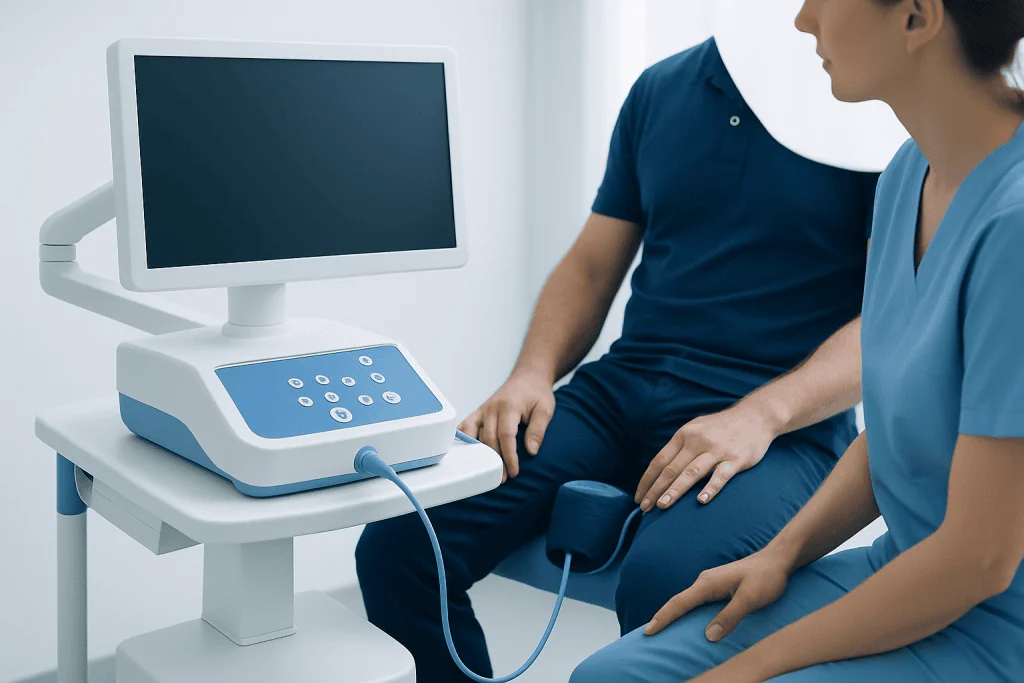
Normal urination depends on coordination between the bladder muscle, urethra, prostate, and pelvic floor. When the outlet of the bladder is narrowed, the bladder may need to create more pressure to pass urine. A UroCuff test records the urine flow pattern and uses cuff pressure during flow interruption to estimate pressure-related information.
The resulting data are commonly reviewed on a pressure-flow nomogram or similar clinical interpretation system. A low flow rate can occur because of an obstruction, weak bladder contraction, inadequate bladder filling, certain medicines, or other urinary conditions. For this reason, the UroCuff result is considered together with the patient’s symptoms, medical history, physical examination, prostate assessment, urinalysis, and any bladder-emptying measurement.
In some situations, a urologist may still recommend formal invasive urodynamic testing, which uses small catheters to measure bladder pressure directly. This may be particularly useful when the diagnosis remains uncertain, symptoms are complex, there is a neurologic condition, or previous treatment has not helped. UroCuff can be a useful lower-burden option for selected patients, but it is not necessary for every person with urinary symptoms.
Who May Benefit From a UroCuff Test?

A UroCuff test may be considered for men with bothersome urinary symptoms that could be related to prostate enlargement or bladder outlet obstruction. It can be especially helpful when a clinician needs more information before recommending a change in medication, a prostate procedure, or continued observation.
Possible reasons for testing include a weak stream, needing to push to begin or continue urination, stop-start flow, prolonged urination, a sensation of incomplete emptying, recurrent urinary retention, or urinary symptoms that have not improved as expected. The test may also support evaluation before certain prostate surgery options when a clearer understanding of urinary flow is helpful.
Not everyone is a suitable candidate on the day of the test. Severe penile skin irritation or injury, inability to void when asked, active severe urinary discomfort, or an inadequate bladder volume may affect whether testing can proceed. The urology team will consider individual circumstances and may postpone the assessment if another condition, such as a suspected urinary infection, needs attention first.
A UroCuff test does not diagnose prostate cancer. Blood in the urine, unexplained weight loss, bone pain, recurrent infections, or abnormal prostate findings require a separate medical evaluation rather than relying on urine-flow testing alone.
How Do I Prepare for a UroCuff Test?
UroCuff patient instructions vary slightly between clinics, so the most important step is to follow the directions provided by the urology team. Patients are usually asked to arrive with a comfortably full bladder and to avoid emptying the bladder immediately before the appointment. A bladder that is too empty can make it difficult to obtain an accurate urine-flow measurement.
Before the visit, patients should tell the clinician about urinary symptoms, prior prostate or urethral procedures, neurologic conditions, diabetes, current medications, allergies, and recent urinary infections. The team may advise whether regular medicines should be taken as usual. Patients should not stop prescription medication unless the clinician specifically instructs them to do so.
Comfortable clothing can make the appointment easier. If possible, allowing enough time to arrive relaxed is helpful, since anxiety and rushing can make it harder to urinate on demand. A procedure video may show the general equipment and sequence, but the clinic’s own instructions and the clinician supervising the test should guide preparation and expectations.
Patients should contact the clinic before attending if they have fever, burning urination, new visible blood in the urine, severe pelvic pain, or are unable to pass urine. These symptoms may need medical assessment before a scheduled flow test.
How Much Water to Drink Before a UroCuff Test?
There is no single amount of water that is right for every person. Many clinics suggest drinking fluids in the hours before the appointment and avoiding urination shortly beforehand so the bladder is comfortably full. The exact volume and timing should come from the testing center, because requirements can differ according to the appointment time, a person’s usual bladder capacity, and other health conditions.
In general, patients should avoid trying to force an extremely full bladder by rapidly drinking large amounts of water. Overfilling can be uncomfortable and may not produce a typical urine-flow pattern. People with heart failure, kidney disease, fluid restrictions, or conditions requiring careful fluid management should ask their regular clinician and the urology team for personalized advice.
At the appointment, the team may check whether the bladder volume is sufficient, sometimes with a bladder scan. If the bladder is not full enough, the patient may be asked to drink more and wait. If it is too full, the team will advise the safest next step.
What Happens During the UroCuff Procedure?
The UroCuff procedure is usually completed in an outpatient urology clinic. After checking in, the patient may be asked about symptoms and may provide a urine sample if the clinician needs to check for infection or blood. The process is private, and staff explain how to use the urine-flow device.
A single-use cuff is placed gently around the penis. The patient then urinates into a specialized toilet or collection device that records the volume and speed of urine flow. At planned points while urine is flowing, the cuff inflates briefly to interrupt the stream and then deflates. These short interruptions allow the device to collect pressure-related information.
After urination, the cuff is removed. The clinician may perform or arrange a post-void residual measurement, often with ultrasound, to see how much urine remains in the bladder. The test itself commonly takes only the time needed to achieve a representative void, although the overall visit may be longer because of preparation, waiting for bladder filling, and review of results.
Documentation may use local billing terminology such as a UroCuff procedure code or UroCuff procedure CPT code. Coding varies by health system, payer, country, and the services performed during the visit. Patients who need coverage or billing information should ask the clinic or insurer directly rather than relying on a code found online.
Does a UroCuff Hurt? Benefits, Limits, and Recovery
Most patients describe the UroCuff test as uncomfortable rather than painful, mainly because the cuff briefly squeezes the penis and temporarily stops the urine stream. The sensation is short-lived, and no anesthesia is typically needed. Patients should tell the staff immediately if they experience significant pain, severe discomfort, dizziness, or an unusual symptom during the test.
A key benefit is that UroCuff can provide useful pressure-flow information without placing a catheter into the bladder. It is quick, does not involve radiation or surgery, and usually allows patients to return to normal activities immediately after the appointment. There is generally no special recovery timeline, dietary restriction, or wound care.
Limitations are important to understand. Results can be affected by bladder fullness, difficulty voiding in an unfamiliar setting, anxiety, medications, and day-to-day variation in urinary function. The test may be inconclusive if the voided volume is too low or if the flow pattern is not representative. A result suggesting obstruction should be interpreted by a urologist rather than used alone to make treatment decisions.
Serious complications are uncommon because the test is external and noninvasive. Temporary mild discomfort or embarrassment may occur. Persistent penile pain, swelling, inability to urinate, fever, or new bleeding after the appointment is not expected and should be discussed promptly with a healthcare professional.
Is the UroCuff Test Necessary? When to Seek Medical Care
The UroCuff test is not automatically necessary for every man with urinary symptoms. Some people can be assessed with a medical history, examination, urine testing, symptom questionnaires, bladder scan, and standard uroflowmetry. A urologist may recommend UroCuff when the cause of symptoms is uncertain, when obstruction needs to be assessed more carefully, or when the information may influence treatment planning.
Its value depends on the clinical question. For example, if a clinician is considering whether urinary symptoms are more likely due to obstruction from an enlarged prostate or weaker bladder contraction, pressure-flow information may be useful. The decision should be shared between the patient and clinician, taking into account symptoms, health history, goals, and whether results are likely to change management.
Medical care should be sought urgently for inability to urinate, fever with urinary symptoms, severe lower abdominal pain, heavy or persistent visible blood in urine, confusion, or severe weakness. A timely medical appointment is also appropriate for new urinary symptoms, recurrent urinary infections, worsening leakage, painful urination, or a gradual decline in urine flow.
For people who need a broader assessment, Acibadem International’s multidisciplinary specialists and JCI-accredited hospitals evaluate urinary conditions and discuss evidence-based options for international patients. Depending on the cause of symptoms, management may include monitoring, medication, bladder-focused care, or selected treatment for benign prostatic hyperplasia.
Frequently asked questions
What is the UroCuff procedure used for?
The UroCuff procedure is used to evaluate urine flow and estimate whether bladder outlet obstruction may be contributing to urinary symptoms. It is often considered in men with symptoms associated with an enlarged prostate, such as a weak stream, straining, or incomplete bladder emptying. Results are interpreted with other clinical findings.
How do I prepare for a UroCuff test?
Patients are usually asked to arrive with a comfortably full bladder and to follow the clinic’s fluid and timing instructions. They should provide an updated medication list and report any recent urinary infection, fever, pain, or inability to urinate. Prescription medicines should not be stopped unless the treating clinician gives specific instructions.
How much water should I drink before a UroCuff test?
The clinic performing the test should provide the most appropriate amount and timing because instructions vary. The goal is a comfortably full bladder, not painful overfilling. People on fluid restriction or with heart or kidney conditions should ask for individualized advice.
Does a UroCuff test hurt?
The test may cause brief pressure or discomfort when the cuff inflates and temporarily interrupts urine flow. It does not usually require anesthesia or catheter insertion into the bladder. Significant pain is not expected and should be reported to the staff immediately.
How long does the UroCuff test take?
The urine-flow portion generally takes only a few minutes, depending on how long the patient needs to urinate. The complete appointment can take longer because the bladder must be sufficiently full and results may be reviewed afterward. If the bladder is not full enough, additional waiting time may be needed.
Is the UroCuff test necessary before prostate treatment?
Not always. Whether it is needed depends on symptoms, examination findings, urine testing, bladder emptying, and the treatment being considered. A urologist may use it when additional information about possible obstruction could help make a more informed treatment decision.
References
- American Urological Association
- European Association of Urology
- National Institute of Diabetes and Digestive and Kidney Diseases
- Urology Care Foundation
This article is for general information only and is not a substitute for professional medical advice. Please consult a qualified doctor about your individual situation.
Explore treatments in Turkey — costs, top hospitals & a free quote
JCI-accredited · board-certified surgeons · reply within 24h
Add us as a Preferred Source to see more of our trusted health content across Google Search, AI Overviews and Discover.

More from the Health Library



Related Specialists

Prof. Dr. Selçuk Sızmaz
Ophthalmology
Prof. Dr. Metin Türkmen
Orthopedic Surgery & Traumatology
Dr. Tahir Ateş
Gynecology & Obstetrics
Dr. Seyfettin Aslan
Otorhinolaryngology