Uterine Fibroid Embolization vs Myomectomy: Which Option Fits Your Goals?
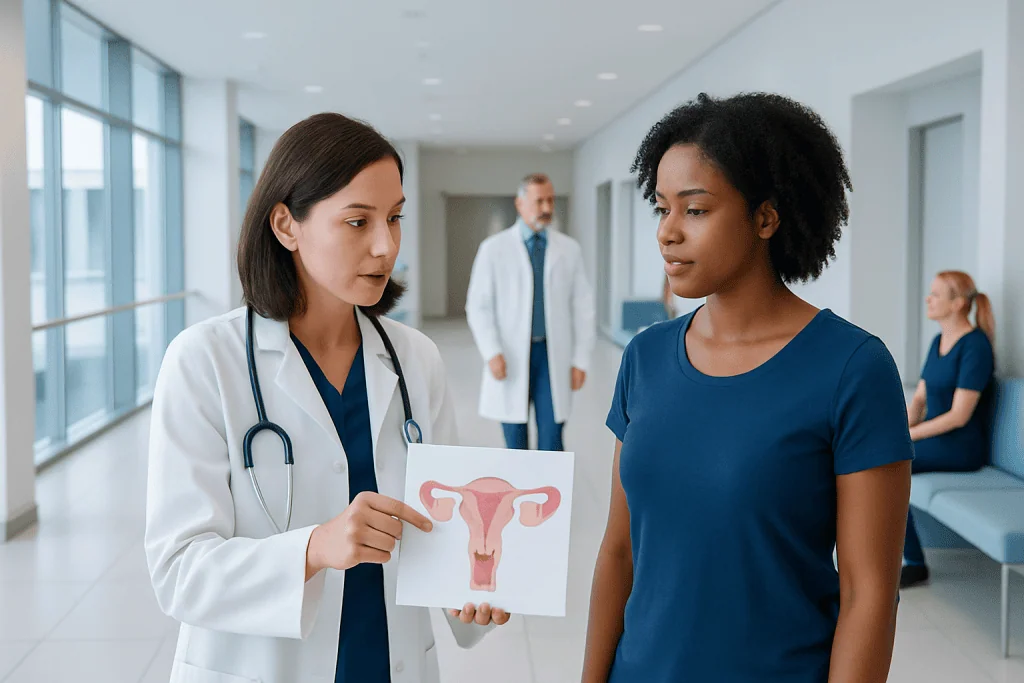
Uterine fibroid embolization shrinks fibroids by blocking their blood supply, while myomectomy surgically removes fibroids. Myomectomy is often favored when future pregnancy is a major goal, though the best option varies by individual case.
Key Takeaways
- Uterine fibroid embolization shrinks fibroids by blocking their blood supply, while myomectomy surgically removes fibroids.
- Myomectomy is often favored when future pregnancy is a major goal, though the best option varies by individual case.
- Embolization usually involves a shorter recovery and no large uterine incision, but fibroids are not physically removed.
- Fibroid number, size, location, age, symptoms, and overall health all influence treatment choice.
- A gynecologist and, when appropriate, an interventional radiologist can help compare benefits, risks, and expected outcomes.
Uterine fibroid embolization and myomectomy are both established treatments for symptomatic fibroids, but they work in different ways and suit different priorities. The best choice often depends on symptom severity, fibroid size and location, future pregnancy plans, and personal preferences about recovery and uterine preservation.
Overview: How These Two Fibroid Treatments Differ
When comparing uterine fibroid embolization vs myomectomy, the central difference is how each treatment addresses fibroids. Uterine fibroid embolization, also called UFE or uterine artery embolization, is a minimally invasive procedure performed by an interventional radiologist. It works by reducing blood flow to the fibroids so they gradually shrink over time.
Myomectomy is an operation performed by a gynecologic surgeon to remove fibroids from the uterus while leaving the uterus in place. Depending on the size, number, and location of fibroids, it may be done through hysteroscopy, laparoscopy, robotic techniques, or an open abdominal incision. Because the fibroids are removed directly, myomectomy may offer more immediate relief for certain symptoms.
Both approaches are designed for people who want relief from fibroid symptoms without having a hysterectomy. Neither treatment is automatically better for everyone. The right fit depends on personal goals, especially whether preserving fertility is important, as well as the details seen on pelvic imaging.
Who May Benefit From Treatment
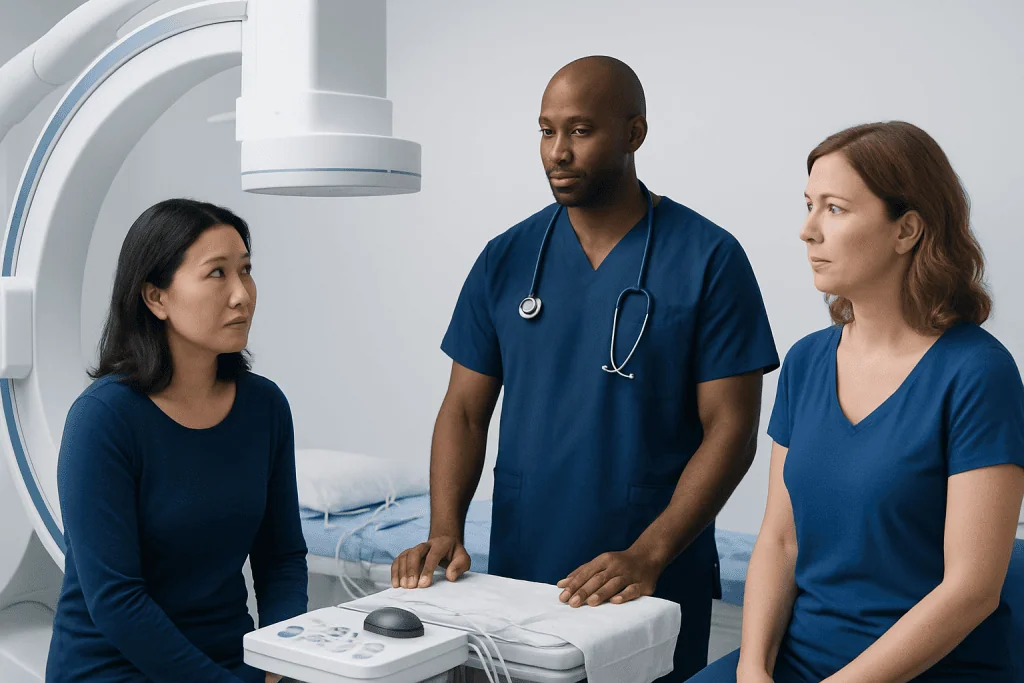
Many fibroids do not cause symptoms and may only need observation. Treatment is usually considered when fibroids lead to heavy menstrual bleeding, pelvic pressure, frequent urination, constipation, back discomfort, pain during sex, or trouble with fertility. Some people also seek treatment because their abdomen feels enlarged or because symptoms affect daily activities and quality of life.
UFE and myomectomy are both uterus-sparing options for symptomatic fibroids. In general, embolization may appeal to people who want a less invasive procedure and a shorter initial recovery. Myomectomy may be preferred when fibroids distort the uterine cavity, when there is a need to remove specific fibroids directly, or when pregnancy is a major near-term goal.
Doctors also consider whether the symptoms are truly caused by fibroids rather than another condition. Heavy bleeding, for example, can have several causes. Conditions such as adenomyosis or uterine fibroids may overlap in symptoms, and an accurate diagnosis helps guide the most appropriate treatment path.
Symptoms, Fibroid Features, and Personal Goals That Shape the Choice
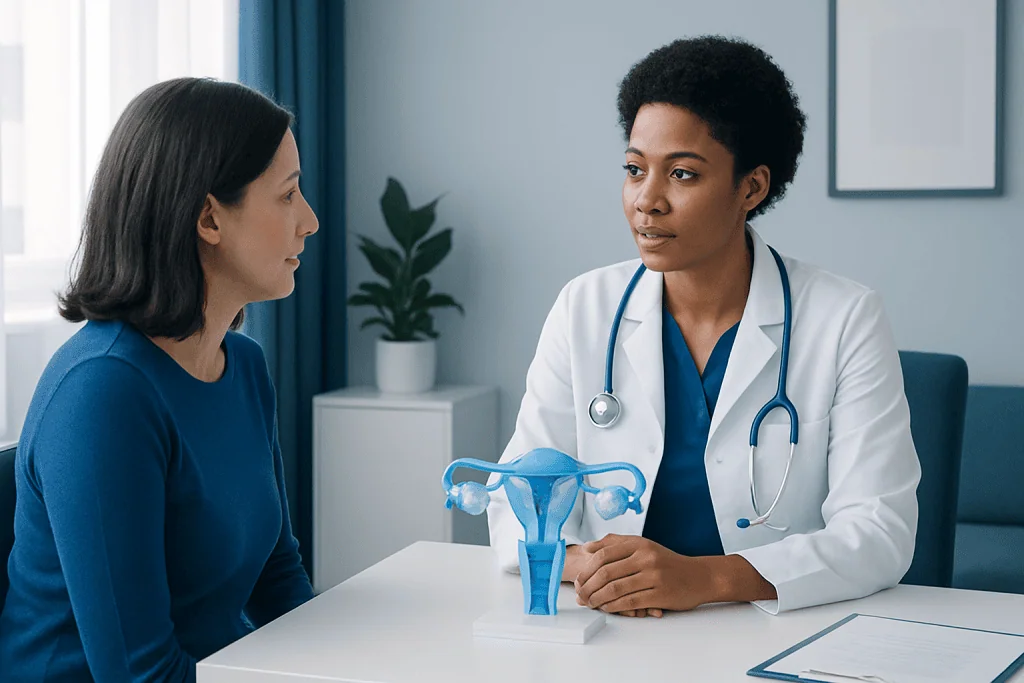
The best treatment choice is rarely based on symptoms alone. Fibroid size, number, and location matter greatly. Submucosal fibroids that bulrow into the inner uterine cavity often have a stronger effect on bleeding and fertility, and these may be particularly well suited to hysteroscopic myomectomy. Large intramural or multiple fibroids may still be treatable, but the most suitable method depends on the overall uterine anatomy.
Pregnancy goals are often one of the most important deciding factors. Myomectomy has traditionally been the more common uterus-sparing option for people who hope to conceive in the future, because it removes fibroids while attempting to restore the shape of the uterus. UFE can preserve the uterus, but its effects on fertility and pregnancy outcomes may be less predictable in some patients, so careful counseling is important.
Recovery expectations also influence the decision. UFE typically avoids major surgery and may allow a quicker return to routine activities, although cramping and discomfort are common in the first days after the procedure. Myomectomy recovery varies widely: hysteroscopic and minimally invasive procedures may involve a shorter recovery than open surgery, but they still require healing after an operation.
- Questions often discussed with the doctor include:
- Is pregnancy desired now or in the future?
- How many fibroids are present, and where are they located?
- Are symptoms mainly bleeding, pressure, pain, or fertility-related?
- How important is avoiding surgery or a uterine scar?
- Is there a wish for the shortest possible recovery time?
How Uterine Fibroid Embolization Works
During uterine fibroid embolization, a specialist inserts a thin catheter into a blood vessel, usually through the wrist or groin, and guides it to the arteries supplying the uterus. Tiny particles are then released to reduce blood flow to the fibroids. Without their usual blood supply, the fibroids typically shrink and symptoms often improve over the following weeks to months.
UFE does not remove fibroids from the body. Instead, it treats them by causing shrinkage and softening. This approach can be helpful when there are multiple fibroids, because several fibroids can often be treated in the same session without making incisions in the uterus itself. Many people appreciate that this is a minimally invasive alternative to surgery.
Potential downsides should also be discussed. Some people may have significant cramping, pelvic pain, fatigue, or low-grade fever after the procedure as part of the body’s response. In some cases, symptoms can persist or fibroids can remain large enough to cause ongoing problems, leading to further treatment later. When a patient is considering uterine fibroid embolization, imaging and specialist review are important to confirm whether the fibroid pattern is suitable.
How Myomectomy Works
Myomectomy removes fibroids while preserving the uterus. The surgical approach depends on where the fibroids are located. Hysteroscopic myomectomy is performed through the vagina and cervix to remove fibroids inside the uterine cavity. Laparoscopic or robotic myomectomy uses small abdominal incisions to remove selected fibroids on or within the uterus. Open abdominal myomectomy may be recommended for very large, deep, or numerous fibroids.
Because the fibroids are physically removed, myomectomy can be especially useful when a fibroid is clearly responsible for heavy bleeding, pressure, repeated pregnancy loss, or difficulty conceiving. It also provides tissue for pathologic review after removal. For some patients, this direct removal offers reassurance and a clearer sense that the fibroids themselves have been addressed.
Myomectomy is still surgery, so it comes with surgical considerations such as bleeding, infection, adhesions, and the possibility of conversion to an open procedure if minimally invasive surgery is not feasible. Fibroids can also recur over time, especially in younger patients or when many fibroids are present. People considering myomectomy should speak with their surgeon about the expected benefits, recovery, and any implications for future delivery by cesarean birth.
Diagnosis and Pre-Treatment Evaluation
Choosing between embolization and myomectomy starts with a careful evaluation. A doctor usually begins with a medical history, discussion of symptoms, and pelvic examination. Ultrasound is often the first imaging test, but magnetic resonance imaging may be especially useful when detailed mapping of fibroids is needed before treatment planning.
Doctors may also order blood tests to check for anemia if heavy menstrual bleeding is present. Depending on age, symptoms, and bleeding pattern, additional evaluation of the uterus may be recommended to rule out other causes of abnormal bleeding. The goal is to confirm that fibroids are the main problem and to identify whether any other condition needs attention.
In many cases, the best plan comes from shared decision-making between a gynecologist and an interventional radiologist. This team-based approach helps compare not only technical eligibility but also the patient’s values. For example, someone whose top priority is pregnancy may be counseled differently from someone whose main goal is symptom relief with the least invasive option. In complex cases, minimally invasive gynecologic surgery or interventional radiology consultation can be especially helpful.
Recovery, Risks, and Long-Term Considerations
Recovery is often one of the clearest practical differences between these options. After UFE, many people go home the same day or after a short hospital stay, but they may experience cramping and fatigue for several days. Improvement in symptoms is usually gradual because the fibroids need time to shrink. After myomectomy, recovery depends on whether the procedure was hysteroscopic, laparoscopic, robotic, or open. Open surgery generally requires the longest healing time.
Both treatments have benefits and limitations over the long term. UFE can improve heavy bleeding and pressure symptoms for many patients, but some may later need another procedure if fibroids do not shrink enough or if symptoms return. Myomectomy removes existing fibroids but does not prevent new fibroids from developing in the future.
Risks differ as well. UFE may affect the blood supply to the ovaries in some cases, which can matter more for people nearing menopause or concerned about ovarian reserve. Myomectomy involves anesthesia and surgical risks, and scar tissue may develop afterward. A person with symptoms that overlap with endometriosis or other pelvic conditions may need a broader care plan, since treating fibroids alone may not fully resolve pain.
How to Decide and When to Seek Specialist Advice
A helpful way to decide is to start with goals rather than procedure names. If the top priority is avoiding major surgery and recovering sooner, embolization may be attractive. If the main goal is future pregnancy or removal of cavity-distorting fibroids, myomectomy may be more appropriate. For some people, the answer becomes clearer only after imaging shows exactly how the fibroids are arranged.
Medical advice is especially important when symptoms are severe, bleeding is causing fatigue or anemia, the abdomen is rapidly enlarging, or fertility is a concern. Patients should also seek evaluation if pelvic pain is persistent, periods have changed markedly, or there is pressure on the bladder or bowel. A personalized consultation helps set realistic expectations about symptom relief, recurrence, and recovery.
Near the end of the decision process, some patients benefit from a second opinion, especially if they have many fibroids, have been told they need hysterectomy, or are uncertain about fertility implications. Acibadem International’s multidisciplinary specialists, including gynecologists and interventional radiologists in JCI-accredited hospitals, diagnose and treat fibroid conditions for international patients using individualized care plans.
Frequently asked questions
Is uterine fibroid embolization less invasive than myomectomy?
Yes. Uterine fibroid embolization is generally considered less invasive because it treats fibroids through a catheter placed in a blood vessel rather than through uterine surgery. Myomectomy is a surgical procedure, although some forms, such as hysteroscopic or laparoscopic myomectomy, are less invasive than open surgery.
Which option is better for future pregnancy?
Myomectomy is often the more commonly recommended uterus-sparing treatment when future pregnancy is a major goal. That said, the best choice depends on the location and number of fibroids, age, ovarian reserve, and overall reproductive history. A gynecologist can advise based on individual fertility priorities.
Do fibroids come back after treatment?
They can. After myomectomy, new fibroids may develop over time because the uterus remains in place. After embolization, treated fibroids usually shrink, but some patients may still have persistent or recurrent symptoms and may need further treatment.
How long is recovery after UFE compared with myomectomy?
Recovery after UFE is often shorter, though cramping, pelvic discomfort, and fatigue can occur for several days. Recovery after myomectomy depends on the surgical approach, with hysteroscopic and laparoscopic procedures usually healing faster than open abdominal surgery. The treating team can give a more precise estimate based on the planned procedure.
Can all fibroids be treated with embolization?
Not always. Suitability for embolization depends on fibroid size, number, blood supply, location, and whether other pelvic conditions are present. Imaging studies, especially ultrasound or MRI, help determine whether embolization is likely to be effective and safe.
Will either treatment require a hysterectomy later?
Some patients do well long term with either treatment and never need hysterectomy. However, hysterectomy may still be considered later if symptoms return, fibroids recur, or another uterine condition develops. The initial treatment choice should be made with a clear discussion of long-term expectations.
References
- American College of Obstetricians and Gynecologists
- Society of Interventional Radiology
- National Institute for Health and Care Excellence
- National Institutes of Health
- World Health Organization
This article is for general information only and is not a substitute for professional medical advice. Please consult a qualified doctor about your individual situation.
Explore treatments in Turkey — costs, top hospitals & a free quote
JCI-accredited · board-certified surgeons · reply within 24h
Add us as a Preferred Source to see more of our trusted health content across Google Search, AI Overviews and Discover.