Vacuole Cataract: An Evidence-Based Patient Guide

A vacuole cataract refers to small fluid-filled spaces within the eye’s natural lens, often alongside cataract changes. Not every vacuole in the lens requires treatment; symptoms and effects on daily activities guide decisions.
Key Takeaways
- A vacuole cataract refers to small fluid-filled spaces within the eye’s natural lens, often alongside cataract changes.
- Not every vacuole in the lens requires treatment; symptoms and effects on daily activities guide decisions.
- A comprehensive eye examination can determine whether lens vacuoles are affecting vision or resemble another eye condition.
- Cataract surgery is the established treatment when cataract-related vision loss becomes bothersome or unsafe.
- No vitamin supplement has been proven to prevent cataracts, but a balanced diet and ultraviolet protection support overall eye health.
A vacuole cataract describes cataract-related changes in the eye’s natural lens that include small clear spaces, called vacuoles. These changes can be harmless when mild, but may contribute to blurred vision, glare or reduced contrast as lens clouding progresses.
Overview: What is a cataract with vacuoles?
A vacuole cataract is a descriptive term used when an eye specialist sees small, bubble-like clear spaces within the natural lens of the eye, together with cataract-related lens changes. In ophthalmology, a vacuole is simply a tiny space or cavity. A vacuole in the eye lens may be seen during a slit-lamp examination and can occur in different layers of the lens.
The lens normally focuses light sharply onto the retina. With a cataract, proteins and water balance within the lens change over time, causing clouding, altered light transmission and sometimes vacuoles. A person may have lens vacuoles without noticeable symptoms, especially when they are small or outside the central visual axis. When clouding or vacuoles affect the central lens, vision can become less clear.
“Vacuole in eyes” is not a diagnosis by itself. It is important that an ophthalmologist identifies exactly where the finding is located, whether it is stable, and whether it is associated with cataract, trauma, medication use, metabolic disease or another lens condition. The practical concern is not the appearance of a vacuole alone, but its effect on sight and eye health.
Symptoms and visual effects
Early cataract changes may cause no symptoms. As lens clarity decreases, common symptoms include blurred or hazy vision, increased sensitivity to bright light, glare from headlights, halos around lights, faded colours and difficulty seeing in dim conditions. Reading may become more difficult, and glasses prescriptions may seem to change more often.
A vacuole cataract can scatter light in a way that reduces contrast sensitivity. This means a person may notice that steps, kerbs, road markings or faces are harder to distinguish even if a standard vision chart result remains relatively good. Symptoms can differ between the two eyes and may progress slowly.
Cataracts do not usually cause pain, redness, discharge or sudden vision loss. Those symptoms may signal another eye problem and should not be assumed to be due to a lens vacuole. An eye assessment is the safest way to distinguish cataract-related blur from dry eye, refractive error, retinal disease, glaucoma or corneal conditions.
Why vacuoles and cataracts develop
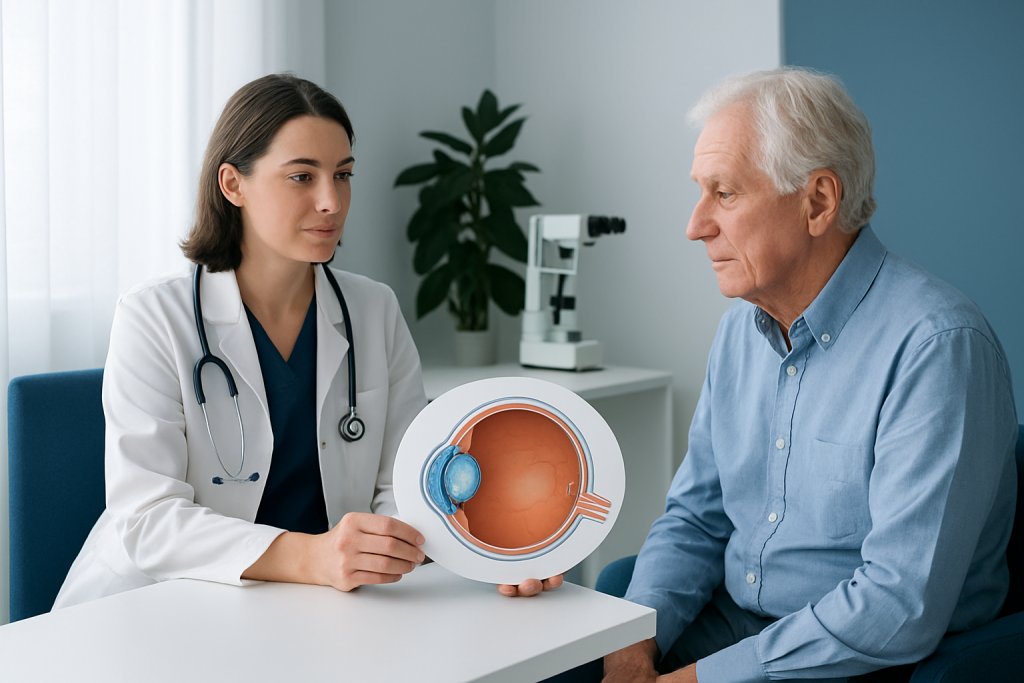
Ageing is the most common reason cataracts develop. Over years, the lens proteins gradually clump and the lens becomes less transparent. Small vacuoles may form as the lens structure and water distribution change. This is usually part of a broader pattern of lens ageing rather than a separate disease.
Other factors can raise the likelihood of cataract formation or earlier lens changes. These include diabetes, long-term corticosteroid use, previous eye injury or surgery, significant ultraviolet exposure, smoking, heavy alcohol use, eye inflammation and a family history of cataracts. Some congenital or inherited conditions may also affect the lens in childhood or early adulthood.
In rare situations, rapidly appearing lens changes may occur after trauma, with certain medicines, or alongside metabolic illness. A clinician will consider the person’s age, medical history, medication use and examination findings before deciding whether monitoring or treatment is appropriate. Maintaining good diabetes control and discussing necessary steroid treatment with a doctor can help reduce avoidable risk.
- Older age and family history
- Diabetes and some metabolic disorders
- Eye injury, inflammation or prior eye surgery
- Long-term corticosteroid exposure
- Smoking and unprotected ultraviolet light exposure
Diagnosis and monitoring in vacuole ophthalmology
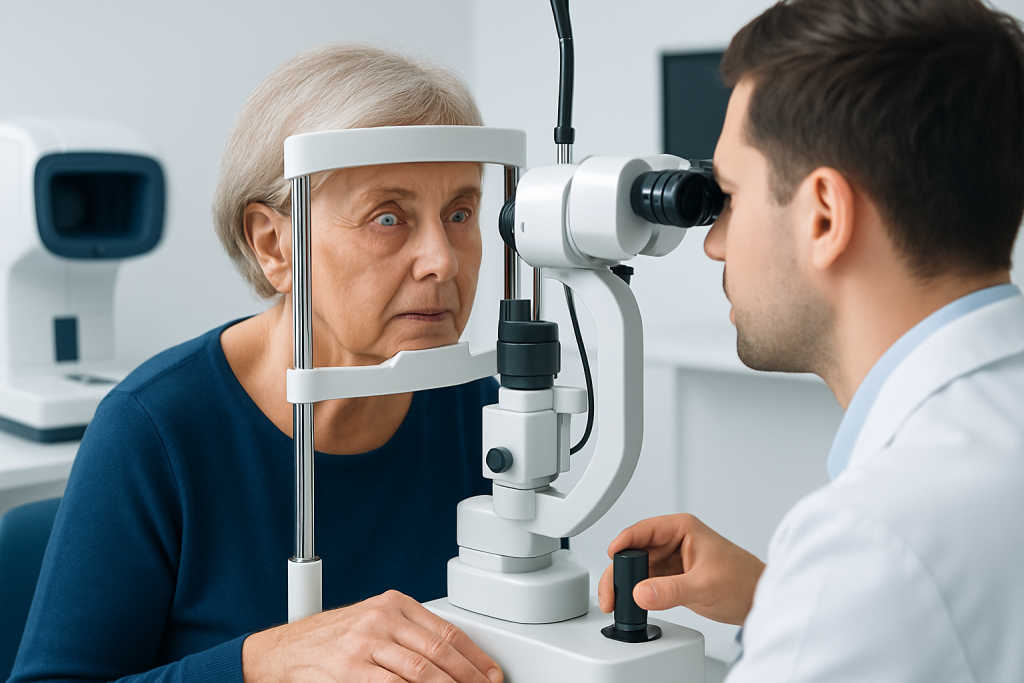
An ophthalmologist diagnoses cataracts and lens vacuoles through a detailed eye examination. A slit lamp, which is a microscope with a bright narrow beam of light, allows the specialist to inspect the lens closely. Dilating drops may be used to widen the pupil so that the lens, retina and optic nerve can be assessed more completely.
Testing commonly includes visual acuity, refraction to check whether glasses improve vision, eye pressure measurement and an assessment of glare or contrast when relevant. Retinal imaging or optical coherence tomography may be recommended if reduced vision could also be caused by macular degeneration, diabetic retinal disease or another retinal problem.
Many people with mild cataract changes are monitored at routine eye visits. There is no fixed schedule that suits everyone; it depends on symptoms, examination findings and other eye conditions. An earlier review may be advised if sight changes noticeably, driving becomes difficult or there is uncertainty about the cause of visual symptoms.
Which vitamins prevent cataracts?
No vitamin or supplement has been proven to prevent cataracts or reverse an established vacuole cataract. Research has explored antioxidants such as vitamins C and E, beta-carotene and other nutrients, but routine high-dose supplements are not a substitute for eye examinations, a healthy diet or cataract treatment when it is needed.
A varied eating pattern that includes fruits, vegetables, whole grains, legumes, nuts and fish can support general health and provides nutrients important for the eyes. Leafy green vegetables contain lutein and zeaxanthin, while colourful produce provides a range of antioxidants. However, these foods should be viewed as part of healthy living rather than a guaranteed cataract-prevention treatment.
People should speak with a doctor or pharmacist before taking supplements, particularly if they use prescription medicines, smoke, are pregnant, or have kidney, liver or other long-term health conditions. Avoiding smoking, managing diabetes and wearing sunglasses that block ultraviolet radiation are practical steps that may help protect long-term eye health.
What is the new treatment for cataracts in 2026?
As of 2026, cataract surgery remains the only established treatment that removes a cataract and restores the optical clarity of the lens. There is currently no approved eye drop, vitamin or medication that reliably dissolves or reverses cataracts, including cataracts with lens vacuoles. Researchers continue to investigate drug-based and lens-preserving approaches, but these are not replacements for standard care.
Modern cataract surgery usually uses phacoemulsification. Through a very small incision, the surgeon uses ultrasound energy to break up and remove the cloudy natural lens, then places a clear artificial intraocular lens, or IOL, inside the lens capsule. In appropriate cases, laser-assisted steps or advanced lens measurements may be considered, but conventional phacoemulsification remains highly effective.
The type of IOL is selected individually. Monofocal lenses usually provide clear vision at one chosen distance, while toric lenses can correct significant astigmatism. Multifocal or extended-depth-of-focus lenses may reduce reliance on glasses for some people, but they are not suitable for every eye and can involve trade-offs such as halos or reduced contrast in low light. Cataract surgery planning should include a discussion of visual needs, eye measurements and any retinal, corneal or glaucoma-related conditions.
Cataract surgery: candidacy, steps, recovery and outcomes
A person is generally a candidate for surgery when cataract-related vision changes interfere with daily life, work, reading, driving, hobbies or safety. Surgery does not need to wait until a cataract is “mature.” The decision is based on symptoms, examination findings and whether the expected benefit outweighs the risks for that individual.
Before surgery, the eye is measured to select an IOL and identify factors that may influence the result. On the day of the procedure, numbing drops and sometimes light sedation are used. The surgeon makes a small incision, opens the front of the lens capsule, removes the cloudy lens material and inserts the IOL. The procedure is commonly performed as day surgery, and the patient returns home with eye drops and aftercare instructions.
Vision often begins improving within days, although healing and adjustment can take several weeks. Follow-up visits help confirm that the eye is healing normally and that eye pressure is appropriate. People are commonly asked to avoid rubbing the eye, follow prescribed drops carefully and temporarily limit activities that could expose the eye to water, dust or injury.
Benefits may include clearer vision, less glare and improved ability to perform daily tasks. Risks are uncommon but can include infection, inflammation, swelling, retinal detachment, raised eye pressure, residual refractive error or a later clouding of the lens capsule. If posterior capsule opacification develops months or years later, it can often be treated with a brief laser procedure. Acibadem International’s multidisciplinary specialists and JCI-accredited hospitals assess and treat cataracts for international patients.
What are the top 5 reasons patients regret cataract surgery?
Most people are satisfied when surgery is appropriately recommended and expectations are clear. When regret occurs, it is often related to a mismatch between expected and achieved vision rather than a problem with the surgery itself. Careful pre-operative discussion can reduce uncertainty.
- Unexpected need for glasses: An IOL can be selected to support a preferred distance, but many people still need glasses for some tasks.
- Night-vision symptoms: Halos, glare or starbursts may be more noticeable with some lens designs, especially in low light.
- Unrecognised eye disease: Retinal, optic nerve or corneal disease can limit visual improvement after cataract removal.
- Residual prescription or astigmatism: Small focusing errors may remain and occasionally need glasses, contact lenses or further treatment.
- Recovery complications or slow adaptation: Dry eye, inflammation, capsule clouding or neuroadaptation can affect early satisfaction and often require follow-up care.
Patients can help make an informed decision by discussing driving habits, reading needs, screen use, night vision, previous eye surgery and willingness to use glasses. Asking about the benefits and limitations of each lens option is particularly important.
When to seek medical care
Routine eye care is appropriate for gradual blurring, increasing glare, frequent changes in glasses prescription or concern about a known vacuole in the lens. An ophthalmologist can establish whether cataract changes explain the symptoms and advise whether monitoring, updated glasses or surgery is the most suitable next step.
Urgent medical assessment is needed for sudden vision loss, new flashes of light, a curtain-like shadow, severe eye pain, marked redness, nausea with eye pain, or a sudden increase in floaters. These symptoms are not typical of an uncomplicated cataract and may need prompt treatment.
People with diabetes, previous eye injury, eye inflammation, glaucoma, retinal disease or long-term steroid treatment may benefit from regular specialist review. Early assessment is also sensible when vision changes affect driving, mobility, work or confidence in everyday activities.
Frequently asked questions
What is a vacuole cataract?
A vacuole cataract is a cataract-related lens change in which small, clear spaces called vacuoles are visible within the natural lens. The term describes an examination finding rather than a separate type of eye disease. Its importance depends on the location of the vacuoles, associated lens clouding and effect on vision.
Can a vacuole in the eye lens disappear on its own?
A lens vacuole associated with age-related cataract changes does not usually need treatment if it is not affecting vision. Established cataract-related lens changes generally do not reverse on their own. An eye specialist can determine whether the finding is stable and whether it needs monitoring.
Do cataract eye drops work?
There are no approved eye drops that have been shown to reliably dissolve or reverse cataracts in routine clinical care. Some products are marketed for this purpose, but patients should be cautious about unproven claims. Cataract surgery remains the established treatment for visually significant cataracts.
Can vitamins prevent cataracts?
No vitamin supplement has been proven to prevent cataracts. A nutritious diet, not smoking, controlling diabetes and using ultraviolet-protective sunglasses may support eye health. Supplements should be discussed with a healthcare professional when there are medical conditions or medication interactions to consider.
How long does recovery take after cataract surgery?
Many people notice improved vision within a few days, but the eye may take several weeks to heal and stabilise fully. Recovery varies according to the eye’s health, the type of lens implanted and whether other eye conditions are present. Follow-up appointments and prescribed drops are important parts of recovery.
Is cataract surgery painful?
Cataract surgery is usually performed with numbing eye drops, so patients generally do not feel pain during the procedure. They may notice light, movement or mild pressure. Mild irritation, scratchiness or light sensitivity can occur afterward and should improve as the eye heals.
References
- American Academy of Ophthalmology
- National Eye Institute
- National Health Service
- Mayo Clinic
- World Health Organization
This article is for general information only and is not a substitute for professional medical advice. Please consult a qualified doctor about your individual situation.
Explore treatments in Turkey — costs, top hospitals & a free quote
JCI-accredited · board-certified surgeons · reply within 24h
Add us as a Preferred Source to see more of our trusted health content across Google Search, AI Overviews and Discover.

More from the Health Library



Related Specialists

Assoc. Prof. Dr. Dilek Altun
Anesthesiology
Asst. Prof. Dr. Mehmet Karaarslan
Internal Medicine
Fzt. Elif Tokgöz Nizam
Physical Medicine & Rehabilitation
Dr. Etem Aytaç Yazar
Orthopedic Surgery & Traumatology