Vagal Maneuvers: An Evidence-Based Guide for Patients

Vagal maneuvers may help stop some episodes of supraventricular tachycardia by affecting the heart’s electrical signals. Common examples include the Valsalva maneuver and, in some settings, guided positioning maneuvers.
Key Takeaways
- Vagal maneuvers may help stop some episodes of supraventricular tachycardia by affecting the heart’s electrical signals.
- Common examples include the Valsalva maneuver and, in some settings, guided positioning maneuvers.
- These techniques are not appropriate for every rapid heartbeat and may be unsafe for some people.
- Chest pain, fainting, severe shortness of breath, or persistent palpitations need urgent medical attention.
- A clinician can confirm whether a rhythm problem is suitable for self-management or needs tests and treatment.
Vagal maneuvers are simple physical techniques that can stimulate the vagus nerve and sometimes slow certain fast heart rhythms, especially some forms of supraventricular tachycardia. They can be helpful in the right situation, but they are not a substitute for medical evaluation when symptoms are severe, new, or persistent.
Overview: what vagal maneuvers are and when they may help
Vagal maneuvers are physical techniques used to stimulate the vagus nerve, a major nerve that helps regulate heart rate. When the vagus nerve is activated, it can briefly slow electrical conduction through the atrioventricular (AV) node. This may interrupt certain rapid heart rhythms and restore a normal heartbeat.
These maneuvers are most often discussed in relation to supraventricular tachycardia, or SVT, a group of abnormal fast rhythms that start above the heart’s ventricles. For some people with a known history of supraventricular tachycardia, a clinician may recommend learning a specific vagal maneuver to try at home if symptoms recur.
It is important to understand their limits. Vagal maneuvers do not treat all types of palpitations or rapid heartbeat, and they may not work even when used correctly. A very fast heart rate can also have causes other than SVT, including anxiety, fever, dehydration, anemia, thyroid problems, or other arrhythmias that need different treatment.
Because of this, vagal maneuvers are best viewed as a focused tool, not a general remedy for every racing heart. The safest approach is to use them only if a qualified clinician has explained when and how they are appropriate for that person.
How vagal maneuvers work in the body
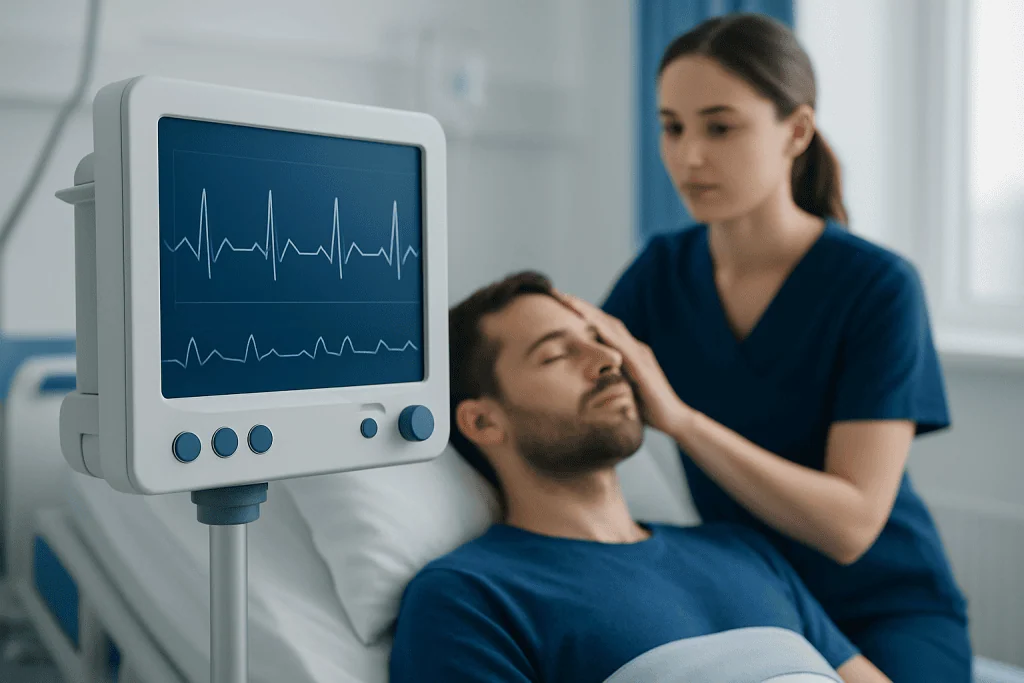
The vagus nerve is part of the parasympathetic nervous system, sometimes called the body’s “rest and digest” system. One of its effects is to slow the transmission of electrical impulses through the AV node, a small but important part of the heart’s conduction system.
Some rapid rhythms depend on a circular electrical pathway that passes through or near the AV node. If vagal stimulation slows conduction enough, that circuit may break and the heart may return to a normal rhythm. This is why vagal maneuvers are mainly useful for rhythm disturbances such as certain forms of SVT rather than for every kind of tachycardia.
The effect is usually short-lived and may be mild. In some cases, the maneuver does not stop the rhythm but briefly slows it enough for symptoms to change or for a doctor to better identify the pattern on an electrocardiogram. That can still be clinically useful.
Although the idea sounds simple, correct diagnosis matters. A person may feel “palpitations” without actually having an arrhythmia, or may have an arrhythmia that does not respond to vagal stimulation. Evaluation by a clinician, often with ECG testing or rhythm monitoring, helps determine what is really happening.
Common types of vagal maneuvers and practical points

The best-known technique is the Valsalva maneuver. In medical practice, this usually means trying to exhale forcefully against a closed airway for a short period, creating pressure in the chest that can trigger a vagal response. Clinicians may teach a modified version that combines the strain with a change in body position, which can improve effectiveness in some patients.
Another historically used method is carotid sinus massage, in which a clinician applies gentle pressure to one side of the neck where the carotid artery is located. This should not be performed without medical supervision because it can be unsafe in some people, especially those with carotid artery disease, prior stroke, or certain risk factors.
Cold stimulation of the face can trigger a reflex response in some situations, particularly in infants, but self-directed “home tricks” found online are not all evidence-based or safe. Splashing icy water on the face or trying unproven techniques may delay proper care or cause unnecessary discomfort without addressing the true cause of symptoms.
- The Valsalva maneuver is the most commonly taught self-administered vagal maneuver.
- Carotid sinus massage is generally a clinician-guided technique, not a home technique.
- Not every rapid heartbeat will respond, even with perfect technique.
- If symptoms are severe or unusual, medical assessment comes first.
Who may benefit and who should be cautious
People most likely to benefit are those who have already been diagnosed with a type of SVT known to respond to vagal maneuvers. In that setting, a cardiologist or emergency clinician may explain exactly what symptoms to look for, how to attempt the maneuver, and when to stop and seek help. This individualized guidance is important because one person’s “usual episode” may look very different from another’s.
Vagal maneuvers are not appropriate for everyone. They should be used cautiously or avoided in people with chest pain suggestive of reduced blood flow to the heart, severe shortness of breath, fainting, symptoms of stroke, marked dizziness, or an uncertain diagnosis. People with significant vascular disease, recent eye surgery, certain neurological conditions, or other specific medical concerns may also need modified advice.
Pregnant patients, older adults, and people with complex heart disease should not assume internet instructions apply to them. Their care team may recommend a different action plan, especially if symptoms are new or if there are other health conditions in the background.
If episodes of rapid heartbeat are recurrent, it is reasonable to ask whether referral for cardiology evaluation or rhythm-focused care is needed. In selected cases, doctors may discuss longer-term treatment options such as medicines or electrophysiology studies and ablation rather than relying repeatedly on self-care measures alone.
What a doctor may do to diagnose the cause
A doctor starts by asking detailed questions about the symptoms: how fast the heart feels, how suddenly it starts and stops, how long it lasts, and whether there is chest pain, shortness of breath, lightheadedness, or fainting. Triggers such as caffeine, illness, dehydration, stress, exercise, and certain medications are also relevant.
An electrocardiogram is often the first test, but if the rhythm episode is not happening at the time of the visit, the ECG may look normal. In that case, ambulatory rhythm monitoring such as a Holter monitor or event recorder can help capture what the heart is doing during symptoms. Blood tests may be used to look for contributing issues such as thyroid disease, electrolyte imbalance, or anemia.
Some patients need imaging such as an echocardiogram to assess heart structure and function. This is especially important if there is a history of heart disease, a murmur, reduced exercise tolerance, or other clues that the rhythm problem is part of a broader cardiac issue.
Because palpitations can have many causes, diagnosis is about more than naming an arrhythmia. It also helps doctors decide whether self-management is reasonable, whether medicines are needed, or whether specialized care through arrhythmia treatment services would be more appropriate.
Treatment options beyond vagal maneuvers
If vagal maneuvers do not stop an episode of SVT, medical treatment may be needed. In emergency or clinic settings, doctors can monitor the heart rhythm and use medications that act quickly on the AV node or other parts of the conduction system. The exact choice depends on the rhythm pattern, symptoms, and the person’s overall health.
For people with recurrent or troublesome episodes, preventive treatment may be considered. This can include prescription medications to reduce the frequency of episodes or to slow conduction in a controlled way. Not everyone needs long-term medication, and treatment decisions are individualized.
Catheter ablation is another important option for selected arrhythmias. In this procedure, specialists identify the abnormal electrical pathway and treat it through thin catheters placed in blood vessels. For many patients with confirmed, recurrent SVT, ablation can provide durable control and reduce the need to rely on repeated home maneuvers.
When symptoms overlap with other conditions such as panic symptoms, dehydration, or structural heart disease, treatment focuses on the underlying cause as well. A balanced care plan often combines rhythm control, trigger management, and clear instructions about what to do during future episodes.
Self-care, prevention, and when to seek medical care
Even when vagal maneuvers are appropriate, prevention matters. Some people notice episodes after sleep loss, emotional stress, alcohol, stimulant use, large amounts of caffeine, dehydration, or intense exertion. Keeping a simple symptom diary may help identify patterns and can be useful during medical visits.
General heart-healthy habits support overall rhythm stability: regular hydration, adequate sleep, moderation with stimulants, and taking medications exactly as prescribed. It is also wise to review over-the-counter products, supplements, and decongestants with a clinician, as some can affect heart rate.
Medical care should be sought promptly if a rapid heartbeat is new, lasts longer than expected, or is accompanied by chest pain, fainting, severe dizziness, weakness, confusion, trouble breathing, or symptoms suggestive of stroke. Emergency care is especially important if the person has known heart disease or if the episode does not stop after following the plan given by their doctor.
For international patients who need further evaluation, Acibadem International’s multidisciplinary specialists in JCI-accredited hospitals diagnose and treat heart rhythm conditions, including assessment for advanced rhythm care when appropriate. The most important step, however, is timely review by a qualified medical professional rather than repeated unsupervised self-treatment.
Frequently asked questions
What are vagal maneuvers used for?
Vagal maneuvers are used to try to slow or stop certain fast heart rhythms, especially some forms of supraventricular tachycardia. They work by stimulating the vagus nerve and temporarily affecting electrical conduction in the heart.
Do vagal maneuvers work for all types of palpitations?
No. Palpitations can be caused by many different conditions, and not all of them respond to vagal stimulation. That is why a medical diagnosis is important before relying on these techniques.
Is the Valsalva maneuver the same as simply holding the breath?
Not exactly. The Valsalva maneuver involves straining or trying to exhale against a closed airway for a short time, rather than just pausing breathing. A clinician should explain the correct method if it is recommended for a known rhythm problem.
Can someone do carotid massage at home?
No, this is generally not advised. Carotid sinus massage should be performed only by a trained clinician because it may be unsafe in some people, particularly those with vascular disease or a history of stroke.
When should a person avoid trying vagal maneuvers?
They should not be used as a substitute for urgent care when there is chest pain, fainting, severe shortness of breath, major dizziness, or stroke-like symptoms. They should also be avoided if a doctor has not confirmed that they are appropriate for that person’s condition.
What if vagal maneuvers stop working?
If an episode does not stop or if episodes become more frequent, medical review is needed. A doctor may recommend rhythm monitoring, medication, or procedures such as catheter ablation depending on the diagnosis.
This article is for general information only and is not a substitute for professional medical advice. Please consult a qualified doctor about your individual situation.
Explore treatments in Turkey — costs, top hospitals & a free quote
JCI-accredited · board-certified surgeons · reply within 24h
Add us as a Preferred Source to see more of our trusted health content across Google Search, AI Overviews and Discover.
Check your numbers in seconds
BMI, calories, due date, blood pressure and 30+ more clinical calculators — free, instant, doctor-reviewed ranges.

More from the Health Library

Bruise from a scratch: Symptoms, Causes, and Treatment — Complete Patient Guide

Electrolyte Imbalance: An Evidence-Based Guide for Patients

Shingles in the Eye: An Evidence-Based Guide for Patients

Mobitz Type 1 — Explained by Medical Evidence, Not Myths

Gua Sha Massage: An Evidence-Based Guide for Patients