Velopharyngeal Insufficiency: What Patients Need to Know

Velopharyngeal insufficiency usually causes hypernasal speech and audible air escape through the nose. It may be present from birth, occur after cleft palate repair, or develop with structural, neurological, or growth-related changes.
Key Takeaways
- Velopharyngeal insufficiency usually causes hypernasal speech and audible air escape through the nose.
- It may be present from birth, occur after cleft palate repair, or develop with structural, neurological, or growth-related changes.
- A specialist speech assessment and imaging or endoscopic examination help identify the pattern and cause of incomplete closure.
- Speech therapy is helpful for learned speech patterns but cannot close a structural gap on its own.
- Treatment may include speech therapy, a dental-type prosthetic device, or surgery depending on the cause and severity.
Velopharyngeal insufficiency is a condition in which the soft palate and throat do not close fully during speech, allowing air and sound to pass into the nose. It can affect speech clarity and may cause food or liquids to come through the nose, but assessment and individualized treatment can often improve communication and comfort.
Understanding velopharyngeal insufficiency
Velopharyngeal insufficiency (VPI) occurs when the soft palate, also called the velum, does not make an adequate seal against the back and side walls of the throat during speech. This seal normally separates the mouth from the nasal cavity for most spoken sounds. When it does not close sufficiently, air may escape through the nose and the voice can sound overly nasal.
VPI is part of a broader term, velopharyngeal dysfunction (VPD). Clinicians may use VPD to describe any problem with this valve-like mechanism. Strictly speaking, insufficiency usually refers to a structural issue, such as too little tissue or a gap that prevents closure. A related problem, velopharyngeal incompetence, refers to reduced movement caused by a neurological or muscle-control issue. In practice, the terms are sometimes used interchangeably, so a detailed assessment is important.
The condition is often identified in childhood as speech develops, especially in children born with a cleft palate. However, it can also be recognized later in life. VPI is not caused by poor effort, intelligence, or a lack of motivation. It is a physical or functional speech mechanism issue that deserves supportive, specialist-led care.
How velopharyngeal insufficiency may affect speech and swallowing
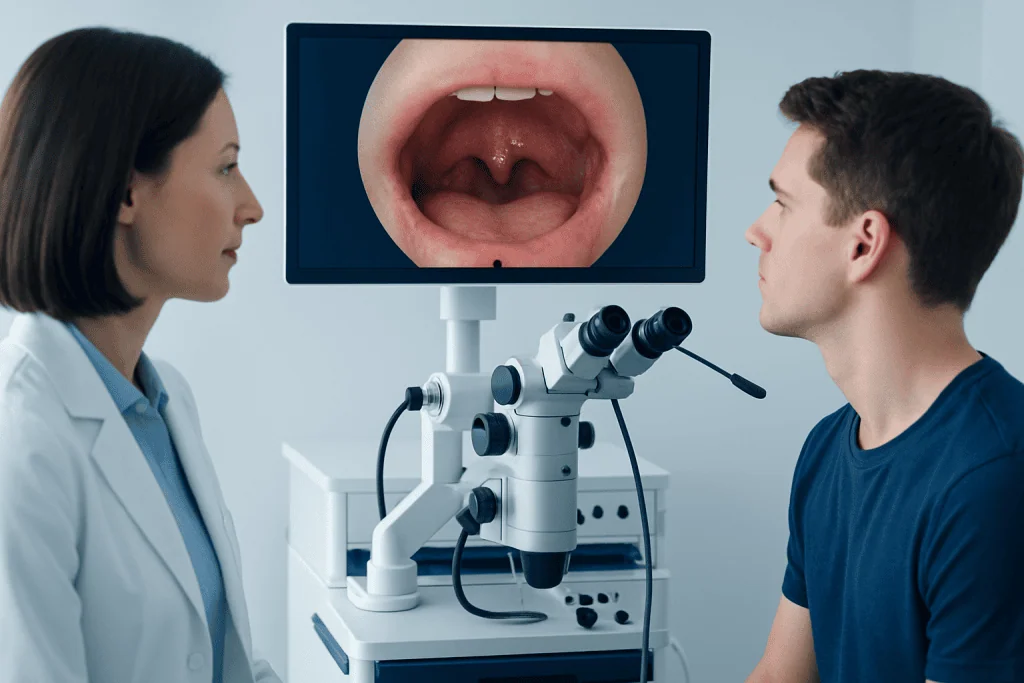
The most noticeable feature of VPI is hypernasality. This means that too much sound resonates in the nose during vowels and certain voiced sounds. Speech may be difficult for unfamiliar listeners to understand, and a person may need to repeat words or speak more slowly. The degree of change varies widely, from mild nasal resonance to a more substantial impact on intelligibility.
Another common sign is nasal air emission: air escapes from the nostrils while saying pressure sounds such as “p,” “b,” “t,” “d,” “k,” “g,” “s,” or “sh.” Some people develop compensatory speech patterns, making sounds farther back in the throat in an effort to be understood. These learned patterns can remain even after a structural problem has been corrected and may need targeted speech therapy.
Some individuals also experience nasal regurgitation, where liquids or food enter the nose during swallowing. This is more likely when the velopharyngeal closure problem is pronounced, although speech symptoms are often the main concern. VPI does not usually cause pain. It also differs from nasal blockage: a blocked nose tends to make speech sound less nasal, whereas VPI commonly makes it sound more nasal.
- Speech that sounds excessively nasal
- Audible nasal air escape or a visible mist from the nostrils during speech
- Weak pressure sounds, such as “p,” “t,” “k,” or “s”
- Speech that is hard to understand, particularly to people outside the family
- Occasional food or fluid coming through the nose
Causes and factors associated with VPI

A cleft palate is one of the most frequent causes of VPI. Even after cleft palate repair, some children may have a remaining gap or may not have enough palate length or movement to achieve complete closure during speech. A submucous cleft palate, in which the muscles beneath the lining of the palate are not properly joined, may be less obvious and can be diagnosed later when speech symptoms become clear.
VPI can also occur after surgery involving the palate or adenoids, following trauma, or as a result of tissue changes during growth. In some cases, it is associated with craniofacial differences or genetic conditions. Certain syndromes can affect palate structure, muscle function, or both. A medical team may recommend genetic evaluation when a person’s history, physical features, development, or family history suggests it could be useful.
Neurological conditions that affect muscle strength or coordination may lead to velopharyngeal incompetence rather than structural insufficiency. Rarely, a new change in nasal speech can follow a neurological event. The cause cannot be determined from speech alone, which is why assessment considers medical history, palate anatomy, movement, hearing, and the specific speech sounds affected.
How specialists assess the condition
Evaluation commonly begins with a speech-language pathologist who has experience in resonance disorders and cleft-related speech. The clinician listens to connected speech and specific sounds, assesses nasal airflow, and identifies whether there are compensatory articulation patterns. Hearing may also be checked because hearing differences can influence speech development and clarity.
An ear, nose, and throat specialist, cleft or craniofacial surgeon, and sometimes a dentist or prosthodontist may assess the palate and throat. Flexible nasendoscopy can allow the team to view the palate and throat from inside the nose while the person speaks. This examination helps show the size, location, and movement pattern of the gap. It is generally brief and is planned with age, comfort, and cooperation in mind.
Another assessment, videofluoroscopy, uses moving X-ray images taken from different angles while speech is produced. It can provide complementary information about palate length and throat-wall movement. The results are considered alongside the speech evaluation rather than in isolation. A multidisciplinary review is particularly valuable because the same speech symptom can arise from different underlying mechanisms.
Treatment options and what they aim to achieve
Treatment is tailored to the cause of VPI, the pattern of closure, speech findings, general health, and the person’s goals. If the main issue is an incorrect learned speech pattern and there is adequate physical closure, specialist speech therapy may be the primary treatment. Therapy can teach placement and airflow for speech sounds and reduce compensatory habits. However, therapy alone cannot reliably correct hypernasality caused by a persistent structural gap.
When there is a significant structural gap, surgery may be considered. Procedures can include palate revision or lengthening, a pharyngeal flap, or sphincter pharyngoplasty. The best option depends on the closure pattern seen during assessment. The aim is to improve separation of the mouth and nose during speech while preserving a safe, open airway for breathing.
For selected people, especially when surgery is not suitable or while further planning takes place, a removable speech prosthesis may help. These dental-type devices can support or extend the palate and reduce air escape. Follow-up remains important after any intervention. Speech therapy is commonly needed after surgery or prosthetic treatment to address learned articulation patterns and help the person use the improved anatomy effectively.
Teams also consider possible airway effects before and after treatment. For example, snoring, pauses in breathing during sleep, or daytime sleepiness should be discussed, as narrowing the throat may affect breathing in some people. Treatment planning should balance speech improvement, swallowing function, and airway health.
Daily support, communication, and follow-up care
Families and adults can support communication by giving the person time to speak, listening without interrupting, and avoiding requests to “speak through the nose less,” which may be frustrating and does not address the underlying mechanism. Teachers, caregivers, and other regular communication partners may benefit from understanding that speech differences are medical and treatable. School-based speech support can complement care from a specialist team when goals are coordinated.
There is no home exercise that can close a structural velopharyngeal gap. Blowing exercises, sucking exercises, and nonspecific oral-motor programs have not been shown to correct VPI-related resonance. Exercises should only be used when recommended for a specific speech or swallowing goal by a qualified speech-language pathologist.
Regular review may be needed as a child grows, after palate surgery, or when speech demands change. Parents may find it helpful to note which situations make speech harder to understand, whether nasal regurgitation occurs, and whether snoring or restless sleep is present. These observations can help the care team make practical recommendations.
Acibadem International’s multidisciplinary specialists and JCI-accredited hospitals assess and treat velopharyngeal conditions for international patients, with care plans guided by speech, airway, and anatomical findings.
When to seek medical care
A medical assessment is appropriate if a child’s speech consistently sounds very nasal, air escapes through the nose during speech, or other people frequently struggle to understand them. Parents should also arrange review when food or drink repeatedly comes through the nose, particularly if this affects eating, drinking, or comfort. Early evaluation can help distinguish VPI from articulation differences, hearing concerns, or nasal conditions.
Adults should seek assessment for a persistent change in speech resonance, especially if it occurs after palate surgery, injury, or another medical event. A new nasal voice accompanied by facial weakness, trouble swallowing, weakness in an arm or leg, severe headache, or confusion needs urgent medical attention because these symptoms may indicate a neurological problem requiring prompt evaluation.
It is also important to discuss loud snoring, witnessed breathing pauses during sleep, gasping at night, or marked daytime sleepiness with a clinician, particularly before or after VPI surgery. An ear, nose, and throat specialist or cleft/craniofacial team can coordinate assessment with a speech-language pathologist and recommend the most appropriate next steps.
Frequently asked questions
Is velopharyngeal insufficiency the same as a cleft palate?
No. A cleft palate is an opening or difference in the structure of the palate that is present before birth, while velopharyngeal insufficiency describes incomplete closure between the palate and throat during speech. VPI can occur in people with a cleft palate, including after repair, but it can also have other causes.
Can speech therapy cure velopharyngeal insufficiency?
Speech therapy can be very helpful for incorrect speech sound patterns and compensatory articulation. However, if hypernasality is caused by a structural gap that prevents closure, therapy cannot physically close that gap. In those situations, surgery or a prosthetic device may be considered alongside therapy.
Can velopharyngeal insufficiency improve with age?
Some speech patterns may change as a child develops, but a true structural closure problem does not reliably resolve with age alone. Growth can also change the relationship between the palate and throat. Periodic assessment helps determine whether treatment is needed and when it may be most appropriate.
How is VPI diagnosed in children?
Diagnosis usually includes a detailed speech evaluation and examination of the mouth and palate. A specialist may also use nasendoscopy or videofluoroscopy while the child speaks to see how the palate and throat move. These tests help the team select treatment based on the individual closure pattern.
Is surgery for velopharyngeal insufficiency always necessary?
No. Surgery is not necessary for everyone with VPI or velopharyngeal dysfunction. The recommendation depends on whether the problem is structural, how much it affects speech or swallowing, airway considerations, and whether speech therapy or a prosthetic approach is suitable.
Can VPI cause sleep apnea?
VPI itself does not necessarily cause sleep apnea. However, some operations used to improve velopharyngeal closure can narrow the throat and may affect breathing during sleep in certain people. Screening for snoring and other sleep-related breathing symptoms is an important part of treatment planning and follow-up.
References
- American Speech-Language-Hearing Association
- American Cleft Palate-Craniofacial Association
- National Institute on Deafness and Other Communication Disorders
- Merck Manual Consumer Version
This article is for general information only and is not a substitute for professional medical advice. Please consult a qualified doctor about your individual situation.
Explore treatments in Turkey — costs, top hospitals & a free quote
JCI-accredited · board-certified surgeons · reply within 24h
Add us as a Preferred Source to see more of our trusted health content across Google Search, AI Overviews and Discover.