

Venous Insufficiency Treatment: Symptoms, Options, and Recovery
Venous insufficiency happens when leg veins do not return blood to the heart effectively. Common symptoms include leg heaviness, swelling, aching, visible veins, and skin changes around the ankles.
Key Takeaways
- Venous insufficiency happens when leg veins do not return blood to the heart effectively.
- Common symptoms include leg heaviness, swelling, aching, visible veins, and skin changes around the ankles.
- Treatment often begins with compression therapy, movement, leg elevation, and weight management.
- Minimally invasive procedures such as endovenous treatments or sclerotherapy may be recommended when symptoms persist.
- Early evaluation can help reduce discomfort and lower the risk of skin damage or venous ulcers.
Venous insufficiency treatment aims to improve blood flow in the leg veins, reduce symptoms, and help prevent complications. Options range from compression stockings and lifestyle measures to minimally invasive procedures and, in selected cases, surgery.
Overview of venous insufficiency treatment
Venous insufficiency is a condition in which the veins, most often in the legs, have trouble sending blood back toward the heart. Healthy leg veins contain one-way valves that keep blood moving upward. When these valves become weak or damaged, blood can collect in the lower legs. This can lead to swelling, discomfort, visible veins, and skin changes over time.
Venous insufficiency treatment focuses on improving circulation, easing symptoms, and preventing complications. The best approach depends on how severe the condition is, which veins are involved, whether there are skin changes or ulcers, and the person’s overall health. Many people improve with conservative measures, while others benefit from office-based procedures or surgery.
This condition is closely related to varicose veins, but not everyone with visible veins has significant venous insufficiency. A careful assessment helps determine whether symptoms are caused by superficial veins, deeper veins, or another circulation problem. Treatment is usually personalized and may involve more than one method.
Symptoms and possible complications
Symptoms often develop gradually and may become more noticeable after long periods of standing or sitting. Many people describe a feeling of heaviness, aching, throbbing, or tiredness in the legs. Swelling around the ankles is also common, especially later in the day. Some people notice itching, burning, or night cramps.
Visible signs can include enlarged, twisted veins, fine spider veins, or changes in the skin around the lower legs. The skin may become dry, irritated, darker in color, or firmer in texture. In more advanced cases, the skin can become fragile and may break down, leading to a slow-healing sore called a venous ulcer.
Possible symptoms and signs include:
- Leg heaviness or aching
- Swelling in the lower legs or ankles
- Varicose veins or spider veins
- Itching or burning around affected veins
- Skin discoloration near the ankles
- Hardening or thickening of the skin
- Venous ulcers, especially near the inner ankle
These symptoms can overlap with other conditions, including lymphedema, heart disease, or blood clots. For that reason, new or worsening leg swelling should be assessed by a qualified doctor rather than assumed to be venous insufficiency alone.
Causes and risk factors
Venous insufficiency usually develops when vein valves stop closing properly. This allows blood to flow backward and pool in the legs, a process often called venous reflux. Over time, pressure inside the veins rises, which can stretch the vein walls and worsen valve function. This may affect superficial veins near the skin, deeper veins, or both.
Several factors can increase the risk. Age is one of the most common, because vein walls and valves can weaken over time. Family history also matters, suggesting a genetic tendency in some people. Pregnancy, hormonal influences, excess body weight, and occupations that involve prolonged standing or sitting may place extra pressure on the leg veins.
Previous leg injury or a history of deep vein thrombosis can also damage the venous system. In some people, reduced physical activity contributes because the calf muscles help pump blood back toward the heart during walking. Understanding the underlying cause is important because treatment is not just about the visible veins, but about the circulation problem beneath them.
How venous insufficiency is diagnosed
Diagnosis begins with a medical history and physical examination. A doctor will ask about leg discomfort, swelling, skin changes, visible veins, prior blood clots, pregnancies, work habits, and family history. The legs are usually examined while standing because vein problems may be easier to see in that position.
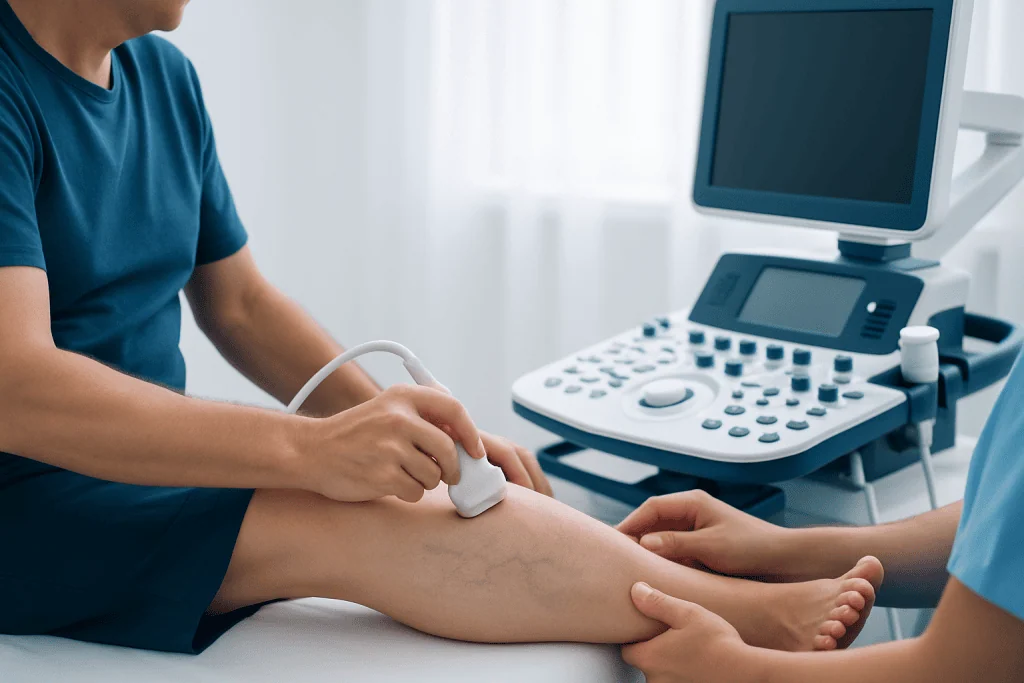
The most important test is often a duplex ultrasound. This imaging study shows how blood is flowing through the veins and whether the valves are leaking. It can also help identify blocked veins or signs of a previous clot. Ultrasound is painless, does not use radiation, and is central to planning treatment.
In some cases, other tests may be considered if symptoms are unusual or if there is concern about deeper venous obstruction. The diagnosis also helps stage the condition, which guides whether treatment should focus on compression and monitoring, minimally invasive procedures, wound care, or surgery.
Treatment options for venous insufficiency
Treatment often starts with conservative care. Compression stockings are commonly recommended because they gently squeeze the legs and support blood flow upward. Doctors may also advise regular walking, calf-strengthening activity, leg elevation during rest, and avoiding long periods of standing or sitting. Weight management and skin care can also help reduce symptoms and protect the lower legs.
If symptoms continue or the veins show significant reflux on ultrasound, minimally invasive treatment may be considered. One common approach is varicose vein treatment using endovenous techniques. These methods close the faulty vein from the inside, allowing blood to reroute through healthier veins. Depending on the anatomy, this may be done with heat-based ablation or other catheter-based procedures.
Another option is sclerotherapy, in which a special solution is injected into certain veins so they gradually close and fade. This is often used for smaller varicose veins or residual veins after another procedure. In selected cases, especially when veins are large or anatomy is complex, surgery such as vein ligation or removal may still be recommended.
When venous insufficiency has led to chronic wounds, treatment also includes careful skin and ulcer care. This may involve dressings, compression, and management by a vascular or wound-care team. If there is concern about arterial circulation as well, doctors may assess for conditions such as peripheral artery disease before advising strong compression therapy.
Recovery after treatment and expected results
Recovery depends on the type of treatment used. With compression therapy and lifestyle measures, improvement may be gradual over days to weeks. After minimally invasive vein procedures, many people return to light daily activities quickly, although temporary bruising, tightness, or mild discomfort can occur. Walking is usually encouraged because it supports healthy circulation.
Compression stockings may still be advised for a period after a procedure, depending on the treatment plan. Follow-up visits and repeat ultrasound may be used to confirm that the treated vein has closed properly and that blood flow through other veins is satisfactory. This helps guide whether any additional treatment is needed.
Most treatments aim to reduce symptoms, improve appearance, protect the skin, and lower the chance of future complications. Even after successful treatment, new problematic veins can develop over time, especially when risk factors remain. Ongoing habits such as movement, weight control, and avoiding prolonged immobility can help maintain results.
For international patients who need evaluation or treatment, Acibadem International’s multidisciplinary specialists and JCI-accredited hospitals provide diagnosis and care plans for venous disorders in a coordinated setting.
Prevention, self-care, and when to see a doctor
Although venous insufficiency cannot always be prevented, daily habits can support vein health. Regular walking is especially helpful because calf muscles act as a natural pump for the veins. Raising the legs when resting may reduce swelling, and changing position often during travel or desk work can help prevent blood pooling in the lower legs.
Helpful self-care steps include:
- Wearing compression stockings if advised by a doctor
- Walking and moving the ankles during long trips
- Maintaining a healthy weight
- Avoiding long periods of standing or sitting without breaks
- Protecting and moisturizing the skin on the lower legs
- Following wound-care instructions carefully if ulcers are present
A doctor should be consulted if leg swelling, pain, or skin discoloration is persistent, or if varicose veins are causing discomfort. Prompt medical attention is especially important for a leg ulcer, sudden one-sided swelling, marked redness, severe pain, fever, or shortness of breath. These symptoms may suggest a different or urgent condition that needs immediate assessment.
Frequently asked questions
What is the best treatment for venous insufficiency?
The best treatment depends on the severity of symptoms, ultrasound findings, and whether there are skin changes or ulcers. Many people start with compression stockings, walking, leg elevation, and weight management. If symptoms persist or reflux is significant, minimally invasive procedures or surgery may be recommended.
Can venous insufficiency go away on its own?
Venous insufficiency usually does not fully go away without treatment because the underlying vein valve problem tends to persist. However, symptoms can often be improved and progression may be slowed with proper care. Early treatment may also help prevent skin damage and ulcers.
Are compression stockings enough to treat venous insufficiency?
Compression stockings can be very effective for symptom relief and are often an important first step. They help reduce swelling and improve comfort, but they do not repair faulty vein valves. Some people still need a procedure if symptoms continue or complications develop.
Is venous insufficiency treatment painful?
Many modern treatments are minimally invasive and generally well tolerated. Some people experience mild discomfort, bruising, or tightness afterward, but this is often temporary. The treating doctor can explain what to expect based on the specific procedure.
How long does recovery take after vein treatment?
Recovery varies by treatment type and the extent of venous disease. After office-based procedures, many people return to normal light activities quickly, while full healing of skin changes or ulcers may take longer. Following instructions about walking, compression, and follow-up care is important for recovery.
When should someone worry about leg swelling?
Persistent or worsening swelling should be checked by a doctor, especially if it affects one leg more than the other. Urgent evaluation is needed if swelling appears suddenly or is associated with severe pain, redness, warmth, chest pain, or shortness of breath. These symptoms can have causes other than venous insufficiency and may need immediate care.
References
- National Heart, Lung, and Blood Institute
- Society for Vascular Surgery
- American Venous Forum
- National Institute for Health and Care Excellence
- World Health Organization
This article is for general information only and is not a substitute for professional medical advice. Please consult a qualified doctor about your individual situation.
Explore treatments in Turkey — costs, top hospitals & a free quote
JCI-accredited · board-certified surgeons · reply within 24h
Add us as a Preferred Source to see more of our trusted health content across Google Search, AI Overviews and Discover.

More from the Health Library

Related Specialists

Prof. Dr. Salih Marangoz
Orthopedic Surgery & Traumatology
Prof. Dr. Mert Erkan
General Surgery
Dr. İlkar Aydın
Radiology
Dr. Halise Akgüneş
Emergency Service