Venous Reflux: A Complete Medical Overview

Venous reflux happens when vein valves weaken and allow blood to pool in the legs. Common symptoms include leg heaviness, aching, swelling, visible veins, itching, and cramps.
Key Takeaways
- Venous reflux happens when vein valves weaken and allow blood to pool in the legs.
- Common symptoms include leg heaviness, aching, swelling, visible veins, itching, and cramps.
- Duplex ultrasound is the main test used to confirm venous reflux and map the affected veins.
- Treatment may include exercise, leg elevation, compression stockings, and minimally invasive vein procedures.
- Early medical evaluation may help reduce discomfort and lower the risk of skin damage or leg ulcers.
Venous reflux is a condition in which blood flows backward in the leg veins because the vein valves do not close properly. It commonly causes heaviness, swelling, aching, skin changes, or varicose veins, and it can often be managed with lifestyle measures, compression, and targeted vein treatments.
Overview
Venous reflux is the backward flow of blood in the veins, most often in the legs. Normally, one-way valves inside the veins help blood move upward toward the heart. When these valves become weak or do not close fully, blood can fall back down with gravity and collect in the lower legs.
This pooling increases pressure inside the veins over time. As a result, a person may notice leg heaviness, swelling, discomfort, or enlarged visible veins. In some people, venous reflux is mild and mainly a cosmetic concern. In others, it contributes to long-term vein disease and symptoms that affect daily comfort.
Venous reflux is closely related to chronic venous insufficiency, a broader term for poor vein function in the legs. It is also a common cause of varicose veins. Although it can become more noticeable with age, modern diagnosis and treatment approaches are often effective and usually less invasive than many people expect.
How Venous Reflux Affects the Legs
The leg veins work against gravity. Blood from the feet and lower legs returns upward through deep and superficial veins, helped by one-way valves and the pumping action of the calf muscles during walking. If the valves leak, blood flows in the wrong direction and pressure builds up in the veins below.
This persistent pressure can stretch the vein walls and make symptoms more noticeable, especially after long periods of standing or sitting. Over time, the skin and soft tissues around the ankles and lower legs may also be affected. Some people first notice bulging veins, while others mainly feel discomfort, fatigue, or swelling.
Venous reflux can involve superficial veins near the skin, deeper veins, or perforator veins that connect the two systems. The location and extent of reflux help guide treatment decisions. Understanding this pattern is important because symptoms may not always match how veins look from the outside.
Symptoms and Possible Complications
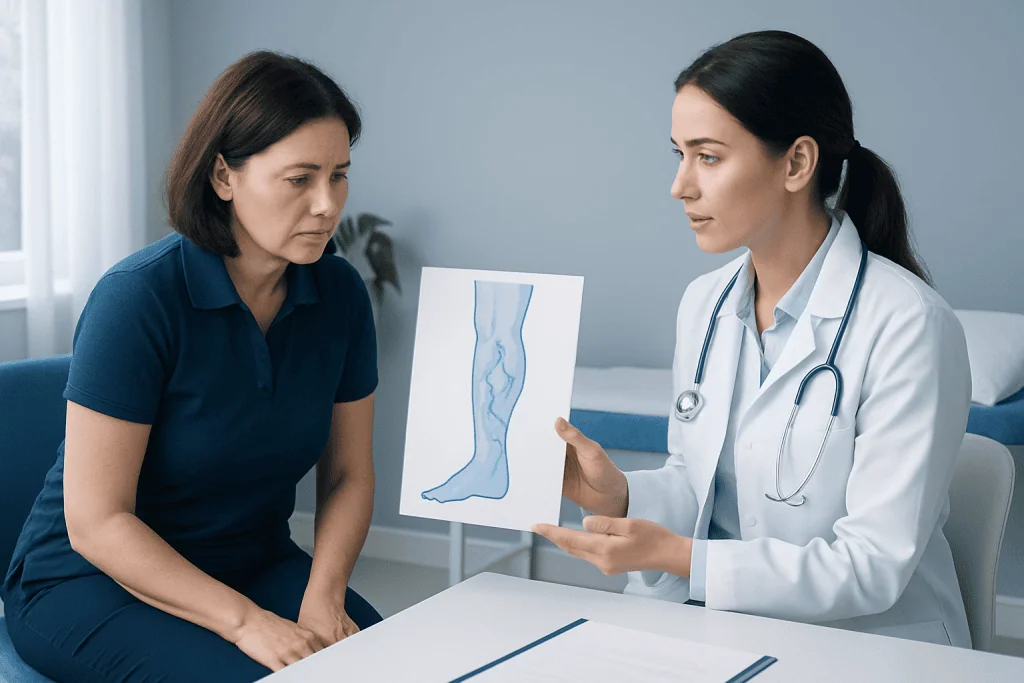
Symptoms of venous reflux vary from person to person. They often worsen later in the day or after prolonged standing and may improve with walking or elevating the legs. Some people have visible vein changes with little discomfort, while others have significant symptoms even when the veins are not very prominent.
- Leg heaviness or tiredness
- Aching, throbbing, or burning discomfort
- Swelling around the ankles or lower legs
- Itching or irritation over visible veins
- Night cramps or restlessness in the legs
- Varicose veins or spider veins
- Skin discoloration, especially near the ankles
If venous reflux continues for a long time, it may lead to chronic skin inflammation, thickening of the skin, or slow-healing wounds called venous ulcers. These changes do not happen in everyone, but they are a reason not to ignore ongoing symptoms. Severe sudden swelling, marked redness, or new calf pain should be assessed promptly because these features may suggest a different condition, such as a blood clot.
Causes and Risk Factors
The immediate cause of venous reflux is valve failure inside the veins. This can happen because the vein walls stretch, the valves weaken over time, or a previous vein problem damages the normal structure. In many cases, there is more than one contributing factor.
Several risk factors make venous reflux more likely. Family history is important, as vein problems often run in families. Age, pregnancy, hormonal influences, excess body weight, and jobs that involve long periods of standing can also increase the strain on leg veins. A previous blood clot in the leg, leg injury, or prior vein surgery may contribute as well.
Being inactive does not directly cause valve failure, but reduced calf muscle activity can make symptoms worse because the muscle pump is less effective. This is why many people notice more discomfort during long travel, desk work, or standing without movement. A doctor may also evaluate for related vein conditions, especially when symptoms suggest broader chronic venous insufficiency.
How Doctors Diagnose Venous Reflux
Diagnosis begins with a medical history and physical examination. A doctor will ask about leg pain, swelling, visible veins, skin changes, past pregnancies, blood clot history, work habits, and family history. The legs are usually examined while standing, because vein changes can be easier to see in that position.
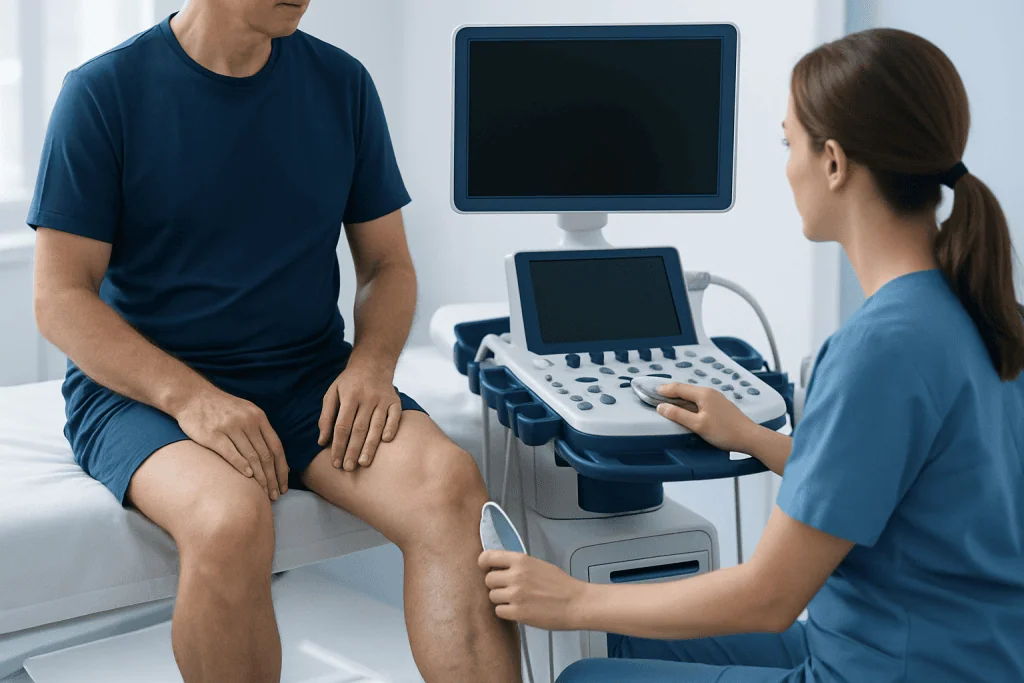
The main test used to confirm venous reflux is duplex ultrasound. This noninvasive test shows the structure of the veins and the direction of blood flow. It helps identify which veins are leaking, whether the deep veins are involved, and whether there is any sign of obstruction or clot.
Ultrasound findings are important because treatment works best when it is matched to the exact vein pattern. In more complex cases, additional vascular assessment may be recommended, but many people do not need extensive testing beyond a detailed duplex study. The goal is not only to confirm reflux, but also to rule out other causes of leg swelling or pain.
Treatment Options
Treatment depends on symptoms, the severity of reflux, the veins involved, and whether skin changes or ulcers are present. Mild symptoms may improve with conservative care, while persistent discomfort or visible varicose veins may lead to a discussion about procedures that close the faulty veins and redirect blood into healthier pathways.
Conservative treatment often includes graduated compression stockings, regular walking, calf-strengthening activity, weight management when appropriate, and leg elevation during rest. These measures do not repair damaged valves, but they can reduce pressure in the veins and improve comfort for many people.
When symptoms continue or when reflux is clearly affecting quality of life, minimally invasive options may be considered. Depending on the anatomy, these can include varicose veins treatment with endovenous thermal ablation, ultrasound-guided foam sclerotherapy, or other catheter-based techniques. In selected situations, specialists may recommend sclerotherapy for smaller veins or surface vein problems, or vascular surgery for more complex disease.
After treatment, many patients return to normal activity quickly, though follow-up is important to confirm vein closure and monitor symptom improvement. The best approach is individualized and should be discussed with a qualified vascular specialist.
Prevention and Self-care
Venous reflux cannot always be prevented, especially when heredity plays a strong role. Still, daily habits can help reduce symptoms and support better circulation. The most useful strategy is regular movement, particularly walking, because the calf muscles help push blood upward from the legs.
Helpful self-care steps include avoiding long periods of standing or sitting without a break, raising the legs when resting, maintaining a healthy weight, and wearing compression stockings if a doctor advises them. Some people also find that changing position frequently during travel or desk work makes a noticeable difference.
Skin care matters when swelling or irritation is present. Keeping the skin moisturized and watching for dryness, cracking, or color change may help reduce complications. Self-care is supportive, but it should not replace medical assessment when symptoms are ongoing, worsening, or associated with skin damage.
When to Seek Medical Care
Medical care is appropriate when leg symptoms are persistent, bothersome, or beginning to affect daily life. A person should consider evaluation for unexplained swelling, recurring aching, visible enlarging veins, skin discoloration, or itching around the lower legs. Early assessment may help identify reflux before more advanced skin changes develop.
Prompt medical attention is important if there is one-sided sudden leg swelling, significant calf pain, warmth, redness, a nonhealing sore, or bleeding from a vein. These symptoms do not always mean venous reflux alone and may need urgent evaluation to exclude other vascular problems.
For people seeking specialist assessment, Acibadem International’s multidisciplinary teams in JCI-accredited hospitals diagnose and treat vein conditions for international patients. A personalized evaluation can help determine whether symptoms are due to venous reflux, another vein disorder, or a different cause altogether.
Frequently asked questions
Is venous reflux the same as varicose veins?
Not exactly. Venous reflux describes the faulty backward flow of blood in the veins, while varicose veins are enlarged, twisted veins that often result from that reflux. A person can have venous reflux before varicose veins become obvious.
Can venous reflux go away on its own?
Damaged vein valves usually do not return to normal on their own. However, symptoms may improve with compression, exercise, leg elevation, and avoiding prolonged standing or sitting. A doctor can advise whether observation or a procedure is the better option.
How serious is venous reflux?
Venous reflux is often manageable and not immediately dangerous, but it should not be ignored if symptoms are persistent. In some people it can lead to chronic swelling, skin changes, or ulcers over time. Evaluation helps clarify the severity and the best treatment plan.
What test confirms venous reflux?
Duplex ultrasound is the standard test used to diagnose venous reflux. It shows both the vein anatomy and the direction of blood flow. The test is noninvasive and is usually performed in an outpatient setting.
Do compression stockings treat venous reflux?
Compression stockings help manage symptoms by reducing pooling and supporting blood flow back toward the heart. They can lessen heaviness, swelling, and discomfort, but they do not fix faulty vein valves. They are often used as part of a broader treatment plan.
When is a procedure recommended for venous reflux?
A procedure may be recommended when symptoms continue despite conservative measures, when varicose veins are significant, or when skin changes and ulcers are developing. The decision depends on ultrasound findings, symptom burden, and overall health. Minimally invasive options are commonly used when suitable.
This article is for general information only and is not a substitute for professional medical advice. Please consult a qualified doctor about your individual situation.
Persistent digestive symptoms? Get evaluated in Turkey
JCI-accredited · board-certified surgeons · reply within 24h
Add us as a Preferred Source to see more of our trusted health content across Google Search, AI Overviews and Discover.

More from the Health Library
Myocardial Infarction — Explained by Medical Evidence, Not Myths

Bladderwrack — Explained by Medical Evidence, Not Myths

Hives on Lips: A Complete Medical Overview
Seated Leg Curl Machine: What Patients Need to Know

Lycopene: A Complete Medical Overview