Ventilator — Explained by Medical Evidence, Not Myths
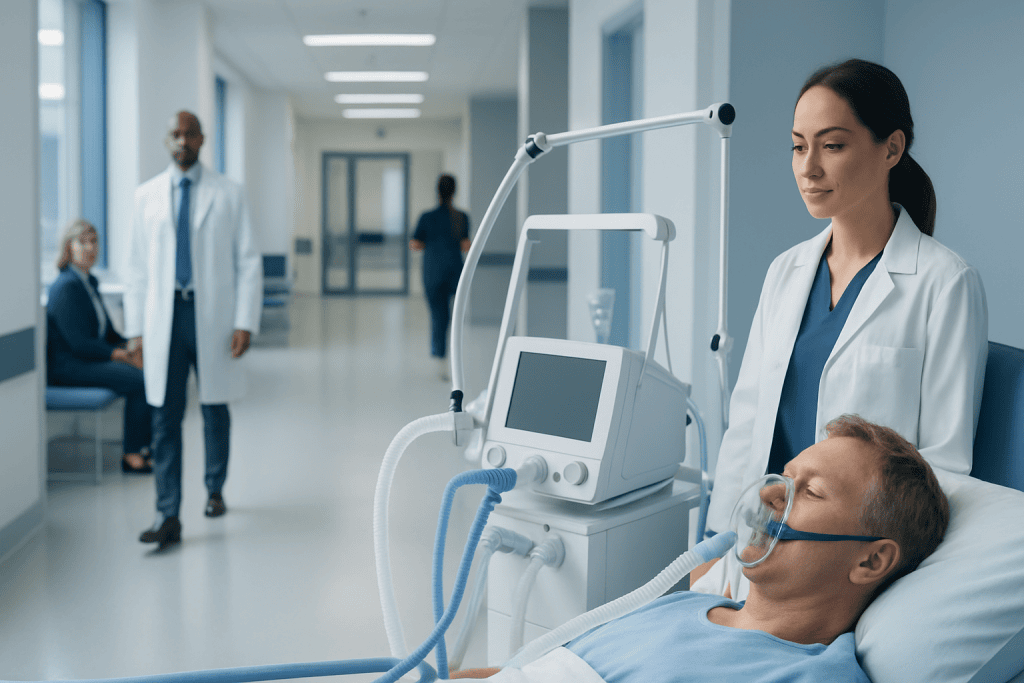
A ventilator helps move air in and out of the lungs when breathing is too weak or unsafe. Doctors use ventilators in intensive care, emergency settings, surgery, and some long-term neuromuscular conditions.
Key Takeaways
- A ventilator helps move air in and out of the lungs when breathing is too weak or unsafe.
- Doctors use ventilators in intensive care, emergency settings, surgery, and some long-term neuromuscular conditions.
- Being on a ventilator often involves close monitoring, and some people need a breathing tube or tracheostomy.
- Ventilator care focuses on treating the underlying illness, preventing complications, and removing support as soon as it is safe.
- Families should ask why the ventilator is needed, what the goals are, and how clinicians will assess readiness to breathe without it.
A ventilator is a medical machine that supports breathing when the lungs or breathing muscles cannot do enough work alone. It does not cure the underlying illness, but it can give the body time to recover while doctors treat the cause.
What a ventilator is and what it does
A ventilator is a machine that helps a person breathe when they cannot breathe well enough on their own. It can deliver oxygen, move air into the lungs, and support the effort of breathing. In everyday conversation, people may say a ventilator “breathes for someone,” but in practice the amount of help can range from partial support to full support depending on the patient’s condition.
A ventilator is a form of life support, but it is best understood as a temporary or sometimes longer-term bridge while the medical team treats the cause of breathing failure. That cause may be a severe lung infection, major surgery, serious injury, medication effects, or weakness of the muscles that control breathing. The machine itself does not heal the lungs; it buys time and helps protect vital organs by keeping oxygen and carbon dioxide at safer levels.
Ventilation can be invasive or noninvasive. Invasive ventilation usually means a breathing tube placed through the mouth into the windpipe, called intubation, or a tracheostomy tube placed through the neck for longer support. Noninvasive ventilation uses a tight-fitting mask over the nose, mouth, or both and may be used in selected patients who are awake and can protect their airway.
Why someone may need a ventilator
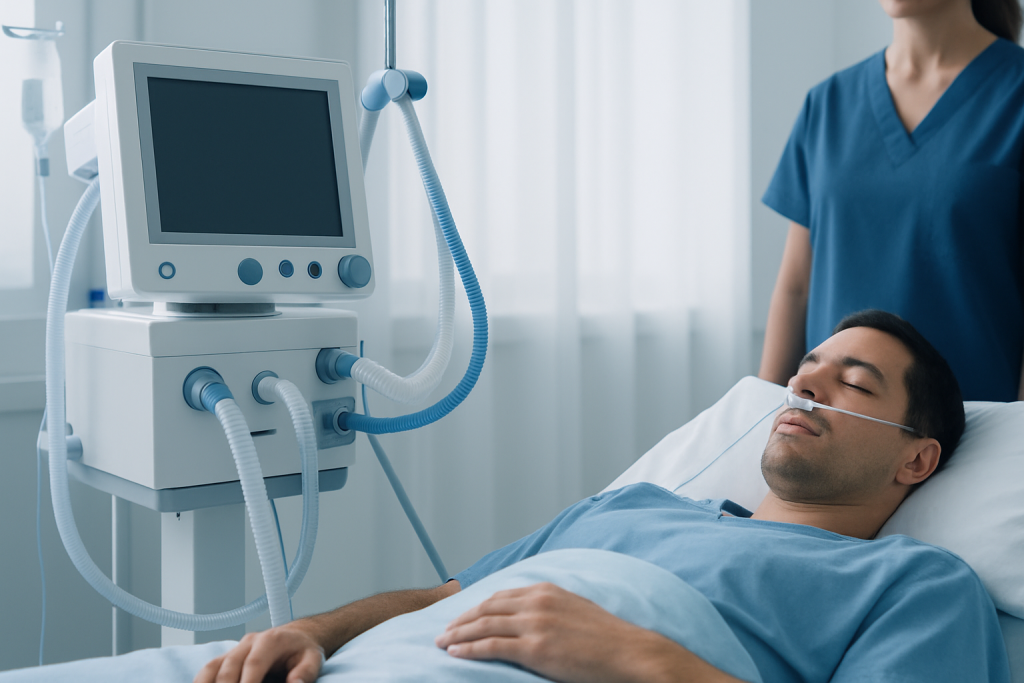
Doctors use a ventilator when breathing is too slow, too weak, too labored, or too ineffective to meet the body’s needs. A person may not be able to bring in enough oxygen, remove enough carbon dioxide, or maintain a safe airway. This can happen suddenly, such as after trauma or severe infection, or gradually in a chronic disease that worsens over time.
Common reasons include respiratory failure from pneumonia, acute respiratory distress syndrome, worsening chronic lung disease, stroke, severe head injury, poisoning, or weakness from neurological and muscle disorders. Ventilators are also used during general anesthesia in the operating room because medicines given for surgery temporarily affect normal breathing.
In some cases, doctors first try noninvasive support such as oxygen therapy or mask ventilation. If breathing remains unsafe or the patient becomes exhausted, invasive mechanical ventilation may be needed. Conditions related to breathing failure can include pneumonia and other serious lung problems, but the exact decision depends on blood oxygen levels, carbon dioxide levels, work of breathing, and the person’s overall stability.
How ventilation is given and monitored

When a person needs invasive ventilation, a breathing tube is usually placed through the mouth into the trachea. The ventilator is then connected to the tube and set to deliver a specific pattern of breaths. Clinicians adjust the settings based on the person’s size, lung condition, oxygen needs, and comfort. Some patients receive medicines for pain, anxiety, or sedation so that the tube and machine are better tolerated.
Not everyone on a ventilator receives the same type or amount of support. Some settings deliver a full number of machine-assisted breaths each minute, while others allow the patient to start breaths and receive help only when needed. The goal is to provide enough support to protect the body without giving more pressure or oxygen than necessary.
Monitoring is continuous and careful. The team checks oxygen levels, heart rate, blood pressure, breathing pattern, chest imaging, and blood tests such as arterial blood gases. Clinicians also watch for signs of improvement or strain, and they regularly assess whether settings can be reduced. If a patient needs prolonged support or has difficulty with airway clearance, procedures such as bronchoscopy may help evaluate the airways and secretions.
Benefits, limits, and common myths
The main benefit of a ventilator is that it can stabilize breathing while doctors treat the illness behind the problem. It can improve oxygen delivery, lower the work of breathing, and reduce dangerous levels of carbon dioxide. This support may protect the brain, heart, and other organs at a critical time.
At the same time, a ventilator has limits. It does not reverse infection, remove fluid from the lungs, treat a stroke, or repair damaged tissue on its own. Recovery depends on the underlying disease, overall health, and how the body responds to treatment. For this reason, medical teams usually discuss the ventilator as one part of a broader care plan rather than a standalone solution.
Several myths can create confusion. One myth is that everyone placed on a ventilator will never breathe independently again; in reality, many people need it only for a short period. Another myth is that a ventilator is only used at the end of life. In fact, it is often used as a temporary, active treatment while the patient recovers from surgery, infection, injury, or another reversible condition.
- A ventilator is not the same as oxygen alone.
- Needing ventilation does not automatically mean permanent dependence.
- Mechanical ventilation can be short-term or long-term, depending on the cause.
- The safest plan is individualized and reviewed frequently.
Risks and possible complications
Like any intensive treatment, mechanical ventilation carries risks, especially when it is needed for more than a brief period. A breathing tube can irritate the throat and vocal cords, and sedation may contribute to confusion or drowsiness. Being immobile in intensive care can also affect muscles, sleep, and general strength.
Possible medical complications include infection such as ventilator-associated pneumonia, lung injury from excessive pressure or volume, low blood pressure, and difficulty clearing secretions. Some patients experience delirium, swallowing problems after extubation, or weakness that makes rehabilitation slower. These risks are one reason teams aim to use lung-protective settings, minimize sedation when possible, and begin mobility and breathing assessments early.
Clinicians also work to prevent blood clots, pressure injuries, and stress-related stomach problems during a prolonged ICU stay. If doctors suspect another chest condition or need a clearer picture of what is affecting breathing, they may use imaging such as chest X-ray or more advanced testing. Risk does not mean complications will happen, but it explains why ventilator care requires close supervision by experienced professionals.
Coming off a ventilator and recovery afterward
Removing ventilator support is called weaning. The process usually begins as soon as the underlying illness improves, oxygen needs decrease, and the patient can breathe more effectively. Doctors and respiratory therapists often test readiness by reducing support and checking whether the person can maintain safe breathing, remain alert enough, and protect the airway.
If these checks go well, the breathing tube may be removed, a step known as extubation. Some people transition to oxygen by nasal cannula or mask, and others may need temporary noninvasive support. When recovery is slower, a tracheostomy may be considered to improve comfort and make longer-term ventilation and airway care easier.
Recovery does not always end when the tube comes out. A person may feel weak, hoarse, tired, or short of breath for some time, especially after a long ICU stay. Pulmonary rehabilitation, physical therapy, nutrition support, and follow-up for the underlying illness can all be important. In selected cases, further evaluation by specialists in pulmonology helps guide longer-term breathing recovery and prevention of future problems.
When to seek medical care
Urgent medical care is needed if a person has severe shortness of breath, blue or gray lips, confusion, inability to stay awake, chest pain, or signs that breathing effort is rapidly worsening. Emergency evaluation is also important after choking, major trauma, a suspected overdose, or a sudden neurological event that affects breathing or consciousness.
Medical review is also sensible for less dramatic symptoms that persist or gradually worsen, such as increasing breathlessness, noisy breathing, repeated pauses in breathing, or extreme fatigue with minimal activity. These may point to lung, heart, airway, or neuromuscular conditions that need assessment before they become critical.
Families of someone already on a ventilator should feel comfortable asking the care team what the ventilator is treating, what improvement would look like, and what the next steps are. Near the end of care planning, it may also help to discuss rehabilitation, swallowing checks, and follow-up needs after discharge. Acibadem International’s multidisciplinary specialists and JCI-accredited hospitals diagnose and treat complex respiratory conditions for international patients, including conditions such as COPD when advanced breathing support is needed.
Frequently asked questions
Is a ventilator the same as oxygen therapy?
No. Oxygen therapy increases the amount of oxygen a person breathes, while a ventilator also helps move air in and out of the lungs. Some people need only oxygen, while others need full mechanical breathing support.
Does being on a ventilator mean a person is in a coma?
Not necessarily. Some patients are sedated because a breathing tube can be uncomfortable, but sedation levels vary. In some situations, people on a ventilator are awake and able to interact, especially with noninvasive ventilation or lighter sedation.
How long can someone stay on a ventilator?
The duration depends on the illness, the person’s strength, and how quickly the lungs or breathing muscles recover. Some people need support only during surgery or for a short ICU stay, while others require longer-term ventilation and rehabilitation.
Can a person talk while on a ventilator?
Most people with a breathing tube through the mouth cannot speak normally because air does not pass through the vocal cords in the usual way. They may communicate with gestures, writing, or communication boards. People with certain tracheostomy setups may sometimes use speaking aids, depending on their condition.
What is the difference between intubation and a ventilator?
Intubation is the placement of a breathing tube into the windpipe. A ventilator is the machine connected to that tube to provide breathing support. They are related but not the same thing.
Are ventilators only used in the ICU?
No. They are commonly used in intensive care, but they are also used in operating rooms during anesthesia, emergency departments, and sometimes at home for selected chronic conditions. The setting depends on why breathing support is needed and how closely the patient must be monitored.
References
- World Health Organization
- National Heart, Lung, and Blood Institute
- American Thoracic Society
- Society of Critical Care Medicine
- MedlinePlus
This article is for general information only and is not a substitute for professional medical advice. Please consult a qualified doctor about your individual situation.
Explore treatments in Turkey — costs, top hospitals & a free quote
JCI-accredited · board-certified surgeons · reply within 24h
Add us as a Preferred Source to see more of our trusted health content across Google Search, AI Overviews and Discover.
Check your numbers in seconds
BMI, calories, due date, blood pressure and 30+ more clinical calculators — free, instant, doctor-reviewed ranges.

More from the Health Library
Heart Anatomy: An Evidence-Based Guide for Patients

Red Patches on Scalp: A Complete Medical Overview

Paliperidone: An Evidence-Based Guide for Patients

Epidural Steroid Injection: An Evidence-Based Guide for Patients

Oxytocin: An Evidence-Based Guide for Patients