Vitiligo Hair: A Complete Medical Overview

Vitiligo hair happens when melanin is lost in hair follicles, causing white or gray strands. It may affect scalp hair, eyebrows, eyelashes, beard hair, or body hair.
Key Takeaways
- Vitiligo hair happens when melanin is lost in hair follicles, causing white or gray strands.
- It may affect scalp hair, eyebrows, eyelashes, beard hair, or body hair.
- Hair pigment change is not dangerous by itself, but a medical exam can help confirm the cause.
- Treatment focuses on the underlying vitiligo and may include topical therapy, light therapy, and supportive camouflage options.
- Early assessment can help distinguish vitiligo hair from other causes of patchy white hair or hair loss.
Vitiligo hair refers to hair that turns white or gray because pigment-producing cells are reduced or lost, often in the scalp, eyebrows, eyelashes, beard, or body hair. It is usually linked to vitiligo in the surrounding skin, but changes in hair color can sometimes appear before, during, or after skin depigmentation becomes noticeable.
Overview: What vitiligo hair means
Vitiligo hair means that hair in a certain area loses its natural color and becomes white, gray, or much lighter than surrounding hair. This happens because melanocytes, the cells that produce pigment, are reduced or absent in the hair follicle. In many people, this change appears together with vitiligo patches on the skin, but it can also draw attention first because hair color change is easy to notice.
The medical term often used for a localized patch of white hair is poliosis. In vitiligo, poliosis may affect the scalp, eyebrows, eyelashes, beard, or other body hair. The change is usually painless and does not mean the hair is unhealthy in structure. The main difference is color, not hair strength.
Vitiligo is a long-term pigment disorder and is thought to involve the immune system. When it affects hair follicles, repigmentation can be more challenging than when only the skin is involved. Even so, the course varies from person to person. Some people have stable changes for years, while others may notice spread or partial return of pigment over time.
How it looks and where it appears
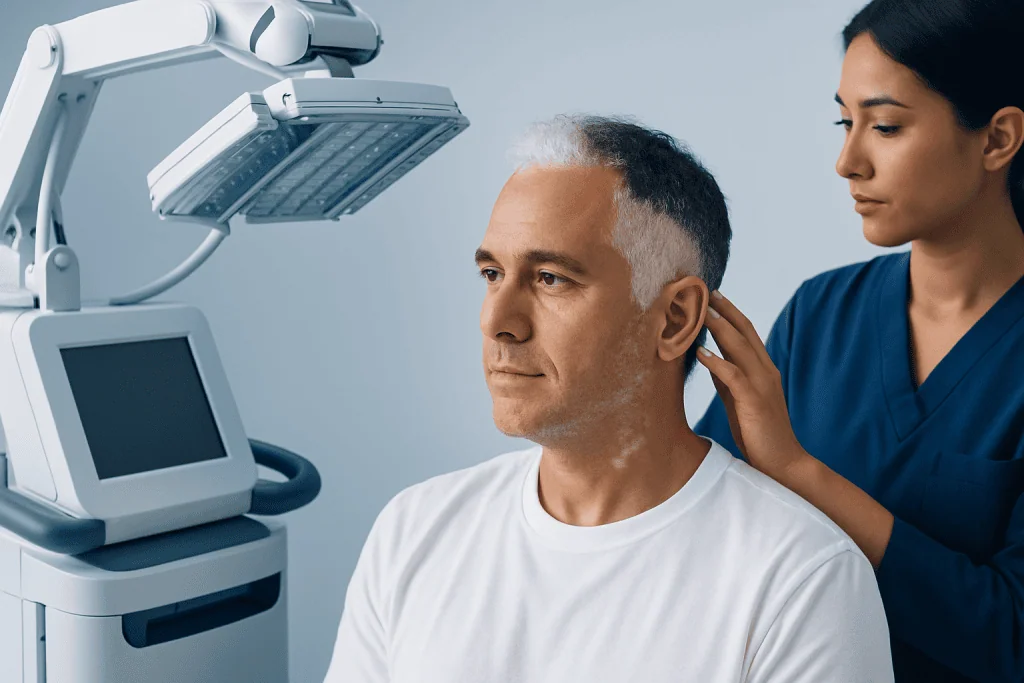
Vitiligo hair can look like a small streak of white hair, a cluster of lighter strands, or broader color loss in a defined area. On the scalp, it may appear as a white patch within darker hair. In facial hair, it may affect part of the beard, moustache, eyebrows, or eyelashes. For some people, the contrast is subtle; for others, it is very noticeable.
Hair pigment loss is often found in or near skin patches that have become lighter than the normal skin tone. Sometimes the skin change is obvious, and sometimes it is faint or located under hair-bearing areas, making it harder to see. White eyebrow or eyelash hair may be one of the earliest visible clues that the pigment disorder extends into the hair follicle.
Common patterns include:
- A white forelock or streak at the front of the scalp
- White hairs within an area of scalp vitiligo
- Patchy whitening of beard or moustache hair
- Loss of pigment in the eyebrows or eyelashes
- Lighter body hair over depigmented skin patches
Not every person with vitiligo develops hair pigment changes. When they do occur, the appearance can remain stable or change gradually over time depending on disease activity.
Why vitiligo affects hair
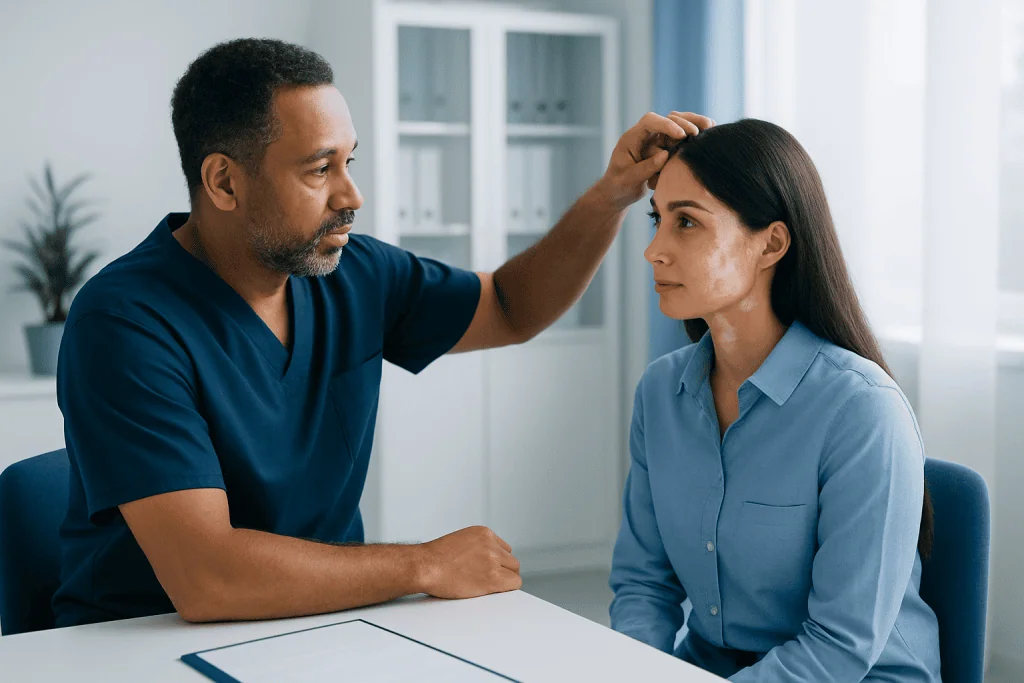
The color of hair depends on melanin made by melanocytes inside the hair follicle. In vitiligo, the immune system appears to target these pigment-producing cells. When melanocytes in the skin are affected, lighter skin patches develop. When the process extends into the hair follicle, the growing hair may come in white or gray.
Doctors do not fully understand why some people with vitiligo develop hair involvement and others do not. Factors may include the type of vitiligo, how active it is, where it appears on the body, and how deeply follicular pigment cells are affected. Hair changes are more likely when vitiligo involves areas where hair follicles are closely connected to the surrounding skin pigment network.
Vitiligo itself is not contagious, and vitiligo hair is not caused by poor hygiene, stress alone, or using the wrong shampoo. Stress can sometimes influence autoimmune conditions, but it is not considered the sole cause. There may also be a personal or family history of autoimmune conditions such as thyroid disease, which is why clinicians sometimes look at overall health as part of assessment.
Other conditions can also cause white patches of hair, so a diagnosis should not be assumed based on appearance alone. A dermatologist may compare vitiligo hair with pigment changes seen in alopecia areata, inflammatory skin disorders, genetic conditions, scarring disorders, or normal age-related graying.
Diagnosis and what doctors look for
Diagnosis begins with a medical history and skin examination. A dermatologist will ask when the hair color change began, whether it is spreading, whether there are lighter skin patches elsewhere, and whether there is itching, scaling, hair shedding, or inflammation. These details help distinguish vitiligo hair from fungal infections, scalp inflammation, autoimmune hair loss, or inherited pigment changes.
The skin and hair are often examined closely under good lighting, and a Wood’s lamp may be used to highlight depigmented skin. This can make subtle vitiligo patches easier to see, especially in fair skin or in areas partly covered by hair. In many cases, the pattern of skin and hair change is enough to support the diagnosis.
When the picture is less clear, the doctor may recommend additional evaluation. This can include checking for associated autoimmune conditions, especially if symptoms suggest thyroid disease or another immune-related disorder. If there is significant hair shedding or patchy loss in addition to color change, the clinician may also evaluate for hair loss causes unrelated to vitiligo.
Biopsy is not always necessary, but it may occasionally be used if the diagnosis is uncertain. The aim is to confirm the cause while avoiding unnecessary treatment. Clear diagnosis is important because white hair caused by vitiligo tends to respond differently than white hair caused by other conditions.
Treatment options for vitiligo hair
Treatment is individualized and depends on how much skin and hair are involved, how active the vitiligo is, and whether the color change is troubling to the patient. In general, treatment aims to stabilize the underlying vitiligo and encourage repigmentation where possible. Hair follicles can sometimes serve as a source of pigment for the skin, but once the follicle itself has lost melanocytes, hair repigmentation may be more difficult.
Doctors may use topical anti-inflammatory medicines for limited areas, especially when there is active vitiligo around the affected hair. In suitable patients, phototherapy may be recommended to help stimulate repigmentation in the skin and sometimes improve follicular pigment activity. Results vary, and treatment usually requires patience and regular follow-up over time.
When vitiligo affects a stable, small area and does not respond to standard treatment, selected patients may discuss procedural options used in specialized centers, including skin grafting or other surgical pigment-restoration approaches for carefully chosen cases. These are not right for everyone, and they are usually considered only after disease activity has been assessed and the skin has remained stable.
Cosmetic and supportive measures are also important. Hair dyes, eyebrow tinting by experienced professionals, styling changes, and camouflage products can help reduce contrast. If scalp involvement is extensive or combined with significant cosmetic concern, a dermatologist may coordinate care with experts in hair transplant and scalp restoration, although restoring hair color is a different issue from increasing hair density. Treatment decisions should always be guided by a qualified specialist.
Self-care, daily management, and emotional impact
Vitiligo hair is medically harmless in most cases, but it can affect confidence because the face and scalp are highly visible. Reassuring, practical self-care can make a meaningful difference. Gentle hair care, sun protection for exposed depigmented skin, and realistic expectations about treatment are all helpful parts of management.
People with scalp or facial vitiligo should protect lighter skin areas from excess sun exposure because depigmented skin burns more easily. This may include hats, shade, and sunscreen on exposed skin around the hairline, eyebrows, beard area, or scalp parting. Sun protection does not worsen vitiligo; it helps reduce sunburn and makes skin tone changes easier to monitor.
Some patients prefer to leave white hair untreated, while others use dyes or camouflage methods. A patch test and professional advice may be sensible if the skin is sensitive. Emotional wellbeing matters too. If appearance changes are causing distress, speaking with a dermatologist, primary care doctor, or counselor can be helpful. Support groups can also reduce the sense of isolation that visible pigment conditions sometimes create.
When to seek medical care
A medical review is a good idea if a patch of hair turns white suddenly, especially if there are also lighter skin areas, new hair loss, itching, scaling, redness, or rapid spread. Assessment is also important when the change affects the eyebrows or eyelashes, since small facial changes can have different causes and deserve careful evaluation.
People should seek prompt care if white hair patches appear together with other symptoms such as fatigue, unexplained weight change, palpitations, or other signs that might suggest an associated autoimmune condition. Children with new pigment changes should also be assessed so the diagnosis is clear and the family receives appropriate advice.
If treatment is being considered, earlier consultation can be helpful because active vitiligo is often managed differently from long-stable disease. Near the end of the care pathway, patients who need multidisciplinary assessment may wish to know that Acibadem International’s dermatology and related specialists at JCI-accredited hospitals diagnose and treat pigment disorders for international patients.
Frequently asked questions
Can vitiligo make hair turn white?
Yes. Vitiligo can affect pigment cells in hair follicles, causing hair to turn white or gray in the involved area. This may happen on the scalp, eyebrows, eyelashes, beard, or body hair.
Does white hair from vitiligo mean the condition is severe?
Not necessarily. White hair means pigment loss has involved the hair follicle, but it does not always reflect how extensive vitiligo is overall. A dermatologist can assess whether the disease appears stable or active.
Can vitiligo hair regain its natural color?
Sometimes, but not always. Repigmentation is more difficult when the follicle has lost many pigment cells, so results vary between individuals. Treatment of the surrounding vitiligo may help in some cases, but expectations should remain realistic.
Is vitiligo hair the same as normal aging or graying?
No. Normal graying usually develops gradually and more diffusely over time, while vitiligo hair often appears as a distinct patch or localized area. The presence of nearby depigmented skin may also suggest vitiligo rather than age-related graying.
Does vitiligo hair cause hair loss?
Vitiligo mainly changes hair color, not the number of hairs. If there is clear thinning, patchy shedding, or broken hair, another condition may be present as well and should be evaluated by a doctor.
Should a child with a white patch of hair be seen by a doctor?
Yes, it is sensible to have a child assessed. A white patch of hair can be caused by vitiligo, but there are other possible explanations, including inherited or inflammatory conditions. Early review helps confirm the diagnosis and guide monitoring.
References
- American Academy of Dermatology
- National Institute of Arthritis and Musculoskeletal and Skin Diseases
- British Association of Dermatologists
- DermNet
- Mayo Clinic
This article is for general information only and is not a substitute for professional medical advice. Please consult a qualified doctor about your individual situation.
Vitiligo in Turkey — costs, top hospitals & a free quote
JCI-accredited · board-certified surgeons · reply within 24h
Add us as a Preferred Source to see more of our trusted health content across Google Search, AI Overviews and Discover.

More from the Health Library



Related Specialists

Prof. Dr. Mustafa Öztürk
Radiology
Dr. Parvana Seyidova
Gynecology & Obstetrics
Prof. Dr. Volkan Özben
General Surgery
Assoc. Prof. Dr. Seden Erten Çelik
Cardiology