Waardenburg Syndrome: Symptoms, Causes, and Treatment Options

Waardenburg syndrome is an inherited genetic condition with several types and a wide range of symptoms. Common features include different-colored eyes, a white forelock, distinctive facial features, and hearing loss.
Key Takeaways
- Waardenburg syndrome is an inherited genetic condition with several types and a wide range of symptoms.
- Common features include different-colored eyes, a white forelock, distinctive facial features, and hearing loss.
- Diagnosis is based on physical findings, hearing and eye assessments, family history, and often genetic testing.
- Treatment is individualized and may include hearing support, speech therapy, eye care, and surgery for bowel problems in certain types.
- Many people with Waardenburg syndrome have normal life expectancy and can do well with early, coordinated care.
Waardenburg syndrome is a rare genetic condition that mainly affects pigment of the hair, skin, and eyes, and may also cause hearing loss and changes in facial development or the intestines in some types. Treatment does not cure the condition itself, but careful evaluation and supportive care can help manage hearing, vision, developmental, and gastrointestinal needs.
Overview: What is Waardenburg syndrome?
Waardenburg syndrome is a genetic condition present from birth that affects the development of pigment-producing cells and, in some people, parts of the inner ear, face, and digestive tract. It is best known for causing features such as very pale blue eyes, eyes of different colors, a white patch of hair, and hearing loss. The condition can look quite different from one person to another, even within the same family.
Several types of Waardenburg syndrome have been described. Types 1 and 2 are the most common. Type 1 often includes wide spacing of the inner corners of the eyes, while type 2 may have similar pigment changes and hearing loss without this facial feature. Type 3 can include changes in the arms or hands, and type 4 is associated with Hirschsprung disease, a bowel disorder caused by missing nerve cells in part of the intestine.
Because the syndrome can involve hearing, vision, facial structure, and sometimes the digestive system, care is often coordinated across different specialties. Early recognition is important, especially in infants and children, because prompt support for hearing and communication can make a meaningful difference in development.
Signs and symptoms that may appear
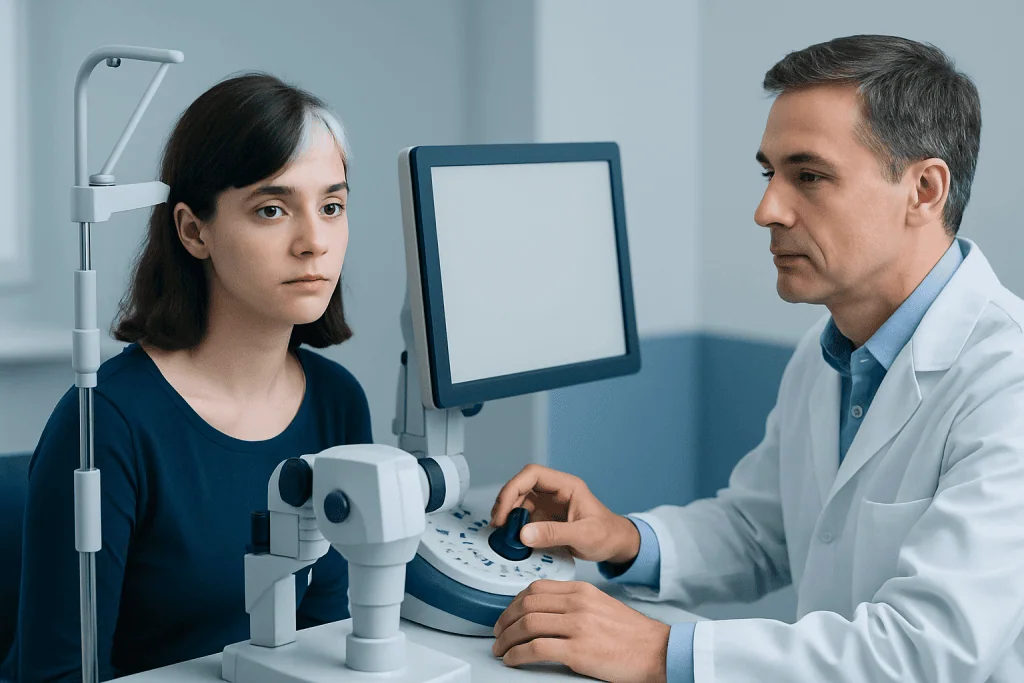
The most recognizable features of Waardenburg syndrome involve pigmentation. A person may have very bright blue eyes, one eye a different color from the other, or patches of lighter color within one iris. Hair changes can include a white forelock or early graying. Skin may also show areas of lighter pigmentation in some cases.
Hearing loss is another important feature. It may be present at birth and can range from mild to profound. Some people have hearing loss in one ear, while others are affected in both ears. In many children, hearing changes are identified through newborn screening or early audiology testing.
Facial features can vary. Some individuals have a broad nasal bridge or a greater distance between the inner corners of the eyes. In type 3, there may be musculoskeletal differences affecting the upper limbs. In type 4, symptoms of Hirschsprung disease such as constipation, abdominal swelling, or difficulty passing stool in infancy may be present.
- Different-colored eyes or unusually bright blue eyes
- White forelock or early graying of the hair
- Congenital hearing loss
- Distinctive facial features
- Patchy changes in skin color
- Constipation or bowel obstruction symptoms in type 4
Why it happens: causes, genes, and inheritance

Waardenburg syndrome is caused by changes in genes involved in the development and movement of neural crest cells during early growth in the womb. These cells contribute to pigment cells, parts of the inner ear, facial structures, and sections of the nervous system that help control the bowel. When one of these genes does not work as expected, the result can be the combination of pigment, hearing, and developmental features seen in the syndrome.
Several genes have been linked to different forms of the condition, including PAX3, MITF, SOX10, EDNRB, EDN3, and SNAI2. Not every person with Waardenburg syndrome has the same gene change, and not every gene change leads to the same symptoms. This helps explain why one family member may have mild pigment differences while another has hearing loss or bowel involvement.
The condition is often inherited, commonly in an autosomal dominant pattern for some types, which means a parent with the condition may pass it to a child. Other forms can follow different inheritance patterns. Sometimes the gene change appears for the first time in a child with no previous family history. Genetic counseling can help families understand recurrence risk, testing choices, and what the diagnosis may mean for relatives.
How doctors diagnose Waardenburg syndrome
Diagnosis usually begins with a careful medical history and physical examination. Doctors look for a pattern of findings such as iris color differences, hair pigment changes, facial measurements, hearing loss, and family history. Because the condition varies widely, diagnosis may involve comparing a person’s features with established clinical criteria rather than relying on a single sign.
Hearing testing is a key part of evaluation, especially in babies and young children. This may include newborn hearing screening, formal audiology tests, and follow-up assessments over time. Eye examination can help document iris differences and rule out other causes of unusual eye appearance. If bowel symptoms are present, further testing may be needed to evaluate for Hirschsprung disease.
Genetic testing can support the diagnosis and may help identify the specific type. It is especially useful when findings are subtle or when families want more information about inheritance. In some situations, doctors may also use imaging or other specialty assessments if there are concerns about related hearing, bowel, or developmental issues. Relevant evaluations may include genetic testing and structured hearing tests as part of a broader care plan.
Treatment options and long-term care
There is no single cure that reverses Waardenburg syndrome itself, so treatment focuses on the specific features each person has. For many people, the main medical need is hearing support. Early intervention may include hearing aids, speech and language therapy, educational support, and, in selected cases, assessment for cochlear implant care. Timely communication support is especially important for children during language development.
Eye color differences and hair pigment changes usually do not require treatment. However, regular eye care may still be advised to monitor vision and ensure that unrelated eye problems are not overlooked. If a child has limb differences or other structural concerns, orthopedic, rehabilitation, or hand-specialist input may be useful depending on the severity.
People with type 4 Waardenburg syndrome may need treatment for bowel problems related to Hirschsprung disease. This can involve pediatric surgical care and close follow-up for feeding, stooling, and growth. Families may also benefit from nutrition guidance and education about signs of bowel obstruction or enterocolitis.
Long-term care is often multidisciplinary. Depending on symptoms, the team may include a pediatrician, geneticist, audiologist, ENT specialist, ophthalmologist, speech therapist, and gastroenterologist or surgeon. Near the end of the diagnostic and treatment journey, some families seek coordinated evaluation at centers such as Acibadem International, where multidisciplinary specialists in JCI-accredited hospitals care for international patients with rare genetic conditions.
Living with Waardenburg syndrome: daily support and outlook
The outlook for most people with Waardenburg syndrome is generally good, and many have normal intelligence and normal life expectancy. Daily life depends largely on whether hearing loss, bowel disease, or limb differences are present. People with milder forms may need little medical treatment beyond routine monitoring and hearing or vision support.
For children, early developmental follow-up is helpful. Hearing loss can affect speech and language if it is not recognized and supported early, so families are encouraged to keep audiology appointments and work closely with school-based or community therapy services. A supportive learning environment and timely communication tools can help children thrive.
Emotional and social support also matter. Visible differences such as unusual eye color or a white forelock may attract questions from others, and children may benefit from age-appropriate explanations and positive reassurance. Families often find genetic counseling helpful not only for medical planning but also for understanding the condition in a clearer, less stressful way.
Can Waardenburg syndrome be prevented?
Waardenburg syndrome cannot usually be prevented because it results from inherited or spontaneous genetic changes. Nothing a parent did during pregnancy causes the condition. This can be an important and reassuring point for families who are newly learning about the diagnosis.
Although prevention is not usually possible, early detection can reduce the impact of complications. Newborn hearing screening, prompt audiology follow-up, and assessment for bowel symptoms in infants are practical ways to support better outcomes. When there is a known family history, genetic counseling before or during pregnancy may help parents understand possible risks and testing options.
Self-care is centered on regular follow-up and attention to the person’s specific needs. This may include hearing device maintenance, speech therapy exercises, school accommodations, and monitoring for constipation or feeding problems in affected infants. A clear care plan can help families feel more prepared and confident.
When to seek medical care
Medical evaluation is recommended if a newborn or child has unusual eye color, a white patch of hair, failed hearing screening, delayed speech, or a family history of Waardenburg syndrome. These features do not always mean a child has the condition, but they are good reasons to ask for pediatric and hearing assessment.
Urgent medical attention is important for signs of significant bowel problems in infants, such as a swollen abdomen, vomiting, poor feeding, inability to pass stool, or severe constipation. These symptoms can suggest Hirschsprung disease or another intestinal problem and should not be ignored.
Adults should also seek care if they notice unexplained hearing changes, have concerns about inherited risk before starting a family, or want clarification about eye, hair, or facial features that run in the family. A qualified doctor or genetic specialist can guide testing and explain whether related evaluations, including hearing loss assessment, may be helpful.
Frequently asked questions
Is Waardenburg syndrome rare?
Yes, Waardenburg syndrome is considered a rare genetic condition. Even so, it is one of the better-known inherited causes of pigment changes with congenital hearing loss. Because symptoms vary, some mild cases may be diagnosed later in life.
Does everyone with Waardenburg syndrome have hearing loss?
No. Hearing loss is common, but not everyone with Waardenburg syndrome is affected. Some people mainly have eye or hair pigment changes, while others have more significant hearing involvement.
Can Waardenburg syndrome affect intelligence?
In most cases, Waardenburg syndrome does not affect intelligence. Children usually develop typically unless other medical issues, such as untreated hearing loss, interfere with communication and learning. Early support can help reduce these challenges.
How is Waardenburg syndrome inherited?
Many cases are inherited from a parent with a gene change, often in an autosomal dominant pattern. This means the condition can be passed from one generation to the next, but symptoms may differ in severity. Some cases happen for the first time in a child without a family history.
Is there a cure for Waardenburg syndrome?
There is no cure that removes the underlying genetic cause. Treatment focuses on managing the specific features present, such as hearing loss, speech needs, or bowel problems. With appropriate care, many people do very well.
Can adults be diagnosed with Waardenburg syndrome?
Yes. Some adults are diagnosed only after a child or another relative is evaluated, or when long-standing features such as different-colored eyes and hearing loss are recognized as part of a syndrome. Genetic testing and specialist assessment can help confirm the diagnosis.
References
- National Institute on Deafness and Other Communication Disorders
- MedlinePlus Genetics
- National Organization for Rare Disorders
- GeneReviews
- American Academy of Pediatrics
This article is for general information only and is not a substitute for professional medical advice. Please consult a qualified doctor about your individual situation.
Hair transplant in Turkey — costs, graft counts & a free assessment
JCI-accredited · board-certified surgeons · reply within 24h
Add us as a Preferred Source to see more of our trusted health content across Google Search, AI Overviews and Discover.