What Are the Symptoms of Colon Cancer?

Colon cancer symptoms often develop gradually and can be easy to overlook at first. Common warning signs include blood in the stool, ongoing bowel habit changes, abdominal pain, and unexplained fatigue.
Key Takeaways
- Colon cancer symptoms often develop gradually and can be easy to overlook at first.
- Common warning signs include blood in the stool, ongoing bowel habit changes, abdominal pain, and unexplained fatigue.
- Many colon cancer symptoms can also be caused by non-cancerous digestive conditions, so medical evaluation is important.
- Screening can help detect colon cancer early, sometimes before symptoms appear.
- Treatment depends on the stage of disease and may include surgery, chemotherapy, radiation therapy, or targeted care.
Colon cancer symptoms may include persistent changes in bowel habits, blood in the stool, abdominal discomfort, fatigue, and unintended weight loss. These symptoms do not always mean cancer, but they should be assessed by a doctor, especially if they last or keep returning.
Overview
Colon cancer is a type of cancer that begins in the large intestine, also called the colon. It usually develops slowly over time, often starting as small growths called polyps that may become cancerous. Because early disease may cause no symptoms, screening plays an important role in finding colon cancer at a more treatable stage.
When symptoms do appear, they can be subtle at first. A person may notice bowel habits changing, tiredness that does not improve, abdominal discomfort, or blood in the stool. These signs are not specific to colon cancer and may also happen with hemorrhoids, infections, inflammatory bowel disease, or other digestive problems.
Even so, symptoms that persist, worsen, or return repeatedly should not be ignored. A timely medical evaluation can help identify the cause and, if needed, allow treatment to begin early.
Symptoms of Colon Cancer

Colon cancer symptoms vary depending on where the tumor is located, how large it is, and whether it has caused bleeding or blockage. Some people have no symptoms at all in the early stages, which is one reason screening is strongly recommended for eligible adults.
Common symptoms may include:
- A persistent change in bowel habits, such as diarrhea, constipation, or narrower stools
- A feeling that the bowel does not empty completely
- Blood in the stool, which may appear bright red or make the stool look dark or black
- Abdominal cramps, bloating, or ongoing discomfort
- Unexplained fatigue or weakness
- Unintended weight loss
Some tumors bleed slowly over time, which may not be obvious to the eye. This can lead to iron deficiency anemia and symptoms such as low energy, shortness of breath with activity, dizziness, or pale skin. In other cases, a larger tumor may partially block the bowel and cause more noticeable pain, nausea, constipation, or abdominal swelling.
Symptoms can also differ depending on whether cancer is in the right side or left side of the colon. Right-sided tumors may cause hidden bleeding and anemia, while left-sided tumors more often lead to constipation, changes in stool shape, or signs of partial blockage.
Causes and Risk Factors
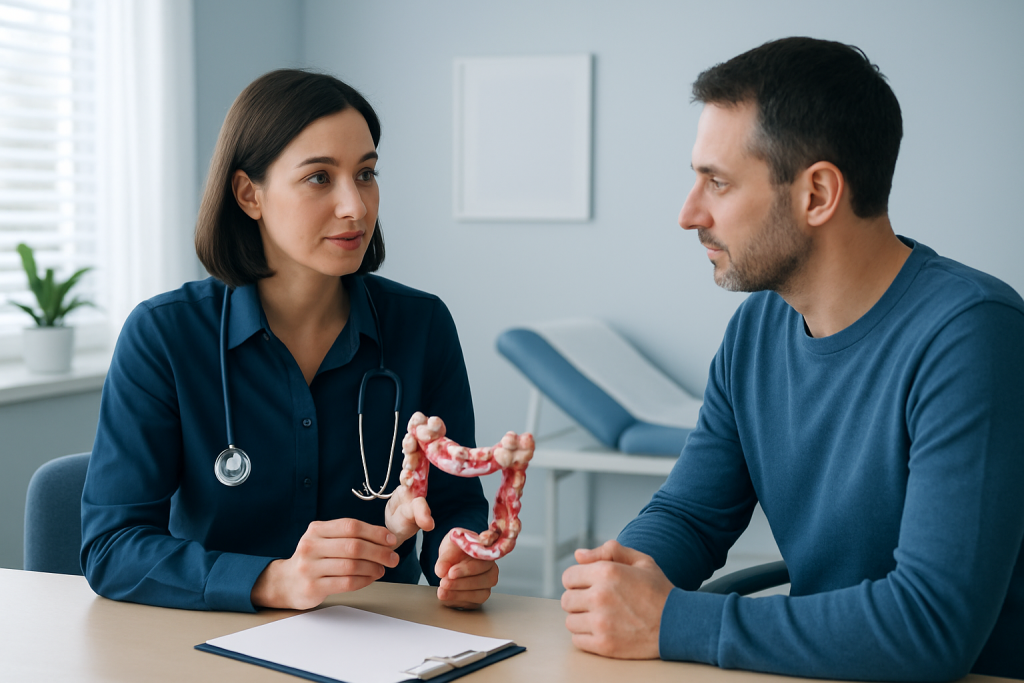
Colon cancer develops when cells in the lining of the colon grow abnormally and begin multiplying out of control. Doctors do not always know exactly why this happens in one person and not another, but several factors are known to increase risk.
Age is one of the most important risk factors, and the risk rises as people get older. A personal or family history of colon polyps or colorectal cancer also matters. Some inherited conditions can greatly increase risk, including Lynch syndrome and familial adenomatous polyposis.
Other factors linked with a higher risk include inflammatory bowel diseases such as ulcerative colitis and Crohn’s disease, obesity, physical inactivity, smoking, heavy alcohol use, and diets high in processed meats or low in fiber. Type 2 diabetes may also be associated with increased risk in some people.
Having risk factors does not mean a person will definitely develop colon cancer, and some people with colon cancer have no clear risk factors. That is why both symptom awareness and routine screening are important.
How Colon Cancer Is Diagnosed
If colon cancer symptoms are present, a doctor will usually begin with a medical history and physical examination. They will ask about bowel habits, bleeding, abdominal pain, weight changes, family history, and any previous screening results. Blood tests may be ordered to look for anemia or other clues.
The most important test for diagnosing colon cancer is usually a colonoscopy. During this procedure, a specialist examines the inside of the colon with a flexible camera. If a suspicious area or polyp is found, it can often be biopsied or removed during the same procedure. This helps confirm whether cancer or a pre-cancerous change is present.
If cancer is diagnosed, imaging tests may be used to see whether it has spread and to help plan treatment. These may include CT scans or other forms of advanced imaging and radiology evaluation. Laboratory analysis of the biopsy can also provide important information about the tumor’s features and guide treatment decisions.
In many cases, care is coordinated by specialists in oncology care, gastroenterology, surgery, pathology, and radiology. This team approach helps doctors assess the stage of disease and recommend the most appropriate next steps.
Treatment Options
Colon cancer treatment depends on the stage of the cancer, the location of the tumor, the person’s general health, and the characteristics of the cancer cells. Treatment is individualized, and doctors usually explain the benefits, goals, and possible side effects of each option before making a plan.
Surgery is often the main treatment for colon cancer that has not spread widely. The goal is to remove the cancer along with a margin of healthy tissue and nearby lymph nodes. In some cases, minimally invasive techniques may be possible as part of colon surgery planning, depending on the tumor and the patient’s condition.
Chemotherapy may be recommended after surgery to reduce the risk of recurrence, or before surgery in selected situations. It may also be used if the cancer has spread. Some patients may receive targeted medicines or immunotherapy, particularly when the tumor has specific molecular features. Radiation therapy is used less often for colon cancer than for rectal cancer, but it may be part of care in certain circumstances or if nearby structures are involved.
Supportive care is also important. This can include nutritional guidance, symptom relief, treatment of anemia, pain management, and emotional support. For patients with more advanced disease, the aim may be to control symptoms, slow progression, and maintain quality of life for as long as possible.
Prevention and Self-care
Not all cases of colon cancer can be prevented, but several steps may help lower risk. Screening is one of the most effective tools because it can detect cancer early and may also prevent cancer by finding and removing polyps before they become malignant. People should talk with a doctor about when to begin screening and which test is most appropriate for them.
Healthy daily habits may also support colon health. These include eating a balanced diet rich in vegetables, fruits, legumes, and whole grains; staying physically active; maintaining a healthy body weight; limiting alcohol; and avoiding smoking. These measures benefit overall health even though they cannot guarantee prevention.
Self-care also means paying attention to symptoms. Ongoing constipation, diarrhea, abdominal discomfort, tiredness, or any blood in the stool should be discussed with a healthcare professional rather than treated as something to ignore. People with a family history of colorectal cancer or inherited syndromes may need earlier or more frequent screening.
Some people researching digestive symptoms may also read about related conditions such as colorectal cancer or colon cancer. Reliable medical advice can help separate common benign problems from symptoms that need prompt investigation.
When to See a Doctor
A doctor should be consulted if colon cancer symptoms last more than a short time, keep coming back, or become more noticeable. Blood in the stool always deserves medical attention, even if hemorrhoids are suspected. New bowel habit changes, unexplained weight loss, persistent abdominal pain, or unusual fatigue should also be assessed.
Urgent medical care may be needed if a person has severe abdominal pain, vomiting, a swollen abdomen, inability to pass stool or gas, or heavy rectal bleeding. These symptoms can suggest a bowel blockage or another serious condition that requires prompt evaluation.
People who are due for colon cancer screening should not wait for symptoms to appear before making an appointment. Early detection often leads to simpler treatment and better outcomes. For international patients seeking coordinated evaluation, Acibadem International’s multidisciplinary specialists and JCI-accredited hospitals diagnose and treat colon cancer using modern imaging, endoscopy, surgery, and oncology services.
Frequently asked questions
What are the first symptoms of colon cancer?
Early colon cancer may cause no symptoms at all. When symptoms do appear, they often include changes in bowel habits, blood in the stool, abdominal discomfort, and unexplained fatigue. Because these signs can also occur with non-cancerous conditions, a doctor should evaluate persistent symptoms.
Does colon cancer always cause blood in the stool?
No, not everyone with colon cancer notices visible blood in the stool. Some tumors cause slow bleeding that can only be detected on testing and may lead to anemia over time. This is why tiredness or weakness can sometimes be a clue even without obvious bleeding.
Can colon cancer symptoms come and go?
Yes, some symptoms can be intermittent, especially in the earlier stages. A person may notice occasional constipation, cramping, or rectal bleeding rather than constant symptoms. Even if symptoms improve temporarily, recurring problems should still be discussed with a doctor.
How is colon cancer different from common digestive problems?
Colon cancer can mimic common conditions such as hemorrhoids, irritable bowel syndrome, or infections. The difference is often that symptoms persist, gradually worsen, or are accompanied by warning signs such as weight loss, anemia, or ongoing blood in the stool. Proper testing is needed to tell the difference.
At what age should colon cancer screening begin?
Screening often begins at age 45 for people at average risk, but recommendations can vary depending on personal and family history. Some people need earlier screening, especially if they have a strong family history or inherited risk. A doctor can advise on the most suitable schedule.
Is colon cancer curable if found early?
Colon cancer is often highly treatable when found early, and some early-stage cancers can be cured with appropriate treatment. Outcomes depend on the stage of the disease and the person's overall health. This is one reason screening and early medical evaluation are so important.
References
- World Health Organization
- American Cancer Society
- National Cancer Institute
- Centers for Disease Control and Prevention
- National Comprehensive Cancer Network
This article is for general information only and is not a substitute for professional medical advice. Please consult a qualified doctor about your individual situation.
Colon Cancer in Turkey — costs, top hospitals & a free quote
JCI-accredited · board-certified surgeons · reply within 24h
Add us as a Preferred Source to see more of our trusted health content across Google Search, AI Overviews and Discover.

Medical Oncology Department
Medical treatment of cancer with chemotherapy, immunotherapy and targeted therapies under a multidisciplinary tumor board.
60 specialists in this unit