What Causes Kidney Stones? Risk Factors, Prevention, and Recurrence

Kidney stones often develop when urine is too concentrated and minerals crystallize. Dehydration, diet, family history, and certain medical conditions can all raise risk.
Key Takeaways
- Kidney stones often develop when urine is too concentrated and minerals crystallize.
- Dehydration, diet, family history, and certain medical conditions can all raise risk.
- Symptoms commonly include severe side or back pain, nausea, and blood in the urine.
- Treatment depends on stone size, location, symptoms, and whether infection or blockage is present.
- Many people can reduce recurrence by drinking enough fluids and following personalized dietary advice.
Kidney stones are hard mineral deposits that form in the urinary tract when urine becomes concentrated and crystals stick together. Understanding the causes, risk factors, and prevention steps can help lower the chance of painful episodes and reduce recurrence.
Overview
Kidney stones are hard deposits made of minerals and salts that form inside the kidneys or elsewhere in the urinary tract. They develop when the balance of water, minerals, and other substances in the urine changes, allowing crystals to form and grow. Some stones stay in the kidney without causing symptoms, while others move into the ureter and lead to sudden pain.
There are several types of kidney stones. The most common are calcium stones, usually calcium oxalate and sometimes calcium phosphate. Other types include uric acid stones, struvite stones linked to certain infections, and cystine stones, which are related to a rare inherited condition. Knowing the stone type can help guide prevention.
Kidney stones are common and often recur. A person who has had one stone may be more likely to develop another, especially if the underlying cause is not addressed. For this reason, prevention is an important part of care, not only treatment of the immediate episode.
Symptoms of Kidney Stones

Small kidney stones may cause no symptoms and can be found by chance on imaging. Symptoms often begin when a stone starts to move or blocks the flow of urine. This can produce severe, cramping pain that may start in the back or side and travel toward the lower abdomen or groin.
Other common symptoms include nausea, vomiting, burning with urination, frequent urination, and blood in the urine. The urine may look pink, red, or brown. Some people also notice cloudy or foul-smelling urine, especially if an infection is present.
The intensity of pain can come in waves as the ureter contracts around the stone. Symptoms vary depending on the stone’s size and location. If a stone causes complete obstruction, symptoms may become more severe and urgent medical assessment is important.
- Sharp pain in the side, back, lower abdomen, or groin
- Blood in the urine
- Nausea or vomiting
- Pain or burning during urination
- Urgent or frequent need to urinate
- Fever or chills if infection is present
What Causes Kidney Stones?
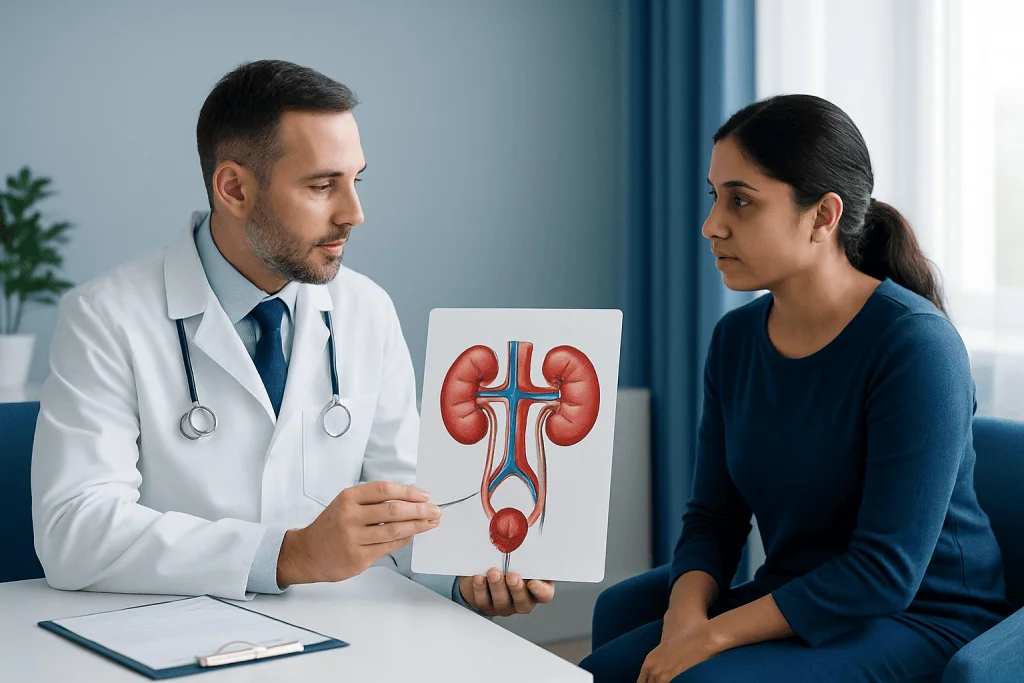
Kidney stones form when urine contains more crystal-forming substances than the fluid can dilute. These substances can include calcium, oxalate, uric acid, and cystine. At the same time, the urine may lack enough protective compounds, such as citrate, that normally help prevent crystals from sticking together.
Dehydration is one of the most important causes because it makes the urine more concentrated. This is why stones may be more common in people who do not drink enough fluids, sweat heavily, or live in hot climates. However, low fluid intake is only one part of the picture.
Diet, genetics, and certain health conditions also play a role. High sodium intake can increase calcium in the urine, while a diet high in animal protein may raise the risk of uric acid stones and lower urinary citrate. Some people are also more prone to stones because of inherited traits or medical conditions that affect how the body handles minerals and acids.
Different stone types have different triggers. Calcium stones may be linked to high urine calcium, oxalate, or low citrate. Uric acid stones may develop when urine is persistently acidic. Struvite stones can occur after recurrent urinary tract infections, and cystine stones result from a genetic disorder called cystinuria.
Risk Factors and Why Stones Can Come Back
Kidney stones can affect many people, but some factors make them more likely. A personal history of stones is one of the strongest predictors of future stones. Family history also matters, suggesting a genetic influence in how the kidneys process certain substances.
Dietary habits are important. High salt intake, too little fluid, excess animal protein, and in some people high oxalate foods can increase risk. Obesity and metabolic conditions may also contribute. Certain digestive conditions, including inflammatory bowel disease or bowel surgery, can change fluid and mineral absorption and increase stone formation.
Some medical conditions are associated with stone formation, including gout, recurrent urinary tract infections, hyperparathyroidism, and renal tubular acidosis. Certain medications and supplements may also raise risk in some individuals. When stones return repeatedly, doctors may look for an underlying metabolic cause or related condition such as kidney conditions if symptoms or imaging suggest another diagnosis needs to be ruled out.
Recurrence is common because the factors that caused the first stone often remain present. If fluid intake stays low, dietary patterns do not change, or a medical issue remains untreated, crystals can form again. This is why stone analysis and urine or blood testing may be recommended after a stone episode, especially in younger patients or those with repeated stones.
How Kidney Stones Are Diagnosed
Diagnosis starts with a medical history and physical examination. The doctor will ask about the pattern of pain, urinary symptoms, previous stones, family history, fluid intake, diet, and any related medical conditions. A urine test can check for blood, crystals, signs of infection, and urine acidity.
Blood tests may help evaluate kidney function and look for abnormalities in calcium, uric acid, or other substances. Imaging is often needed to confirm the diagnosis, determine the stone’s size and location, and check for blockage. Ultrasound and CT scanning are common tools, chosen based on the situation and the person’s age and overall health.
If the stone passes, it may be collected and analyzed. This can provide valuable information about the type of stone and how to help prevent another one. In people with recurrent stones, a doctor may recommend a more detailed metabolic evaluation, which can include a 24-hour urine collection.
Not all pain in the side or back is caused by stones. Doctors sometimes need to distinguish kidney stones from urinary infection, gallbladder disease, appendicitis, or other abdominal conditions. Accurate diagnosis helps ensure the right treatment and avoids unnecessary delays.
Treatment Options
Treatment depends on the stone’s size, location, symptoms, and whether there is infection, obstruction, or reduced kidney function. Very small stones often pass on their own with time, fluids, pain relief, and careful follow-up. A doctor may sometimes prescribe medication to help the ureter relax and make passage easier.
Larger stones, persistent pain, repeated vomiting, infection, or blocked urine flow may require a procedure. Common approaches include shock wave treatment to break a stone into smaller pieces, endoscopic removal through the urinary tract, or surgery for more complex cases. In some situations, temporary drainage is needed first to relieve obstruction and protect the kidney.
People with repeated stones may also need treatment aimed at prevention, such as medications that reduce urine calcium, lower uric acid, or increase citrate, depending on the stone type. Dietary changes are often part of treatment as well. For selected patients, procedures such as ureteroscopy or percutaneous nephrolithotomy may be recommended if the stone is too large or difficult to pass naturally.
Care is individualized. When symptoms overlap with other urinary problems, doctors may also assess for conditions such as bladder disease or structural issues in the urinary tract. Near the end of the care pathway, patients may benefit from multidisciplinary follow-up; Acibadem International’s specialists in JCI-accredited hospitals diagnose and treat kidney stone disease for international patients.
Prevention and Self-care
The most effective general prevention step is staying well hydrated. Drinking enough fluid helps keep urine diluted so crystals are less likely to form. The exact amount varies from person to person, but many people are advised to aim for pale, light-colored urine unless a doctor has given different guidance because of heart, kidney, or other health conditions.
Dietary advice should be tailored, especially after a stone has been analyzed. In many cases, reducing sodium intake is helpful because excess salt can increase urine calcium. A balanced intake of dietary calcium is usually encouraged rather than avoiding calcium completely, since too little calcium in food can sometimes increase oxalate absorption. Moderating animal protein may also help some people.
For those with calcium oxalate stones, doctors may suggest limiting very high-oxalate foods if appropriate and pairing oxalate-containing foods with calcium sources at meals. People with uric acid stones may benefit from reducing foods that raise uric acid and from treatment that makes the urine less acidic. Weight management, regular meals, and managing related conditions such as gout can also support prevention.
- Drink fluids regularly throughout the day
- Reduce excess salt in the diet
- Follow personalized advice based on stone type
- Do not stop dietary calcium unless a doctor recommends it
- Limit excessive animal protein if advised
- Attend follow-up if stones recur
When to See a Doctor
Medical assessment is important for severe or persistent pain, blood in the urine, or symptoms that suggest a stone may be blocking urine flow. Prompt care can help control pain, confirm the diagnosis, and reduce the risk of complications.
Urgent medical attention is needed if pain comes with fever, chills, vomiting that prevents fluid intake, very little urine, or signs of dehydration. These may suggest infection or significant obstruction, both of which can become serious without treatment.
Even after a stone passes, follow-up can be useful, especially if this is not the first episode. Recurrent stones often benefit from a prevention plan based on stone analysis, urine testing, and review of diet and medical history. Anyone who is unsure about symptoms should consult a qualified doctor rather than self-diagnosing.
Frequently asked questions
Can kidney stones go away on their own?
Yes, many small kidney stones can pass on their own, especially if they are not causing major blockage or infection. A doctor may recommend fluids, pain management, and monitoring, but larger stones often need a procedure.
What is the main cause of kidney stones?
There is not one single cause. Kidney stones usually form when urine becomes too concentrated and minerals crystallize, often influenced by dehydration, diet, inherited tendencies, or certain medical conditions.
Does drinking water really help prevent kidney stones?
Yes, adequate fluid intake is one of the most effective ways to reduce risk. Diluted urine makes it harder for crystals to form and grow, although some people also need dietary or medical treatment depending on the stone type.
Are all kidney stones made of calcium?
No. Calcium stones are the most common, but uric acid, struvite, and cystine stones also occur. Identifying the type of stone helps guide the best prevention strategy.
Do kidney stones always cause severe pain?
No, not always. Some stones remain in the kidney and cause few or no symptoms, while others cause sudden severe pain when they move into the ureter or block urine flow.
Can kidney stones come back after treatment?
Yes, recurrence is common if the underlying causes are still present. This is why follow-up, hydration, and personalized prevention measures are important after a first stone episode.
References
- National Institute of Diabetes and Digestive and Kidney Diseases
- European Association of Urology
- American Urological Association
- National Kidney Foundation
This article is for general information only and is not a substitute for professional medical advice. Please consult a qualified doctor about your individual situation.
Explore treatments in Turkey — costs, top hospitals & a free quote
JCI-accredited · board-certified surgeons · reply within 24h
Add us as a Preferred Source to see more of our trusted health content across Google Search, AI Overviews and Discover.