What Causes Poor Posture? Causes, Explanations, and Next Steps

Poor posture is common and often related to muscle imbalance, inactivity, repetitive positions, or ergonomics. Pain does not always mean a serious condition, but persistent or worsening symptoms deserve medical review.
Key Takeaways
- Poor posture is common and often related to muscle imbalance, inactivity, repetitive positions, or ergonomics.
- Pain does not always mean a serious condition, but persistent or worsening symptoms deserve medical review.
- Doctors look at posture in context, including symptoms, movement, strength, spinal alignment, and sometimes imaging.
- Treatment focuses on the cause and may include exercise, physical therapy, workstation changes, and treatment of underlying conditions.
- Red flags include numbness, weakness, bowel or bladder changes, fever, unexplained weight loss, or a new spinal deformity.
What causes poor posture is most often a mix of everyday habits, muscle weakness or tightness, prolonged sitting, and sometimes pain or underlying spine conditions. In many people it is manageable, but posture changes with significant pain, weakness, numbness, or a rapidly worsening curve should be medically assessed.
Overview: what causes poor posture?
What causes poor posture? In most cases, it develops gradually from a combination of daily habits, reduced muscle support, prolonged sitting, repetitive movements, and compensation for discomfort elsewhere in the body. For many people, posture changes are not dangerous, but they can contribute to muscle strain, fatigue, headaches, and back or neck pain over time.
Poor posture is not just about “standing up straight.” It can reflect how the muscles, joints, nerves, and spine work together. A person may slouch because chest muscles are tight, upper back muscles are weak, the core is deconditioned, or pain makes certain positions feel easier temporarily.
Sometimes posture changes are linked to an underlying condition rather than habit alone. Examples include spinal curvature disorders, arthritis, osteoporosis-related compression fractures, neurological diseases, or problems affecting balance and muscle control. This is why persistent or clearly worsening posture changes deserve a more careful look.
A helpful way to think about posture is that it is a body-wide pattern, not a personal failing. Improvement usually comes from identifying the reason behind it and addressing that specific cause rather than trying to force one “perfect” position all day.
How poor posture can look and feel
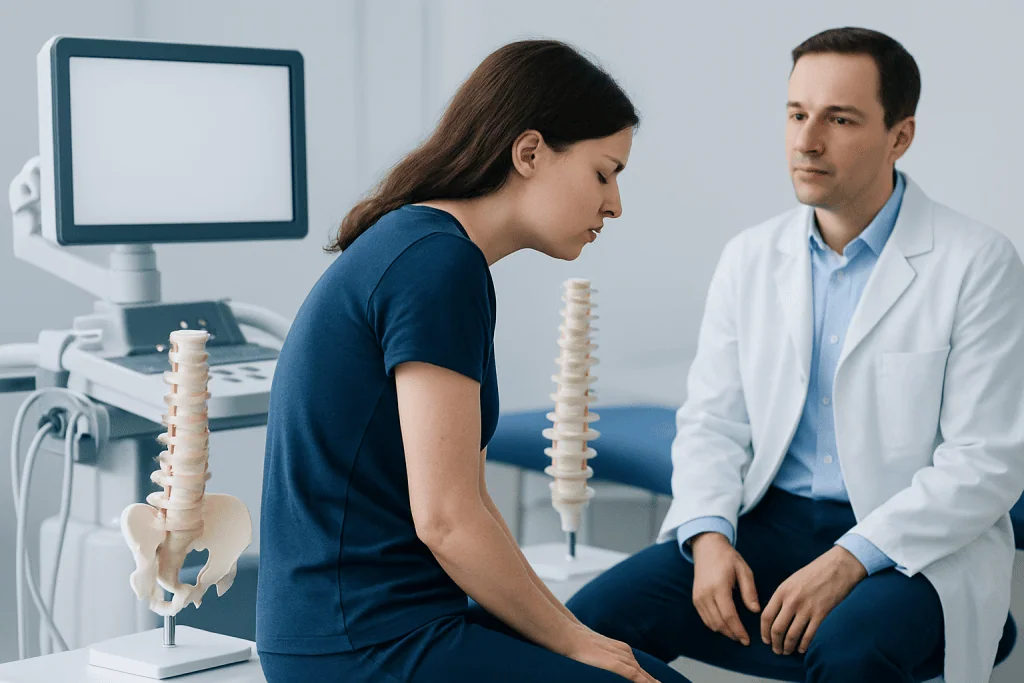
Poor posture can show up in several ways. Common patterns include rounded shoulders, a forward head position, increased upper back rounding, an exaggerated lower back arch, leaning more to one side, or standing with bent knees and a collapsed trunk. These patterns may be subtle at first and become more noticeable with fatigue.
Some people mainly notice symptoms rather than appearance. Typical complaints include neck tension, shoulder tightness, mid-back aching, lower back pain, reduced flexibility, headaches, or feeling tired after sitting or standing for long periods. The body may seem stiff on waking or after desk work.
Posture can also affect movement quality. A person may find it harder to take deep breaths, rotate the trunk, raise the arms fully overhead, or sit comfortably for long periods. In athletes or active adults, poor alignment may contribute to overuse discomfort because certain muscles and joints work harder than others.
- Rounded shoulders and chest tightness
- Forward head posture with neck strain
- Upper or lower back pain that worsens with long sitting
- Muscle fatigue, stiffness, or reduced flexibility
- Headaches linked to neck and shoulder tension
Common causes and risk factors
The most common answer to what causes poor posture is muscle imbalance. Some muscles become tight from repeated positions, while others become weak from underuse. For example, long hours at a computer can shorten the chest and hip flexor muscles while the upper back, gluteal, and deep core muscles become less active. Over time, the body adopts this alignment as its default.
Daily routines and ergonomics also play a major role. Sitting for long periods, looking down at phones, driving frequently, carrying heavy bags unevenly, or working at a poorly adjusted desk can all reinforce postural strain. Lack of physical activity makes it harder for the body to support neutral alignment during work and daily tasks.
Pain itself can change posture. Someone with shoulder pain, hip arthritis, a painful foot problem, or a spinal disc issue may unconsciously lean, guard, or twist to avoid discomfort. In this way, posture may be a sign of another musculoskeletal problem rather than the primary issue. Related spine conditions such as scoliosis or a herniated disc can affect alignment and comfort.
Age and health conditions matter too. Bone loss, vertebral compression fractures, arthritis, connective tissue disorders, neuromuscular disease, vision problems, obesity, pregnancy-related body changes, and emotional stress can all influence how the body holds itself. Stress is especially important because people often tighten the shoulders, jaw, and upper back without realizing it.
When posture may signal something more than habit
Most posture problems are mechanical, meaning they relate to muscles, joints, and movement patterns. However, some changes suggest that a medical condition may be contributing. These include a newly visible spinal curve, one shoulder or hip suddenly sitting much higher than the other, a progressive stooped posture, or posture changes accompanied by significant pain.
Neurological symptoms are especially important. Numbness, tingling, weakness, loss of coordination, hand clumsiness, gait changes, or bowel and bladder symptoms need prompt medical attention. These signs may indicate nerve or spinal cord involvement rather than a simple posture habit.
Doctors also become more concerned if posture changes appear with fever, unexplained weight loss, night pain, recent injury, known osteoporosis, or a history of cancer. In older adults, a worsening hunched posture may sometimes reflect vertebral compression fractures or degenerative spine disease. In children and teenagers, asymmetry or a visible curve should be assessed because growth can influence spinal shape.
Even when the cause is not serious, early assessment can help prevent a cycle in which discomfort leads to more compensation, less movement, weaker support muscles, and further posture decline.
How doctors evaluate poor posture
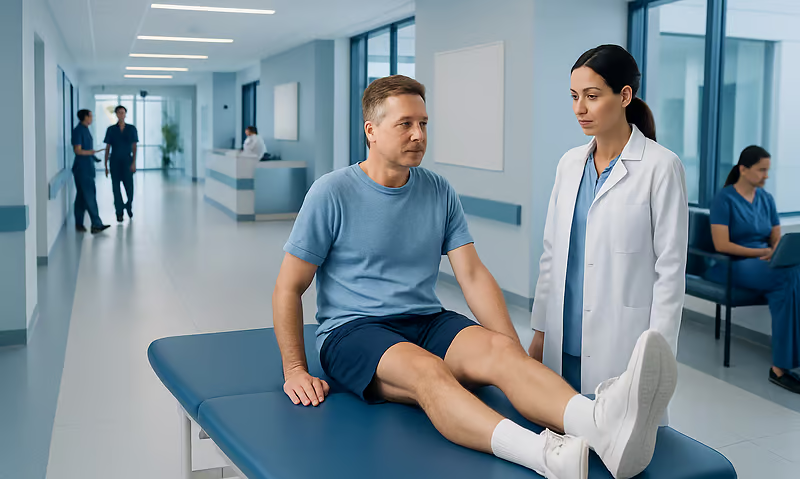
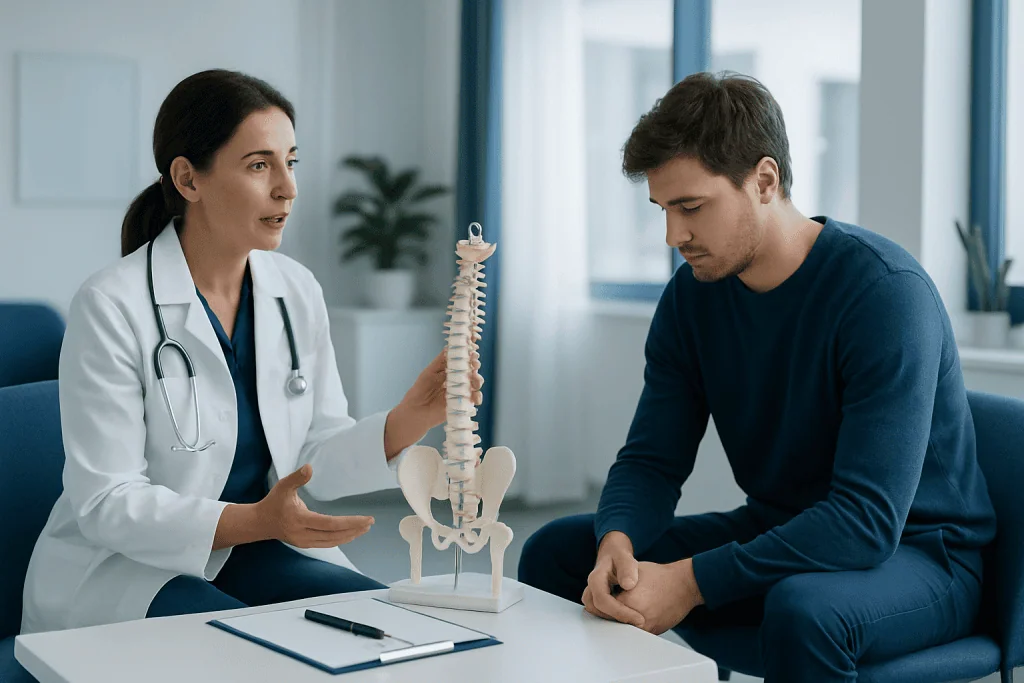
A medical evaluation starts with the story behind the posture change. A doctor will ask when it began, whether pain is present, which activities make it better or worse, whether the problem is progressing, and whether there are symptoms such as numbness, weakness, headaches, balance issues, or breathing limitation. They also ask about work habits, exercise, injuries, and previous spine or joint conditions.
The physical exam usually includes observing standing and sitting alignment, shoulder and pelvic level, spinal curves, walking pattern, flexibility, joint motion, muscle strength, and core control. A doctor may check for tender areas, muscle spasm, leg length differences, and how the neck, shoulders, and hips move together. If nerve involvement is possible, the neurologic exam includes reflexes, sensation, and coordination.
Imaging is not needed for everyone. It is more likely if there is significant pain, trauma, a visible deformity, suspected scoliosis or fracture, persistent symptoms despite treatment, or red-flag findings. Depending on the situation, doctors may use X-rays, MRI for discs and nerves, or CT scanning to evaluate bone detail. If an underlying condition is suspected, blood tests or bone density testing may also be considered.
The goal is not simply to label posture as “good” or “bad.” A useful evaluation identifies why the posture developed, whether there is a structural problem, and which treatments are most likely to relieve symptoms and improve function.
Treatment options and next steps
Treatment depends on the cause. For many people, the foundation is a targeted exercise plan to improve flexibility, postural awareness, and strength in the muscles that support the spine, shoulders, hips, and core. General advice to “sit up straight” is usually less effective than a program tailored to the person’s posture pattern and daily activities.
Physical therapy is often central because it combines movement assessment, stretching, strengthening, breathing mechanics, and practical retraining for work and home. A therapist may also address movement habits such as how a person lifts, uses a laptop, drives, or holds a phone. In some cases, doctors recommend physical therapy and rehabilitation to reduce pain and restore more efficient movement.
When pain is a major driver of posture change, treatment may also include short-term pain management, activity modification, or treatment of the underlying joint or spine disorder. If a person has a structural condition such as significant spinal curvature, compression fracture, or nerve compression, management may involve a spine specialist, orthopedist, neurologist, or rehabilitation physician. For selected cases with suspected structural alignment problems, spine surgery may be considered, although this is not needed for most people with poor posture.
Acibadem International’s multidisciplinary specialists and JCI-accredited hospitals evaluate posture-related symptoms in international patients, especially when poor posture may be connected to spine, nerve, or musculoskeletal conditions.
Prevention and self-care that actually helps
Preventing posture problems is usually more realistic than trying to maintain one rigid “ideal” position. The body does best with variety. Changing positions regularly, standing up during long sitting periods, and moving the neck, shoulders, hips, and back throughout the day can reduce strain more effectively than staying perfectly upright without breaks.
Exercise is one of the best long-term tools. Programs that strengthen the upper back, core, and hips while improving chest, hip flexor, and hamstring flexibility often help support more comfortable alignment. Walking, swimming, Pilates, yoga, and resistance training can all be useful when done safely and consistently.
Home and work setup matters. A screen placed too low encourages forward head posture, while unsupported sitting can increase slouching. Small ergonomic adjustments such as screen height, chair support, keyboard position, and alternating sitting with standing may reduce mechanical stress. Carrying loads evenly and using supportive footwear can also help.
- Take regular movement breaks during desk work
- Strengthen core, gluteal, and upper back muscles
- Stretch tight chest, neck, and hip flexor muscles
- Adjust desk, chair, and screen setup
- Address pain early instead of compensating around it
When to seek medical care
Medical care is appropriate if poor posture is new, worsening, painful, or interfering with daily life despite self-care. A doctor should also assess posture changes that follow an injury or that come with reduced mobility, repeated headaches, shoulder problems, or chronic back pain.
More urgent evaluation is needed if posture changes are accompanied by numbness, tingling, weakness, loss of balance, bowel or bladder changes, fever, unexplained weight loss, chest pain, severe night pain, or a rapidly developing spinal curve. These features suggest that the problem may involve nerves, bone, inflammation, or another underlying condition that needs timely diagnosis.
Children and adolescents should be checked if there is noticeable asymmetry of the shoulders, shoulder blades, or waist, or if a spinal curve seems to be developing during growth. Older adults should seek care if a stooped posture appears suddenly or if height loss and back pain suggest possible fracture.
In short, poor posture is often manageable and commonly related to habits and muscle balance. The safest next step is to seek medical guidance whenever the pattern is persistent, progressive, or paired with other symptoms that suggest more than simple mechanical strain.
Frequently asked questions
Can poor posture be caused by stress?
Yes. Stress can increase muscle tension, especially in the neck, shoulders, and upper back, which may change how a person sits or stands. Over time, these tension patterns can contribute to discomfort and a more slouched or guarded posture.
Is poor posture always a sign of a spine problem?
No. Many cases are related to muscle imbalance, prolonged sitting, weak postural support muscles, or temporary compensation for pain elsewhere. However, some people do have an underlying spine condition, which is why persistent or worsening changes should be assessed.
Can poor posture cause pain, or does pain cause poor posture?
Both can happen. Poor alignment can strain muscles and joints, but pain can also make someone lean, twist, or guard a body part in ways that worsen posture. Doctors often evaluate both issues together because they can reinforce each other.
How long does it take to improve poor posture?
Improvement depends on the cause, severity, and how consistent a person is with exercise and habit changes. Some people feel better within weeks, while longer-standing posture patterns may take several months of regular work to change.
Do posture correctors work?
They may provide short-term reminders, but they usually do not fix the underlying cause on their own. Lasting improvement typically comes from strengthening, flexibility work, movement retraining, and addressing pain or structural issues if present.
Should someone get imaging for poor posture?
Not always. Imaging is usually reserved for cases with significant pain, trauma, visible deformity, neurological symptoms, or concern for an underlying condition such as scoliosis, fracture, or disc disease. A doctor can decide whether X-rays, MRI, or other tests are appropriate.
References
- National Institute of Arthritis and Musculoskeletal and Skin Diseases
- American Academy of Orthopaedic Surgeons
- National Institute of Neurological Disorders and Stroke
- Scoliosis Research Society
- World Health Organization
This article is for general information only and is not a substitute for professional medical advice. Please consult a qualified doctor about your individual situation.
Joint and spine care in Turkey — expert assessment & treatment
JCI-accredited · board-certified surgeons · reply within 24h
Add us as a Preferred Source to see more of our trusted health content across Google Search, AI Overviews and Discover.