What Do Blind People See? Causes, Explanations, and Next Steps

Blindness is not the same for everyone; some people see light, shapes, or blurred images, while others see nothing visually. Many causes of vision loss are gradual and manageable, but sudden blindness or eye pain needs urgent medical evaluation.
Key Takeaways
- Blindness is not the same for everyone; some people see light, shapes, or blurred images, while others see nothing visually.
- Many causes of vision loss are gradual and manageable, but sudden blindness or eye pain needs urgent medical evaluation.
- Doctors diagnose vision loss by checking visual acuity, eye pressure, the retina, optic nerve, and sometimes the brain.
- Treatment depends on the cause and may include glasses, medication, laser therapy, surgery, or rehabilitation support.
- People with low vision often benefit from practical tools, mobility training, and regular follow-up with eye specialists.
What blind people see depends on why vision is reduced and whether the person has partial or complete blindness. Many people with blindness still perceive light, movement, shapes, or color changes, while others have no visual perception at all; sudden changes in vision should be assessed promptly.
Overview: what blind people may actually see
When people ask, “what do blind people see,” the answer is usually more varied than expected. Blindness is often not total darkness. Depending on the cause and severity of vision loss, a person may still notice light, shadows, movement, blurred outlines, or areas of missing vision. Others may have no light perception at all.
In many cases, vision changes develop gradually and are linked to common eye conditions rather than a sudden emergency. At the same time, certain symptoms do need prompt medical review, especially sudden vision loss, eye pain, flashes of light, or a curtain-like shadow over the vision. These warning signs can point to treatable problems that should not be ignored.
It also helps to understand that blindness can be present from birth or acquired later in life. A person born blind may describe sensory experiences differently from someone who lost sight after years of normal vision. Someone with acquired blindness may retain visual memories, but those memories are different from current eyesight.
Doctors do not define blindness only by whether a person can or cannot see “black.” Instead, they look at visual acuity, visual field, light perception, and how much vision supports daily activities. This is why two people who are both described as blind may report very different experiences.
How blindness is experienced differently
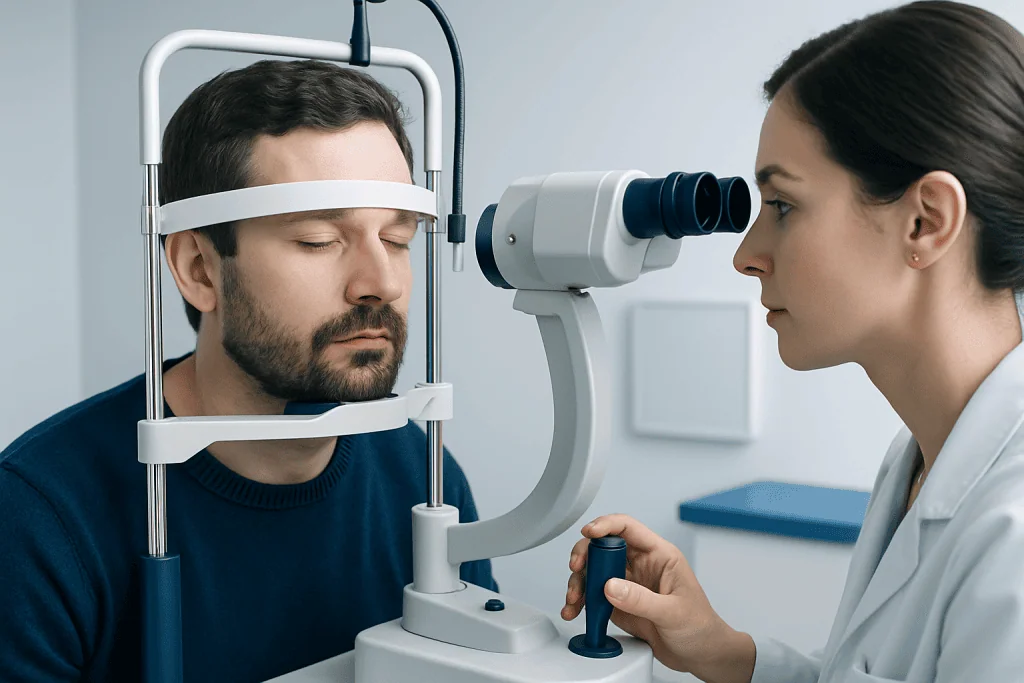
Blindness exists on a spectrum. Some people have low vision rather than complete blindness. They may read large print with magnification, recognize faces up close, or navigate using remaining side vision. Others may have central vision loss, where the middle of sight is blurred or missing, but side vision remains relatively intact.
Different eye and nerve conditions create different visual patterns. For example, cataracts often cause cloudy, dim, or glare-filled vision. Cataracts can make colors seem faded and details harder to see. Glaucoma may slowly narrow side vision, creating tunnel vision, while retinal disease may cause blank spots, distortion, or difficulty seeing in dim light.
Some people see flashes, floating spots, shimmering lights, or moving shadows. These symptoms can happen with migraine, vitreous changes, retinal tears, or neurological causes. They are not the same as hallucinations, and they do not always mean permanent blindness, but they should be discussed with a clinician if they are new or worsening.
In complete blindness, a person may have no visual input at all. This is called no light perception. Even then, the experience is not always described as “seeing black,” because black is itself a visual sensation. Instead, many people explain it as simply not receiving visual information.
Common causes of blindness and visual impairment
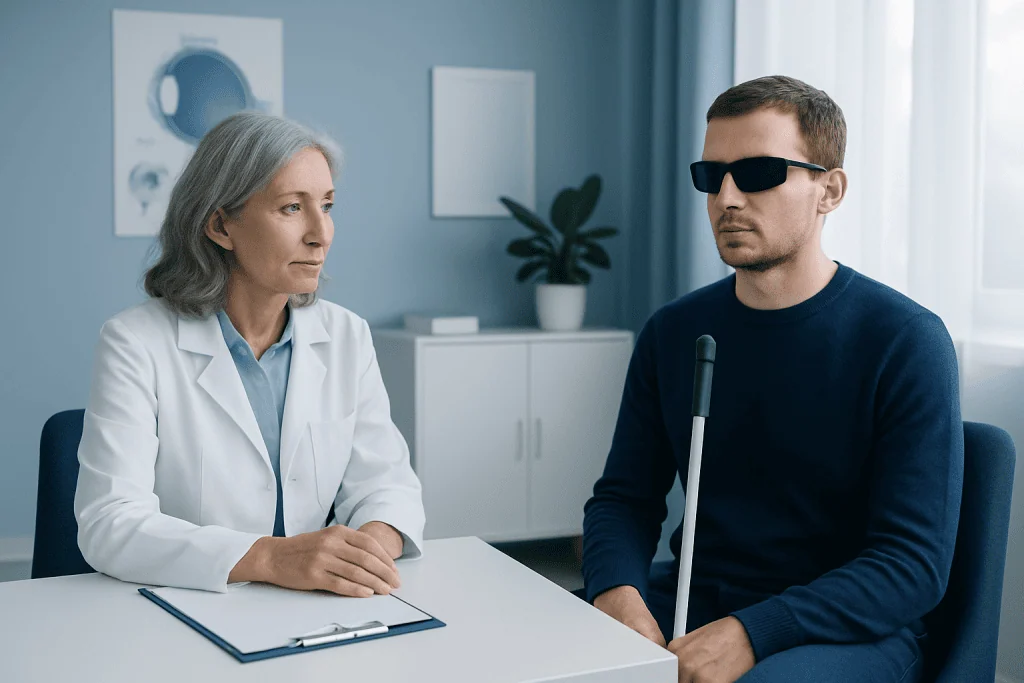
Vision loss can happen when any part of the visual system is affected, including the cornea, lens, retina, optic nerve, or brain. Common causes include cataracts, glaucoma, diabetic eye disease, age-related macular degeneration, retinal detachment, inherited retinal disorders, trauma, stroke, and severe infections. Some causes are reversible or partly treatable, especially when diagnosed early.
Gradual vision loss is often linked to age-related or chronic conditions. Diabetes can damage retinal blood vessels and lead to diabetic retinopathy, while uncontrolled eye pressure can damage the optic nerve in glaucoma. These conditions may progress quietly, which is why regular eye exams are important even if there are no symptoms at first.
Sudden vision loss is more urgent. It can happen with retinal detachment, blocked blood flow to the eye, optic neuritis, severe inflammation, acute glaucoma, or stroke. A sudden dark curtain, severe pain, halos around lights, a rapid drop in vision, or new weakness or speech difficulty should prompt urgent medical attention.
Not all episodes of temporary visual change mean permanent blindness. Dry eyes, migraine aura, medication effects, low blood pressure, and eye strain can also affect vision. Even so, any unexplained new loss of vision deserves medical assessment to identify the cause and protect remaining sight.
What increases the risk of vision loss
Several factors can raise the risk of blindness or low vision. Age is one of the most important, because many eye conditions become more common over time. Family history also matters, particularly for glaucoma, inherited retinal disorders, and some forms of macular degeneration.
Medical conditions such as diabetes, high blood pressure, autoimmune disease, and vascular disease can affect the eyes directly or reduce blood flow to structures needed for sight. Smoking is another major risk factor because it can damage blood vessels and increase the chance of cataracts and macular degeneration.
Eye injury, past eye surgery, prolonged steroid use, and certain infections can also increase risk. In some cases, neurological conditions affecting the optic nerve or brain alter what a person sees even though the eye itself appears normal. This is one reason assessment may involve both eye specialists and neurology teams.
Risk does not mean inevitable blindness. Many people preserve useful vision for years with screening, timely treatment, and healthy lifestyle measures. Early identification is especially helpful because some causes of vision loss respond better before significant damage occurs.
How doctors evaluate vision loss
A doctor usually begins by asking when the vision change started, whether it is in one eye or both, and whether there are symptoms such as pain, redness, flashes, floaters, headache, or neurological changes. This history helps separate urgent causes from slower, chronic ones. It also guides whether the problem is more likely in the eye itself or in the optic nerve or brain.
The examination often includes a visual acuity test, visual field testing, pupil assessment, and checking eye movements. The clinician may measure eye pressure and examine the front of the eye and the retina after dilating the pupils. These steps can reveal cataracts, retinal problems, bleeding, swelling, optic nerve changes, or signs of glaucoma.
Some people need imaging or specialized testing. Optical coherence tomography can show detailed layers of the retina, while ultrasound may help if the retina cannot be seen clearly. If a neurological cause is suspected, blood tests or brain imaging may be needed. For a close look at the eye structures, an ophthalmologist may recommend evaluation in a dedicated ophthalmology service.
Diagnosis is important because “blindness” is a description of vision loss, not a single disease. The next steps depend entirely on the cause. Even when vision cannot be fully restored, an accurate diagnosis helps protect remaining sight and supports planning for rehabilitation and daily life.
Treatment options and practical next steps
Treatment depends on the underlying reason for vision loss. Some conditions improve with glasses, contact lenses, lubricating drops, or medication. Others may need procedures such as laser treatment, injections, or surgery. For example, cloudy vision from cataracts may be treated with cataract surgery, while selected retinal problems may need prompt repair to preserve vision.
When glaucoma is involved, treatment often focuses on lowering eye pressure to prevent further damage rather than restoring lost vision. This may include drops, laser procedures, or glaucoma surgery. If the concern relates to the back of the eye or a detached retina, a patient may need assessment by specialists in retina care.
Not every cause of blindness is reversible, but support can still make a major difference. Low vision rehabilitation may include magnifiers, screen readers, contrast-enhancing tools, orientation and mobility training, and home safety adaptations. These measures can improve independence, reading, work, and navigation.
Near the end of the care pathway, multidisciplinary support often becomes just as important as diagnosis. Acibadem International’s multidisciplinary specialists and JCI-accredited hospitals diagnose and treat eye conditions for international patients, including evaluation, procedures, and rehabilitation planning when needed.
Prevention and self-care
Many causes of vision loss cannot be completely prevented, but there are practical ways to reduce risk. Regular eye examinations are one of the most effective steps, particularly for older adults and people with diabetes, high blood pressure, or a family history of eye disease. Screening can detect damage before symptoms become obvious.
Managing general health also helps protect vision. Good control of blood sugar, blood pressure, and cholesterol supports the blood vessels that nourish the eyes. Avoiding smoking, wearing sunglasses with UV protection, and using protective eyewear during work or sports can reduce long-term eye damage and injury.
Daily self-care matters too. Contact lenses should be used exactly as directed, and any redness, pain, or discharge should be assessed promptly. Adequate lighting at home, reducing fall hazards, and using magnification or larger text can make life easier for people with low vision.
People should also pay attention to changes in one eye compared with the other. Covering one eye at a time can help reveal subtle vision loss that might otherwise be missed. New distortion, missing spots, glare, or difficulty seeing at night are good reasons to book an eye exam.
When to seek medical care
Medical review is advisable any time vision changes are new, unexplained, or getting worse. This includes gradual blurring, increased glare, trouble reading, narrowed side vision, or reduced night vision. While these symptoms are often related to common eye conditions, they still deserve proper evaluation.
Urgent care is needed for sudden vision loss in one or both eyes, a curtain-like shadow, new flashes and many floaters, severe eye pain, redness with nausea, or vision loss after an injury. Immediate medical attention is also important if vision changes happen together with weakness, confusion, facial drooping, or speech problems, because these can suggest a neurological emergency.
Children and older adults should not be expected to “adapt” to unexplained visual symptoms without assessment. If a child squints, avoids visual tasks, tilts the head, or seems not to notice objects, an eye examination is appropriate. For adults, especially those with diabetes or glaucoma risk, delaying care can allow preventable damage to progress.
In short, many visual symptoms turn out to be manageable or non-emergency causes, which is reassuring. The safest next step is to have persistent or sudden changes checked by a qualified doctor so the cause can be identified early and treatment started if needed.
Frequently asked questions
Do blind people see complete darkness?
Not always. Some people who are considered blind still perceive light, movement, shadows, or blurred shapes, while others have no visual perception at all. The experience depends on the cause and degree of vision loss.
Can someone be blind and still see light?
Yes. Blindness does not necessarily mean total absence of vision. A person may be legally blind or functionally blind and still notice light, contrast, or large objects.
What causes sudden blindness?
Sudden blindness can be caused by retinal detachment, blocked blood flow to the eye, severe glaucoma, inflammation, optic nerve problems, trauma, or stroke. Because some of these conditions are time-sensitive, sudden vision loss should be treated as urgent.
Is blindness always permanent?
No. Some causes of vision loss are reversible or partly treatable, such as cataracts or certain retinal conditions. Others may be permanent, but early diagnosis can still help preserve remaining vision and improve daily functioning.
How do doctors test why vision is lost?
Doctors usually combine medical history with an eye examination, vision testing, visual field testing, and a detailed look at the retina and optic nerve. Depending on the findings, they may also use eye imaging, ultrasound, blood tests, or brain scans.
What is the difference between low vision and blindness?
Low vision means sight is reduced enough to interfere with daily activities even after standard correction, but some useful vision remains. Blindness can range from severe visual impairment to no light perception, depending on the clinical definition and the person's actual function.
References
- American Academy of Ophthalmology
- National Eye Institute
- Centers for Disease Control and Prevention
- World Health Organization
- American Optometric Association
This article is for general information only and is not a substitute for professional medical advice. Please consult a qualified doctor about your individual situation.
Explore treatments in Turkey — costs, top hospitals & a free quote
JCI-accredited · board-certified surgeons · reply within 24h
Add us as a Preferred Source to see more of our trusted health content across Google Search, AI Overviews and Discover.
Check your numbers in seconds
BMI, calories, due date, blood pressure and 30+ more clinical calculators — free, instant, doctor-reviewed ranges.