What Do Neuropsychological Tests Diagnose?

Neuropsychological tests assess cognitive, emotional, and behavioral functioning in a structured way. They can help evaluate conditions such as dementia, stroke, traumatic brain injury, epilepsy, ADHD, and learning disorders.
Key Takeaways
- Neuropsychological tests assess cognitive, emotional, and behavioral functioning in a structured way.
- They can help evaluate conditions such as dementia, stroke, traumatic brain injury, epilepsy, ADHD, and learning disorders.
- These tests do not replace brain scans or medical examinations, but they add valuable detail about day-to-day brain function.
- Results are interpreted by a trained specialist and compared with age, education, and background.
- Testing can guide diagnosis, treatment planning, rehabilitation, school support, and follow-up over time.
Neuropsychological tests help identify changes in memory, attention, language, problem-solving, and other thinking skills. They do not usually diagnose a condition on their own, but they provide detailed information that helps doctors understand how the brain is functioning and what may be causing symptoms.
Overview: What neuropsychological tests are used for
Neuropsychological tests are detailed assessments that measure how well different parts of the brain are working. They look at skills such as attention, memory, language, visual-spatial abilities, processing speed, planning, problem-solving, and emotional functioning. The goal is to understand a person’s cognitive strengths and areas of difficulty in a structured, evidence-based way.
These tests are often used when someone has symptoms such as forgetfulness, confusion, trouble concentrating, slowed thinking, language problems, or changes in behavior. They may also be recommended after a stroke, head injury, brain surgery, seizure disorder, or during evaluation for developmental or psychiatric conditions.
Neuropsychological testing does not usually provide a single answer by itself. Instead, it adds an important layer of information to the medical history, neurological examination, imaging, and laboratory findings. This helps clinicians distinguish between normal aging, temporary problems, and conditions that affect brain function more significantly.
What neuropsychological tests can diagnose or help identify
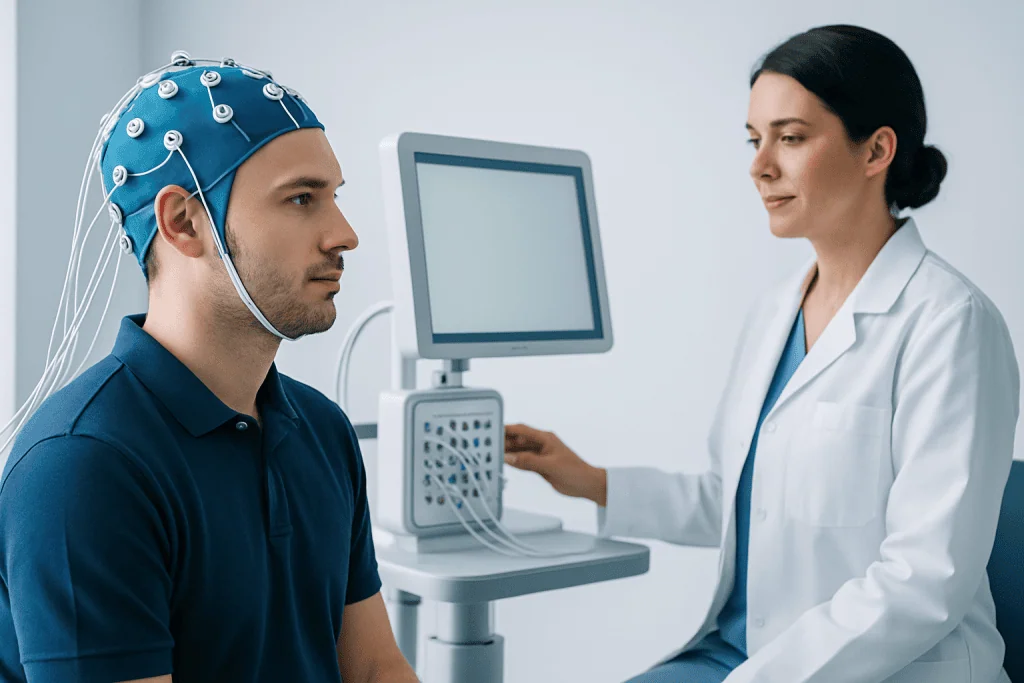
Neuropsychological tests can help diagnose or clarify many conditions that affect the brain and nervous system. They are especially useful when symptoms are subtle, overlap with more than one condition, or affect daily life in ways that are hard to capture in a brief office visit. The testing pattern can suggest whether the main issue involves memory, attention, language, executive function, mood, or a combination of these.
Conditions that may be evaluated with neuropsychological tests include:
- Mild cognitive impairment and different types of dementia
- Stroke and its effects on thinking and behavior
- Traumatic brain injury, including concussion-related cognitive changes
- Epilepsy and cognitive effects related to seizures or treatment
- Brain tumors or the effects of neurosurgery
- Attention-deficit/hyperactivity disorder (ADHD)
- Learning disorders in children and adults
- Autism spectrum-related cognitive and adaptive concerns
- Depression, anxiety, and other mental health conditions when they affect concentration or memory
- Neurodegenerative disorders such as Parkinson’s disease or multiple sclerosis
In many cases, the tests help doctors determine whether symptoms fit a neurologic disorder, a psychiatric condition, medication effects, sleep problems, or another medical cause. They can also help separate true memory storage problems from difficulties with focus, stress, or retrieval. This distinction matters because the next steps in treatment may be very different.
For example, a person with new memory symptoms may need evaluation for Alzheimer’s disease or another cause of cognitive decline, while someone with slowed thinking after an accident may be assessed for lingering effects of a brain injury. Testing can also support planning for rehabilitation, school accommodations, work adjustments, and long-term monitoring.
Symptoms and situations that may lead to testing

A doctor may recommend neuropsychological testing when a person or family notices changes in thinking, behavior, or daily function. Common concerns include repeating questions, misplacing items often, getting lost in familiar places, struggling to follow conversations, losing focus easily, or having new problems with organization and decision-making.
Testing may also be useful when symptoms affect school or work. A child may be bright but have persistent trouble with reading, writing, listening, or attention. An adult may find it harder to multitask, learn new information, or complete familiar tasks after an illness or injury. In these situations, testing can help identify the specific cognitive skills that need support.
Neuropsychological evaluation is also used before and after certain medical treatments. For example, it may help establish a baseline before brain surgery, monitor changes over time in seizure disorders, or measure recovery after stroke. When symptoms are complex, this type of assessment provides a clearer picture of real-world functioning than a quick memory screening alone.
How the testing process works
A neuropsychological evaluation is performed by a clinical neuropsychologist or another appropriately trained specialist. It usually begins with a detailed interview about symptoms, medical history, medications, education, mood, daily activities, and any changes noticed by the patient or family. This background is important because the same test score can mean different things depending on age, language, education, and health history.
The testing session may last from a couple of hours to most of a day, depending on the reason for referral. Tasks can include answering questions, remembering words or stories, copying designs, naming objects, solving problems, reading, writing, and completing attention or speed-based exercises. Some tests are done with paper and pencil, while others may be computer-based.
People sometimes worry that they need to study for these tests, but preparation is usually simple. It is generally best to get enough sleep, wear glasses or hearing aids if needed, bring a medication list, and eat normally unless told otherwise. The specialist will consider fatigue, pain, mood, language, and cultural background when interpreting the results.
After the evaluation, results are analyzed as patterns rather than isolated scores. The final report explains which abilities are preserved, which are reduced, and what conditions may best explain the profile. This information can support referrals for neurology evaluation, rehabilitation, counseling, or educational services when appropriate.
How doctors use results to make a diagnosis
Neuropsychological tests help with diagnosis by showing whether a person’s cognitive profile fits a known pattern. For instance, one condition may primarily affect short-term memory storage, while another may mainly reduce attention and processing speed. Some disorders cause greater difficulty with language, while others more strongly affect visual-spatial skills or planning.
Doctors do not rely on testing results alone. They combine them with the medical history, physical and neurological examination, brain imaging, blood tests, and sometimes sleep or psychiatric assessments. This broader view helps rule out reversible causes such as vitamin deficiency, thyroid problems, medication side effects, depression, anxiety, or sleep disorders.
The results can also show severity and progression. A person may have normal age-related forgetfulness, mild cognitive impairment, or a more established dementia syndrome. In children, the testing profile may support a diagnosis of ADHD or a specific learning disorder rather than a general lack of ability. In adults, it may help clarify whether symptoms stem from a neurological illness, emotional distress, or both.
When needed, doctors may also recommend related assessments such as brain MRI to look for structural changes, or additional specialist review through neurosurgical assessment if a lesion, tumor, or pressure-related problem is suspected. Together, these tools improve diagnostic accuracy and treatment planning.
Conditions commonly assessed with neuropsychological testing
One of the most common reasons for neuropsychological testing is evaluation of memory decline in older adults. The testing can help distinguish normal aging from mild cognitive impairment and dementias such as Alzheimer’s disease, vascular cognitive impairment, or other neurodegenerative conditions. This is important because early identification can improve planning, safety, and symptom management.
Testing is also widely used in neurologic conditions affecting younger and middle-aged adults. People with epilepsy may be assessed before surgery or when seizures appear to affect memory and language. Those recovering from concussion or traumatic brain injury may need testing to evaluate concentration, reaction speed, and readiness to return to school, work, or sports.
In children and adolescents, neuropsychological testing can help identify attention disorders, learning disabilities, developmental concerns, and the effects of medical conditions on school performance. The results may guide classroom strategies, therapy plans, and family support. In adults, testing may clarify cognitive changes related to multiple sclerosis, Parkinson’s disease, brain tumors, infection, autoimmune illness, or major mood disorders.
Treatment planning, rehabilitation, and follow-up
Neuropsychological tests do not treat a condition, but they often shape the treatment plan in a very practical way. If testing shows a memory-storage problem, doctors may focus on evaluating neurodegenerative causes and building routines that support safety and independence. If the main difficulty is attention or mental fatigue, treatment may include sleep evaluation, medication review, stress management, or targeted cognitive strategies.
The results can also guide rehabilitation. Speech and language therapy may be helpful for language or communication problems, occupational therapy may support organization and daily tasks, and cognitive rehabilitation may help after brain injury or stroke. For children, schools may use the report to arrange accommodations, extra time, or specialized learning support.
Repeat testing is sometimes recommended to track change over time. This can show whether cognition is improving after treatment, staying stable, or gradually declining. Follow-up may be especially helpful after surgery, during recovery from neurological illness, or when doctors need to compare current function with a previous baseline.
Near the end of the diagnostic pathway, some patients may seek care in centers with coordinated specialties. Acibadem International’s multidisciplinary specialists and JCI-accredited hospitals evaluate and treat patients with cognitive and neurological conditions, especially when testing results need to be integrated with broader medical care.
When to see a doctor
A medical evaluation is a good idea when changes in memory, attention, language, decision-making, or behavior are persistent, worsening, or starting to interfere with daily life. This includes difficulty managing medication, finances, work tasks, school performance, driving, or social communication. Family concerns should also be taken seriously, even if the person affected feels mostly well.
Urgent medical care is important if cognitive symptoms come on suddenly or are accompanied by weakness, severe headache, confusion, new seizures, fainting, or trouble speaking. These symptoms may point to a condition that needs prompt assessment. A sudden change in mental status should never be assumed to be stress or normal aging without medical review.
Even when symptoms seem mild, early assessment can be helpful and reassuring. Some causes of cognitive changes are treatable or reversible, and others benefit from earlier support and planning. A qualified doctor or neuropsychologist can explain whether neuropsychological testing is appropriate and how the results may help.
Frequently asked questions
Can neuropsychological tests diagnose dementia?
They can strongly support the diagnosis of dementia by showing patterns of memory and thinking changes that match certain disorders. However, doctors usually combine test results with medical history, examination, and other investigations before making a final diagnosis.
Do neuropsychological tests show whether someone has ADHD?
They can help identify attention, impulsivity, working memory, and executive function problems that are often seen in ADHD. Diagnosis is based on the full clinical picture, including symptoms over time and how they affect daily life.
Are neuropsychological tests the same as an IQ test?
No. An IQ test measures certain aspects of intellectual ability, while neuropsychological testing is broader and looks at many cognitive functions, emotional factors, and everyday functioning. Some evaluations may include intelligence testing as one part of the overall assessment.
Can anxiety or depression affect neuropsychological test results?
Yes. Mood disorders, stress, poor sleep, pain, and fatigue can all affect concentration, memory, and processing speed. A neuropsychologist takes these factors into account when interpreting the results.
How long does a neuropsychological evaluation take?
It depends on the reason for testing and the number of areas being assessed. Some evaluations take a few hours, while more detailed assessments may last most of a day or be split across sessions.
Do people need a brain scan if they already had neuropsychological testing?
Sometimes yes. Neuropsychological tests show how the brain is functioning, while imaging can show structural changes or injury. Doctors decide whether both are needed based on symptoms, examination findings, and medical history.
References
- American Psychological Association
- National Institute on Aging
- National Institute of Neurological Disorders and Stroke
- Centers for Disease Control and Prevention
- World Health Organization
This article is for general information only and is not a substitute for professional medical advice. Please consult a qualified doctor about your individual situation.
Explore treatments in Turkey — costs, top hospitals & a free quote
JCI-accredited · board-certified surgeons · reply within 24h
Add us as a Preferred Source to see more of our trusted health content across Google Search, AI Overviews and Discover.