What Does a Neuroradiologist Do? Role in Diagnosis, Treatment Planning, and Second Opinions

A neuroradiologist is a physician trained in radiology with advanced expertise in imaging of the nervous system. They interpret MRI, CT, and other scans to help diagnose brain, spine, and nerve conditions.
Key Takeaways
- A neuroradiologist is a physician trained in radiology with advanced expertise in imaging of the nervous system.
- They interpret MRI, CT, and other scans to help diagnose brain, spine, and nerve conditions.
- Their reports support neurologists, neurosurgeons, oncologists, and other specialists in treatment planning.
- Neuroradiologists are often valuable in complex cases or when a second opinion is needed.
- Some neuroradiologists also perform image-guided procedures, depending on their training.
A neuroradiologist is a medical doctor who specializes in interpreting imaging of the brain, spine, head, neck, and nervous system. Their work helps confirm diagnoses, shape treatment plans, and clarify complex cases through expert review and second opinions.
Overview: what a neuroradiologist does
A neuroradiologist is a doctor with specialized training in medical imaging of the brain, spinal cord, head, neck, and nerves. After completing medical school, this physician trains in radiology and then gains additional expertise focused on the nervous system. Their main role is to analyze imaging studies in detail and explain what those images may mean for a patient’s health.
Neuroradiologists most often interpret tests such as MRI, CT, angiography, and sometimes specialized imaging of blood vessels, soft tissues, and the spine. They look for patterns that may point to stroke, tumors, bleeding, inflammation, infection, trauma, degenerative spine disease, congenital differences, or other neurological conditions. Their findings are recorded in a report that guides the doctor responsible for overall care.
In many cases, patients do not meet a neuroradiologist in person because much of the work happens behind the scenes. Even so, the neuroradiologist plays an important part in care. Careful image interpretation can help narrow down possible causes of symptoms, reduce uncertainty, and support timely treatment decisions.
How neuroradiologists help with diagnosis
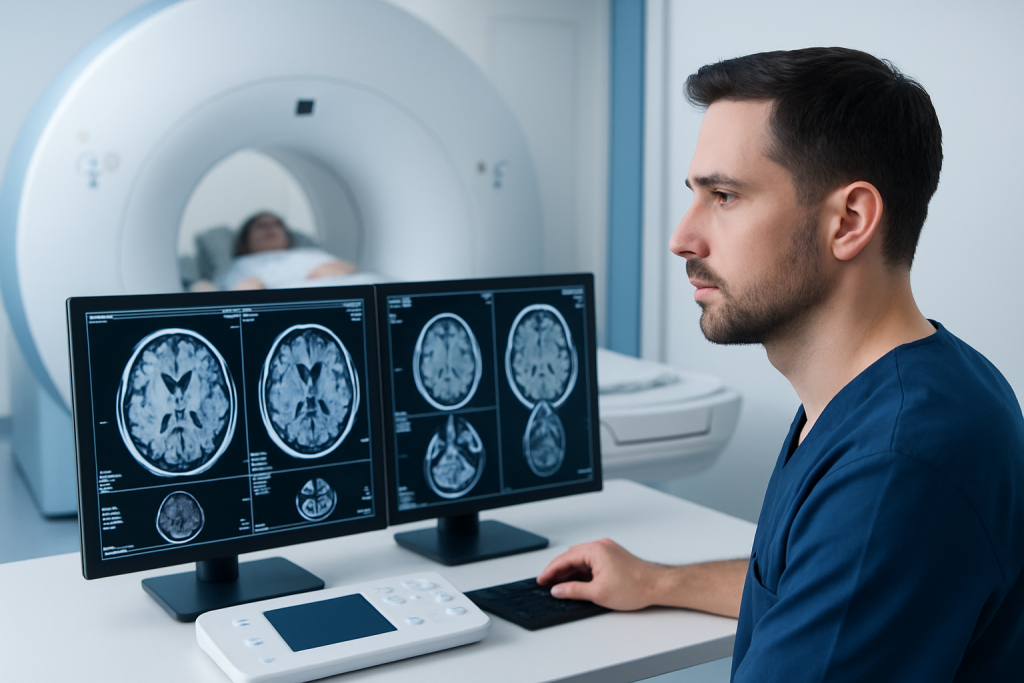
When symptoms affect the nervous system, imaging is often a key part of understanding what is happening. A neuroradiologist studies the images slice by slice, compares them with prior scans if available, and identifies both obvious and subtle abnormalities. This may include areas of restricted blood flow, very small bleeds, nerve compression, fluid build-up, abnormal tissue growth, or changes linked to inflammation.
Their role is not only to spot abnormalities but also to place them in context. For example, a scan finding may be new or long-standing, urgent or less urgent, or directly related to symptoms or incidental. This distinction matters because not every abnormality requires treatment, and not every symptom has a clear imaging explanation.
Neuroradiologists commonly contribute to the diagnosis of conditions such as stroke, brain tumors, aneurysms, traumatic brain injury, spinal disc disease, and multiple sclerosis. They may also help assess suspected infection, seizures, dizziness, headaches, memory problems, and congenital conditions. Their expertise is especially useful when imaging findings are subtle or when several possible diagnoses need to be considered.
Imaging tests a neuroradiologist interprets
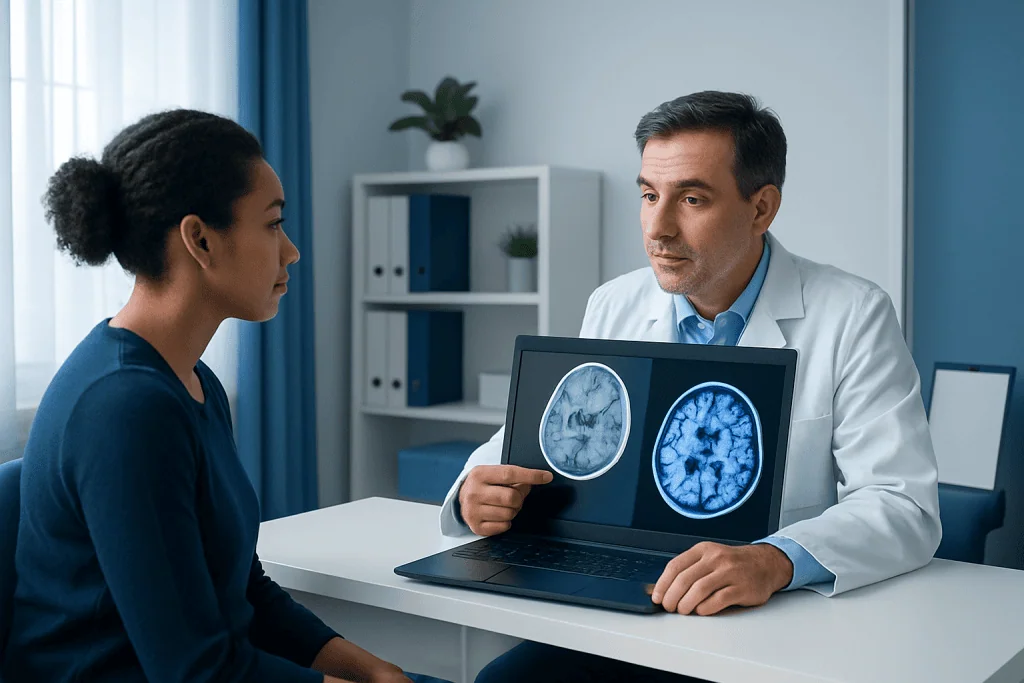
Neuroradiologists work with several types of imaging. MRI is often used to look closely at the brain, spinal cord, nerves, discs, and soft tissues. CT scans are commonly used in urgent settings because they are fast and especially helpful for detecting bleeding, fractures, and some types of stroke. Depending on the clinical question, the scan may be done with or without contrast material.
They may also interpret vascular imaging, which shows blood vessels in the brain and neck. This can include CT angiography, MR angiography, or catheter angiography. These tests are important when doctors suspect narrowing, blockage, aneurysm, malformation, or other vessel-related problems.
Other studies can include imaging of the pituitary gland, inner ear, skull base, face, or spinal canal. In some centers, neuroradiologists are also involved in advanced techniques such as perfusion imaging, diffusion imaging, or functional imaging, which may add detail in selected cases. When needed, they help determine whether a patient should have a MRI scan or a CT scan based on the clinical concern and the urgency of the situation.
- Brain imaging for headaches, weakness, seizures, memory concerns, or trauma
- Spine imaging for neck pain, back pain, numbness, or nerve compression
- Vascular imaging for stroke, aneurysm, or vessel narrowing
- Head and neck imaging for masses, cranial nerve symptoms, or structural abnormalities
Role in treatment planning and multidisciplinary care
A neuroradiologist does not usually provide treatment alone, but the imaging report can strongly influence what happens next. The report may help determine whether a patient needs medication, monitoring, surgery, rehabilitation, or further testing. For example, scan findings may help a neurologist decide whether symptoms are related to inflammation, a vascular problem, tumor, or degenerative disease.
These specialists often work closely with neurologists, neurosurgeons, oncologists, stroke teams, orthopedic spine surgeons, and ear, nose, and throat specialists. In many hospitals, complex cases are reviewed in multidisciplinary meetings where images are discussed together with symptoms, examination findings, and laboratory results. This team-based process helps make treatment planning more precise.
In cancer care, neuroradiology can help distinguish between active tumor, treatment effects, swelling, and scar-related changes. In stroke care, fast interpretation can support decisions about urgent therapies. In spine care, imaging may clarify whether symptoms are related to disc disease, spinal stenosis, nerve root compression, or another cause, helping guide choices such as spinal surgery when appropriate.
When a second opinion from a neuroradiologist may help
A second opinion from a neuroradiologist can be helpful when symptoms continue without a clear explanation, when the diagnosis is uncertain, or when treatment decisions are significant. Patients and doctors may request another expert review if the original report is unclear, if symptoms and imaging do not seem to match, or if a rare condition is being considered.
Second-opinion review may involve re-reading existing MRI or CT scans, comparing them with earlier studies, or recommending additional imaging sequences for more detail. Sometimes the second review confirms the original interpretation, which can provide reassurance. In other situations, it may refine the diagnosis, identify a subtle finding, or suggest a different next step.
This can be especially useful in possible demyelinating disease, complex headache evaluation, difficult spine cases, vascular abnormalities, or planning for surgery. For instance, expert imaging review may help distinguish routine age-related changes from findings that deserve closer follow-up. It may also support decisions about referral for procedures such as brain surgery when imaging raises concern for a mass or structural problem.
Interventional neuroradiology and related procedures
Some doctors with neuroradiology expertise also perform minimally invasive, image-guided procedures. This area is often called interventional neuroradiology or endovascular neuroradiology. These procedures are different from diagnostic image reading, but they are closely related because both depend on detailed knowledge of the brain, spine, and blood vessels.
Examples may include catheter-based treatment of certain aneurysms, vascular malformations, or some stroke-related blockages, depending on the case and the center’s expertise. Other image-guided procedures can involve biopsies, drainage procedures, or selected spine interventions. Not every neuroradiologist performs these treatments, because additional training is required.
For patients, it can be useful to understand the distinction: one neuroradiologist may focus mainly on interpreting scans, while another may focus on procedures, or both roles may exist within the same department. If a scan shows a condition that may benefit from intervention, the neuroradiologist usually works with the broader team to decide the safest and most appropriate plan.
What patients can expect and when to seek specialist review
In most situations, the patient’s referring doctor orders the scan and later explains the results. The neuroradiologist reviews the images, prepares a report, and may contact the treating team directly if there is an urgent finding. Patients can usually help this process by bringing previous imaging, providing a clear symptom history, and sharing information about past surgery, implants, or contrast reactions.
Specialist review is often appropriate when there are symptoms such as sudden weakness, changes in speech, severe new neurological symptoms, persistent unexplained headaches, seizures, worsening numbness, vision changes, or signs of spinal cord compression. These symptoms do not always mean a serious condition, but they deserve proper medical assessment. In urgent situations, emergency care is important.
For non-urgent concerns, asking whether a scan would benefit from neuroradiology review can be reasonable, especially if the case is complex. Near the end of the care pathway, patients may also seek expert centers for integrated evaluation. Acibadem International’s multidisciplinary specialists and JCI-accredited hospitals diagnose and treat neurological conditions for international patients, with neuroradiology support as part of coordinated care.
Although imaging is highly valuable, it is only one part of diagnosis. The best decisions are usually made by combining scan findings with a medical history, physical examination, and other tests when needed. This is why communication between the neuroradiologist and the treating clinician is so important.
Frequently asked questions
Is a neuroradiologist the same as a neurologist?
No. A neurologist diagnoses and treats disorders of the brain, spinal cord, nerves, and muscles through clinical evaluation and medical management. A neuroradiologist is a radiology specialist who focuses on interpreting imaging of the nervous system and, in some cases, performing image-guided procedures.
Do patients usually see a neuroradiologist in person?
Often they do not, because neuroradiologists commonly work by reviewing scans and sending detailed reports to the treating doctor. However, patients may meet them in some settings, especially if a second opinion is requested or if an image-guided procedure is being considered.
What kinds of conditions can a neuroradiologist help diagnose?
They can help assess a wide range of conditions involving the brain, spine, head, neck, and nerves. Examples include stroke, tumors, bleeding, aneurysms, multiple sclerosis, spinal disc problems, infection, trauma, and some causes of headaches or seizures.
When is a neuroradiology second opinion useful?
A second opinion may help when the diagnosis is unclear, symptoms and scan findings do not match, or treatment decisions are complex. It can also be useful if a patient wants expert confirmation before surgery or when a rare neurological condition is suspected.
Can a neuroradiologist recommend treatment?
A neuroradiologist’s main role is to interpret imaging and explain what the findings may suggest. Their report often influences treatment decisions, but treatment is usually planned by the doctor or team responsible for the patient’s overall care.
What is the difference between neuroradiology and interventional neuroradiology?
Diagnostic neuroradiology focuses on reading and interpreting scans. Interventional neuroradiology includes minimally invasive procedures that use imaging guidance to diagnose or treat certain brain, spine, or blood vessel conditions.
References
- Radiological Society of North America
- American Society of Neuroradiology
- National Institute of Neurological Disorders and Stroke
- American College of Radiology
- World Health Organization
This article is for general information only and is not a substitute for professional medical advice. Please consult a qualified doctor about your individual situation.
Joint and spine care in Turkey — expert assessment & treatment
JCI-accredited · board-certified surgeons · reply within 24h
Add us as a Preferred Source to see more of our trusted health content across Google Search, AI Overviews and Discover.