What Does Shingles Look Like? Causes, Explanations, and Next Steps
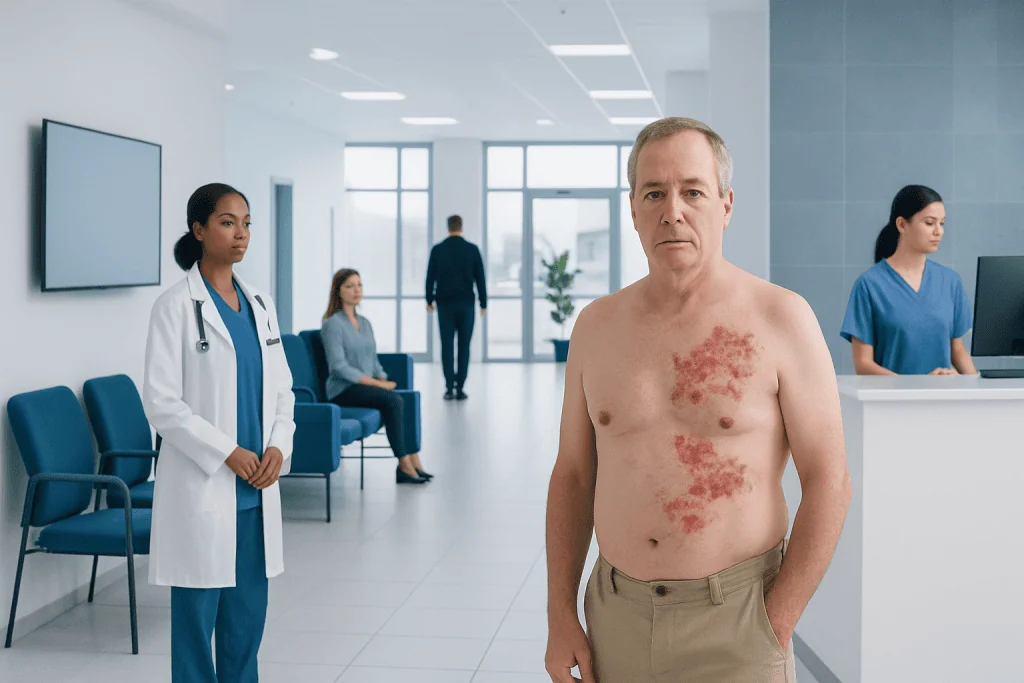
Shingles usually appears as a painful rash with grouped blisters on one side of the body or face. Before the rash starts, many people notice tingling, burning, itching, or sensitivity in the area.
Key Takeaways
- Shingles usually appears as a painful rash with grouped blisters on one side of the body or face.
- Before the rash starts, many people notice tingling, burning, itching, or sensitivity in the area.
- A doctor can often diagnose shingles by examining the rash and asking about symptoms and timing.
- Antiviral treatment works best when started early, ideally within the first few days of rash onset.
- Urgent medical care is needed if shingles involves the eye, causes facial weakness, or occurs with high-risk conditions.
What does shingles look like? In many people, it begins as a band or patch of burning, tingling, or tender skin, followed by a one-sided rash that turns into small fluid-filled blisters. Shingles is often manageable, but a prompt medical review is important if the rash affects the face or eyes, causes severe pain, or occurs in someone with a weakened immune system.
Overview: what shingles usually looks like
For many people, shingles is not dangerous and improves with treatment and time. The rash most often looks like a stripe, band, or patch of red skin with clusters of small blisters on just one side of the body. It may appear on the chest, back, waist, or face, and it usually follows the path of a single nerve rather than spreading evenly everywhere.
Before the rash appears, the skin in that area may feel strange or uncomfortable. People often describe burning, tingling, itching, stabbing pain, or skin that feels overly sensitive to touch. A few days later, a red rash develops, then fluid-filled blisters form, break, dry out, and crust over.
Although the appearance can vary, the one-sided pattern is one of the most helpful clues. Shingles usually does not cross the body’s midline. If a person sees a blistering rash that is painful and limited to one side, especially after unusual tingling or nerve-like pain, shingles becomes a strong possibility.
How the rash changes over time
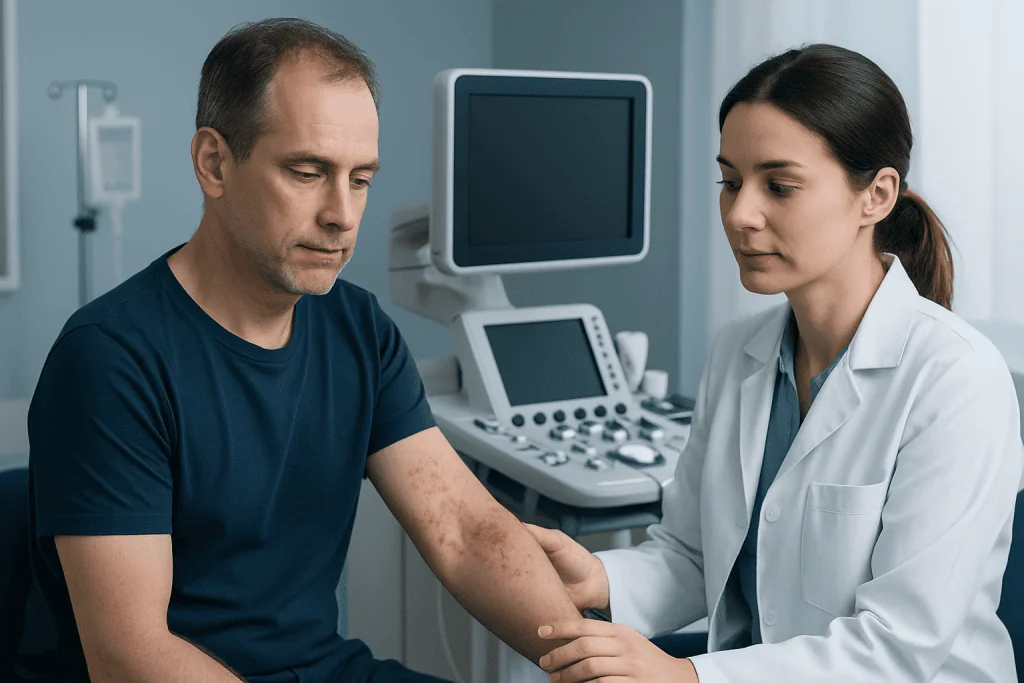
Shingles does not always look the same on day one as it does later in the week. In the earliest stage, the skin may simply look pink or slightly red, while discomfort is more noticeable than visible changes. Some people think they have a pulled muscle, an insect bite, or skin irritation before the blisters appear.
As the rash develops, small blisters tend to appear in a tight cluster on top of the red base. These blisters may be clear at first and then become cloudy. Over several days, they can break open, ooze slightly, and then form scabs or crusts as healing begins.
The full process often unfolds in a predictable sequence:
- tingling, burning, itching, or pain in one area
- red patches or bumps
- grouped blisters
- drying and crusting
- gradual clearing, sometimes with lingering skin sensitivity or nerve pain
In some cases, especially in older adults, pain may be stronger than the visible rash. A mild-looking rash can still feel intense, which is one reason early medical advice can be useful.
Where shingles can appear and how location affects symptoms
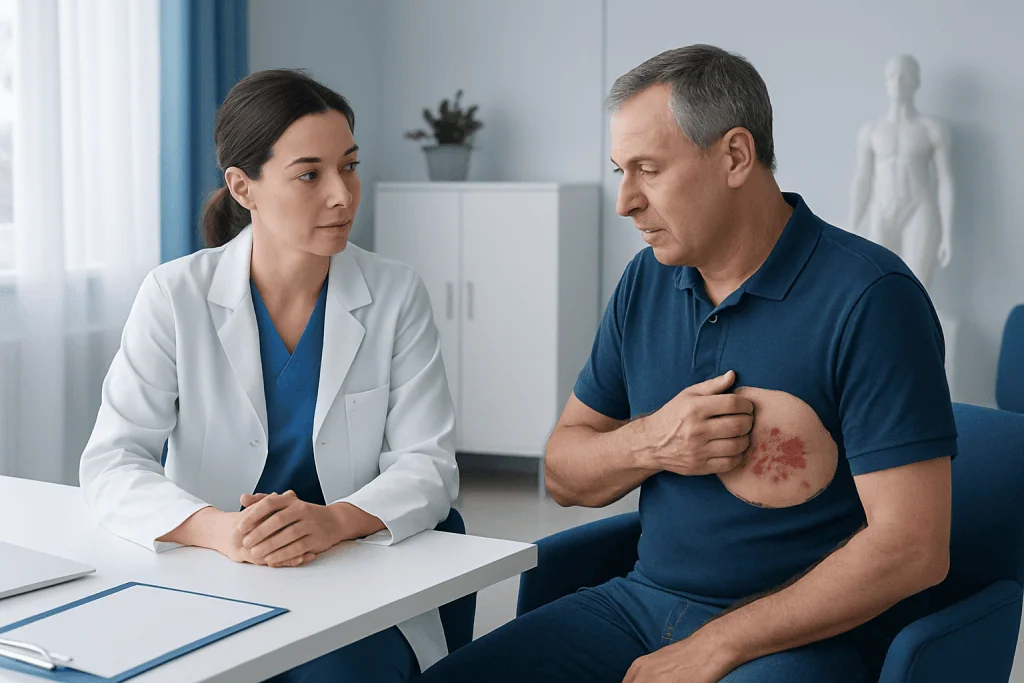
Shingles can occur anywhere a nerve is present, but some locations are more common than others. The trunk is the classic site, with the rash wrapping from the back toward the chest or abdomen in a belt-like pattern. This is why many people first notice it under clothing where friction makes the skin feel sore.
It can also affect the face, scalp, neck, or around one eye. When shingles involves the forehead, eyelid, or tip of the nose, medical attention is especially important because the eye itself may be at risk. Eye involvement can threaten vision and may need prompt specialist care. Related symptoms may include eye redness, swelling, pain, blurred vision, or light sensitivity.
Less commonly, shingles appears on an arm, leg, buttock, or inside the mouth. Some people also experience headache, fatigue, fever, or swollen lymph nodes. If the rash is near the ear, with ear pain, hearing changes, or facial weakness, doctors may evaluate for complications affecting facial nerves.
Because the appearance depends partly on location, shingles can sometimes be confused with other conditions such as eczema or contact dermatitis. The difference is that shingles usually follows a nerve pattern and is often painful before the skin eruption becomes obvious.
Why shingles happens and who is more likely to get it
Shingles is caused by reactivation of the varicella-zoster virus, the same virus that causes chickenpox. After a person recovers from chickenpox, the virus does not fully leave the body. Instead, it remains inactive in nerve tissue and may become active again later in life, causing shingles, also called herpes zoster.
Doctors do not always know exactly why the virus reactivates at a certain time, but risk tends to increase with age and with conditions that weaken immune defenses. A person may be more likely to develop shingles if they are older, have cancer, take immune-suppressing medicines, have had an organ transplant, or live with illnesses that affect immune function.
Stress, recent illness, and physical strain are sometimes reported around the time shingles develops, though they are not the sole cause. Importantly, shingles itself is not usually caught from another person. However, the virus from active blisters can spread to someone who has never had chickenpox or has not been vaccinated, and that person could then develop chickenpox rather than shingles.
People who are unsure whether a new rash could be herpes zoster may benefit from reading about shingles more broadly, especially if they have risk factors or unusual nerve pain before a rash appears.
How doctors diagnose shingles
Doctors often diagnose shingles by looking at the rash and asking about symptoms such as pain, tingling, and when the skin changes started. The combination of a one-sided blistering rash and nerve-like discomfort is often enough to make the diagnosis in a straightforward case.
If the rash is atypical, very early, or in someone with a weakened immune system, further testing may be considered. A clinician may swab fluid from a blister for laboratory testing to confirm the varicella-zoster virus. This can be helpful if the rash resembles herpes simplex, bacterial skin infection, or another blistering condition.
When shingles affects the face or the eye area, the exam may be more detailed. A doctor may check vision, eye surface health, facial movement, hearing, and nerve function. If symptoms suggest eye involvement, referral for an eye examination may be appropriate to protect vision and guide treatment.
Diagnosis is not only about naming the rash. It also helps the medical team judge whether complications are likely and whether treatment should start urgently, especially in high-risk patients or in those with severe pain.
Treatment options and what recovery may involve
Treatment usually aims to shorten the illness, reduce pain, and lower the risk of complications. Antiviral medicines are commonly used, and they tend to work best when started early, ideally within the first few days after the rash appears. A doctor may also suggest pain relief, soothing skin care, and measures to keep the blisters clean and dry.
Supportive care is often simple but helpful. Loose clothing, cool compresses, and avoiding scratching can reduce irritation. If pain is significant, a clinician may recommend medications targeted to nerve pain rather than ordinary skin discomfort.
Most people recover over a few weeks, but some continue to feel burning, aching, or sensitivity after the rash has healed. This persistent nerve pain is called postherpetic neuralgia and is more common in older adults. If pain lingers or interferes with sleep or daily activities, doctors may suggest more specialized pain management support.
In selected situations, additional specialist care may be needed, such as evaluation by dermatology for uncertain rashes or severe skin involvement. Near the end of the care pathway, Acibadem International’s multidisciplinary specialists and JCI-accredited hospitals also diagnose and treat shingles for international patients when broader assessment is needed.
Self-care, prevention, and reducing spread
Good self-care can make shingles more comfortable while the skin heals. Keeping the rash clean and dry helps protect the skin. Covering the area loosely can reduce friction and lower the chance of exposing others to blister fluid. It is best to avoid picking at scabs, since this may delay healing or increase the risk of secondary infection.
Until the blisters have crusted over, people with shingles should be cautious around those at higher risk from varicella-zoster exposure. This includes newborns, pregnant people who are not immune to chickenpox, and anyone with significant immune suppression. Hand hygiene and avoiding direct contact with the rash are sensible precautions.
Vaccination is the main preventive step for adults who are eligible. Shingles vaccines do not treat an active outbreak, but they can lower the risk of future episodes and complications. A doctor can advise whether vaccination is appropriate based on age, immune status, and vaccination history.
General health habits also matter. Adequate rest, good nutrition, and management of chronic illness support recovery and overall immune health, although they do not replace medical treatment when shingles is suspected.
When to seek medical care
Medical review is important if a person thinks they may have shingles, because early treatment can make a difference. It is especially important to seek prompt care if the rash is on the face, scalp, or near the eye; if there is severe pain; or if the person is pregnant, older, or has a weakened immune system.
Urgent attention is also needed for warning signs such as eye redness or vision changes, facial drooping, confusion, severe headache, widespread rash, fever with a very unwell feeling, or signs of skin infection such as increasing redness, warmth, swelling, or pus. These features may suggest complications or another diagnosis that needs faster treatment.
If the rash is unusual, crosses the midline, or does not blister in the typical pattern, it is still worth having it checked. Other skin conditions can look similar, and a clinician can help distinguish shingles from problems such as allergic rash, cold sores, or bacterial infection. When in doubt, an early appointment is safer than waiting for the rash to declare itself fully.
Frequently asked questions
What does shingles look like in the beginning?
At first, shingles may not look dramatic. The skin may seem slightly red or irritated, while the main symptoms are burning, tingling, itching, or tenderness in a strip on one side of the body. Small blisters usually appear after this early stage.
Can shingles look like a few small bumps instead of a large rash?
Yes. Early shingles can start as a small cluster of bumps or blisters rather than a broad rash. The pattern and symptoms matter: one-sided distribution and nerve-like pain often help distinguish it from minor skin irritation.
Does shingles always hurt?
Pain is very common, but not everyone experiences it in the same way. Some people feel burning or stabbing discomfort, while others mainly notice itching, tenderness, or unusual skin sensitivity. In older adults, pain can be more severe than the visible rash suggests.
How can a person tell shingles from a rash caused by allergy or eczema?
Shingles usually appears on one side of the body and often follows tingling or pain before the rash begins. Allergic rashes and eczema are more likely to itch than hurt and may affect both sides or appear in broader, less nerve-like patterns. A doctor may need to examine the rash if it is not clearly typical.
Is shingles contagious?
Shingles itself is not spread from person to person in the usual sense. However, the virus in the blisters can infect someone who has never had chickenpox or has not been vaccinated, causing chickenpox in that person. Covering the rash and avoiding direct contact with the blisters helps reduce this risk.
When should someone see a doctor for shingles?
A doctor should be contacted as soon as shingles is suspected, especially because treatment works best early. Prompt care is particularly important if the rash is near the eye, on the face, very painful, widespread, or occurs in someone who is pregnant or immunocompromised.
References
- Centers for Disease Control and Prevention
- National Institute on Aging
- National Health Service
- American Academy of Dermatology
- Mayo Clinic
This article is for general information only and is not a substitute for professional medical advice. Please consult a qualified doctor about your individual situation.
Shingles in Turkey — costs, top hospitals & a free quote
JCI-accredited · board-certified surgeons · reply within 24h
Add us as a Preferred Source to see more of our trusted health content across Google Search, AI Overviews and Discover.