What Happens If Absence Seizures Go Untreated? Causes, Explanations, and Next Steps

Absence seizures usually cause brief lapses in awareness, often without falling or confusion afterward. Untreated frequent episodes can affect attention, education, work and everyday safety.
Key Takeaways
- Absence seizures usually cause brief lapses in awareness, often without falling or confusion afterward.
- Untreated frequent episodes can affect attention, education, work and everyday safety.
- A medical review is important because staring spells can have several causes and diagnosis requires more than observation alone.
- An electroencephalogram, or EEG, is commonly used to help identify absence seizures.
- Medicines can often reduce or stop absence seizures; treatment choice depends on the seizure type and the individual.
- Urgent medical care is needed for prolonged seizures, injury, breathing problems or repeated seizures without recovery.
Absence seizures are often brief and may look like daydreaming, but repeated untreated episodes can interfere with learning, work, safety and emotional wellbeing. They should be assessed by a doctor because effective treatment is often available and some seizure patterns need closer follow-up.
What untreated absence seizures can mean
What happens if absence seizures go untreated? In many cases, the seizures themselves are brief and do not cause direct physical injury. However, repeated lapses in awareness can quietly affect school, work, conversations and safety, especially when they happen many times a day. A medical assessment is worthwhile because treatment can often control the seizures effectively.
Absence seizures are a type of seizure caused by brief abnormal electrical activity in the brain. During an episode, a person may suddenly stop what they are doing, stare ahead and be unable to respond for several seconds. They usually return to normal quickly and may not realize an episode occurred.
Not every stare or lapse in concentration is a seizure. Tiredness, anxiety, attention difficulties, daydreaming and some medical conditions can appear similar. Still, frequent or unexplained episodes of unresponsiveness should not simply be assumed to be harmless distraction, particularly when they interrupt daily activities.
Why absence seizures may be missed
Absence seizures can be difficult to recognize because they are often subtle. A child may seem to be daydreaming in class, miss a question or pause in the middle of a sentence. An adult may lose track of part of a meeting, conversation or task. Unlike some other seizure types, there may be no dramatic movements, collapse or prolonged recovery period.
Typical episodes often begin and end abruptly. The person may blink rapidly, make small chewing or lip-smacking movements, or briefly stop moving. Attempts to get their attention by calling their name or touching them may not work during the episode, but they generally resume their activity immediately afterward.
Because the person is usually back to normal within seconds, families and teachers may not connect these brief events with a health condition. Keeping a record of when episodes occur, what was observed and how long they lasted can give a clinician useful information. If it is safe to do so, a short video of an event may also help with assessment.
Potential effects of leaving episodes untreated

The main concern with untreated absence seizures is the cumulative effect of repeated interruptions in awareness. A person may miss instructions, parts of lessons, information in conversations or steps in a task. In children, frequent episodes can be mistaken for inattention or learning difficulty and may contribute to problems with academic progress if they are not recognized.
Safety can also be affected. A lapse in awareness around traffic, water, stairs, cycling, cooking or machinery may create risk, even though the seizure is short. Decisions about driving and other potentially hazardous activities should be discussed with a clinician, since legal requirements and individual risk vary by location and seizure control.
Some people with absence epilepsy have only absence seizures, while others may develop or already have other seizure types. A doctor can determine the likely epilepsy syndrome and whether there are features that require a different treatment approach. Untreated seizures do not automatically mean that a person will have a severe outcome, but ongoing events deserve review rather than watchful waiting alone.
Repeated unexplained episodes can also affect confidence, independence and social wellbeing. Supportive communication is important: the person is not choosing to ignore others, and a diagnosis can help families, schools and workplaces make practical adjustments while treatment is being planned.
Causes and factors linked with absence seizures
Absence seizures are most commonly associated with generalized epilepsy syndromes, particularly childhood absence epilepsy and juvenile absence epilepsy. They often begin in childhood or adolescence, although seizures with similar features can occur at other ages. Genetics may play a role, and some people have a family history of seizures or epilepsy.
Absence seizures are not caused by poor parenting, lack of effort, personality or ordinary daydreaming. The underlying mechanism involves abnormal, synchronized electrical signaling across brain networks. In some people, lack of sleep, illness, emotional stress or missed seizure medicine may make seizures more likely, but these factors do not by themselves explain the condition.
Hyperventilation can trigger absence seizures in some people and may be used carefully during a clinical assessment. Flashing lights are not a common trigger for typical absence seizures, although photosensitivity can occur in certain epilepsy syndromes. A specialist can explain individual triggers and practical steps to reduce risk.
How doctors diagnose absence seizures
Diagnosis starts with a detailed description of the episodes. A doctor may ask about the person’s age when symptoms began, episode frequency and duration, responsiveness, movements, recovery, family history and any other seizure-like events. Information from a parent, teacher, colleague or other witness can be especially valuable because the person may not notice the episodes.
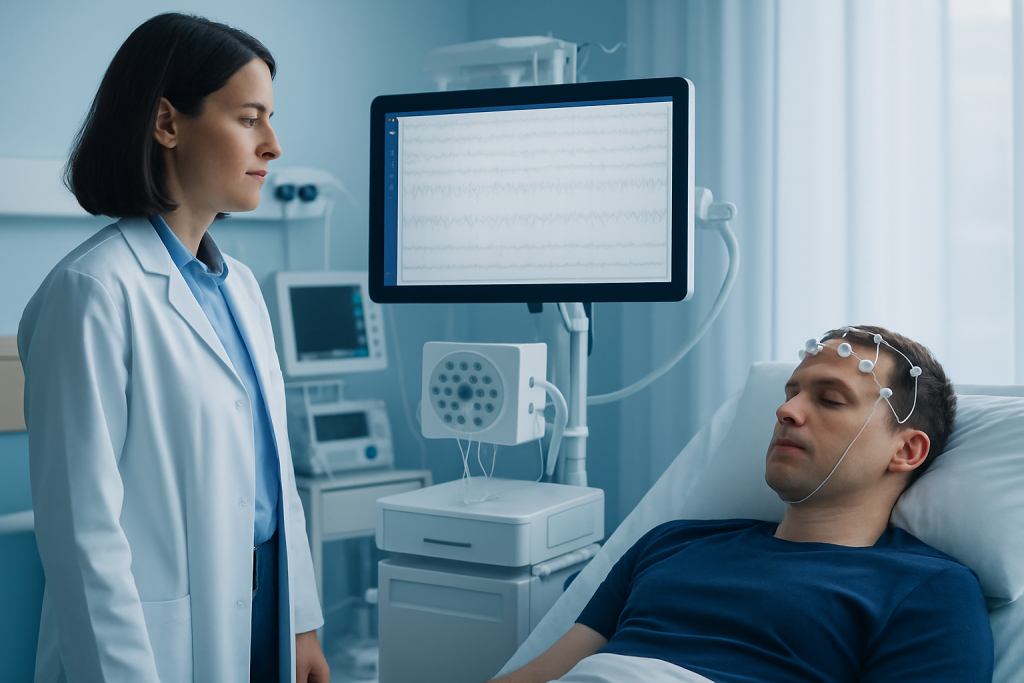
An electroencephalogram (EEG) is a key test. It records electrical activity in the brain and may show a pattern consistent with absence seizures. The clinician may ask the person to breathe deeply for a short period during the recording, as this can sometimes bring on a typical episode under supervised conditions.
Brain imaging is not necessary for every person with suspected absence epilepsy, particularly when the history and EEG are typical. However, an MRI or other tests may be recommended if the presentation is unusual, there are neurological concerns, or another cause needs to be excluded. Evaluation should also consider conditions that can resemble seizures, including focal seizures, attention-related difficulties and fainting episodes.
A neurology assessment can clarify whether the events fit epilepsy and identify the most appropriate care plan. Accurate classification matters because medicines that are useful for some seizure types may not be the best choice for others.
Treatment and everyday support
Treatment aims to stop seizures, protect safety and support normal participation in education, work and daily life. Anti-seizure medicines are the main treatment for absence epilepsy. The choice depends on the person’s age, seizure type, other health conditions, potential side effects and whether any additional seizure types are present.
Many people respond well to medication, but follow-up is important. A clinician may review seizure frequency, side effects, mood, concentration and EEG findings over time. Medicines should not be stopped suddenly or changed without medical advice, as this can increase the chance of seizures.
Good sleep routines, taking prescribed medicine consistently and avoiding known individual triggers can support seizure control. Families may wish to inform school staff or relevant workplace contacts so that episodes are recognized and support can be provided without blame or embarrassment. A clinician can also advise about sports, swimming supervision, driving and other activities based on the person’s circumstances.
For international patients, Acibadem International’s multidisciplinary specialists and JCI-accredited hospitals evaluate and treat seizure disorders, including epilepsy, with individualized diagnostic and follow-up planning.
When to seek medical care
Arrange a prompt medical appointment for new, repeated or unexplained staring episodes, especially if the person cannot respond during them, has sudden pauses in activity, or is having difficulties at school or work. It is also important to seek review if episodes increase, occur despite treatment or are accompanied by falls, jerking movements, confusion or changes in behavior.
Emergency medical help is needed if a seizure lasts longer than five minutes, seizures occur repeatedly without the person returning to their usual state, there is trouble breathing, a significant injury occurs, or it is the person’s first seizure with concerning symptoms. Emergency services should also be contacted if a seizure happens in water or during a situation where immediate safety is at risk.
During a suspected absence seizure, stay calm and remain nearby. Guide the person away from hazards if needed, avoid restraining them, and note the start and end time. Once the episode has passed, offer reassurance and record what occurred to share with a healthcare professional.
Frequently asked questions
Can untreated absence seizures cause brain damage?
Typical brief absence seizures are not generally thought to cause brain damage on their own. However, frequent untreated episodes can interfere with learning, attention, safety and daily functioning. A medical assessment can confirm the cause and help prevent these practical effects.
Do absence seizures go away without treatment?
Some childhood absence epilepsy syndromes may improve or resolve over time, but this cannot be predicted reliably without medical evaluation. Seizures may continue for months or years and can affect daily life while present. A clinician should advise whether treatment and ongoing monitoring are needed.
How can someone tell the difference between daydreaming and an absence seizure?
Daydreaming usually develops gradually and can often be interrupted by calling the person’s name or touching them. An absence seizure typically starts and ends suddenly, and the person cannot respond during the brief episode. An EEG and clinical evaluation are needed to diagnose seizures accurately.
Are absence seizures dangerous?
They are often brief and do not usually cause immediate physical harm. They can still be dangerous in situations requiring continuous awareness, such as crossing roads, swimming, cooking or operating equipment. Their frequency and the person’s activities help determine the level of risk.
What tests are used for suspected absence seizures?
Doctors usually begin with a medical history and witness description of the events. An EEG is commonly used to look for brain-wave patterns associated with absence seizures, sometimes with supervised hyperventilation. Further tests may be considered if symptoms are atypical or another condition is suspected.
Can adults have absence seizures?
Yes. Absence seizures often begin in childhood or adolescence, but some people continue to experience them as adults or are diagnosed later. New episodes of unresponsiveness in adulthood should always be assessed because several medical conditions can cause similar symptoms.
References
- Centers for Disease Control and Prevention
- Epilepsy Foundation
- National Institute of Neurological Disorders and Stroke
- International League Against Epilepsy
- National Health Service
This article is for general information only and is not a substitute for professional medical advice. Please consult a qualified doctor about your individual situation.
Explore treatments in Turkey — costs, top hospitals & a free quote
JCI-accredited · board-certified surgeons · reply within 24h
Add us as a Preferred Source to see more of our trusted health content across Google Search, AI Overviews and Discover.

More from the Health Library



Related Specialists

Fzt. Serkan Başkurt
Physical Medicine & Rehabilitation
Dr. Meftun Zerbızade
Neurosurgery
Dr. Begüm Uzsezer Güler
Gynecology & Obstetrics
Prof. Dr. Necdet Sağlam
Orthopedic Surgery & Traumatology