

What Is a Dental Crown? Uses, Materials, and Benefits
A dental crown covers and protects a tooth that is weakened, broken, worn, or heavily restored. Common crown materials include porcelain, ceramic, metal alloys, and porcelain-fused-to-metal.
Key Takeaways
- A dental crown covers and protects a tooth that is weakened, broken, worn, or heavily restored.
- Common crown materials include porcelain, ceramic, metal alloys, and porcelain-fused-to-metal.
- The best crown type depends on the tooth location, bite forces, appearance goals, and oral health needs.
- Good oral hygiene and regular dental checkups help crowns last longer.
- Pain, looseness, a damaged crown, or swelling around the tooth should be checked by a dentist.
A dental crown is a tooth-shaped cap placed over a damaged, weak, or treated tooth to restore its function and appearance. Crowns are commonly used to protect teeth after large fillings, fractures, root canal treatment, or significant wear.
Overview: What Is a Dental Crown?
A dental crown is a custom-made covering that fits over a tooth. It is designed to restore the tooth’s shape, size, strength, and appearance when the natural structure has been damaged or weakened. Once cemented or bonded in place, the crown acts like a protective outer layer that allows the tooth to function more normally.
Dentists may recommend a crown when a tooth cannot be reliably restored with a simple filling alone. This can happen after a large cavity, a fracture, advanced wear, or root canal treatment. Crowns can also improve the appearance of misshapen or discolored teeth and may be used as part of broader general dentistry care.
A crown is different from a filling because it covers most or all of the visible part of the tooth above the gumline. It is also different from a removable denture, since it is fixed in place. In many cases, a crown helps preserve a natural tooth for longer rather than removing it.
When Is a Dental Crown Needed?
Dental crowns are used for both restorative and cosmetic reasons. A common reason is to protect a tooth that has been weakened by decay, a large filling, or a crack. A crown can hold the remaining tooth structure together and reduce the risk of further breakage.
Crowns are also often placed after root canal treatment, especially on back teeth that handle strong chewing forces. In these cases, the tooth may become more brittle over time, and a crown provides added support. Dentists may also use crowns to replace a missing tooth by attaching them to dental implants or as part of a dental bridge.
Other uses include covering severely worn teeth, reshaping a tooth with poor form, or improving the look of a tooth with deep discoloration that may not respond well to whitening. In children or adults with extensive damage, the decision depends on how much healthy tooth structure remains and whether long-term protection is needed.
- Large cavities that leave too little tooth for a filling
- Broken, cracked, or badly worn teeth
- Teeth treated with root canal therapy
- Support for bridges or implants
- Cosmetic improvement of shape or color
Types of Dental Crown Materials
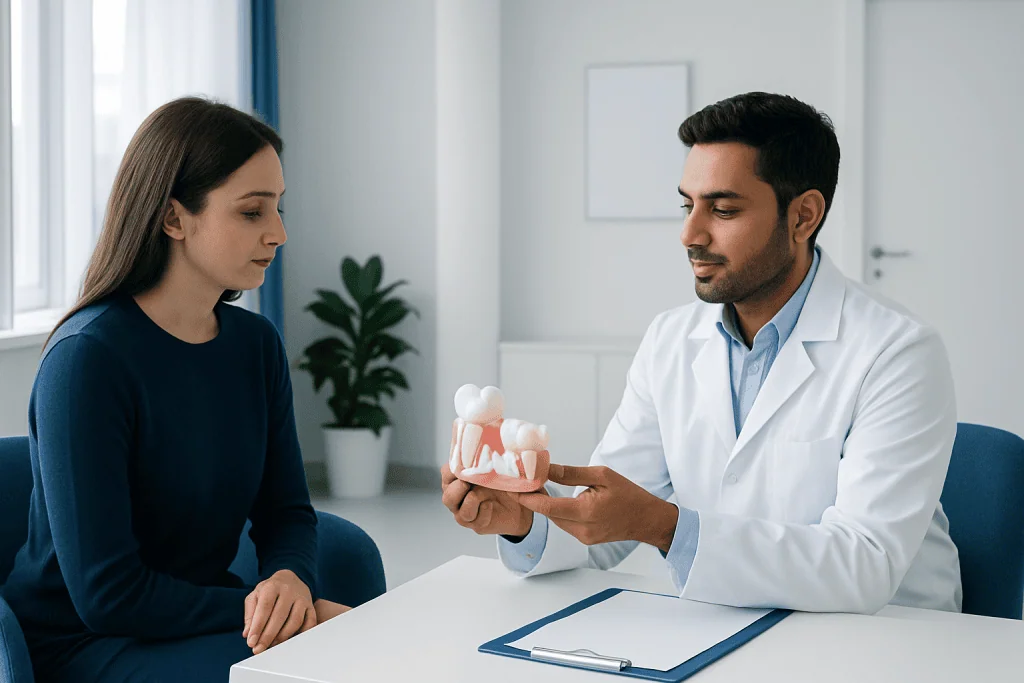
Dental crowns can be made from several materials, and each has advantages and limitations. Common options include all-ceramic or all-porcelain crowns, porcelain-fused-to-metal crowns, metal alloy crowns, and resin-based crowns. The right choice depends on the tooth’s position, the patient’s bite, the amount of remaining tooth, and aesthetic preferences.
All-ceramic and all-porcelain crowns are often chosen for front teeth because they can closely match natural tooth color. They are metal-free and can provide a lifelike appearance. In some cases, they may also be suitable for back teeth, especially when modern high-strength ceramics are used.
Porcelain-fused-to-metal crowns combine a metal base with a tooth-colored outer layer. They can offer a balance of strength and appearance, although sometimes the metal may become visible near the gumline over time. Full metal crowns, often made from gold-colored or silver-colored alloys, are highly durable and may be useful on back teeth where chewing forces are strongest and visibility is low.
Some practices use digital scanning and computer-guided workflows to help design and fabricate crowns with high precision, especially within digital dentistry. The dentist will explain which material best suits the individual tooth, bite pattern, and cosmetic goals.
How the Dental Crown Procedure Works
The process usually begins with an examination and imaging to assess the tooth and surrounding tissues. The dentist checks whether enough healthy tooth structure remains and whether the tooth nerve is healthy or has already been treated. If active decay, infection, or gum disease is present, these issues may need attention first.
To prepare the tooth, the dentist reshapes it so the crown can fit securely. Impressions or digital scans are then taken to create a crown that matches the bite and nearby teeth. In many traditional cases, a temporary crown is placed while the permanent one is made in a dental laboratory. This temporary crown protects the tooth for a short period.
At the fitting appointment, the permanent crown is checked for shape, color, and bite. Minor adjustments may be made before it is cemented or bonded into place. The goal is a comfortable fit that allows normal chewing and feels natural with the other teeth.
Some people notice mild sensitivity or tenderness for a few days after the procedure, especially around the gumline. This usually settles as the tooth and surrounding tissues adapt. If discomfort persists, the bite may need adjustment by the dentist.
Benefits of a Dental Crown
The main benefit of a dental crown is protection. By covering the tooth, a crown can help reduce the risk of further fracture or wear and allow the tooth to handle normal biting forces more effectively. This can be especially important for teeth with large restorations or teeth that have already lost substantial structure.
Crowns also restore function. A damaged tooth may make chewing uncomfortable or inefficient, while a well-fitted crown can improve stability and contact with opposing teeth. For some patients, this also improves speech and day-to-day comfort.
Appearance is another important advantage. Modern crown materials can closely resemble natural enamel in color and contour, making them a useful choice within cosmetic dentistry when a tooth is badly misshapen or discolored. In addition, crowns can support long-term oral health by helping preserve a natural tooth that might otherwise need extraction.
- Strengthens a weak or broken tooth
- Restores chewing ability and comfort
- Improves tooth shape, color, and overall appearance
- Protects root canal-treated teeth
- May help avoid tooth loss in selected cases
Possible Risks, Limitations, and Lifespan
Dental crowns are widely used and generally reliable, but they are not permanent and they do have limitations. A crown can chip, loosen, wear down, or come off, especially if there is tooth decay underneath, a very heavy bite, or habits such as clenching and grinding. Some people with teeth grinding or bruxism may need a night guard to help protect both natural teeth and crowns.
There can also be short-term sensitivity to cold, heat, or pressure after placement. If the tooth still has a living nerve, this sensitivity often improves as the tooth settles. Rarely, the bite may feel high, causing discomfort in the tooth or jaw until adjusted.
The lifespan of a crown varies and depends on the material used, oral hygiene, biting forces, diet, and regular dental care. Although many crowns last for years, no exact lifespan can be guaranteed. Avoiding very hard foods, maintaining clean gums around the crown, and attending routine checkups can help it last longer.
Caring for a Dental Crown
A crowned tooth still needs daily care. Although the crown itself cannot decay like natural enamel, the tooth structure at the margin where the crown meets the gum can still develop cavities. Brushing twice daily with fluoride toothpaste and cleaning between the teeth every day are important for keeping the area healthy.
It also helps to limit frequent sugary snacks and drinks, which increase the risk of decay around the crown edges. People should avoid using teeth to open packaging or biting hard objects such as ice, pens, or unpopped popcorn kernels, as these habits can damage both crowns and natural teeth. Consistent dental hygiene supports the long-term success of any crown.
Regular dental checkups allow the dentist to examine the crown, the underlying tooth, the bite, and the gums. Professional cleaning can help remove plaque around hard-to-reach areas. Early review is especially helpful if there is a history of gum recession, clenching, or repeated dental repairs.
When to See a Dentist
A person should contact a dentist if a crown feels loose, moves when chewing, causes persistent pain, or no longer fits comfortably. A cracked or chipped crown may still look minor on the surface, but it can expose the tooth or affect the bite. Swelling, bad taste, bleeding around the tooth, or increasing sensitivity may also suggest a problem that needs assessment.
Prompt care is particularly important after trauma or if a temporary crown falls off before the final crown is placed. Even when there is little pain, leaving a damaged or missing crown untreated can allow the tooth to weaken further or shift position. If sudden injury is involved, urgent evaluation through dental emergency and trauma care may be appropriate.
For people seeking diagnosis or treatment abroad, Acibadem International’s multidisciplinary specialists and JCI-accredited hospitals provide evaluation and treatment for a wide range of dental conditions, including restorative procedures such as crowns. A qualified dentist can recommend whether a crown, filling, veneer, implant, or another option is the most suitable choice.
Frequently asked questions
Is getting a dental crown painful?
The procedure is usually done with local anesthesia, so the tooth is numbed during preparation. Some mild soreness or sensitivity afterward is possible, but this often improves within a few days. Persistent or severe discomfort should be checked by a dentist.
How long does a dental crown last?
A dental crown can last for many years, but its lifespan varies from person to person. The material, bite forces, oral hygiene, and habits such as grinding all affect durability. Regular checkups help identify wear or problems early.
Can a crowned tooth still get a cavity?
Yes. The crown itself does not decay, but the natural tooth at the edge of the crown can still develop cavities. Careful brushing, flossing, and dental visits are important to protect this area.
What is the best material for a dental crown?
There is no single best material for every situation. Ceramic or porcelain crowns are often preferred for a natural look, while metal-containing crowns may offer excellent strength in some back teeth. The best option depends on appearance goals, bite, tooth position, and the amount of remaining tooth structure.
What should a person avoid after getting a crown?
It is sensible to avoid very sticky or hard foods immediately after placement, especially if a temporary crown is in place. Long term, people should avoid chewing ice, biting hard objects, and using teeth as tools. These habits can loosen or damage the crown.
Can a dental crown be replaced?
Yes. If a crown becomes worn, damaged, loose, or no longer fits well, a dentist can evaluate whether it should be repaired or replaced. The condition of the underlying tooth will help determine the next step.
References
- American Dental Association
- National Institute of Dental and Craniofacial Research
- NHS
- Mayo Clinic
- FDI World Dental Federation
This article is for general information only and is not a substitute for professional medical advice. Please consult a qualified doctor about your individual situation.
Joint and spine care in Turkey — expert assessment & treatment
JCI-accredited · board-certified surgeons · reply within 24h
Add us as a Preferred Source to see more of our trusted health content across Google Search, AI Overviews and Discover.

Dental & Oral Health
Full-scope dental care from implants and aesthetics to oral and maxillofacial surgery.
158 specialists in this unitRelated Treatments
More from the Health Library



Related Specialists

Assoc. Prof. Dr. Ferit Bayram
Oral & Dental Health
Assoc. Prof. Dr. Yeliz Çavuşoğlu Yüce
Oral & Dental Health
Assoc. Prof. Dr. Mutlu Keskin
Oral & Dental Health
Prof. Dr. Ülkü Noyan
Oral & Dental Health