What Is a Diagnostic Mammogram for Men?
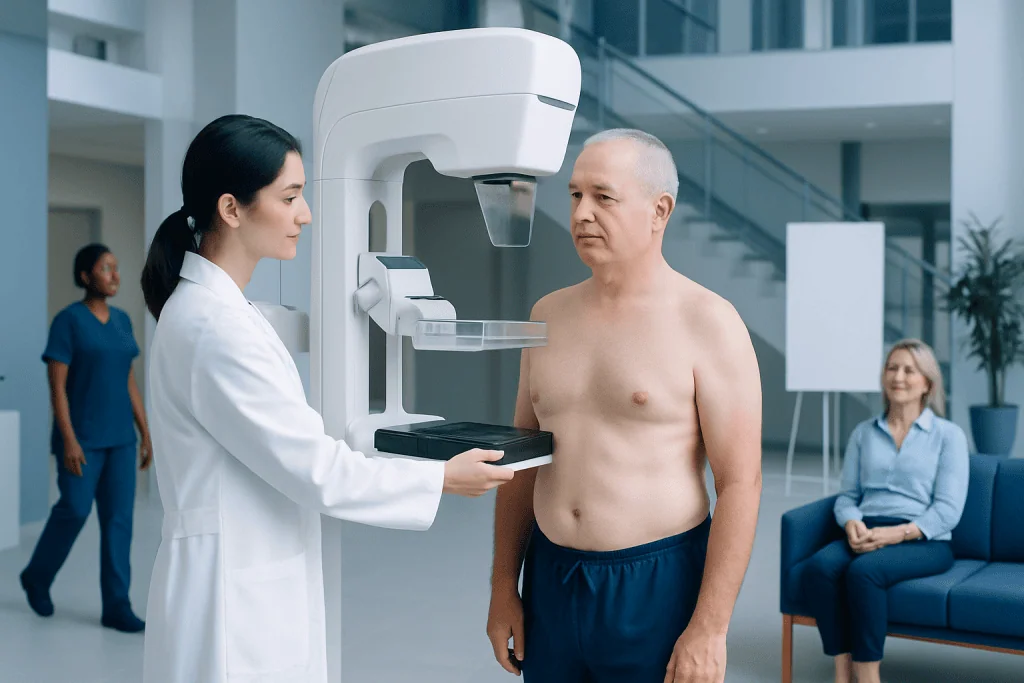
A diagnostic mammogram for men is used to investigate symptoms, not as routine screening for most men. It can help distinguish common benign causes, such as gynecomastia, from findings that need further testing.
Key Takeaways
- A diagnostic mammogram for men is used to investigate symptoms, not as routine screening for most men.
- It can help distinguish common benign causes, such as gynecomastia, from findings that need further testing.
- The test is brief and uses low-dose X-rays to create detailed images of breast tissue.
- Additional imaging, such as ultrasound, or a biopsy may be recommended depending on the results.
- Men should seek medical evaluation for a new breast lump, nipple discharge, or skin or nipple changes.
A diagnostic mammogram for men is a targeted breast imaging test used to investigate symptoms such as a lump, swelling, nipple discharge, or skin changes. Although mammograms are more often associated with women, they can play an important role in evaluating male breast concerns quickly and accurately.
Overview: what a diagnostic mammogram for men is
A diagnostic mammogram for men is a breast X-ray performed to evaluate a specific symptom or abnormal finding. Unlike a screening mammogram, which is done routinely in people without symptoms, a diagnostic mammogram is ordered when there is a concern that needs closer assessment. In men, this most often includes a new lump under or near the nipple, breast enlargement, tenderness, nipple discharge, or skin changes.
Men have much less breast tissue than women, but they can still develop breast conditions. Many of these are benign, meaning non-cancerous. A common example is gynecomastia, which is enlargement of male breast tissue that can be linked to hormonal changes, medications, liver disease, or other causes. Imaging helps a doctor understand whether symptoms are more consistent with a benign condition or whether more testing is needed.
A diagnostic mammogram is usually performed in a radiology or breast imaging center. The images are reviewed by a radiologist, often along with the patient’s symptoms and physical examination findings. In some cases, a breast ultrasound is also used on the same day to provide additional information.
Why men may need this test
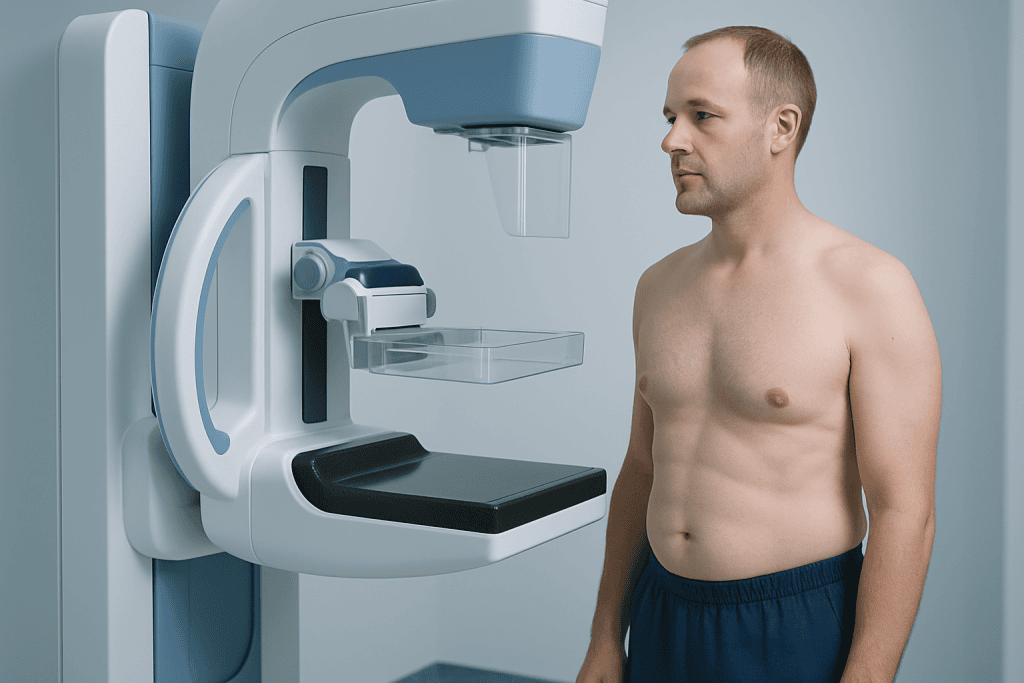
A doctor may recommend a diagnostic mammogram for men when breast symptoms cannot be explained by examination alone. The main goal is to identify the cause of the problem as clearly as possible and guide the next step. Most male breast complaints are not caused by cancer, but imaging is important because some symptoms can overlap.
Common reasons for a diagnostic mammogram in men include:
- A new breast or chest wall lump
- One-sided breast enlargement
- Breast pain or tenderness, especially if localized
- Nipple discharge, particularly if bloody or from one side
- Nipple inversion or a new change in nipple shape
- Skin dimpling, thickening, redness, or ulceration
- An abnormality found during another examination or scan
This test may also be considered in men with a stronger risk profile, such as a personal history of breast cancer, a significant family history, or known inherited risk factors. If symptoms suggest a non-cancerous condition such as gynecomastia, imaging can still be useful to confirm that impression and rule out other causes.
What the test can show
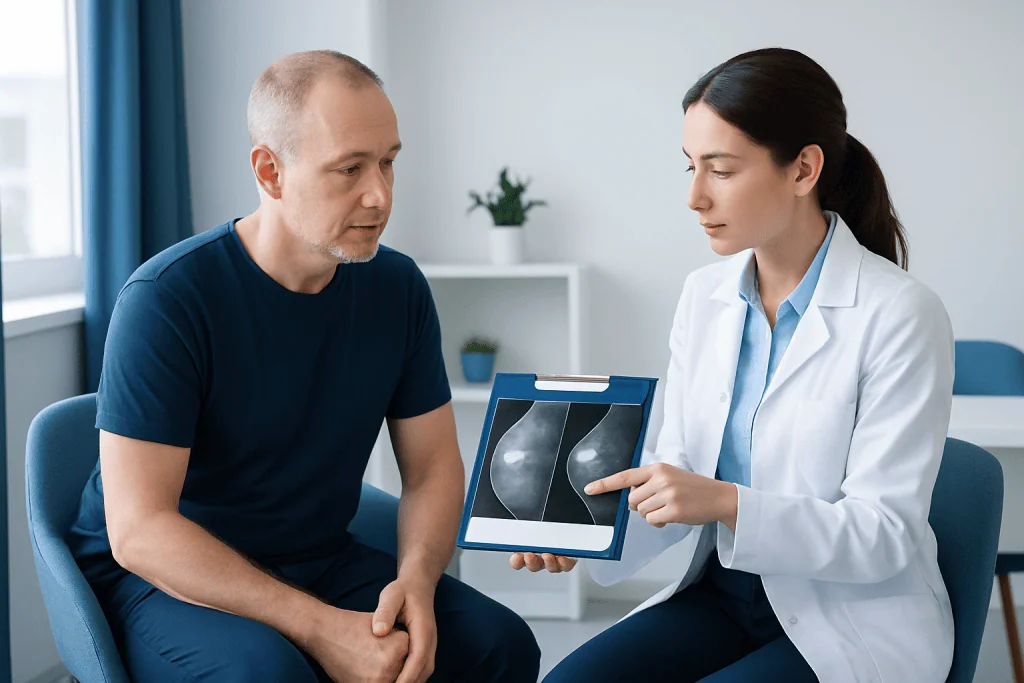
A diagnostic mammogram for men can reveal patterns in the breast tissue that help doctors narrow down the diagnosis. In many cases, it can show the typical appearance of gynecomastia, which often appears as a flame-shaped or nodular area of tissue behind the nipple. This finding is common and usually benign.
The test can also identify suspicious masses, calcifications, or asymmetry that may require further evaluation. In male breast cancer, imaging may show an irregular mass, often away from the center of the nipple, although appearances can vary. Mammography is one part of the assessment and is interpreted together with symptoms and examination findings.
If mammogram results are unclear or if the radiologist wants to look more closely at a lump, a breast ultrasound may be added. Ultrasound is especially helpful for showing whether a lump is solid or fluid-filled and for guiding procedures such as breast biopsy if a tissue sample is needed.
What to expect during the appointment
Before the exam, the patient is usually asked about symptoms, past medical history, medications, and any family history of breast cancer. It is best not to apply deodorant, powder, or lotions to the chest or underarm area on the day of the test, because some products can affect the images. The patient will undress from the waist up and wear a gown.
During the mammogram, the breast tissue is placed on a flat plate and gently compressed with another plate for a few seconds while the X-ray image is taken. Because men have less breast tissue, positioning can feel slightly awkward, but the technologist will help make the process as comfortable as possible. Usually, images are taken from more than one angle, and extra views may be needed depending on the area being examined.
The test is brief, and each image takes only a short time. Some men feel pressure or temporary discomfort during compression, but it should pass quickly once the image is completed. If the area is especially tender, telling the technologist can help them adjust positioning carefully.
In many centers, a diagnostic mammogram is followed immediately by targeted ultrasound if the radiologist believes it would be useful. This can reduce delays and help provide a clearer answer on the same day.
Results and possible next steps
Results may show a benign pattern, a probably benign finding that needs follow-up, or an abnormality that requires more testing. When the images clearly match gynecomastia or another harmless condition, no invasive test may be needed. The doctor may instead focus on identifying triggers such as medications, hormone-related conditions, or weight changes.
If the findings are not clearly benign, the next step may be additional imaging or tissue sampling. An ultrasound can provide more detail, and a biopsy can confirm the diagnosis under the microscope. In some situations, doctors may also order blood tests to look for hormonal, liver, kidney, or thyroid-related causes of breast enlargement.
If cancer is diagnosed, treatment planning depends on the stage, tumor features, and the patient’s overall health. Imaging may be part of a broader workup that can include MRI or other tests when appropriate. At the end of the imaging process, the radiologist usually provides a report to the referring doctor, who explains the findings and recommended next steps.
Limitations, safety, and accuracy
Mammography uses a low dose of radiation. For most patients, the benefits of investigating a concerning symptom outweigh the small radiation exposure from the test. Diagnostic mammography has been widely used for many years and is considered a standard, well-established imaging tool.
Like any test, a mammogram has limitations. Not every abnormality can be fully characterized by mammography alone, and some findings may need ultrasound or biopsy for a definite answer. A normal mammogram also does not mean symptoms should be ignored if they persist or worsen.
Accuracy depends on image quality, the type of breast tissue present, and whether the imaging findings match the clinical picture. This is why doctors combine mammogram results with a physical examination, medical history, and sometimes laboratory tests. When these pieces are reviewed together, the evaluation is more reliable.
When to see a doctor
Men should not ignore breast changes, even though many causes are benign. A prompt medical evaluation is important for any new or persistent symptom. Early assessment can often provide reassurance and, when needed, lead to timely treatment.
It is sensible to arrange a medical visit if there is:
- A new lump in the breast or under the nipple
- One-sided breast enlargement that is new or increasing
- Nipple discharge, especially if bloody
- Nipple inversion or a new change in nipple position
- Skin dimpling, thickening, redness, or scaling
- Persistent pain focused in one area
- Swelling in the underarm area
If symptoms are rapidly changing, associated with fever, or follow an injury, more urgent evaluation may be appropriate. Men with a strong family history of breast cancer or known inherited mutations should discuss individualized breast risk assessment with a qualified doctor.
For international patients who need evaluation, Acibadem International’s multidisciplinary specialists and JCI-accredited hospitals diagnose and treat breast conditions using coordinated imaging and follow-up care.
Frequently asked questions
Do men really get mammograms?
Yes. Men can have mammograms when they have breast symptoms such as a lump, nipple discharge, or one-sided enlargement. In men, the test is usually diagnostic rather than routine screening.
Is a diagnostic mammogram for men the same as a screening mammogram?
No. A diagnostic mammogram is done to investigate a specific symptom or abnormal finding. A screening mammogram is used routinely in people without symptoms, which is not common for most men.
What is the most common reason a man might need this test?
One of the most common reasons is to evaluate gynecomastia, which is benign enlargement of male breast tissue. A new lump or nipple-related change is also a common reason for imaging.
Is the test painful?
Most men feel pressure and brief discomfort during compression, but the exam is usually quick. If the area is tender, the technologist can often adjust positioning to make it more manageable.
Can a mammogram tell if a breast lump in a man is cancer?
A mammogram can show whether a finding looks benign or suspicious, but it may not provide a final diagnosis by itself. If the result is unclear or concerning, ultrasound or a biopsy may be needed.
How should a man prepare for a diagnostic mammogram?
It is generally recommended to avoid deodorant, powders, or lotions on the chest and underarms on the day of the exam. Bringing information about symptoms, medications, and family history can also be helpful.
References
- American Cancer Society
- Radiological Society of North America
- National Cancer Institute
- Centers for Disease Control and Prevention
- American College of Radiology
This article is for general information only and is not a substitute for professional medical advice. Please consult a qualified doctor about your individual situation.
Explore treatments in Turkey — costs, top hospitals & a free quote
JCI-accredited · board-certified surgeons · reply within 24h
Add us as a Preferred Source to see more of our trusted health content across Google Search, AI Overviews and Discover.