What Is a Partial Knee Replacement Procedure?

Partial knee replacement treats damage limited to one compartment of the knee. It usually preserves more healthy bone, cartilage, and ligaments than total knee replacement.
Key Takeaways
- Partial knee replacement treats damage limited to one compartment of the knee.
- It usually preserves more healthy bone, cartilage, and ligaments than total knee replacement.
- Not everyone with knee arthritis is a candidate; careful evaluation is essential.
- Recovery may be quicker than with total knee replacement, but rehabilitation still matters.
- Long-term success depends on proper patient selection, surgical technique, and follow-up care.
A partial knee replacement procedure is a type of knee surgery that replaces only the worn or damaged section of the knee joint rather than the entire joint. It may be an option for carefully selected people with arthritis limited to one part of the knee.
Overview of Partial Knee Replacement
A partial knee replacement procedure, also called unicompartmental knee replacement, is an operation used to treat arthritis or joint damage affecting only one part of the knee. Instead of replacing the whole joint, the surgeon removes the damaged surfaces in the affected compartment and replaces them with artificial components made of metal and medical-grade plastic. The healthy parts of the knee are left in place.
The knee has three main compartments: the medial compartment on the inner side, the lateral compartment on the outer side, and the patellofemoral compartment behind the kneecap. A partial replacement is most often performed when osteoarthritis is limited to one of these compartments, especially the inner side of the knee. This makes it different from a total knee replacement, which resurfaces the entire joint.
Because more of the natural knee is preserved, some people feel that the knee moves in a more natural way after surgery. The incision may be smaller, blood loss may be lower, and recovery can be somewhat faster in suitable patients. However, the procedure is only effective when the damage is truly limited, so the decision depends on a careful orthopedic assessment.
Who May Benefit From This Procedure

Partial knee replacement is generally considered for people who have persistent knee pain, stiffness, and reduced function that have not improved enough with nonsurgical treatment. These treatments may include activity modification, physical therapy, weight management, pain-relieving medicines, bracing, or injections. When symptoms continue to affect walking, sleep, work, or daily activities, surgery may be discussed.
The best candidates usually have arthritis confined to a single compartment of the knee, with relatively healthy cartilage in the rest of the joint. The knee should also be reasonably stable, with ligaments that still function well, especially the anterior cruciate ligament in many cases. Good range of motion and only mild deformity may also support candidacy.
Doctors do not decide based on age alone. Younger and older adults can both be candidates if the pattern of damage is appropriate. On the other hand, widespread arthritis, major knee instability, severe deformity, inflammatory arthritis, or substantial damage behind the kneecap may make a total knee replacement a better option. In some cases, symptoms thought to come from one area may actually reflect more extensive joint disease such as knee osteoarthritis.
Symptoms and Conditions It Can Treat
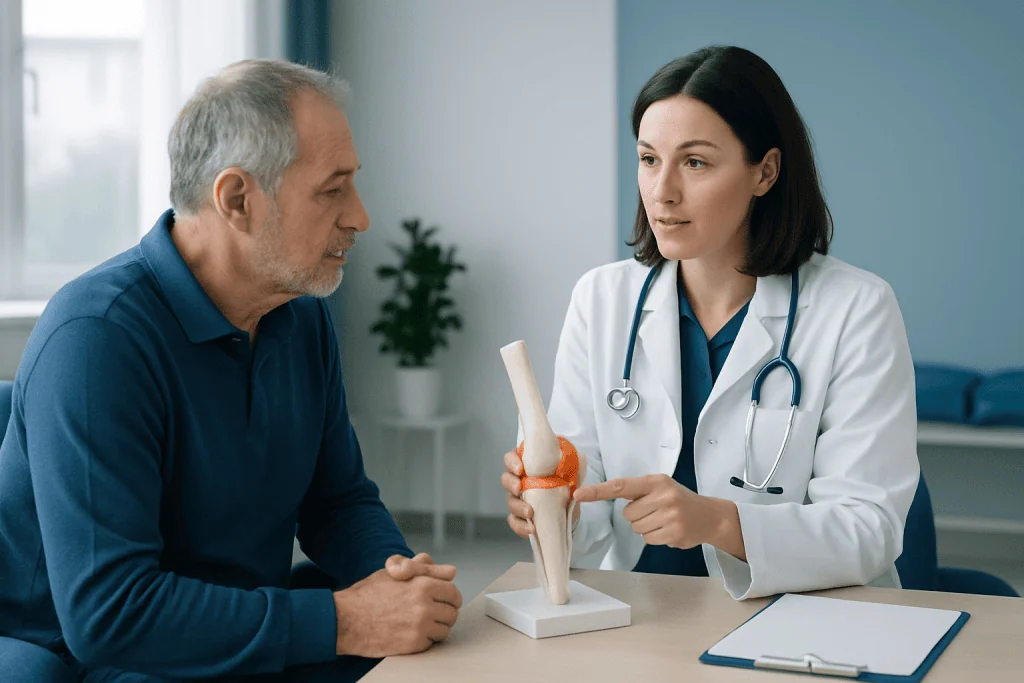
The main reason for considering a partial knee replacement procedure is pain caused by joint surface damage in one part of the knee. This pain is often worse with walking, climbing stairs, standing for long periods, or getting up from a chair. Some people also notice stiffness, swelling, a grinding sensation, or a feeling that the knee is not moving smoothly.
The condition most commonly treated is osteoarthritis, a gradual breakdown of cartilage. Cartilage normally allows the joint to glide smoothly, but when it wears away, the bones rub together and cause pain and inflammation. In selected cases, a partial replacement may also be used for localized damage related to osteonecrosis or a previous injury, provided the rest of the knee remains healthy.
Doctors will usually explore whether symptoms match the area of joint damage seen on imaging. Pain throughout the entire knee, major swelling, or symptoms affecting several compartments may suggest that damage is more widespread. In that situation, another treatment strategy may be more appropriate than a partial replacement.
How Doctors Diagnose and Plan Surgery
Diagnosis starts with a medical history and physical examination. The doctor asks about pain location, severity, activities that worsen symptoms, previous injuries, and how much symptoms affect quality of life. During the examination, they check swelling, alignment, range of motion, stability, and which part of the knee is tender or painful.
X-rays are the main imaging test used to assess arthritis and determine which compartment is affected. Weight-bearing X-rays are especially useful because they show how much joint space remains when the person is standing. In some cases, MRI or other imaging may help clarify cartilage damage, ligament condition, or whether the disease is more extensive than it first appears.
Planning surgery also includes an overall health review. Doctors consider medical conditions such as diabetes, heart disease, smoking status, and body weight because these can affect healing and surgical risk. The goal is to confirm both that the knee pattern is suitable for partial replacement and that the patient is prepared for surgery and rehabilitation. When surgery is appropriate, the orthopedic team may discuss options within broader knee replacement care.
What Happens During a Partial Knee Replacement Procedure
The operation is performed in a hospital under regional anesthesia, general anesthesia, or a combination recommended by the anesthesiology team. After preparing the knee, the surgeon makes an incision to access the damaged compartment. Only the worn cartilage and a small amount of underlying bone in the affected area are removed.
The surgeon then places specially shaped implants that recreate the smooth surfaces of the joint. The exact technique varies depending on the compartment involved and the implant design. The healthy bone, cartilage, and usually the key supporting ligaments in the rest of the knee are preserved, which is one reason the procedure can feel more natural than replacing the entire joint.
Many centers encourage early movement after surgery, sometimes on the same day. Pain control, walking assistance, and physical therapy begin soon after the procedure. For some patients, partial replacement may be part of a broader orthopedic plan that also involves robotic orthopedic surgery if that technology is appropriate and available, although the best approach depends on the surgeon’s judgment and the individual’s anatomy.
Recovery, Rehabilitation, and Expected Results
Recovery after a partial knee replacement procedure varies from person to person, but many people regain walking ability relatively quickly compared with total knee replacement. Most patients use a walker, crutches, or a cane for a short period while strength and balance improve. Swelling, discomfort, and temporary stiffness are common in the early weeks.
Physical therapy is an important part of recovery. Exercises focus on improving knee motion, strengthening the thigh and hip muscles, and restoring normal walking patterns. Following the rehabilitation plan helps reduce stiffness and supports long-term function. It is also important to protect the wound, take medicines as directed, and attend follow-up visits.
Many patients experience meaningful pain relief and better daily function after healing. They may find it easier to walk, go up and down stairs, and return to low-impact activities. However, the artificial joint is not identical to a natural knee, and high-impact sports or heavy repetitive strain may not be recommended. If arthritis later develops in the remaining compartments, some patients may eventually need conversion to a total knee replacement.
Benefits, Limitations, and Possible Risks
One potential advantage of partial knee replacement is that it preserves more of the knee’s normal structures. This can mean a smaller operation, less disruption of tissues, and sometimes a more natural-feeling knee afterward. Some patients also have a shorter hospital stay and faster return to daily activities than those undergoing total knee replacement.
At the same time, the procedure has important limitations. It works best only when damage is truly localized. If arthritis is already present in more than one compartment, symptoms may continue or return. That is why careful patient selection is one of the most important factors in a good outcome.
As with any surgery, there are risks. These include infection, blood clots, bleeding, stiffness, implant loosening, nerve or blood vessel injury, persistent pain, and progression of arthritis in other parts of the knee. Doctors reduce these risks through careful planning, sterile technique, early mobilization, and follow-up care. If symptoms are severe and more widespread, doctors may compare this approach with other orthopedic rehabilitation and surgical options.
- Benefits may include pain relief and improved movement.
- Preserving healthy tissue can support a more natural knee feel.
- Recovery may be quicker than with total knee replacement in selected patients.
- Not all knee arthritis can be treated with a partial replacement.
Self-care, Long-Term Joint Health, and When to See a Doctor
Self-care plays an important role both before and after surgery. Maintaining a healthy weight can reduce pressure on the knee joint. Regular low-impact exercise, such as walking, cycling, or swimming, helps support joint mobility and muscle strength. People with knee symptoms should also avoid repeatedly pushing through activities that significantly worsen pain.
After surgery, long-term joint health depends on staying active in a balanced way, continuing strengthening exercises when advised, and protecting the knee from major trauma. Supportive footwear, fall prevention, and management of other health conditions can also help preserve mobility. If symptoms change over time, reassessment is important because arthritis can progress in other parts of the joint.
A person should see a doctor if knee pain is persistent, swelling keeps returning, the knee becomes increasingly bowed or unstable, or daily activities are becoming difficult despite conservative treatment. Urgent medical advice is needed after surgery for fever, wound drainage, worsening redness, severe calf pain, chest pain, or sudden shortness of breath. For international patients needing evaluation and treatment, Acibadem International’s multidisciplinary specialists in JCI-accredited hospitals provide assessment and care for knee conditions and procedures such as partial knee replacement.
Frequently asked questions
What is the difference between partial and total knee replacement?
A partial knee replacement replaces only the damaged compartment of the knee, while a total knee replacement resurfaces the entire joint. Partial replacement preserves more natural bone and ligaments, but it is only suitable when arthritis is limited to one area.
How long does it take to recover from a partial knee replacement procedure?
Recovery time varies, but many people begin walking soon after surgery with support. Improvement often continues over several weeks to months as swelling decreases and strength returns through rehabilitation.
Is partial knee replacement less painful than total knee replacement?
Some patients experience less postoperative pain and a quicker early recovery because the surgery is smaller and preserves more tissue. Even so, pain experiences differ, and proper pain management and physical therapy remain important.
How long does a partial knee replacement last?
A partial knee replacement can last many years, especially when the original knee damage was well suited to the procedure and the implants remain stable. Longevity depends on factors such as activity level, body weight, implant position, and whether arthritis develops in other knee compartments.
Can arthritis come back after a partial knee replacement?
The replaced compartment itself does not regrow cartilage, but arthritis can progress in the other parts of the knee that were not replaced. If that happens, symptoms may return and some patients may later need further treatment.
Who is not a good candidate for partial knee replacement?
People with widespread knee arthritis, major deformity, unstable ligaments, significant inflammatory arthritis, or marked damage in more than one compartment may not be good candidates. An orthopedic surgeon uses examination and imaging to decide whether the procedure is appropriate.
References
- American Academy of Orthopaedic Surgeons
- National Institute for Health and Care Excellence
- National Institute of Arthritis and Musculoskeletal and Skin Diseases
- OrthoInfo
- Arthritis Foundation
This article is for general information only and is not a substitute for professional medical advice. Please consult a qualified doctor about your individual situation.
Joint and spine care in Turkey — expert assessment & treatment
JCI-accredited · board-certified surgeons · reply within 24h
Add us as a Preferred Source to see more of our trusted health content across Google Search, AI Overviews and Discover.

Orthopedics & Spine
Care for bones, joints and the musculoskeletal system, including joint replacement, sports injuries and trauma.
125 specialists in this unit