

What Is Congenital Heart Disease? Types, Causes, and Treatment

Congenital heart disease includes many different heart defects present from birth. Symptoms vary widely and may appear in infancy, childhood, or adulthood.
Key Takeaways
- Congenital heart disease includes many different heart defects present from birth.
- Symptoms vary widely and may appear in infancy, childhood, or adulthood.
- Diagnosis often involves physical examination, echocardiography, and other heart tests.
- Treatment depends on the type and severity of the defect and may include monitoring, medicines, catheter procedures, or surgery.
- Many people with congenital heart disease can live active lives with regular specialist care.
Congenital heart disease is a structural problem of the heart or major blood vessels that is present at birth. Some forms are mild and need little treatment, while others require lifelong follow-up, medicines, procedures, or surgery.
Overview
Congenital heart disease is a term for abnormalities in the heart’s structure that develop before birth. These changes can affect the heart walls, valves, blood vessels, or the way blood flows through the heart. Some defects are small and cause few or no problems, while others are more complex and need treatment early in life.
The condition is present at birth, but it may not always be detected immediately. In some babies, signs appear soon after delivery. In others, a congenital heart problem may be found later in childhood or even adulthood during an examination or imaging test done for another reason.
Congenital heart disease is different from heart disease that develops over time, such as coronary artery disease. Because it begins during fetal development, care often involves pediatric cardiologists, adult congenital heart specialists, surgeons, and imaging experts working together over many years.
Types of Congenital Heart Disease
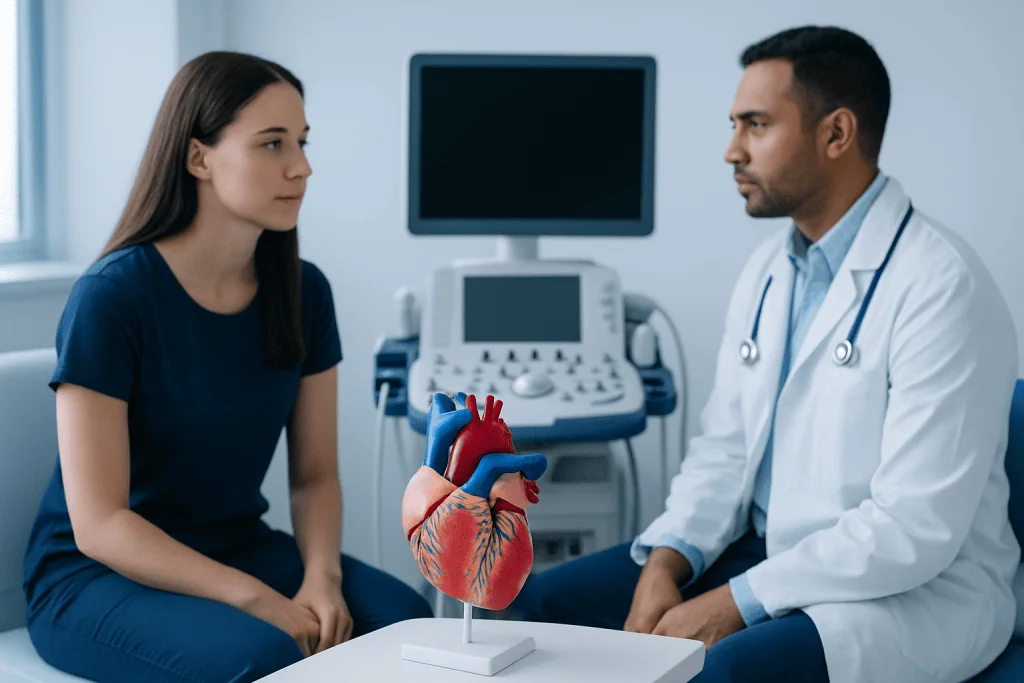
There are many types of congenital heart disease. Some are called simple defects because they involve a single small problem. Others are more complex and affect several parts of the heart. A doctor may describe the condition by how it changes blood flow or oxygen levels.
Common examples include holes in the heart, such as atrial septal defect and ventricular septal defect, narrowing of heart valves or blood vessels, abnormal connections between blood vessels, and valve abnormalities. Some babies are born with cyanotic heart disease, in which lower oxygen levels can make the lips or skin look bluish.
Examples of congenital heart defects include:
- Septal defects, including holes between the heart chambers
- Patent ductus arteriosus
- Coarctation of the aorta
- Pulmonary or aortic valve stenosis
- Tetralogy of Fallot
- Transposition of the great arteries
- Hypoplastic heart syndromes
Some people also have rhythm problems, heart failure, or valve disease later in life as a result of the original defect or previous repairs. For this reason, ongoing follow-up is important even after successful childhood treatment.
Symptoms
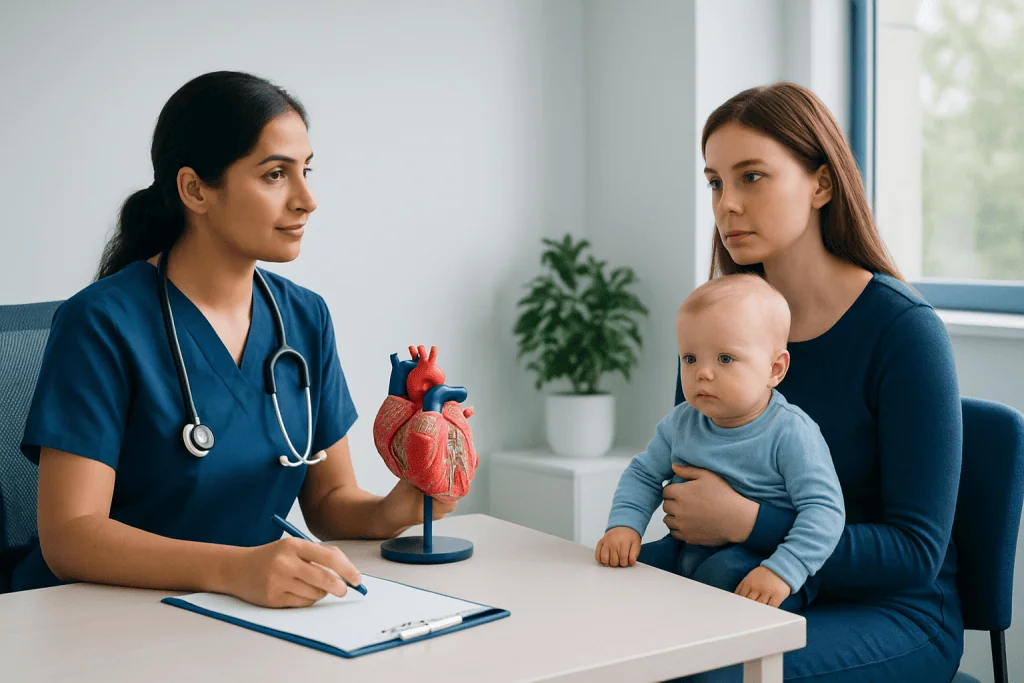
Symptoms of congenital heart disease depend on the type of defect and how much it affects circulation. In newborns and infants, symptoms may appear quickly if the heart cannot pump blood effectively or if oxygen levels are low. In milder cases, signs may be subtle and discovered only during routine examinations.
Possible symptoms in babies and children include rapid breathing, difficulty feeding, poor weight gain, sweating during feeds, tiring easily, bluish lips or skin, frequent chest infections, or delayed growth. A heart murmur may be the first clue, although not all murmurs mean there is a serious problem.
Older children and adults may notice shortness of breath, reduced exercise tolerance, palpitations, chest discomfort, dizziness, fainting, or swelling in the legs or abdomen. Some people with mild defects may have no symptoms at all and learn about the condition after an echocardiogram or other test.
Causes and Risk Factors
In many cases, the exact cause of congenital heart disease is not known. It usually happens during early fetal development when the heart is forming. Most families did nothing to cause it, and the condition often appears without a clear explanation.
Sometimes congenital heart disease is linked to genetic changes or certain syndromes. A family history of heart defects may slightly increase the chance in some cases. Environmental influences can also play a role during pregnancy, although they do not explain every case.
Risk factors may include:
- Genetic or chromosomal conditions
- A family history of congenital heart defects
- Maternal diabetes that is not well controlled
- Certain infections during pregnancy, such as rubella
- Exposure to alcohol, smoking, or some medications during pregnancy
- Maternal health conditions that affect fetal development
Having a risk factor does not mean a baby will definitely be born with a heart defect. Likewise, congenital heart disease can occur even when none of these risk factors are present. Prenatal care and discussing medications and health conditions with a doctor can help lower avoidable risks.
How Congenital Heart Disease Is Diagnosed
Diagnosis may happen before birth, soon after delivery, during childhood, or later in adult life. Doctors begin with a medical history and physical examination. They may listen for a murmur, check oxygen levels, and look for signs such as poor growth, bluish skin color, or fluid buildup.
The main test for diagnosing congenital heart disease is an echocardiogram, which uses ultrasound to show the heart’s structure and blood flow. During pregnancy, a fetal echocardiogram may be recommended if there is a family history, an abnormal prenatal scan, or another reason for concern.
Other tests may include an electrocardiogram, chest X-ray, pulse oximetry, exercise testing, cardiac MRI, CT, or cardiac catheterization. These tests help doctors understand the exact anatomy, evaluate heart function, and plan treatment. In some people, related conditions such as arrhythmia or heart failure may also need assessment and management.
Treatment Options
Treatment depends on the specific defect, the person’s age, symptoms, and overall health. Small defects may only need regular checkups. Others require medicines to support heart function, control fluid buildup, help the heart beat more effectively, or lower the risk of complications.
Some congenital heart problems can be treated with catheter-based procedures rather than open surgery. For example, a doctor may close a hole in the heart, widen a narrowed valve, or place a stent using minimally invasive techniques. In other cases, cardiac catheterization is used to diagnose the problem in more detail or guide treatment.
More complex defects may need one or more operations. These may include valve repair, vessel reconstruction, or surgery to correct major structural abnormalities. Depending on the condition, the care plan may involve heart surgery and long-term follow-up with specialists in cardiology.
Even after treatment, lifelong monitoring is often recommended. Some patients need repeat procedures, pregnancy counseling, exercise guidance, or prevention of complications such as rhythm disturbances, endocarditis, or heart failure. Near the end of the care pathway, patients may also benefit from advice at centers such as Acibadem International, where multidisciplinary specialists in JCI-accredited hospitals diagnose and treat congenital heart disease for international patients.
Prevention and Self-Care
Not all cases of congenital heart disease can be prevented, but healthy pregnancy care may reduce some risks. Before and during pregnancy, it is helpful to discuss chronic health conditions, medicines, vaccinations, and lifestyle habits with a qualified doctor. Good control of diabetes and avoidance of alcohol, smoking, and non-prescribed drugs are especially important.
For children and adults living with congenital heart disease, self-care focuses on regular medical follow-up and heart-healthy habits. This may include taking medicines as prescribed, attending imaging and clinic appointments, staying physically active within a doctor’s guidance, and eating a balanced diet.
Some people need extra planning for dental work, surgery, sports participation, or pregnancy. A specialist can explain whether there is any need for antibiotics before certain procedures, whether strenuous exercise should be limited, and how to reduce the risk of complications. Families can also benefit from learning the warning signs that require urgent medical attention.
When to See a Doctor
Parents should seek medical advice if a baby has trouble feeding, poor weight gain, rapid breathing, unusual sleepiness, sweating during feeds, or bluish lips or skin. These symptoms do not always mean congenital heart disease, but they should be checked promptly by a healthcare professional.
Older children and adults should arrange a medical evaluation if they have unexplained shortness of breath, chest discomfort, palpitations, fainting, reduced exercise tolerance, or swelling in the legs. People who were treated for a congenital heart defect in childhood should continue follow-up even if they feel well, because some problems can reappear or develop later.
Urgent care is needed for severe breathing difficulty, persistent blue discoloration, collapse, or severe chest symptoms. Early assessment helps doctors identify the cause and begin appropriate treatment as soon as possible.
Frequently asked questions
Is congenital heart disease the same as heart disease in adults?
No. Congenital heart disease refers to structural heart problems that are present at birth, while many adult heart diseases develop later in life. However, adults can live with congenital heart disease and may still need specialist care.
Can congenital heart disease be mild?
Yes. Some congenital heart defects are very small and may never cause major symptoms. Others are more complex and need medicines, procedures, or surgery.
Can congenital heart disease be found before birth?
Yes. Many cases can be suspected on prenatal ultrasound and confirmed with a fetal echocardiogram. Early diagnosis helps families and doctors plan care after delivery.
Do all children with congenital heart disease need surgery?
No. Treatment depends on the exact defect and its severity. Some children only need monitoring, while others benefit from medicines, catheter procedures, or surgery.
Can adults have congenital heart disease without knowing it?
Yes. Mild defects may not cause obvious symptoms for many years. In some adults, the condition is found during a routine exam or heart imaging for another reason.
Can people with congenital heart disease live a normal life?
Many people can live active, fulfilling lives, especially with timely diagnosis and proper follow-up. The outlook depends on the type of defect, whether it was repaired, and whether complications develop over time.
References
- World Health Organization
- American Heart Association
- Centers for Disease Control and Prevention
- National Heart, Lung, and Blood Institute
- European Society of Cardiology
This article is for general information only and is not a substitute for professional medical advice. Please consult a qualified doctor about your individual situation.
Heart care in Turkey — expert evaluation and treatment
JCI-accredited · board-certified surgeons · reply within 24h
Add us as a Preferred Source to see more of our trusted health content across Google Search, AI Overviews and Discover.

More from the Health Library



Related Specialists
Dr. Özgür Kabagöz
Emergency Service
Dr. Doğuş Durmuş
General Surgery
Dr. İbrahim Bağcıvan
Internal Medicine
Dr. Emine Çiğdem Kırçiçeği Çiçekdağ
Anesthesiology