

What Is Interventional Neurology? Procedures, Conditions, and How It Helps

Interventional neurology treats many brain and blood vessel conditions through tiny catheters instead of large incisions. Common procedures include thrombectomy for stroke, aneurysm coiling, stenting, and diagnostic angiography.
Key Takeaways
- Interventional neurology treats many brain and blood vessel conditions through tiny catheters instead of large incisions.
- Common procedures include thrombectomy for stroke, aneurysm coiling, stenting, and diagnostic angiography.
- These treatments often aim to restore blood flow, prevent bleeding, or reduce the risk of future neurological damage.
- Fast evaluation is especially important for stroke symptoms, as some treatments are time-sensitive.
- Care usually involves a multidisciplinary team that may include neurologists, neurosurgeons, radiologists, and rehabilitation specialists.
Interventional neurology is a subspecialty that uses image-guided, minimally invasive procedures to diagnose and treat certain conditions affecting the brain, spinal cord, head, and neck blood vessels. It can play an important role in emergencies such as stroke as well as in planned treatment for aneurysms and other vascular disorders.
Overview: What Interventional Neurology Means
Interventional neurology is a medical field focused on diagnosing and treating disorders of the brain, spinal cord, and blood vessels using thin tubes called catheters and advanced imaging guidance. Rather than performing open surgery in every case, specialists often reach the affected area through a blood vessel, usually starting from the wrist or groin. This approach can allow treatment with smaller access points, careful navigation, and close monitoring during the procedure.
The field is also known as neurointervention or endovascular neurology. It is commonly used for conditions involving the blood vessels of the brain and neck, such as stroke, aneurysms, arteriovenous malformations, carotid artery narrowing, and some spinal vascular conditions. In some situations, interventional neurology is used urgently to prevent permanent brain injury. In others, it is part of a planned treatment strategy after detailed imaging and specialist evaluation.
Because the nervous system is complex, care is rarely provided by one doctor alone. Interventional neurologists typically work with stroke neurologists, neurosurgeons, neuroradiologists, intensive care teams, and rehabilitation professionals. This team approach helps match each patient with the most appropriate treatment, whether that is a catheter-based procedure, medication, surgery, or careful observation.
What Conditions Can Interventional Neurology Help Treat?
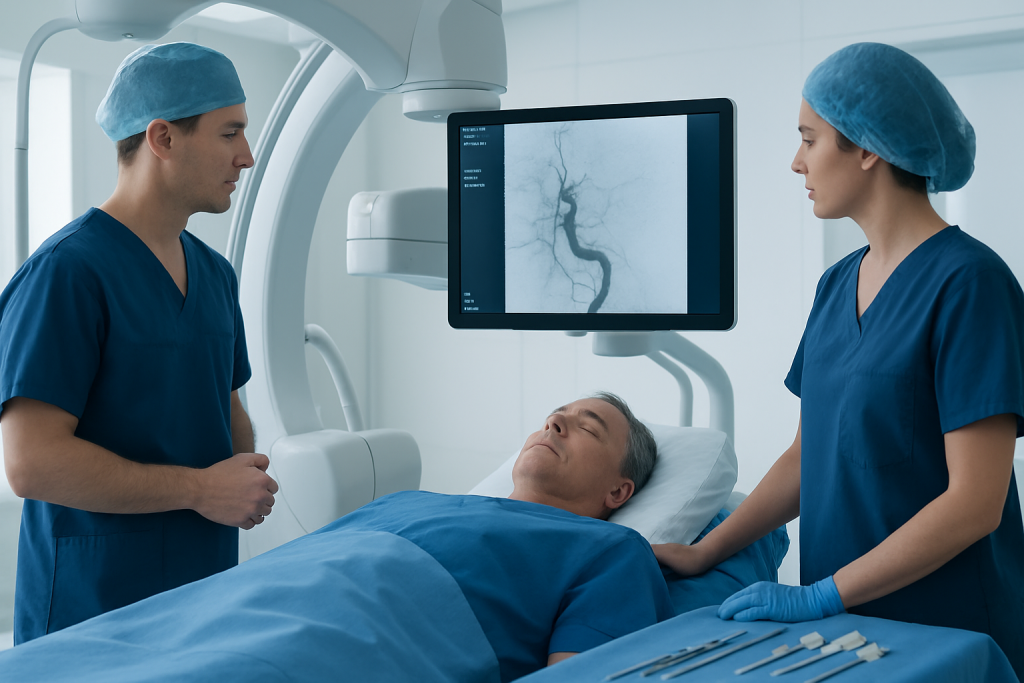
One of the best-known uses of interventional neurology is treatment for certain types of acute ischemic stroke. In this situation, a blood clot blocks an artery supplying the brain. When appropriate, a specialist may remove the clot through a catheter-based procedure called mechanical thrombectomy. This can help restore blood flow and limit brain damage in selected patients.
Interventional neurology is also used for brain aneurysms, which are weak areas in a blood vessel wall that can bulge and sometimes rupture. Depending on the aneurysm’s size, shape, and location, treatment may include coils, stents, or flow-diverting devices placed inside the blood vessel. These options may be considered as alternatives or complements to open neurosurgery in selected cases, including some patients being evaluated for brain aneurysm care.
Other conditions may include narrowing of the carotid or intracranial arteries, arteriovenous malformations and fistulas, venous sinus disorders, and some causes of bleeding in or around the brain. In carefully selected cases, specialists may help manage vascular problems related to the spinal cord or head and neck. Some patients are referred after symptoms such as weakness, speech changes, severe headache, vision problems, or transient ischemic attacks raise concern for a blood vessel disorder.
- Acute ischemic stroke caused by a large vessel blockage
- Brain aneurysms
- Carotid artery disease and some intracranial artery narrowing
- Arteriovenous malformations and dural arteriovenous fistulas
- Certain causes of brain bleeding or abnormal blood flow
Common Procedures Used in Interventional Neurology

Procedures vary depending on the condition being treated. A common diagnostic test is cerebral angiography, in which contrast dye is injected through a catheter to create detailed images of blood vessels in the brain and neck. This can help define the exact location and shape of a blockage, aneurysm, or abnormal connection between vessels. It is often used to guide treatment planning and, in some cases, to perform treatment during the same session.
For stroke, one major procedure is mechanical thrombectomy, where tiny devices are used to capture and remove a clot from a blocked brain artery. For aneurysms, doctors may perform aneurysm coiling or place a stent or flow-diverting device to redirect blood flow away from the aneurysm. For narrowed arteries, balloon angioplasty or carotid artery stenting may be considered in selected patients.
Some abnormal vessel connections can be treated with embolization, which means placing special materials through a catheter to block abnormal blood flow. The exact technique depends on the location and anatomy of the blood vessel problem. Although these procedures are minimally invasive, they are still highly specialized and require advanced imaging, careful patient selection, and close monitoring before, during, and after treatment.
How Patients Are Evaluated and Diagnosed
Diagnosis usually begins with a detailed review of symptoms, medical history, medicines, and risk factors. The neurologic examination helps assess strength, speech, coordination, sensation, vision, and consciousness. In urgent situations such as suspected stroke, imaging is performed quickly because treatment decisions can depend on how much brain tissue is at risk and whether there is bleeding.
Common imaging tests include CT, CT angiography, MRI, and MR angiography. These scans help show whether a blood vessel is blocked, narrowed, enlarged, or leaking. In some patients, ultrasound of the neck arteries or advanced perfusion imaging may also be used. If more detail is needed, a cerebral angiogram can provide a precise map of the blood vessels and support treatment planning.
The care team also considers the patient’s overall health, including blood pressure, heart rhythm, kidney function, bleeding risk, and any previous strokes or surgeries. Not every patient with a vascular brain condition needs an intervention right away. The benefits and risks of a procedure are weighed carefully against other options such as medication, monitoring, or surgery.
Benefits, Risks, and What to Expect During Treatment
A key benefit of interventional neurology is that many treatments can be done through a small blood vessel access point rather than a larger surgical opening. This may reduce tissue disruption and, in some cases, support a shorter recovery compared with open procedures. It can also allow doctors to reach delicate blood vessels deep within the brain or neck with a high level of precision under imaging guidance.
However, minimally invasive does not mean risk-free. Possible complications depend on the procedure and may include bleeding, blood vessel injury, allergic reaction to contrast dye, kidney strain, infection, or stroke-related complications. Some patients may also need blood-thinning medicines after stent placement, which requires careful follow-up and discussion with the medical team.
Before treatment, patients are typically given instructions about eating, drinking, and medications. During the procedure, sedation or general anesthesia may be used depending on the urgency and complexity. Afterward, monitoring usually takes place in a recovery area, stroke unit, or intensive care setting so the team can watch for changes in blood pressure, neurological status, and the access site.
Recovery, Follow-Up, and Long-Term Care
Recovery depends on the reason for treatment and the patient’s health before the procedure. Someone treated for a diagnostic angiogram may go home the same day or after a short observation period, while a person treated for stroke may need a longer hospital stay and rehabilitation. The team checks the access site, reviews any new symptoms, and may repeat imaging to confirm that blood flow has improved or that the treated aneurysm or vessel remains stable.
Many patients benefit from long-term care focused on preventing future vascular events. This may include controlling blood pressure, cholesterol, blood sugar, and irregular heart rhythms; stopping smoking; staying physically active; and taking prescribed medicines regularly. For patients recovering after stroke, rehabilitation can be an essential part of treatment and may involve physical therapy, occupational therapy, speech therapy, and cognitive support.
Follow-up appointments are important because some treated conditions need ongoing imaging surveillance. For example, aneurysms or stents may need periodic scans to make sure the result remains stable over time. At this stage, patients often work with multiple specialists to coordinate neurological care, vascular risk reduction, and recovery goals.
When to Seek Medical Care
Emergency care is needed right away for possible stroke symptoms. Warning signs can include sudden weakness or numbness on one side of the body, facial drooping, trouble speaking or understanding speech, sudden vision loss, severe imbalance, or a sudden severe headache unlike usual headaches. Rapid medical evaluation is important because some interventional treatments are most effective within a limited time window.
Medical advice is also important for persistent or recurring neurological symptoms, even if they seem to improve. Brief episodes of speech difficulty, temporary weakness, or vision changes can be warning signs of a transient ischemic attack or another blood vessel problem. Ongoing severe headaches, pulsating noises in the ear, or unexplained neurological symptoms may also need specialist assessment.
Patients with known aneurysms, carotid artery disease, or prior stroke should keep regular follow-up visits and ask their doctor about the safest monitoring plan. In specialized centers, interventional neurologists, neurosurgeons, and stroke teams work together to guide diagnosis and treatment. Acibadem International’s multidisciplinary specialists and JCI-accredited hospitals also provide evaluation and treatment for international patients who need advanced neurovascular care.
Frequently asked questions
Is interventional neurology the same as neurosurgery?
No. Interventional neurology uses image-guided catheters placed through blood vessels to diagnose and treat certain neurological conditions, while neurosurgery often involves open or minimally invasive operations on the brain, spine, or nerves. In many cases, the two specialties work closely together to choose the best treatment.
What is the difference between interventional neurology and interventional radiology?
There is overlap between these fields because both use imaging guidance and minimally invasive techniques. Interventional neurology focuses specifically on neurological and neurovascular conditions of the brain, spinal cord, and head and neck vessels. Teamwork between different specialists is common in complex cases.
Can interventional neurology help in a stroke emergency?
Yes, in selected patients with a blocked large brain artery, interventional neurology can offer mechanical thrombectomy to remove the clot. This treatment is time-sensitive, so emergency evaluation should happen as quickly as possible. Not every stroke is treated this way, which is why imaging and specialist assessment are essential.
Are interventional neurology procedures always safer than open surgery?
Not always, but they may offer advantages in carefully selected patients, such as smaller access points and less tissue disruption. The safest option depends on the condition, the anatomy of the blood vessels, the urgency, and the person's overall health. Doctors weigh the risks and benefits of each approach before recommending treatment.
How long does recovery take after an interventional neurology procedure?
Recovery varies widely. After a simple diagnostic angiogram, some people recover quickly, while treatment for stroke or an aneurysm may require hospitalization, monitoring, and rehabilitation. The doctor will explain the expected recovery plan based on the specific procedure and condition.
Will a patient need follow-up after treatment?
Yes, follow-up is usually important. Some conditions require repeat scans or clinic visits to make sure a treated blood vessel remains stable and to reduce the risk of future events. Long-term management of blood pressure, cholesterol, smoking, and other risk factors is often part of care.
References
- World Stroke Organization
- American Stroke Association
- National Institute of Neurological Disorders and Stroke
- Society of NeuroInterventional Surgery
- Radiological Society of North America
This article is for general information only and is not a substitute for professional medical advice. Please consult a qualified doctor about your individual situation.
Interventional Neurology in Turkey — costs, top hospitals & a free quote
JCI-accredited · board-certified surgeons · reply within 24h
Add us as a Preferred Source to see more of our trusted health content across Google Search, AI Overviews and Discover.

More from the Health Library



Related Specialists

Dr. Baran Şen
Orthopedic Surgery & Traumatology
Dr. Nesrin Karakaya
Anesthesiology
Dt. Emrah Özmutlu
Oral Dental & Maxillofacial Surgery
Dr. Muhammed Taha Taş
Emergency Service