What Is Quest Diagnostics and How Does It Work?

Quest Diagnostics is a clinical laboratory company that performs a wide range of medical tests. Doctors use these test results to help screen for disease, confirm diagnoses, and monitor treatment.
Key Takeaways
- Quest Diagnostics is a clinical laboratory company that performs a wide range of medical tests.
- Doctors use these test results to help screen for disease, confirm diagnoses, and monitor treatment.
- Many tests involve simple samples such as blood, urine, or swabs collected at a lab or clinic.
- Results are usually sent to the ordering clinician, who explains what they mean in context.
- Abnormal results do not always mean disease and often need medical interpretation and follow-up.
Quest Diagnostics is a large laboratory testing provider that processes blood, urine, and other medical samples ordered by healthcare professionals. Its services help support screening, diagnosis, treatment planning, and follow-up care for many health conditions.
Overview
Quest Diagnostics is a healthcare company best known for providing laboratory testing services. In simple terms, it collects or receives patient samples, analyzes them in certified laboratories, and reports the findings to the healthcare professional who ordered the test. These results can help doctors understand a person’s health, look for possible illness, and monitor known medical conditions over time.
Laboratory testing is a routine part of modern medicine. A clinician may order tests during a regular checkup, before surgery, when symptoms need evaluation, or during treatment follow-up. Quest Diagnostics is one of several providers that support this process by performing tests on samples such as blood, urine, stool, saliva, and tissue, depending on the clinical need.
It is helpful to understand that Quest Diagnostics does not replace a doctor. Rather, it provides technical testing services that support medical decision-making. A laboratory result becomes most useful when it is interpreted together with symptoms, medical history, physical examination, and sometimes additional testing such as MRI scans or ultrasound imaging.
What Services Does Quest Diagnostics Provide?
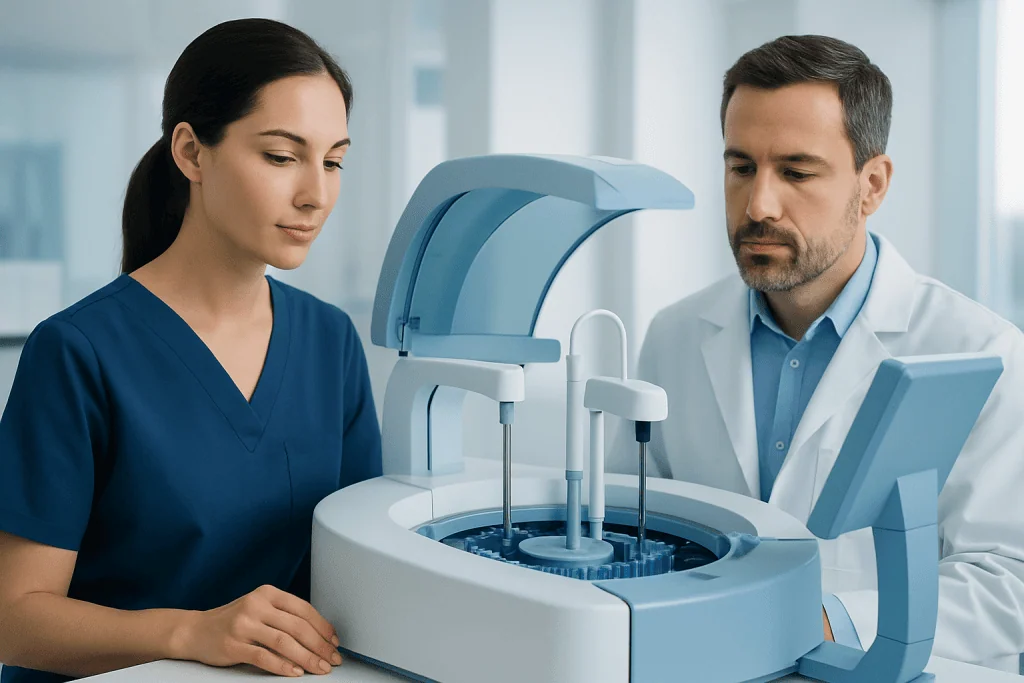
Quest Diagnostics offers a broad range of diagnostic laboratory services. These often include common blood tests such as complete blood counts, cholesterol panels, blood sugar testing, thyroid tests, liver and kidney function tests, and vitamin or mineral measurements. Urine testing, pregnancy testing, allergy testing, and infectious disease screening may also be available, depending on the order from the treating clinician.
Some tests are used for routine screening, while others are more specialized. For example, a doctor may order tests to investigate anemia, infections, hormonal changes, autoimmune conditions, or inherited health concerns. In some situations, laboratory testing works alongside pathology services, including tissue analysis after a biopsy, to support diagnosis of conditions such as cancer.
Quest Diagnostics may also provide access points such as patient service centers, employer health screening programs, and selected consumer-initiated tests where permitted. However, even when a test seems straightforward, the best next step is usually to review the result with a qualified healthcare professional who can explain whether it is normal, borderline, or clinically significant.
How Does Quest Diagnostics Work?

The process usually begins when a doctor, nurse practitioner, or another licensed clinician orders a test. The order specifies which sample is needed and what is being checked. The patient then visits a lab collection site, clinic, hospital, or another approved setting where the sample is collected. Many routine tests involve a blood draw from a vein, while others use urine, a nasal or throat swab, stool, or another specimen type.
After collection, the sample is labeled carefully and sent to a laboratory for analysis. In the lab, trained personnel use validated methods and specialized equipment to measure substances, identify cells or microorganisms, or look for genetic or molecular markers. Quality control steps are an important part of the process to help ensure that testing is accurate and reliable.
Once testing is complete, the results are reported to the clinician who ordered them, and in many cases they may also be available to the patient through a secure online portal. Turnaround time varies by test. Some common tests may come back quickly, while more complex testing can take longer. If a result is unexpected or unclear, the clinician may repeat the test or recommend additional evaluation, such as CT scanning or referral to a specialist.
Why Doctors Order Lab Tests
Laboratory tests are ordered for several reasons. One common reason is screening, which means checking for signs of disease before symptoms appear. Examples include cholesterol testing, blood sugar checks, or screening for certain infections. Early detection can help guide timely care and may reduce the chance that a problem goes unnoticed.
Tests are also used to support diagnosis when symptoms are present. If a person has fatigue, fever, abdominal pain, weight changes, or other concerns, a doctor may order tests to narrow down the possible causes. In some cases, blood and urine tests can point toward problems such as diabetes, infection, inflammation, kidney issues, or hormonal imbalance.
Another major use is monitoring. People with long-term conditions often need repeat testing to track how their body is responding to treatment or whether the condition is stable. For example, a clinician may use lab results to follow blood counts, kidney function, blood sugar control, or medication effects. This is why the same test may be done more than once, even if a diagnosis is already known.
Understanding Test Results
Many patients feel anxious when they see numbers, ranges, or flagged results on a lab report. It helps to know that a “normal range” is a statistical reference based on many people, and a result slightly outside that range does not always mean something is wrong. Age, sex, hydration, medications, timing, recent illness, and even exercise can affect some values.
Results need interpretation in context. A doctor may decide that an abnormal result is not clinically important, or that it should be repeated later. On the other hand, a result that appears normal may still need further review if symptoms strongly suggest a medical problem. This is why self-interpretation can be misleading, especially for complex tests.
Patients are often advised to ask practical questions when discussing results: What does this test measure? Is the result clearly normal or only slightly outside the range? Do more tests need to be done? Should the result be repeated? What symptoms should prompt follow-up sooner? A calm conversation with a healthcare professional can usually clarify next steps and reduce unnecessary worry.
Preparing for a Test and Getting Accurate Results
Good preparation can improve the usefulness of many lab tests. Some tests require fasting for a certain number of hours, while others should be taken at a specific time of day. Certain medicines, supplements, or recent strenuous exercise may affect results. It is important for patients to follow the instructions given by their doctor or the laboratory collection center and to mention any medications or health changes before testing.
Sample quality also matters. For example, urine tests may need a clean-catch sample, and stool tests may require special storage or handling instructions. Blood samples must be labeled and transported properly so the laboratory can analyze them correctly. If a sample is not suitable, the patient may need to repeat the collection.
There are also limits to what laboratory testing can show. A test is one piece of medical information, not a complete diagnosis by itself. Sometimes a clinician combines lab results with imaging, physical examination, or procedures such as biopsy to reach a clearer conclusion. This step-by-step approach helps avoid overinterpreting a single result.
When to Seek Medical Advice
Patients should contact the ordering clinician if they do not understand why a test was ordered, how to prepare, or what the result means. Follow-up is especially important if symptoms continue despite “normal” results, since some conditions need repeat testing or different kinds of evaluation. A laboratory report is most useful when it is reviewed as part of the whole clinical picture.
Urgent medical attention may be needed if a person has severe symptoms such as chest pain, difficulty breathing, sudden weakness, confusion, heavy bleeding, or signs of a serious infection. In these situations, care should not be delayed while waiting for routine laboratory interpretation. Emergency symptoms should be evaluated promptly by local emergency services or an emergency department.
For people seeking coordinated international care, Acibadem International’s multidisciplinary specialists and JCI-accredited hospitals diagnose and treat a wide range of conditions, using laboratory testing together with imaging and clinical assessment. Whether testing is done through a local provider or as part of specialist care, clear communication with a qualified doctor remains the safest way to understand results and plan next steps.
Frequently asked questions
Is Quest Diagnostics a doctor’s office?
No. Quest Diagnostics is a laboratory testing provider, not a doctor’s office. It performs tests on medical samples, while diagnosis and treatment decisions are made by the healthcare professional who ordered the test.
What kinds of samples does Quest Diagnostics test?
It commonly tests blood, urine, stool, and swab samples. Depending on the clinical need, some tests may also involve saliva, tissue, or other specimen types collected by a qualified professional.
Do abnormal lab results always mean a person is sick?
Not always. Some results are only slightly outside the reference range and may be influenced by timing, hydration, medicines, or other factors. A doctor should interpret the result in context before any conclusions are made.
How long does it take to get results from Quest Diagnostics?
The timing depends on the test. Common routine tests may be available relatively quickly, while specialized or confirmatory tests can take longer. The ordering clinician or the laboratory can usually explain expected turnaround times.
Can patients look at their own lab results?
In many cases, yes, results may be available through a secure patient portal. Even so, it is wise to review them with the ordering clinician, because numbers on a report do not always explain their medical significance by themselves.
Do people need to fast before every test?
No. Some tests require fasting, but many do not. Patients should follow the exact instructions provided for their specific test and ask their clinician or the laboratory if they are unsure.
This article is for general information only and is not a substitute for professional medical advice. Please consult a qualified doctor about your individual situation.
Explore treatments in Turkey — costs, top hospitals & a free quote
JCI-accredited · board-certified surgeons · reply within 24h
Add us as a Preferred Source to see more of our trusted health content across Google Search, AI Overviews and Discover.
Check your numbers in seconds
BMI, calories, due date, blood pressure and 30+ more clinical calculators — free, instant, doctor-reviewed ranges.

More from the Health Library

Diagnostic Mammogram: Who Needs It and What Results Mean

What Is a Diagnostic Mammogram for Men?

Common Reasons Doctors Order Lab Tests: Screening, Diagnosis, and Monitoring

Image-Guided Biopsy: How Tissue Samples Are Taken Safely

Liver Ultrasound: Uses, Preparation and Results