What Is Skin Cancer? Recognizing Suspicious Spots and When to Get Checked
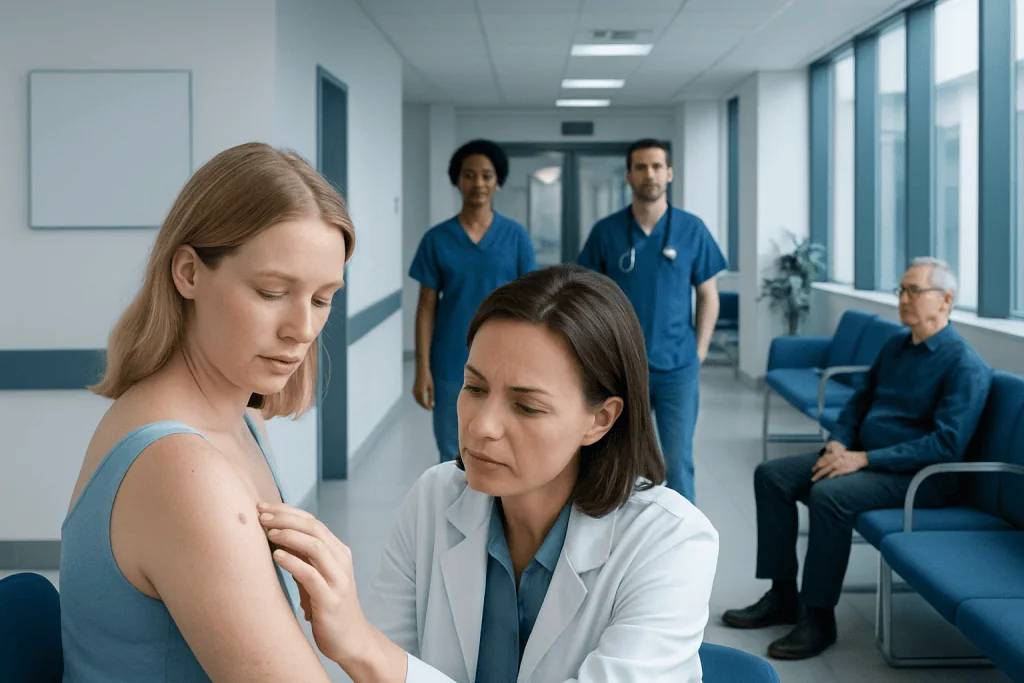
Skin cancer can develop on any area of skin, including places that do not get much sun. A new, changing, bleeding, or non-healing spot should be checked by a doctor.
Key Takeaways
- Skin cancer can develop on any area of skin, including places that do not get much sun.
- A new, changing, bleeding, or non-healing spot should be checked by a doctor.
- The main types are basal cell carcinoma, squamous cell carcinoma, and melanoma.
- Regular skin checks and sun protection can help detect problems early and lower risk.
- Diagnosis usually involves a skin examination and, if needed, a biopsy.
Skin cancer happens when abnormal skin cells grow out of control, often after damage from ultraviolet light. Recognizing a changing mole or unusual spot early can help treatment start promptly and improve outcomes.
Overview of Skin Cancer
Skin cancer is a common cancer that begins when skin cells grow abnormally. It most often develops after long-term exposure to ultraviolet (UV) radiation from sunlight or tanning beds, but it can also appear in areas that receive little sun. Skin cancer may affect anyone, regardless of age or skin tone.
There are several types of skin cancer. The most common are basal cell carcinoma and squamous cell carcinoma, often called non-melanoma skin cancers. Melanoma is less common but more likely to spread if not found early. Each type can look different, which is why any suspicious skin change deserves attention.
Many skin cancers are highly treatable when diagnosed early. For that reason, noticing new or changing spots and arranging a medical evaluation without delay is important. A doctor can decide whether a spot is harmless, needs monitoring, or should be tested.
Common Signs and Symptoms
Skin cancer does not always look dramatic. It may begin as a small spot, patch, bump, sore, or mole that slowly changes over time. Some skin cancers are painless, so the absence of discomfort does not mean a lesion is harmless.
Warning signs can include a sore that does not heal, a spot that bleeds easily, a scaly patch, a pearly or shiny bump, or a growth with raised edges. Melanoma often appears as a new dark spot or a mole that changes in size, shape, or color. Some melanomas are not dark brown or black and may look pink, red, skin-colored, or even pale.
The ABCDE rule can help people notice suspicious moles:
- Asymmetry: one half does not match the other
- Border irregularity: edges are uneven, blurred, or ragged
- Color variation: more than one shade appears within the same spot
- Diameter: the spot is larger than about 6 mm, although smaller melanomas can occur
- Evolving: the mole or spot changes over time
Another helpful clue is the “ugly duckling” sign. This means a spot looks noticeably different from the other moles on the body. If a lesion stands out, it is sensible to have it checked.
Types, Causes, and Risk Factors

Basal cell carcinoma usually develops slowly and often appears on sun-exposed areas such as the face, ears, scalp, neck, and shoulders. It may look like a pearly bump, a pink patch, or a sore that repeatedly crusts or bleeds. Squamous cell carcinoma may appear as a rough, scaly patch, a wart-like growth, or a firm red bump, and it can also arise in scars or chronically irritated skin.
Melanoma begins in pigment-producing cells called melanocytes. It can develop from an existing mole or appear as a new spot. Although it is strongly linked to UV exposure, melanoma can also occur on the soles, palms, under the nails, or other less-exposed areas. People may also hear about rare forms such as Merkel cell carcinoma, but these are less common.
The main risk factors include:
- Frequent or intense UV exposure from the sun or tanning beds
- A history of sunburns, especially blistering sunburns
- Fair skin, light eyes, or light hair, although skin cancer affects all skin tones
- A large number of moles or atypical moles
- A personal or family history of skin cancer, including melanoma
- Older age, though younger adults can also be affected
- A weakened immune system
- Exposure to certain chemicals or previous radiation treatment
Having one or more risk factors does not mean a person will definitely develop skin cancer. Likewise, people without obvious risk factors can still get it. That is why skin awareness and regular medical advice are valuable for everyone.
How Doctors Diagnose Skin Cancer
Diagnosis usually starts with a careful skin examination. A doctor asks about how long the spot has been present, whether it has changed, and whether there are symptoms such as itching, bleeding, or tenderness. The doctor may also examine the rest of the skin because some people have more than one suspicious lesion.
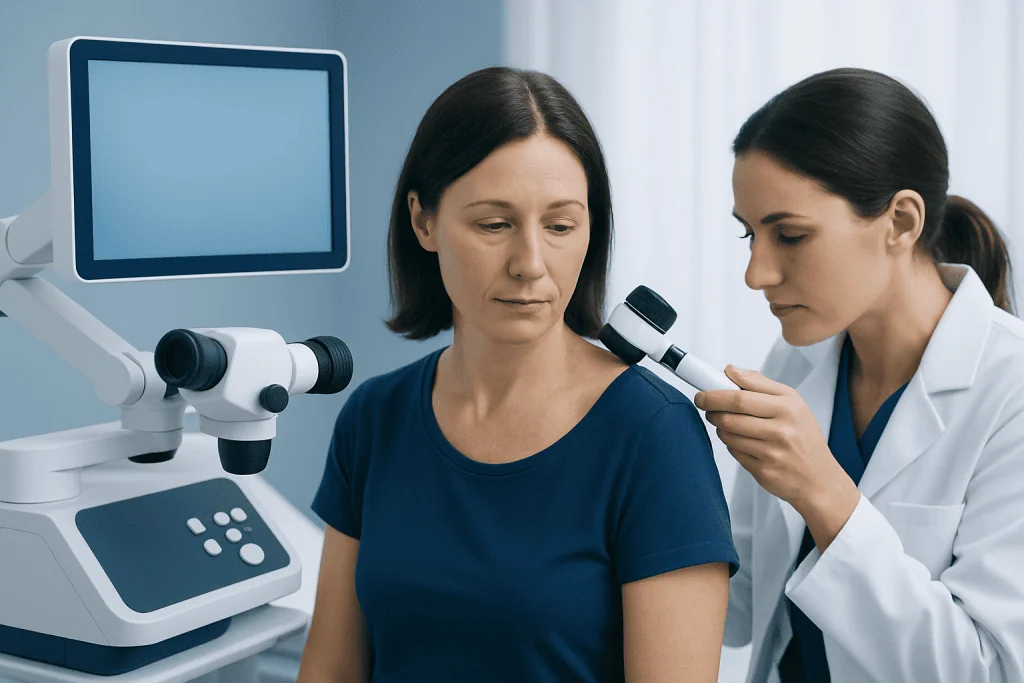
Dermatologists often use a tool called a dermatoscope, which magnifies the skin and helps reveal patterns not visible to the naked eye. If a lesion appears suspicious, the most reliable way to confirm the diagnosis is a biopsy. During a biopsy, all or part of the spot is removed and examined under a microscope.
If skin cancer is confirmed, further assessment depends on the type, size, depth, and location of the tumor. In some cases, especially with melanoma or more advanced cancers, doctors may recommend imaging tests or lymph node evaluation to see whether the disease has spread. Patients may also need evaluation for related conditions such as non-melanoma skin cancers in other areas of the skin.
Treatment Options
Treatment depends on the type of skin cancer, how deep it is, where it is located, and whether it has spread. For many early skin cancers, treatment can remove the lesion completely. A doctor will explain the benefits, possible side effects, and expected recovery for each option.
Common treatments include surgical removal, freezing certain superficial lesions, topical medicines for selected early cancers, and light-based therapies in specific situations. When surgery is recommended, it may range from a simple excision to more specialized techniques that preserve healthy tissue. Some patients may benefit from Mohs surgery when the cancer is in a cosmetically sensitive area or has unclear borders.
More advanced cases may require additional care such as radiation therapy, immunotherapy, targeted therapy, or, less commonly, chemotherapy. Melanoma treatment may involve surgery plus staging procedures and follow-up with medical oncology specialists. If reconstruction is needed after removal, doctors may discuss wound repair or skin grafting depending on the area involved.
Near the end of the care pathway, coordination between dermatology, pathology, surgery, and oncology is often important. Acibadem International’s multidisciplinary specialists and JCI-accredited hospitals diagnose and treat skin cancer for international patients when specialist evaluation is needed.
Prevention and Self-Care
Not all skin cancers can be prevented, but many can be reduced through consistent sun protection. The goal is to limit unnecessary UV exposure rather than avoid normal daily life. Small habits practiced regularly can make a meaningful difference over time.
Helpful prevention steps include:
- Use a broad-spectrum sunscreen with appropriate SPF and reapply as directed
- Wear protective clothing, a wide-brimmed hat, and UV-blocking sunglasses
- Seek shade, especially during the middle of the day when UV rays are strongest
- Avoid tanning beds and intentional tanning
- Protect children from sunburn, as early UV damage matters later in life
- Check the skin regularly, including the scalp, back, soles, and nails
Monthly self-checks can help people learn what is normal for their own skin. Using a mirror or asking a family member to help examine hard-to-see areas may be useful. Taking photos of moles or spots can also make it easier to notice gradual changes.
People who have already had skin cancer should follow the surveillance plan their doctor recommends. This often includes regular skin exams and strong sun protection, because a previous skin cancer can increase the chance of developing another one later.
When to Get Checked
It is wise to arrange a medical check if a spot is new, changing, bleeding, crusting, painful, or not healing within several weeks. A mole that looks different from others or a dark streak under a nail that is not linked to injury should also be assessed. Early evaluation is especially important for people with a personal or family history of skin cancer.
Routine skin exams may be recommended for those at higher risk, including people with many moles, atypical moles, significant sun exposure, or a weakened immune system. A doctor can advise how often these checks should happen. Seeking care early does not mean the lesion is definitely cancerous; many suspicious spots turn out to be benign.
Prompt attention offers reassurance when a lesion is harmless and supports earlier treatment if it is not. If there is uncertainty, it is safer to ask a qualified doctor than to wait and watch for too long.
Frequently asked questions
What does skin cancer usually look like?
Skin cancer can look like a new mole, a changing mole, a shiny bump, a scaly patch, or a sore that does not heal. There is no single appearance, which is why any unusual or changing spot should be checked by a doctor.
Can skin cancer happen in people with darker skin?
Yes. Although the risk from UV exposure is often lower in darker skin, skin cancer can still occur in all skin tones. In some cases, it appears on the palms, soles, nails, or other less sun-exposed areas.
Is every changing mole cancer?
No. Many moles and skin growths are benign and may change slightly over time. However, a changing mole should still be assessed because visual appearance alone cannot always rule out skin cancer.
Does skin cancer always hurt or itch?
No. Many skin cancers cause no pain or itching in the early stages. Some may bleed, crust, or become tender later, but a painless spot can still be important.
How is skin cancer confirmed?
A doctor first examines the lesion and may use a dermatoscope for a closer look. If the spot seems suspicious, a biopsy is usually needed to confirm whether cancer cells are present.
Can skin cancer be cured?
Many skin cancers can be treated successfully, especially when found early. The outlook depends on the type of skin cancer, how deep it is, and whether it has spread.
References
- World Health Organization
- American Academy of Dermatology
- National Cancer Institute
- American Cancer Society
- National Health Service
This article is for general information only and is not a substitute for professional medical advice. Please consult a qualified doctor about your individual situation.
Skin Cancer in Turkey — costs, top hospitals & a free quote
JCI-accredited · board-certified surgeons · reply within 24h
Add us as a Preferred Source to see more of our trusted health content across Google Search, AI Overviews and Discover.