What Is the Success Rate of Proton Therapy: How It Works, Results and What to Expect

Proton therapy is a precise form of external-beam radiation that delivers most of its energy directly within the tumor target. There is no single proton therapy success rate; outcomes depend primarily on the individual cancer and treatment plan.
Key Takeaways
- Proton therapy is a precise form of external-beam radiation that delivers most of its energy directly within the tumor target.
- There is no single proton therapy success rate; outcomes depend primarily on the individual cancer and treatment plan.
- It may be especially useful for tumors near sensitive structures such as the brain, spinal cord, eyes, heart or reproductive organs.
- Treatment itself is painless, although side effects can develop gradually in the treated area.
- Not every person with cancer benefits more from proton therapy than from advanced photon radiation.
- A radiation oncology team evaluates imaging, pathology, previous treatment and overall health to determine suitability.
The success rate of proton therapy depends on the cancer type, location, stage, treatment goal and whether it is combined with surgery, chemotherapy or other treatments. For appropriately selected patients, proton therapy can achieve tumor-control outcomes comparable to other modern radiation techniques while reducing radiation exposure to some healthy tissues.
What Is the Success Rate of Proton Therapy?
What is the success rate of proton therapy? There is no single percentage that applies to every person or cancer. Success is usually measured by local tumor control, the chance of cure, survival, symptom relief, and the likelihood of avoiding long-term treatment effects; these outcomes depend on the cancer type, stage, location, biology, and the treatments used alongside radiation.
For many cancers, proton therapy can provide tumor-control results similar to high-quality photon radiation therapy. Its potential advantage is physical precision: protons can reduce the radiation dose reaching certain nearby healthy tissues. This may be particularly important when a tumor is close to vital organs or when a person is young and has many years ahead in which late radiation effects could matter.
Proton therapy is not automatically more effective for every tumor. A radiation oncologist considers whether its dose-distribution advantage is likely to make a meaningful difference for the individual treatment plan. The most useful discussion is therefore not simply about a general success rate, but about expected results and risks for that person’s specific diagnosis.
How Proton Therapy Works
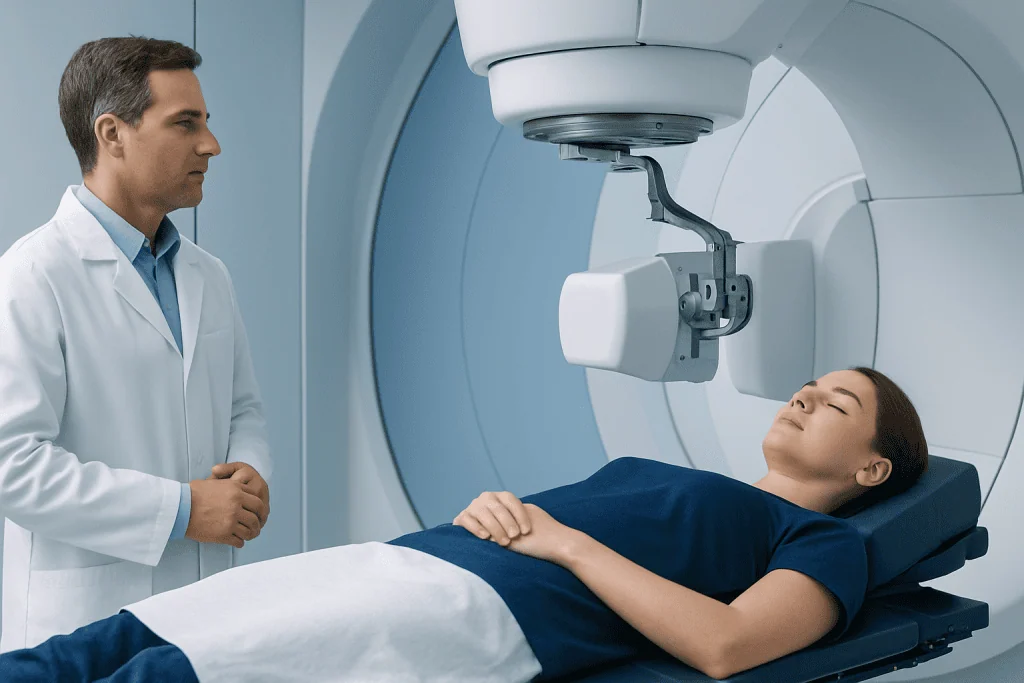
Proton therapy, also called proton beam therapy, is a type of external-beam radiation treatment. It uses positively charged particles called protons to damage the DNA of cancer cells. When cancer cells cannot repair this damage, they may stop dividing and are gradually cleared by the body.
Unlike standard X-ray radiation, protons deposit most of their energy at a planned depth, known as the Bragg peak, and deliver little to no radiation beyond that point. The treatment team can shape and direct proton beams to cover the tumor and a small surrounding margin while attempting to protect nearby normal tissues.
This precision does not mean that proton therapy is risk-free. Radiation still passes through some normal tissue before reaching the target, and healthy structures near the tumor may receive some dose. The expected benefit depends on the anatomy of the tumor, how it moves with breathing or digestion, and whether another radiation technique can provide an equally safe plan.
Which Cancers May Be Suitable for Proton Therapy?

Proton therapy may be considered for localized cancers where reducing radiation to nearby organs is especially valuable. Examples include some tumors of the brain and spinal cord, skull base, eye, head and neck, chest, liver, prostate, pelvis, and certain childhood cancers. It may also be used for selected cancers that have returned after prior radiation, when further radiation is otherwise difficult to deliver safely.
What cancers respond best to proton therapy? Cancers do not respond to protons because they are protons; rather, the benefit is often related to where the cancer is located. Tumors close to sensitive structures, including the optic nerves, brainstem, spinal cord, heart, lungs, kidneys, bowel or reproductive organs, may be strong candidates when a proton plan can reduce exposure to those areas.
Some cancer types are commonly discussed in proton therapy planning because of their location or long-term considerations, including brain tumors, certain head and neck cancers, eye tumors, prostate cancer, and pediatric tumors. However, candidacy must be individualized. A person may receive excellent care with modern photon techniques such as intensity-modulated radiation therapy, depending on the clinical situation.
- Pathology and cancer stage help define the treatment goal.
- CT, MRI, PET, and other scans show the tumor’s position relative to organs at risk.
- Previous surgery, chemotherapy, and radiation affect available options.
- Age, general health, and practical ability to attend treatment are also considered.
What Happens Before, During and After Treatment?
Planning begins with a consultation with a radiation oncologist and review by a multidisciplinary cancer team when appropriate. The patient usually has a simulation appointment, which may include a planning CT scan and sometimes MRI or PET image fusion. A customized mask, cushion, or body-support device helps reproduce the same position at each session.
Specialists use the planning images to outline the tumor and nearby organs. Medical physicists and dosimetrists then develop and verify a highly individualized radiation plan. This process can take time because the team checks that the intended dose reaches the target while respecting safety limits for healthy tissue.
At each treatment session, the patient lies on a treatment couch while imaging and positioning systems confirm alignment. The beam is delivered from outside the body; the patient does not feel the radiation itself and is not radioactive afterward. Sessions commonly last longer than the actual beam delivery because careful setup is essential. The number of visits varies widely, from a short course to several weeks of weekday treatment.
Proton therapy is one form of radiation therapy and may be used alone or combined with surgery, systemic treatment, or both. Follow-up appointments and imaging assess response, manage side effects, and monitor general recovery.
Benefits, Limitations and Possible Risks
The main potential benefit of proton therapy is lower radiation exposure beyond the tumor target. Depending on the treatment site, this may reduce the dose to healthy brain, spinal cord, heart, lungs, kidneys, bowel, salivary glands, or other structures. Lower dose does not always translate into fewer side effects for every patient, but it can be clinically meaningful in selected cases.
What is the downside of proton therapy? Proton therapy has limitations. It is not available in every region, planning can be complex, and daily treatment requires precise positioning. Body movement, changes in weight, swelling, bowel gas, or differences in organ filling can affect how the proton beam travels, so the treatment team may need repeat imaging or plan adjustments during treatment.
Side effects are determined mainly by the area treated, the total dose, and whether chemotherapy or surgery is also used. Short-term effects may include tiredness, skin redness or sensitivity in the beam-entry area, hair loss within the treatment field, and symptoms related to the treated organ, such as swallowing discomfort, bowel changes, or urinary irritation. Some effects arise months or years later, which is why continued follow-up is important.
Proton therapy can also have serious risks in some circumstances, including injury to nearby organs, hormonal changes after treatment near hormone-producing structures, fertility effects with pelvic treatment, or a small long-term risk of a second cancer from radiation. The treatment team explains the relevant risks and compares them with the risks of alternative approaches before treatment begins.
Recovery, Daily Life and Repeat Treatment
How painful is proton therapy? Proton beam delivery is painless. The patient does not see, feel, or hear the radiation entering the body, although the treatment room equipment may make noise. Remaining still in a mask or other positioning device can feel uncomfortable for some people, but staff can communicate throughout the session and help address positioning concerns.
Most people continue many usual daily activities during treatment, though fatigue can build over the course of several weeks. Skin and organ-specific effects often appear gradually rather than immediately. The care team can offer practical advice on nutrition, skin care, activity, sleep, and symptom control based on the body area being treated.
How many times can you have proton therapy? A person may receive proton therapy more than once, but this is not decided by a fixed lifetime number. The possibility of repeat treatment depends on the previous radiation dose, the areas that received radiation, the time since treatment, the current cancer location, and the tolerance of surrounding healthy organs. Re-irradiation is highly specialized and requires detailed review of prior treatment records and imaging.
Recovery continues after the final session. Acute side effects often improve over weeks, although the timing differs between individuals and treatment sites. Tumor response may take weeks or months to become clear on scans, and some treated tumors may initially look swollen or unchanged before the full effect is seen.
When to Seek Medical Care
People receiving proton therapy should contact their radiation oncology team promptly if they develop new or worsening symptoms that interfere with eating, drinking, breathing, urination, bowel movements, movement, sleep, or daily activities. New severe pain, persistent vomiting, fever, signs of infection, marked weakness, confusion, heavy bleeding, or sudden neurological symptoms require urgent medical assessment.
It is also important to discuss side effects early, even when they seem mild. Many radiation-related symptoms can be managed more effectively when addressed promptly, and the team can determine whether a symptom is expected treatment-related irritation or needs further investigation.
For patients considering treatment abroad, Acibadem International’s multidisciplinary specialists and JCI-accredited hospitals assess cancer treatment options for international patients, including proton therapy, based on individual clinical needs. A consultation should include a review of pathology reports, recent scans, previous treatments, and the person’s goals of care.
Frequently asked questions
Is proton therapy more successful than standard radiation therapy?
Not necessarily. For many cancers, proton therapy and modern photon radiation can achieve similar tumor-control outcomes. Proton therapy may be preferred when it can substantially reduce radiation exposure to important healthy tissues near the tumor.
Does proton therapy cure cancer?
Proton therapy can be part of curative treatment for some localized cancers, but it is not a cure in every situation. Whether cure is possible depends on the cancer type, stage, biology, location, and whether cancer has spread.
How long does a proton therapy course take?
The duration varies according to the cancer and treatment goal. Some people have a small number of sessions, while others attend weekday sessions over several weeks. The radiation oncologist provides the planned schedule after treatment planning is complete.
Are patients radioactive after proton therapy?
No. Proton therapy is external-beam radiation, so it does not leave radioactive material in the body. Patients can generally be around family members and others after each session.
Can proton therapy cause hair loss?
Hair loss can occur if hair-bearing skin is in the radiation field, such as during treatment for some brain or head and neck tumors. Hair outside the treated area is not affected. The likelihood and degree of regrowth depend on the dose and treatment location.
What follow-up is needed after proton therapy?
Follow-up usually includes appointments with the oncology team, physical examinations, and imaging or laboratory tests appropriate for the cancer type. These visits assess tumor response, monitor for side effects, and support recovery over time.
References
- National Cancer Institute
- American Society for Radiation Oncology
- American Cancer Society
- European Society for Medical Oncology
- International Atomic Energy Agency
This article is for general information only and is not a substitute for professional medical advice. Please consult a qualified doctor about your individual situation.
Oncology care in Turkey — second opinion and treatment plan
JCI-accredited · board-certified surgeons · reply within 24h
Add us as a Preferred Source to see more of our trusted health content across Google Search, AI Overviews and Discover.