What Muscles Does Rowing Work? A Doctor-Reviewed Answer

Rowing is a full-body exercise that heavily involves the legs, back, and core. The stroke has four phases: catch, drive, finish, and recovery, and different muscles contribute in each phase.
Key Takeaways
- Rowing is a full-body exercise that heavily involves the legs, back, and core.
- The stroke has four phases: catch, drive, finish, and recovery, and different muscles contribute in each phase.
- Glutes, quadriceps, hamstrings, lats, rhomboids, abdominals, shoulders, and arms all help power or control the movement.
- Mild muscle soreness after rowing is common, but joint pain, chest symptoms, or marked weakness are not typical.
- Technique, gradual progression, and recovery habits help reduce strain and overuse injuries.
What muscles does rowing work? Rowing is mainly a full-body movement that targets the legs, back, core, shoulders, and arms, with the legs providing much of the power and the trunk helping transfer it efficiently. For most people, muscle soreness after rowing is harmless, but sharp pain, swelling, weakness, or symptoms that do not improve should be medically reviewed.
Overview: the short answer
What muscles does rowing work? Rowing is best understood as a coordinated full-body exercise rather than an arm-only workout. It mainly works the leg muscles, especially the quadriceps, glutes, and hamstrings, while the back and core stabilize the trunk and the shoulders and arms help finish the stroke.
For most healthy adults, feeling the muscles work during rowing or having mild soreness afterward is a normal response to exercise. This is especially true after starting a new routine, increasing resistance, or rowing for longer than usual. In many cases, the sensation reflects muscle effort rather than injury.
Still, it helps to know the difference between expected muscle fatigue and warning signs. Sharp pain, significant swelling, weakness, numbness, chest discomfort, or breathlessness out of proportion to effort are not typical training effects. If these occur, a doctor may ask about the rowing session, examine the painful area, and decide whether testing such as imaging or heart evaluation is needed.
Which muscle groups rowing works most
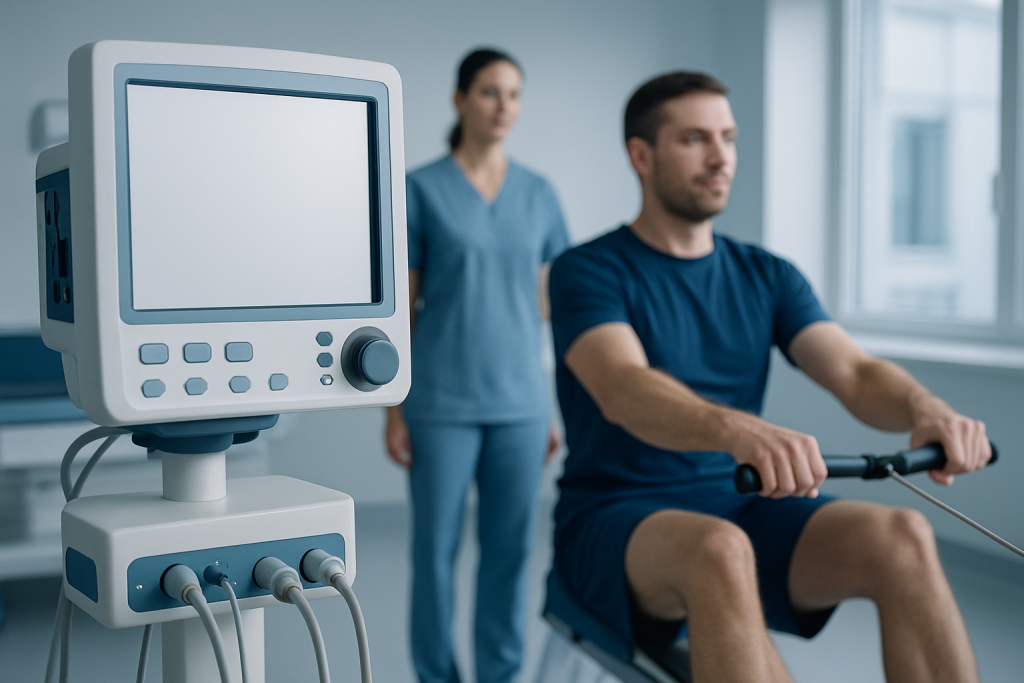
The legs do much of the power production in rowing. During the drive phase, the quadriceps extend the knees and help push the body backward, while the gluteal muscles extend the hips. The hamstrings assist with hip movement and help control the return phase.
The back is another major contributor. The latissimus dorsi, rhomboids, and middle trapezius help pull the handle toward the body and support shoulder blade control. These muscles are important for efficient force transfer and can be especially active when technique is solid and the stroke is driven from the legs first.
The core works continuously, even though it may not feel as obvious as the legs. The abdominal muscles, obliques, and deeper spinal stabilizers help keep the trunk steady, protect the lower back, and transmit force between the lower and upper body. A well-braced core often makes rowing feel smoother and more controlled.
The shoulders and arms also contribute, but usually less than many people expect. The rear shoulders, biceps, forearms, and grip muscles help complete the pull and control the handle. In balanced rowing, the arms support the movement rather than dominate it.
- Primary muscles: quadriceps, glutes, hamstrings, latissimus dorsi
- Important stabilizers: abdominals, obliques, spinal muscles, rhomboids, trapezius
- Supporting muscles: deltoids, biceps, forearms, calf muscles
How the rowing stroke recruits the body
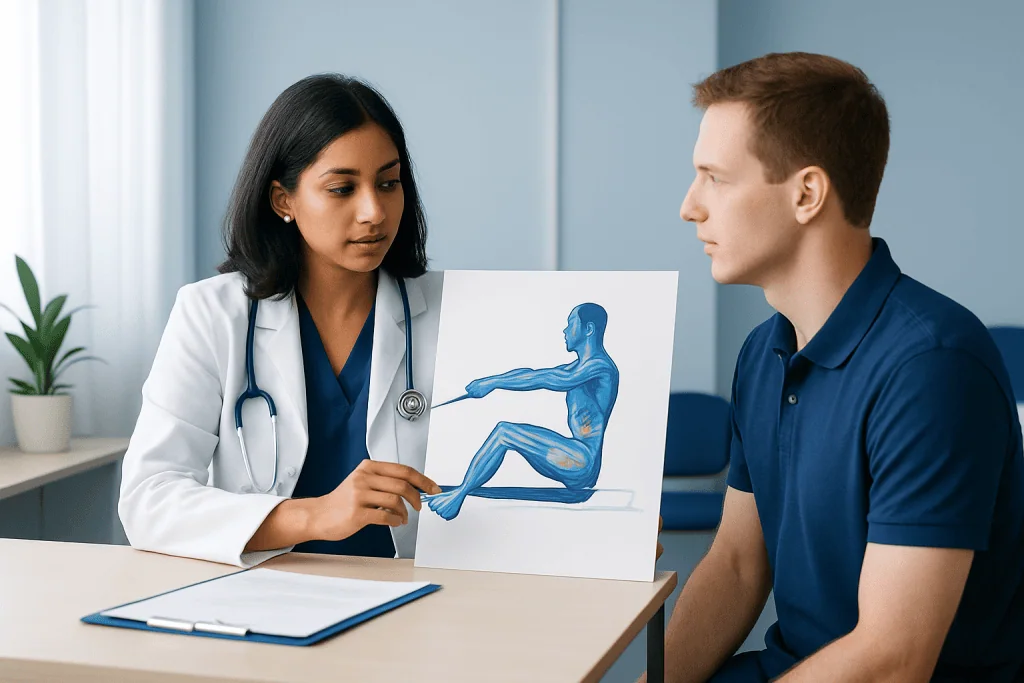
Understanding the stroke can make the answer more practical. Rowing has four commonly described phases: catch, drive, finish, and recovery. Each phase changes which muscles are working hardest and whether they are producing force or controlling movement.
At the catch, the knees are bent, the hips are flexed, and the arms are extended. The core and back muscles prepare the trunk for a stable start. During the drive, the legs push first, the hips open, and then the upper body and arms follow. This sequence is why rowing is often considered leg-driven.
At the finish, the handle reaches the lower chest or upper abdomen, and the shoulder blades draw back gently. The back, rear shoulders, and arms are more active here. During recovery, the movement reverses in a controlled way: arms extend, the body pivots forward, and the knees bend again. Hamstrings, core, and lower leg muscles help manage this return smoothly.
If the sequence is rushed or if the rower pulls mainly with the arms, the workout may feel less balanced and may place more strain on the shoulders, elbows, or lower back. People with recurring back symptoms may benefit from medical guidance to rule out issues such as a herniated disc if pain radiates or persists.
Is rowing enough for strength, posture, and cardio?
Rowing offers a blend of muscular work and aerobic conditioning. Because many large muscle groups work together, it can raise heart rate effectively while also building muscular endurance. For people who want an efficient workout, this combination is one of rowing’s main strengths.
However, rowing is not identical to a complete strength-training program. It can help develop the posterior chain, core control, and leg endurance, but it may not provide the same loading needed to maximize bone strength or build strength evenly across all movement patterns. Many people do best when rowing is paired with resistance exercises for pushing, squatting, hinging, and carrying.
Rowing may also support posture by strengthening upper back and trunk muscles, but form matters. If a person rows with rounded shoulders, excessive lumbar flexion, or poor hip mechanics, the expected postural benefits may be reduced. A clinician or physiotherapist may suggest physical therapy and rehabilitation when technique problems or recurring discomfort interfere with exercise.
Common soreness vs signs of strain or injury
Mild soreness in the thighs, buttocks, upper back, or abdominal wall one day after rowing is common, especially in beginners. This usually improves within a few days and is often accompanied by stiffness rather than true pain. General fatigue in the forearms or grip can also occur after longer sessions.
By contrast, pain that is sharp, one-sided, or focused in a joint is less typical. Lower back pain during or after rowing may reflect poor hip hinge mechanics, sudden overloading, or a pre-existing spinal issue. Shoulder pain can happen if the upper body leads too early, and knee pain may appear when stroke mechanics or foot position are off.
Medical review is more important when symptoms include swelling, bruising, locking of a joint, weakness, numbness, pain that wakes a person at night, or pain that persists despite rest and reduced training. Doctors may also consider overuse problems involving tendons or the spine. In some cases, persistent shoulder or neck symptoms may overlap with conditions such as cervical disc herniation, especially if pain travels into the arm.
Severe muscle pain with dark urine after extreme exertion is uncommon but urgent because it may suggest significant muscle breakdown. Chest pain, fainting, or unusual shortness of breath with rowing should also be assessed promptly rather than assumed to be simple exercise fatigue.
When to seek medical care
Most rowing-related soreness settles with rest, hydration, sleep, and a temporary reduction in intensity. Medical care is sensible when pain is severe, keeps returning, limits normal movement, or does not start to improve after several days. It is also appropriate when a person is unsure whether symptoms are muscular or coming from a joint, nerve, or the heart and lungs.
Urgent assessment is important for chest pain, collapse, severe breathlessness, major swelling, deformity after an injury, progressive weakness, or numbness. Athletes with known heart, lung, or musculoskeletal conditions should be especially cautious if symptoms change suddenly.
When evaluating rowing-related pain, a doctor will usually begin with questions about where the pain is, when it started, stroke volume and technique, recent training changes, and any prior injuries. The physical examination may include posture, range of motion, strength, nerve function, and joint stability. Depending on the findings, next steps may include blood tests, X-rays, ultrasound, MRI, or assessment by orthopedic and traumatology specialists or cardiology if symptoms point beyond routine muscle soreness.
How to row more safely and reduce overuse problems
Good technique and sensible progression are the most reliable ways to reduce rowing-related strain. Beginners often benefit from learning the order of the stroke slowly: legs, then body, then arms on the drive; arms, then body, then legs on the recovery. This helps spread the work across the body instead of overloading smaller muscle groups.
Warming up before harder sessions can improve comfort and movement quality. A short period of easy rowing followed by dynamic mobility for the hips, thoracic spine, shoulders, and ankles may help prepare the joints and soft tissues. After training, a cool-down and light movement can help ease stiffness.
Recovery also matters. Adequate sleep, hydration, and rest days support muscle repair. It is usually wise to increase duration, stroke rate, or resistance gradually rather than all at once. People returning after illness, pregnancy, surgery, or a long break may benefit from a more individualized plan.
If pain is recurring or technique is difficult despite instruction, professional input can be useful. Acibadem International’s multidisciplinary specialists in JCI-accredited hospitals evaluate exercise-related musculoskeletal complaints for international patients and can guide diagnosis, rehabilitation, and safe return to activity.
Frequently asked questions
Does rowing work abs or just legs and arms?
Rowing does work the abdominal muscles, but mostly as stabilizers rather than prime movers. The core helps keep the trunk steady and transfers force from the legs to the upper body throughout the stroke.
What muscles should feel most tired after rowing?
Many people notice fatigue in the thighs, glutes, upper back, and sometimes the abdominal wall after a solid rowing session. The exact pattern depends on technique, intensity, fitness level, and whether the session emphasized power or endurance.
Is rowing bad for the lower back?
Not necessarily. With good technique, rowing can be a useful full-body exercise, but poor hip hinge mechanics, too much resistance, or sudden training increases can strain the lower back. Persistent or radiating back pain should be evaluated by a clinician.
Does rowing help build muscle?
Rowing can help build muscular endurance and some strength, especially in the legs, back, and core. It is usually most effective when combined with dedicated resistance training if the goal is larger increases in muscle size or maximal strength.
Why do my arms get tired first when I row?
This often suggests that the arms are starting the pull too early or doing more than their share of the work. In efficient rowing, the legs begin the drive, the trunk follows, and the arms finish the stroke.
Can beginners row every day?
Some beginners can tolerate short, easy sessions on most days, but daily hard rowing is more likely to cause overuse symptoms. Rest days and gradual progression are important, especially during the first few weeks of training.
References
- American College of Sports Medicine
- National Institute of Arthritis and Musculoskeletal and Skin Diseases
- MedlinePlus
- National Heart, Lung, and Blood Institute
This article is for general information only and is not a substitute for professional medical advice. Please consult a qualified doctor about your individual situation.
Joint and spine care in Turkey — expert assessment & treatment
JCI-accredited · board-certified surgeons · reply within 24h
Add us as a Preferred Source to see more of our trusted health content across Google Search, AI Overviews and Discover.
Check your numbers in seconds
BMI, calories, due date, blood pressure and 30+ more clinical calculators — free, instant, doctor-reviewed ranges.