What to Know Before Knee Replacement Surgery

Knee replacement surgery is usually considered after non-surgical treatments no longer control pain or improve daily function. The procedure may replace all or part of the damaged knee joint, depending on the pattern of joint damage.
Key Takeaways
- Knee replacement surgery is usually considered after non-surgical treatments no longer control pain or improve daily function.
- The procedure may replace all or part of the damaged knee joint, depending on the pattern of joint damage.
- Preparation includes medical assessment, planning for recovery at home, and learning what to expect after surgery.
- Rehabilitation and regular exercise are essential for regaining strength, movement, and confidence.
- Most patients improve pain and mobility, but recovery takes time and realistic expectations are important.
Knee replacement surgery is a common procedure used to relieve long-term knee pain and improve function when other treatments no longer help enough. Understanding who may benefit, how to prepare, and what recovery involves can help patients make informed decisions with confidence.
Overview of Knee Replacement Surgery
Knee replacement surgery is an operation in which a damaged knee joint is resurfaced with artificial components. It is most often recommended for people with severe joint damage, commonly from osteoarthritis, when pain, stiffness, and reduced mobility make daily life difficult. The goal is to reduce pain, improve movement, and help the person return to everyday activities more comfortably.
The knee is a large joint where the thigh bone, shin bone, and kneecap work together to allow bending, straightening, walking, climbing, and standing. When the cartilage that cushions these surfaces wears away, the bones can rub together. This may lead to pain, swelling, grinding, stiffness, and loss of function that gradually worsen over time.
There are different types of knee replacement surgery. In a total knee replacement, the damaged surfaces of the joint are replaced. In a partial knee replacement, only the part of the knee that is damaged is treated. The best choice depends on how much of the joint is affected, the patient’s symptoms, overall health, and the orthopedic surgeon’s assessment.
Who May Need It and Common Symptoms
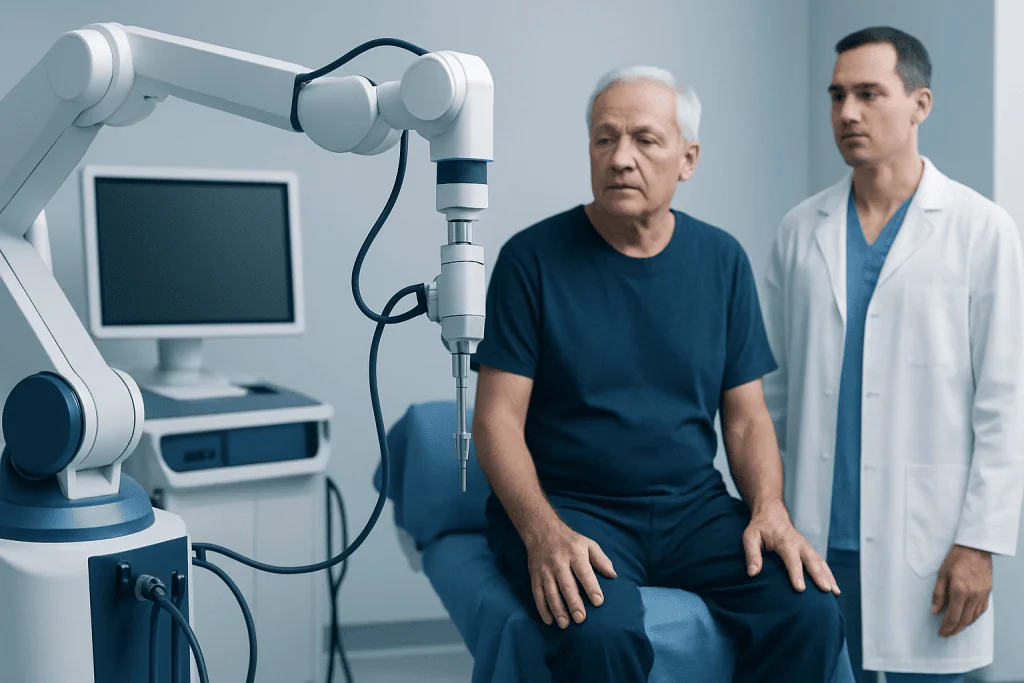
People considering knee replacement surgery usually have ongoing symptoms that have not improved enough with medicines, exercise, weight management, physical therapy, injections, or supportive devices. The most common reason is advanced arthritis in the knee, especially wear-and-tear arthritis. In some cases, inflammatory arthritis, previous injury, or joint deformity may also lead to severe damage.
Common symptoms that may lead to surgical evaluation include persistent knee pain during walking or at rest, stiffness that limits bending or straightening, swelling, a feeling that the knee is unstable, and trouble with routine tasks such as climbing stairs or getting out of a chair. Some people also notice a bowing in or out of the knee as the joint surfaces wear unevenly.
Surgery is not based on imaging alone. Doctors look at how much the symptoms affect quality of life, sleep, mobility, independence, and participation in daily activities. A person with severe pain and major functional limits may be a better candidate than someone whose X-rays look advanced but whose symptoms are still manageable.
Many patients seeking care have already been evaluated for knee osteoarthritis or other chronic joint problems. Discussing the pattern of pain and how the knee affects daily life helps the care team decide whether surgery or continued non-surgical care is the more appropriate next step.
Causes, Risk Factors, and When Surgery Is Considered

The most common cause of needing knee replacement surgery is osteoarthritis, a gradual breakdown of joint cartilage over time. Other causes include rheumatoid arthritis, post-traumatic arthritis after a fracture or ligament injury, cartilage damage, and deformities that place uneven stress on the joint. In some patients, years of chronic knee pain eventually lead to loss of activity, muscle weakness, and worsening joint mechanics.
Risk factors for developing severe knee damage include increasing age, excess body weight, a history of knee injuries, repetitive heavy joint loading, certain inflammatory conditions, and family tendencies toward arthritis. However, not every person with these risk factors will need surgery. Many people are treated successfully for years with exercise, medication, and lifestyle changes.
Knee replacement is generally considered when symptoms remain significant despite a reasonable trial of non-surgical treatment. These treatments may include pain-relieving medicines, anti-inflammatory strategies, bracing, walking aids, structured physical therapy, injections, and activity modification. The decision also depends on overall health, expectations, and whether the likely benefits outweigh the risks.
Before surgery is planned, the orthopedic team often reviews whether other options have been fully explored, such as physical therapy and rehabilitation or image-guided knee injections when appropriate. This step helps ensure that surgery is chosen at the right time and for the right reason.
How Doctors Diagnose Knee Joint Damage
Diagnosis begins with a medical history and physical examination. The doctor asks about the location and severity of pain, how long symptoms have been present, what makes them better or worse, and how much they interfere with walking, work, sleep, and daily activities. During the examination, the knee is assessed for swelling, range of motion, alignment, tenderness, stability, and strength.
Imaging tests help confirm the source and extent of damage. Standard X-rays are commonly used to show joint space narrowing, bone spurs, deformity, and wear patterns. In some cases, additional imaging such as MRI or CT may be used, especially if the diagnosis is uncertain, only one part of the joint seems affected, or prior surgery has changed the joint anatomy.
Doctors may also order blood tests or other evaluations if inflammatory arthritis or infection is a concern. When pain seems to come from more than one source, the hip, lower back, and surrounding muscles may also be examined. This is important because pain near the knee can sometimes be influenced by another joint or by nerve-related problems.
A careful diagnosis helps determine whether surgery is likely to help and what type of procedure may be best. Some patients may be candidates for robotic orthopedic surgery techniques, which can support precise planning in selected cases, while others may benefit most from conventional approaches.
Preparing for Surgery and What Happens During the Procedure
Preparation for knee replacement surgery usually includes a preoperative medical review, blood tests, and an assessment of any conditions such as diabetes, heart disease, or anemia that may affect recovery. The surgical team may advise stopping certain medicines, improving nutrition, quitting smoking, and performing strengthening exercises before the operation. Planning ahead for transportation, mobility aids, and support at home can make recovery smoother.
Patients are often encouraged to ask practical questions before surgery. These may include how long the hospital stay is likely to be, what type of anesthesia may be used, when walking usually begins, and what kind of rehabilitation will be needed afterward. Understanding the process in advance often reduces uncertainty and helps patients take an active role in recovery.
During the operation, the surgeon removes damaged cartilage and a small amount of bone from the joint surfaces and places artificial components designed to restore smoother movement. The exact technique varies depending on whether the replacement is total or partial and on the patient’s anatomy. The procedure is performed under sterile conditions to lower the risk of infection and is followed by close monitoring in the recovery period.
For people with advanced wear, deformity, and major functional limitation, the procedure may be discussed as part of broader knee replacement treatment planning. The focus is not only the surgery itself, but also pain control, safe mobilization, and rehabilitation in the days and weeks that follow.
Recovery, Rehabilitation, and Possible Risks
Recovery begins soon after surgery. Many patients start moving the knee and standing or walking with assistance within a short time, depending on their condition and the surgeon’s plan. Early movement supports circulation, helps reduce stiffness, and encourages confidence. Pain management is also an important part of recovery and usually includes a combination of approaches rather than relying on one method alone.
Rehabilitation is essential for a good result. A structured exercise program helps improve knee motion, strengthen the muscles around the joint, and restore balance and walking pattern. Progress is gradual, and it is normal to have some swelling, discomfort, and fatigue during the healing period. Following the care team’s instructions closely can make a meaningful difference in recovery.
As with any major operation, knee replacement surgery has possible risks. These may include infection, blood clots, stiffness, bleeding, wound healing problems, continued pain, nerve or blood vessel injury, or wear and loosening of the artificial joint over time. Most patients do well, but no surgery can guarantee a perfect result. Understanding both benefits and risks helps support realistic expectations.
Recovery timelines vary. Some people feel improvement in the first weeks, while full recovery and strengthening can take several months. The knee often continues to feel more natural with time as swelling decreases and mobility improves.
Self-care, Long-Term Joint Protection, and When to See a Doctor
After knee replacement surgery, long-term self-care remains important. Patients are usually advised to continue home exercises, maintain a healthy body weight, stay active within recommended limits, and use proper footwear. Low-impact activities such as walking, cycling, and swimming are often easier on the joint than high-impact jumping or twisting sports.
Protecting overall health also supports the knee. Managing conditions such as diabetes, avoiding tobacco, and addressing balance issues can help reduce complications and support mobility. Some patients benefit from reviewing movement habits, home safety, and strengthening routines with their rehabilitation team to lower the risk of falls.
A doctor should be contacted promptly if there is increasing redness, warmth, drainage from the wound, fever, severe calf pain, sudden shortness of breath, chest pain, or a sudden inability to move the knee as expected. Persistent swelling or pain that is not improving should also be assessed. Even after recovery, regular follow-up may be recommended to monitor the joint replacement over time.
Patients choosing care abroad may value coordinated orthopedic and rehabilitation services. Acibadem International’s multidisciplinary specialists and JCI-accredited hospitals diagnose and treat knee conditions for international patients, with treatment plans tailored to the individual’s health status and recovery goals.
Frequently asked questions
How do people know when it is time to consider knee replacement surgery?
It is usually considered when knee pain and stiffness continue to limit daily life despite non-surgical treatment. A doctor looks at symptoms, physical function, imaging findings, and overall health before recommending surgery.
Is knee replacement surgery always a total replacement?
No. Some patients need a total knee replacement, while others may be suitable for a partial knee replacement if damage is limited to one part of the joint. The choice depends on the pattern of arthritis, knee stability, alignment, and the surgeon's evaluation.
How long does recovery usually take after knee replacement?
Initial recovery starts in the first days and weeks, but full recovery often takes several months. Many people gradually improve in walking, strength, and comfort over time with regular rehabilitation and exercise.
Will a person need physical therapy after surgery?
In most cases, yes. Physical therapy or a guided rehabilitation program helps restore motion, strength, and balance after surgery. Following the exercise plan consistently is one of the most important parts of recovery.
What are the main risks of knee replacement surgery?
Possible risks include infection, blood clots, stiffness, bleeding, ongoing pain, and problems related to the implant over time. The care team explains these risks in the context of the patient's health and takes steps to reduce them.
How long does an artificial knee joint last?
Artificial knee joints can last many years, but longevity varies from person to person. Factors such as age, activity level, body weight, implant type, and joint health can affect how long the replacement performs well.
References
- American Academy of Orthopaedic Surgeons
- National Institute of Arthritis and Musculoskeletal and Skin Diseases
- National Health Service
- Mayo Clinic
- Arthritis Foundation
This article is for general information only and is not a substitute for professional medical advice. Please consult a qualified doctor about your individual situation.
Joint and spine care in Turkey — expert assessment & treatment
JCI-accredited · board-certified surgeons · reply within 24h
Add us as a Preferred Source to see more of our trusted health content across Google Search, AI Overviews and Discover.

Orthopedics & Spine
Care for bones, joints and the musculoskeletal system, including joint replacement, sports injuries and trauma.
125 specialists in this unit