When a Headache Needs Brain Imaging: Red Flags and Next Steps

Most recurrent headaches are primary headaches and do not require routine CT or MRI scans. Imaging is considered when a headache is sudden, unusually severe, new, changing, or linked with neurological symptoms.
Key Takeaways
- Most recurrent headaches are primary headaches and do not require routine CT or MRI scans.
- Imaging is considered when a headache is sudden, unusually severe, new, changing, or linked with neurological symptoms.
- CT and MRI are used for different reasons; the best test depends on symptoms, timing, and urgency.
- A medical history and neurological exam are often the most important first steps.
- Anyone with red-flag headache symptoms should seek prompt medical assessment.
Most headaches do not need brain imaging, especially when they fit a familiar migraine or tension-type pattern and the neurological exam is normal. Imaging is more helpful when headache red flags suggest a possible underlying problem such as bleeding, infection, pressure changes, stroke, or a mass.
Overview: Do Headaches Usually Need Brain Imaging?
Headaches are very common, and in most cases they are not caused by a dangerous brain problem. Many people have primary headaches, such as migraine or tension-type headache, which can be painful and disruptive but do not usually show a structural abnormality on a scan. For these headaches, imaging often does not change treatment and may not be necessary.
The decision to order brain imaging depends less on how strong the pain feels and more on the overall pattern. A clinician looks at when the headache started, whether it is new or familiar, whether it is getting worse, and whether there are other symptoms such as weakness, confusion, fever, or vision changes. A careful neurological examination is also very important.
Brain imaging is mainly used to look for secondary headache causes. These are headaches linked to another condition, such as bleeding around the brain, stroke, infection, inflammation, abnormal pressure, or rarely a tumor. Imaging helps doctors identify who needs urgent treatment and who can be managed safely without a scan.
Headache Red Flags That May Need Imaging
Doctors often use the term “red flags” for signs that a headache may need urgent assessment or brain imaging. A red flag does not always mean something serious is present, but it does mean the headache should be evaluated carefully. The goal is to avoid missing uncommon but important conditions.
Red flags include a sudden severe headache that reaches maximum intensity within seconds or minutes, sometimes described as a “thunderclap” headache. Other warning signs include a new headache after age 50, a new pattern of headache in someone with cancer or a weakened immune system, headache after a head injury, or headache that is steadily worsening over days to weeks.
Symptoms affecting the brain, nerves, or the rest of the body also matter. These include fainting, seizures, weakness, numbness, difficulty speaking, confusion, double vision, loss of vision, fever, neck stiffness, and persistent vomiting. Headache triggered by coughing, exertion, sexual activity, or a major change in position may also require investigation.
- Sudden “worst headache” or thunderclap headache
- New headache with weakness, numbness, speech trouble, or confusion
- Headache with fever, stiff neck, or signs of infection
- Headache after trauma
- Progressively worsening or clearly changed headache pattern
- New headache during pregnancy or after delivery
- Headache with vision loss, jaw pain, or scalp tenderness in older adults
Symptoms and Situations Doctors Look at Closely

Not every concerning headache is dramatic. Sometimes the key issue is that the headache is different from a person’s usual pattern. For example, someone with a long history of migraine may still need imaging if headaches become much more frequent, start waking them from sleep, or are now accompanied by new neurological symptoms.
Doctors also consider who is having the headache. Children, older adults, pregnant patients, and people with immune suppression may need a different level of caution. People taking blood thinners can be at higher risk of bleeding, especially after even minor head injury. In older adults, a new headache may raise concern for conditions such as temporal arteritis or other vascular causes.
Headache with eye pain, red eye, or changes in vision may point to problems that need urgent care, not only in the brain but also in the eye. Severe headache with high blood pressure, especially if accompanied by confusion or visual symptoms, may also need prompt evaluation. The full picture, rather than one symptom alone, guides the next step.
What Can Cause a Secondary Headache?
Secondary headaches can arise from many different conditions. Some are emergencies, while others are less urgent but still important to diagnose. Imaging is one tool that helps doctors sort through these possibilities together with blood tests, eye examination, and sometimes lumbar puncture or vascular studies.
Examples include bleeding around the brain, especially subarachnoid hemorrhage after a thunderclap headache; stroke; blood clots in the veins of the brain; meningitis or encephalitis; brain swelling; hydrocephalus; and masses such as tumors or abscesses. Problems with blood vessels, including aneurysm or artery inflammation, may also need targeted imaging.
Pressure-related disorders are another group. Headaches can happen when pressure inside the skull is too high or too low. A person may also have headache linked to another condition entirely, such as severe sinus disease, uncontrolled high blood pressure, or side effects of certain medications. Sometimes the concern is whether a headache fits a known primary headache disorder like migraine or whether it suggests a different diagnosis.
CT or MRI: Which Brain Imaging Test Is Used?
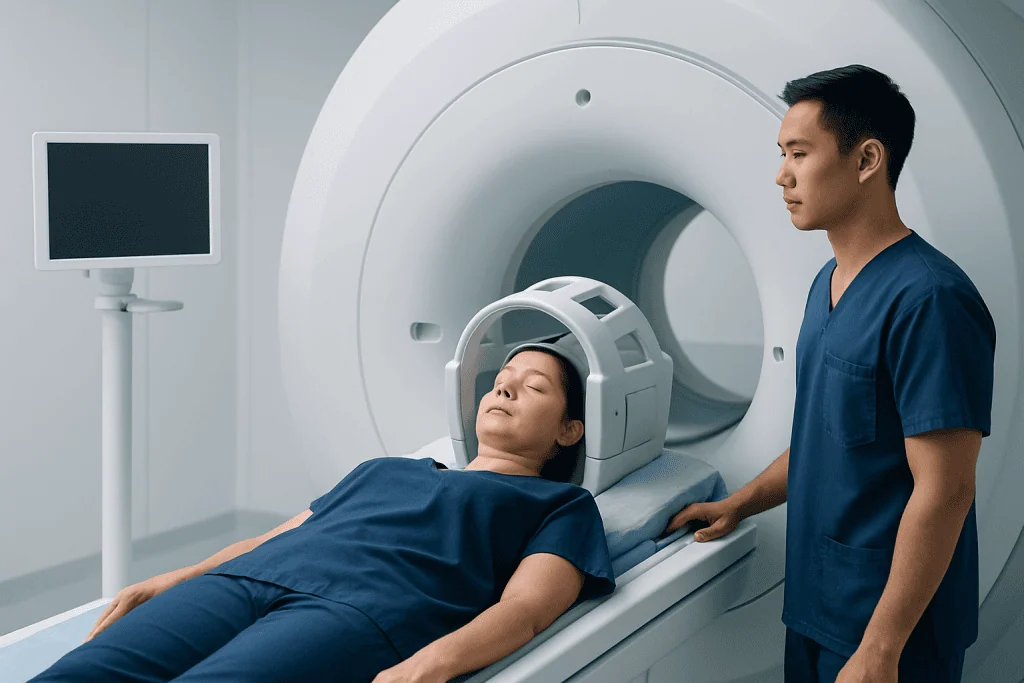
The two main imaging tests for headaches are computed tomography (CT) and magnetic resonance imaging (MRI). They do not do exactly the same job. CT is fast, widely available, and especially useful in emergencies, such as a sudden severe headache where doctors need to look quickly for bleeding. MRI takes longer but provides more detailed images of the brain and surrounding structures.
In an emergency department, a non-contrast head CT may be the first test for a thunderclap headache, head injury, or acute neurological deficit. In outpatient care, MRI is often preferred for a new persistent headache with concerning features because it can better show subtle abnormalities, inflammation, small strokes, pressure-related signs, and some tumors.
Sometimes a clinician needs to look specifically at blood vessels. In that case, additional studies such as CT angiography, MR angiography, or venography may be considered. If imaging is recommended, it may include MRI scanning or CT scanning depending on the situation. The most appropriate test is based on urgency, suspected cause, age, pregnancy status, metal implants, and prior medical history.
How Doctors Decide Whether Imaging Is Necessary
The decision usually starts with a detailed conversation and a neurological exam. The clinician asks about the onset, location, pattern, triggers, associated symptoms, medications, family history, and any previous headaches. This often reveals whether the headache behaves like a primary disorder or whether red flags are present.
If the story fits a stable primary headache and the neurological exam is normal, imaging is often not recommended. This is true even if headaches are frequent or severe, because scans are unlikely to explain symptoms in a useful way. In such cases, management may focus on diagnosing and treating a disorder such as tension-type headache or another primary headache syndrome.
If the diagnosis remains uncertain, symptoms are new or changing, or the examination is abnormal, imaging may be ordered. Some patients also need other tests, such as blood work for inflammation or infection, an eye exam to look for optic nerve swelling, or a lumbar puncture if bleeding or infection is still suspected after initial imaging. The process is tailored to the individual rather than based on one rule for everyone.
What Happens After Imaging and Treatment Options
What happens next depends entirely on the imaging result and the overall clinical picture. If the scan is normal and no red flags remain after assessment, the next step is often treatment for a primary headache disorder. This may include lifestyle measures, headache diaries, trigger management, and medications chosen by a doctor based on the headache type and frequency.
If imaging shows a secondary cause, treatment targets the underlying problem. That may mean urgent care for bleeding or stroke, antibiotics or antivirals for infection, management of abnormal pressure, or referral to specialists such as neurology, neurosurgery, or ophthalmology. Some people may also need neurological rehabilitation after certain neurological events.
Normal imaging can be reassuring, but it does not mean a person’s pain is unimportant. Migraine and other primary headaches can significantly affect quality of life and deserve proper treatment. Near the end of the care pathway, patients may benefit from a structured plan that explains the diagnosis, expected warning signs, and when to return for reassessment. Acibadem International’s multidisciplinary specialists and JCI-accredited hospitals diagnose and treat headache-related conditions for international patients when advanced evaluation is needed.
Self-Care, Prevention, and When to Seek Medical Help
For people with non-urgent headaches, simple measures can help while awaiting medical advice. These include staying hydrated, sleeping regularly, limiting excessive caffeine, eating consistently, reducing stress, and avoiding overuse of pain medicines. Taking headache medicine too often can itself lead to more frequent headaches, sometimes called medication-overuse headache.
Keeping a headache diary can be very useful. It may include when the headache starts, where the pain is felt, associated symptoms, menstrual timing if relevant, foods or activities beforehand, and what treatments helped. This information helps doctors decide whether the pattern looks like migraine, cluster headache, tension-type headache, or something that needs investigation.
Urgent medical care is appropriate for a sudden severe headache, headache with neurological symptoms, fever and stiff neck, seizure, new confusion, fainting, major head injury, or rapidly worsening pain. A person should also seek prompt evaluation for a new headache during pregnancy or after delivery, a new headache after age 50, or a headache that is clearly different from their usual pattern. When in doubt, it is safest to speak with a qualified doctor.
Frequently asked questions
Do most headaches need a CT scan or MRI?
No. Most headaches are primary headaches, such as migraine or tension-type headache, and do not need routine brain imaging when the history is typical and the neurological exam is normal. Imaging is usually reserved for headaches with red flags or an unusual pattern.
What is the biggest red flag for a dangerous headache?
A sudden severe headache that reaches peak intensity within moments is one of the most important red flags. This kind of thunderclap headache needs urgent medical assessment because it can be linked to bleeding or other serious causes.
Is MRI better than CT for headache?
Neither test is always better; each has a role. CT is often used in emergencies because it is fast and good at detecting acute bleeding, while MRI provides more detailed images and is often preferred for non-emergency evaluation of a new or changing headache.
If a brain scan is normal, can the headache still be serious?
A normal scan is often reassuring, but it does not rule out every cause of headache on its own. Doctors interpret imaging together with symptoms, examination findings, and sometimes other tests. A normal scan also does not mean the pain is not real or that treatment is unnecessary.
When should someone go to the emergency department for a headache?
Emergency care is appropriate for a sudden severe headache, headache with weakness, speech problems, seizure, confusion, fever, neck stiffness, or after significant head injury. It is also important to seek urgent help if the headache is the worst of a person’s life or clearly different from usual headaches.
Can repeated headaches over months still need imaging?
Sometimes, yes. Imaging may be considered if headaches are becoming progressively worse, changing in pattern, waking a person from sleep, or causing new neurological or visual symptoms. Stable, long-standing headaches without red flags are less likely to need imaging.
References
- American Headache Society
- American College of Radiology
- National Institute of Neurological Disorders and Stroke
- National Health Service
- Mayo Clinic
This article is for general information only and is not a substitute for professional medical advice. Please consult a qualified doctor about your individual situation.
Explore treatments in Turkey — costs, top hospitals & a free quote
JCI-accredited · board-certified surgeons · reply within 24h
Add us as a Preferred Source to see more of our trusted health content across Google Search, AI Overviews and Discover.
Check your numbers in seconds
BMI, calories, due date, blood pressure and 30+ more clinical calculators — free, instant, doctor-reviewed ranges.