When Is a Sleep Study Not Enough? Signs You May Need Neurological Sleep Evaluation

A routine sleep study is useful, but it may not fully explain complex sleep symptoms. Neurological sleep evaluation is considered when symptoms suggest narcolepsy, parasomnias, seizure-related events, movement disorders, or unexplained daytime sleepiness.
Key Takeaways
- A routine sleep study is useful, but it may not fully explain complex sleep symptoms.
- Neurological sleep evaluation is considered when symptoms suggest narcolepsy, parasomnias, seizure-related events, movement disorders, or unexplained daytime sleepiness.
- Warning signs include dream enactment, sudden muscle weakness, unusual nighttime movements, blackouts, and persistent symptoms despite a normal sleep study.
- Evaluation may include a detailed neurological exam, sleep history, video EEG, actigraphy, multiple sleep latency testing, and brain imaging when appropriate.
- Accurate diagnosis is important because different sleep and neurological conditions can look similar but need different treatments.
A standard sleep study can answer many questions, but it does not explain every sleep-related symptom. When symptoms suggest a brain, nerve, or movement-related sleep disorder, a neurological sleep evaluation may help identify the cause and guide more targeted care.
Overview: Why a Sleep Study May Not Always Be Enough
A sleep study, also called polysomnography, is one of the most important tools in sleep medicine. It can detect breathing-related sleep disorders such as obstructive sleep apnea, monitor oxygen levels, and record brain waves, heart rhythm, muscle activity, and limb movements during sleep. For many people, this test provides clear answers and helps guide treatment.
However, some sleep-related symptoms are more complex. A person may have vivid dream enactment, sudden daytime weakness, episodes that resemble seizures, unusual movements during sleep, or severe daytime sleepiness that remains unexplained. In these situations, a routine overnight study may not capture the full picture, or the results may be normal even though symptoms continue.
That is when neurological sleep evaluation becomes important. This kind of assessment looks more closely at how the brain and nervous system affect sleep, wakefulness, movement, and behavior at night. It can help distinguish between primary sleep disorders, seizure disorders, movement disorders, and other neurological conditions that can disrupt sleep or mimic common sleep problems.
Symptoms That Suggest a Neurological Sleep Evaluation
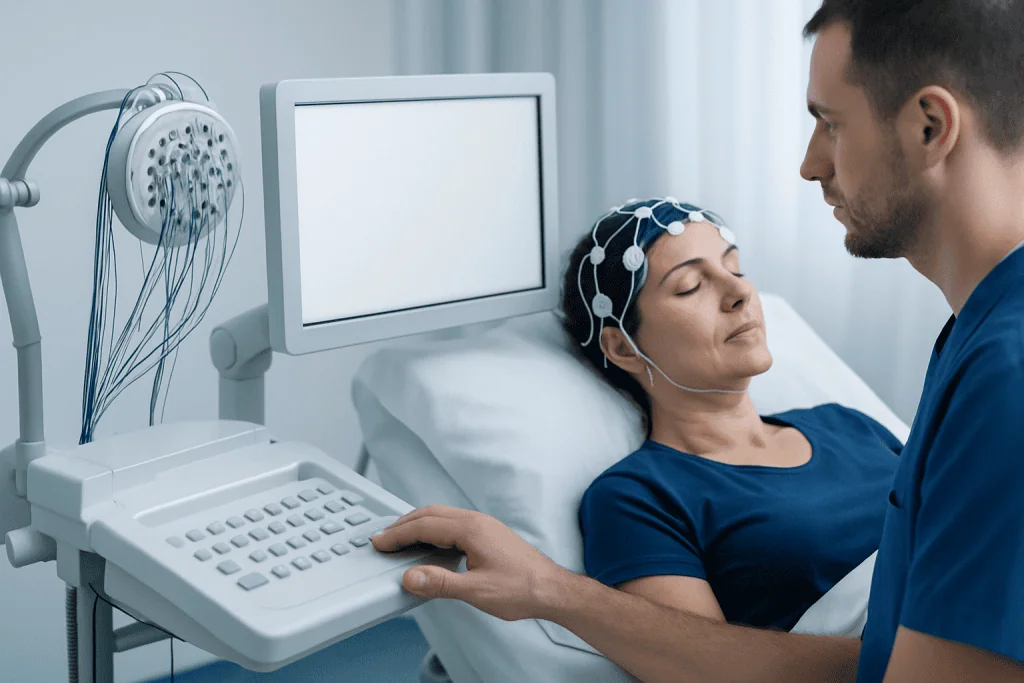
Some symptoms raise the possibility that a standard sleep study alone may not be enough. Persistent excessive daytime sleepiness is one example, especially when a person gets enough sleep but still struggles to stay awake. This may point to conditions such as narcolepsy or other central disorders of hypersomnolence, which often require specialized daytime testing in addition to overnight monitoring.
Another important sign is unusual behavior during sleep. This can include punching, kicking, shouting, sitting up suddenly, sleepwalking, or acting out dreams. These symptoms may be caused by parasomnias, certain movement disorders, or nighttime seizures. Because these conditions can overlap, a neurologically focused evaluation may be needed to sort them out safely and accurately.
Other symptoms that may warrant further assessment include:
- Sudden episodes of muscle weakness triggered by emotion
- Repeated blackouts, staring spells, or confusion on waking
- Jerking, stiffening, or rhythmic movements during sleep
- Restless or uncomfortable legs at night that significantly disturb sleep
- A normal sleep study despite ongoing severe symptoms
- Memory changes, balance problems, tremor, or other neurological symptoms occurring alongside sleep complaints
If sleep symptoms are unusual, disabling, or difficult to classify, a neurological sleep specialist can help determine whether the problem involves the brain, nerves, muscles, or a related sleep disorder.
Conditions That Can Be Missed or Need More Specialized Testing

Several disorders may require more than a standard overnight sleep study for diagnosis. Narcolepsy is one of the best-known examples. People with narcolepsy may have overwhelming daytime sleepiness, brief uncontrollable sleep episodes, vivid dream-like hallucinations, sleep paralysis, or cataplexy, which is sudden loss of muscle tone triggered by emotions. Diagnosing narcolepsy usually requires an overnight study followed by a multiple sleep latency test the next day.
Parasomnias are another group of conditions that can be difficult to define with routine testing alone. These include REM sleep behavior disorder, sleepwalking, confusional arousals, and night terrors. In REM sleep behavior disorder, a person may physically act out dreams because the usual muscle paralysis of REM sleep is reduced or absent. This may need video monitoring and neurological review because it can overlap with or signal broader neurological disease.
Nocturnal seizures can also be mistaken for sleep disorders, especially when episodes happen only at night. Sudden repetitive movements, stiffening, vocalizations, or brief arousals may appear similar to parasomnias. In some cases, additional testing such as prolonged video EEG is needed. Likewise, movement-related conditions such as periodic limb movement disorder, restless legs syndrome, or symptoms associated with Parkinson’s disease may need neurological assessment if symptoms are severe, atypical, or linked with daytime neurological complaints.
How Doctors Evaluate Sleep Symptoms From a Neurological Perspective
A neurological sleep evaluation starts with a detailed history. The doctor will ask about the timing of symptoms, sleep habits, medications, alcohol use, mental health, medical conditions, and family history. Bed partners or family members can be very helpful because they may notice behaviors during sleep that the person does not remember. A careful description of events often provides crucial clues.
The assessment usually includes a neurological examination. This looks for signs involving movement, strength, reflexes, sensation, coordination, memory, and alertness. These findings can help point toward disorders affecting the central nervous system, peripheral nerves, or muscles. The aim is not simply to confirm poor sleep, but to understand whether sleep symptoms are part of a broader neurological pattern.
Depending on the situation, testing may include a repeat or more specialized sleep study, daytime sleep testing, video EEG, actigraphy, blood tests, or imaging such as MRI. If breathing-related sleep problems are suspected, evaluation may still include standard sleep medicine tools and sometimes sleep apnea treatment. If seizure-like episodes are part of the concern, doctors may recommend EEG testing or extended monitoring to capture events more clearly.
What Tests May Be Used Beyond Standard Polysomnography
Polysomnography records many body functions during sleep, but it has limits. It takes place over one night in a specific setting, and some events do not happen every night. In addition, certain disorders require tests that measure daytime sleepiness, long-term sleep patterns, or electrical brain activity during suspected seizure-like episodes. That is why additional studies are sometimes recommended.
One commonly used follow-up test is the multiple sleep latency test, which measures how quickly a person falls asleep during several daytime naps and whether REM sleep appears unusually early. This helps assess narcolepsy and related disorders. Actigraphy, a wearable movement monitor, can be useful for tracking sleep-wake patterns over days or weeks, especially when circadian rhythm disruption is suspected.
When spells may be epileptic, video EEG monitoring can be especially valuable because it matches behavior on camera with brain electrical activity. In some cases, neuroimaging such as MRI is used to look for structural causes if the history or examination suggests a neurological disorder. The right combination of tests depends on the symptoms, and not every patient needs every test.
Treatment Options After Neurological Sleep Evaluation
Treatment depends on the diagnosis. Some people are found to have a primary sleep disorder, while others have a neurological condition that affects sleep secondarily. This distinction matters because treatment for one disorder may not help another, even if the symptoms look similar. The goal is to improve sleep quality, daytime function, and safety.
Management may include sleep schedule adjustments, medication review, treatment of breathing-related sleep disorders, therapy for movement disorders, or medications targeted to conditions such as narcolepsy or REM sleep behavior disorder. If nighttime events are caused by seizures, treatment is usually guided by a neurologist with expertise in epilepsy. If symptoms relate to another neurological disease, care may involve several specialists working together.
Safety planning is also important. People who act out dreams, sleepwalk, or have sudden episodes of sleepiness or collapse may need practical changes at home, such as removing sharp objects, protecting the sleep area, and avoiding driving until a doctor advises it is safe. Near the end of the evaluation process, some patients choose centers with multidisciplinary neurological and sleep expertise; Acibadem International’s multidisciplinary specialists in JCI-accredited hospitals diagnose and treat sleep-related neurological conditions for international patients.
Self-Care, Symptom Tracking, and When to See a Doctor
Self-care cannot replace diagnosis, but it can support the evaluation. Keeping a sleep diary can help identify patterns in bedtime, wake time, naps, nighttime events, and daytime symptoms. If possible, family members can record observations about unusual behaviors during sleep. Video recordings taken safely at home may also be helpful for the doctor, though they should never delay urgent care.
Good sleep habits still matter even when symptoms may have a neurological cause. Consistent sleep and wake times, limiting alcohol, reviewing medications with a doctor, and avoiding sleep deprivation can reduce some triggers for nighttime events. For people with excessive daytime sleepiness, taking precautions around driving, swimming, climbing, or operating machinery is especially important until the cause is clear.
A doctor should be consulted if a person has persistent sleepiness despite enough sleep, sudden weakness with emotions, repeated unusual movements at night, injuries during sleep, blackouts, breathing pauses, or symptoms that continue even after a normal sleep study. Urgent medical attention is needed if episodes involve prolonged confusion, serious injury, chest pain, or concern for seizures or stroke. Early assessment can lead to a more precise diagnosis and more effective treatment.
Frequently asked questions
What is a neurological sleep evaluation?
A neurological sleep evaluation is a more specialized assessment used when sleep symptoms may involve the brain or nervous system. It combines sleep history, neurological examination, and selected tests to identify conditions that a standard sleep study may not fully explain.
Can a normal sleep study still mean something is wrong?
Yes. A normal overnight sleep study does not rule out every sleep disorder or neurological condition. Some problems happen only occasionally, while others require daytime testing, video EEG, or longer-term monitoring to diagnose.
When should excessive daytime sleepiness be evaluated by a neurologist?
Excessive daytime sleepiness deserves further evaluation when it is persistent, severe, or unexplained by poor sleep habits. A neurological assessment may be helpful if there are symptoms such as sudden muscle weakness, vivid dream-like experiences, sleep paralysis, or a normal sleep study despite ongoing sleepiness.
Are acting out dreams and sleepwalking the same thing?
No. Although both involve unusual nighttime behavior, they can happen in different stages of sleep and may have different causes. A specialist may need to determine whether the behavior is a parasomnia, a seizure-related event, or another neurological problem.
What is the difference between a sleep disorder and a nighttime seizure?
They can look similar, especially when episodes happen only during sleep. Sleep disorders often follow recognizable patterns related to sleep stages, while seizures are caused by abnormal electrical brain activity. In unclear cases, video EEG and detailed clinical review may be needed.
Will everyone with unusual sleep symptoms need brain imaging?
No. Brain imaging is not required for every patient. It is usually considered when the history, examination, or test results suggest a structural neurological cause that needs further investigation.
References
- American Academy of Sleep Medicine
- National Institute of Neurological Disorders and Stroke
- National Heart, Lung, and Blood Institute
- National Institute for Health and Care Excellence
- World Health Organization
This article is for general information only and is not a substitute for professional medical advice. Please consult a qualified doctor about your individual situation.
Explore treatments in Turkey — costs, top hospitals & a free quote
JCI-accredited · board-certified surgeons · reply within 24h
Add us as a Preferred Source to see more of our trusted health content across Google Search, AI Overviews and Discover.

More from the Health Library



Related Specialists

Dr. Emre Sübay
Ophthalmology
Dt. Aslı Yetğın Yazar
Oral & Dental Health
Prof. Dr. Javad Parvizi
Orthopedic Surgery & Traumatology
Assoc. Prof. Dr. Mirza Zafer Dağtaş
Orthopedic Surgery & Traumatology