When Is Cataract Surgery Needed? Signs It May Be Time to Act

Cataract surgery is often recommended when vision changes start to limit reading, driving, work, or independence. Common signs include blurry vision, glare, halos, faded colors, and frequent prescription changes.
Key Takeaways
- Cataract surgery is often recommended when vision changes start to limit reading, driving, work, or independence.
- Common signs include blurry vision, glare, halos, faded colors, and frequent prescription changes.
- Surgery is not based only on age or how a cataract looks, but on symptoms, eye exam findings, and personal needs.
- An eye doctor can confirm whether a cataract is the main cause of vision loss or whether another eye condition is involved.
- Modern cataract surgery is a common and effective procedure, but the decision should be individualized.
Cataract surgery is usually considered when cataracts begin to interfere with clear vision, safety, or everyday activities. The right timing depends less on the cataract itself and more on how much symptoms affect daily life and whether other eye problems are present.
Overview: When Cataract Surgery Becomes the Right Choice
A cataract happens when the eye’s natural lens becomes cloudy. This clouding scatters light and makes vision less sharp, less bright, and sometimes more distorted. Cataracts often develop gradually, so many people do not notice the change at first.
Cataract surgery is usually not performed simply because a cataract exists. Instead, it is considered when the cataract begins to affect daily life, safety, or the ability to do important tasks. For one person, that may mean difficulty driving at night. For another, it may mean trouble reading, working on a screen, recognizing faces, or managing household activities.
The decision is therefore personal as well as medical. Some people function well with mild symptoms, while others are more affected because of work demands, hobbies, or other eye conditions. A comprehensive eye examination helps determine whether cataracts are the main reason for vision problems and whether surgery is likely to help.
Signs It May Be Time to Act
The clearest sign that cataract surgery may be needed is that vision problems are becoming disruptive. Glasses, brighter lighting, or anti-glare measures may help for a while, but these strategies become less effective as the cataract progresses. When this happens, surgery may offer the best improvement.
Symptoms vary, but some patterns are especially common. People may notice that vision looks cloudy or dim, colors seem less vivid, or light sources appear overly bright. Night driving can become stressful because headlights produce glare or halos. Reading may require stronger light, and seeing fine details can become more difficult.
- Blurred, hazy, or cloudy vision
- Glare from sunlight, lamps, or headlights
- Halos around lights, especially at night
- Frequent changes in eyeglass prescription
- Faded or yellowed colors
- Double vision in one eye
- Difficulty reading, driving, or recognizing faces
Sometimes the timing becomes clear because everyday safety is affected. If a person feels less confident walking on stairs, crossing streets, cooking, or driving, it is important not to ignore these changes. In such situations, surgery may help restore not only clearer vision but also confidence and independence.
How Cataracts Affect Daily Life

Cataracts can influence more than visual clarity. They can gradually reduce quality of life by making routine tasks slower, more tiring, and less comfortable. Many people adapt without realizing how much extra effort they are using to compensate.
Reading may become difficult even with glasses, especially in dim light. Hobbies such as sewing, painting, gardening, or using digital devices can feel less enjoyable. Work performance may also be affected if a job requires precision, screen use, or safe mobility in changing light conditions.
Driving is one of the most important concerns. Glare from oncoming headlights, reduced contrast sensitivity, and slower adjustment between bright and dark settings can make both daytime and nighttime driving harder. For older adults in particular, reduced vision may also increase the risk of falls and limit social independence.
These practical effects matter. Eye specialists do not base the decision on vision chart numbers alone. They also consider how strongly symptoms are interfering with daily living, personal goals, and overall well-being.
Causes, Risk Factors, and Related Eye Conditions
Most cataracts develop with age as natural changes occur in the lens proteins. This is known as age-related cataract and is the most common type. However, cataracts can also develop earlier because of diabetes, long-term steroid use, smoking, previous eye injury, radiation exposure, or a family tendency.
Some people have cataracts in both eyes, although one eye may become worse sooner. Cataracts can progress slowly over years or more quickly in certain situations. The speed of change helps guide follow-up, but it still does not by itself determine when surgery is needed.
It is also important to understand that cataracts are not the only cause of blurred vision. Conditions such as glaucoma or age-related retinal disease may also affect sight. An eye doctor will look carefully for these problems because they can influence both symptoms and the expected benefit of surgery.
In some cases, cataract removal may also make it easier for the doctor to monitor or treat other eye diseases. A full assessment helps distinguish whether the lens clouding is the main issue or whether more than one eye condition is contributing to vision changes.
How Doctors Decide: Eye Examination and Diagnosis
The decision about cataract surgery begins with a detailed eye examination. The doctor will ask about symptoms, when they occur, and how they affect daily activities. Vision testing, refraction, and a slit-lamp examination help show how much the lens has become cloudy and whether a new glasses prescription can still help.
Pupil dilation allows the doctor to examine the inside of the eye more fully, including the retina and optic nerve. This is important because some vision complaints that seem related to cataracts may actually come from another eye problem. If another condition is present, the doctor will explain how it may affect surgery timing and expected results.
Doctors do not rely on a single rule such as “wait until the cataract is mature.” In modern practice, surgery is often performed earlier, once symptoms are bothersome enough and the likely benefits are clear. The right timing depends on visual needs, general eye health, and whether the cataract is interfering with examination or treatment of another condition.
Before surgery, additional measurements are taken to plan the procedure and choose the most suitable intraocular lens. This evaluation is part of safe, personalized cataract surgery, helping the team match treatment to the person’s visual goals and eye anatomy.
Treatment Options and What Surgery Involves
There are no eye drops, exercises, or medicines proven to remove an established cataract. In the early stages, symptom relief may come from stronger lighting, updated glasses, sunglasses, or anti-glare lenses. Once these steps no longer provide enough improvement, surgery becomes the definitive treatment.
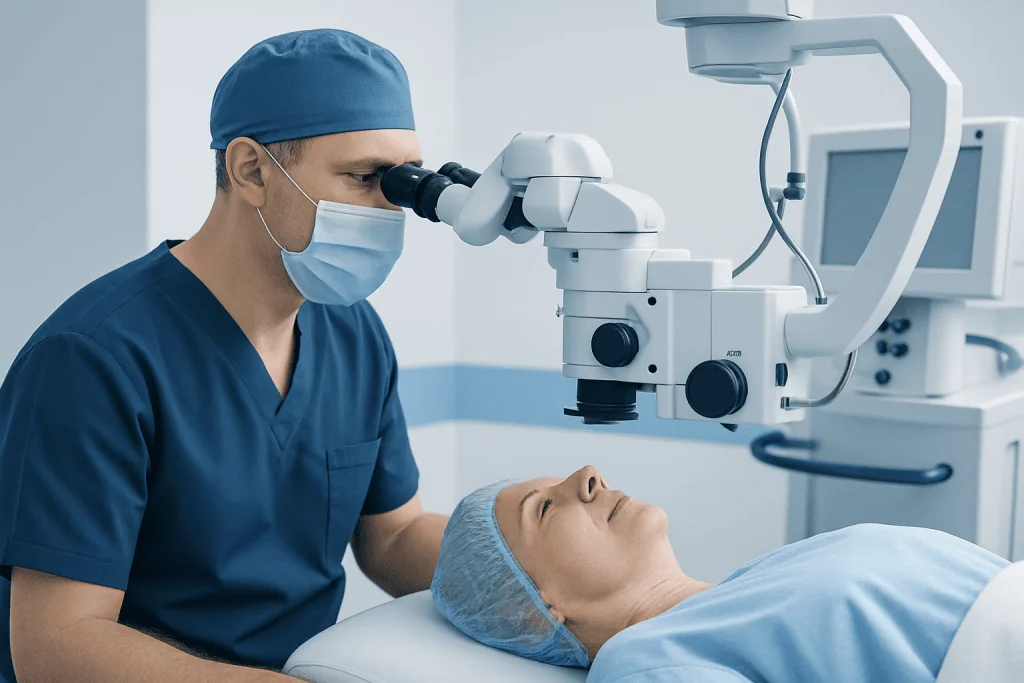
Cataract surgery removes the cloudy natural lens and replaces it with a clear artificial intraocular lens. The procedure is commonly performed one eye at a time. It is usually done as day surgery, and many people recover gradually over days to weeks, although exact healing time varies.
The choice of replacement lens depends on several factors, including overall eye health, astigmatism, visual needs, and whether the goal is clearer distance vision, less dependence on glasses, or both. Some people may also be assessed for options that address corneal focusing issues through vision correction planning, although not every treatment is suitable for every eye.
If other conditions are present, such as retinal problems or corneal disease, the treatment plan may need adjustment. In selected cases, coordination with specialists in corneal treatment or retinal surgery may be relevant. The surgeon will explain the expected benefits, limits, and risks in a balanced way before any decision is made.
Prevention, Self-care, and Preparing for Surgery
Not all cataracts can be prevented, especially those related to aging. Still, healthy habits may support long-term eye health and may help slow risk factors linked to cataract development. Regular eye checkups are especially important for older adults and for people with diabetes or other chronic health conditions.
- Wear sunglasses that block ultraviolet light outdoors
- Stop smoking or seek support to quit
- Manage diabetes and other chronic conditions carefully
- Eat a balanced diet rich in fruits and vegetables
- Use protective eyewear during sports or hazardous work
- Review long-term steroid use with a doctor if applicable
If surgery is being planned, preparation usually includes eye measurements, a review of medications, and instructions about the day of the procedure. Patients should ask practical questions about recovery, eye drops, activity restrictions, and when they can return to work or driving.
Near the end of the care journey, some international patients choose centers with coordinated ophthalmology services. Acibadem International’s multidisciplinary specialists and JCI-accredited hospitals diagnose and treat cataracts for international patients, with treatment plans tailored to the individual eye examination and visual needs.
When to See a Doctor
A person should arrange an eye examination if vision is becoming cloudy, glare is worsening, or normal activities feel harder because of sight changes. Even if symptoms seem mild, regular assessment can track progression and identify the right time to consider surgery.
Prompt medical evaluation is especially important if vision changes suddenly, only one eye becomes much worse, or there is pain, redness, flashes of light, or a curtain-like loss of vision. These signs are not typical of an uncomplicated cataract and may point to another eye problem that needs urgent care.
It is also wise to seek review if a person is avoiding driving, stumbling more often, or becoming socially isolated because of poor vision. Cataracts usually develop slowly, but the effect on confidence and safety can be significant. Early discussion with an eye specialist can make planning easier and less stressful.
Frequently asked questions
How do people know when cataract surgery is really necessary?
Cataract surgery is usually considered necessary when vision problems begin to interfere with daily activities such as reading, driving, working, or moving around safely. The decision depends on symptoms, exam findings, and personal needs rather than age alone.
Can someone wait if they have a cataract but are not very bothered by it?
Yes. If the cataract is present but not causing significant problems, an eye doctor may recommend monitoring it with regular checkups. Surgery is often timed according to how much the cataract affects quality of life and whether glasses still help enough.
Do cataracts always get worse over time?
Many cataracts gradually progress, especially age-related cataracts, but the speed can vary from person to person. Some change slowly over years, while others become more troublesome sooner because of other health factors or visual demands.
Will new glasses cure a cataract?
New glasses can improve vision temporarily in the early stages, but they do not remove the cloudy lens. When prescription changes no longer provide enough benefit, surgery becomes the only effective way to treat the cataract itself.
Is cataract surgery done immediately after diagnosis?
Not usually. Many people are diagnosed before they need surgery, and they may simply be followed over time. Surgery is generally scheduled when symptoms become bothersome, safety is affected, or the cataract interferes with care for another eye condition.
Can cataract surgery help with night driving problems?
It often can if cataracts are the main cause of glare, halos, or poor contrast at night. An eye examination is important because other eye conditions can also affect night vision and may influence how much improvement to expect.
References
- American Academy of Ophthalmology
- National Eye Institute
- Mayo Clinic
- National Health Service
- World Health Organization
This article is for general information only and is not a substitute for professional medical advice. Please consult a qualified doctor about your individual situation.
Cataract Surgery in Turkey — costs, top hospitals & a free quote
JCI-accredited · board-certified surgeons · reply within 24h
Add us as a Preferred Source to see more of our trusted health content across Google Search, AI Overviews and Discover.

Ophthalmology
Comprehensive eye care from laser vision correction to retina, cornea and cataract surgery.
75 specialists in this unit