When Migraine Needs Brain Imaging: Red Flags That Change the Workup
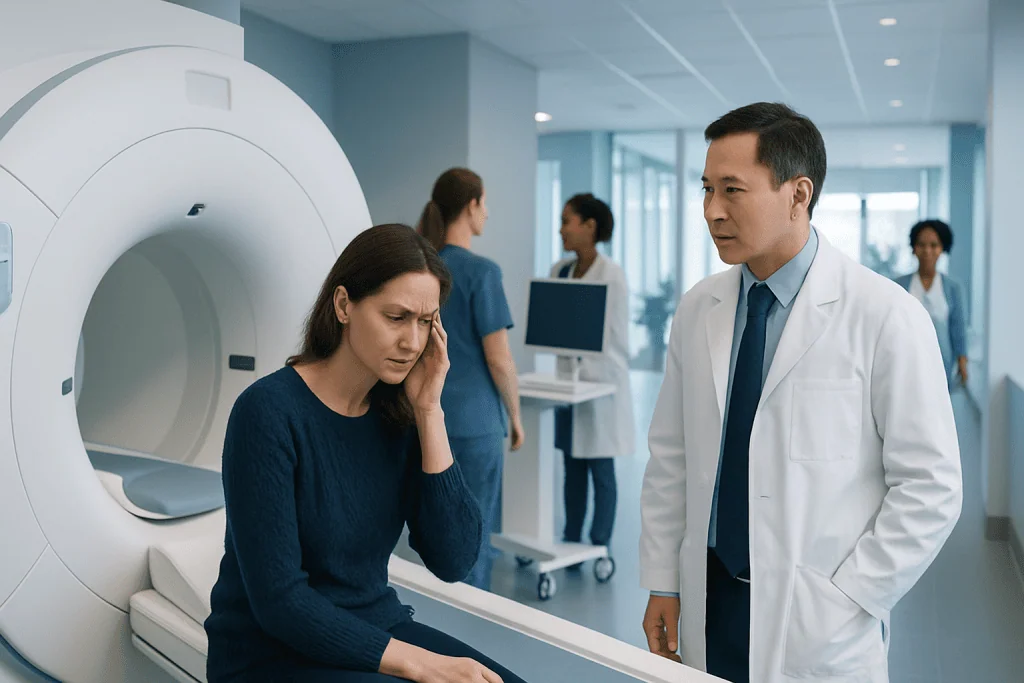
Routine brain imaging is not usually needed for a stable, typical migraine pattern. Red flags such as sudden severe headache, new neurological symptoms, fever, cancer history, or head trauma can change the workup.
Key Takeaways
- Routine brain imaging is not usually needed for a stable, typical migraine pattern.
- Red flags such as sudden severe headache, new neurological symptoms, fever, cancer history, or head trauma can change the workup.
- MRI is often preferred for many non-emergency headache evaluations, while CT is commonly used in urgent situations.
- A careful history and neurological examination help determine whether imaging is necessary.
- People should seek urgent medical care for thunderclap headache, confusion, weakness, seizure, or headache after significant injury.
Most people with a typical migraine and a normal neurological exam do not need brain imaging. However, certain warning signs, changes in headache pattern, or abnormal exam findings can mean that MRI or CT scanning is appropriate to look for another cause.
Overview: Does Migraine Usually Need Brain Imaging?
Migraine is a common neurological condition that can cause moderate to severe headache, often with nausea, light sensitivity, sound sensitivity, or visual symptoms. For many people, the diagnosis is made from the pattern of symptoms and a clinical evaluation rather than from a scan. If a person has a long-standing history of migraines that follow a familiar pattern and the neurological examination is normal, brain imaging is usually not necessary.
This approach can feel surprising to patients, especially when headaches are painful or disruptive. However, imaging is most helpful when there is reason to suspect a structural or secondary cause of headache rather than a primary headache disorder such as migraine. A normal scan also does not treat migraine itself, so doctors balance the potential value of imaging against cost, incidental findings, and unnecessary anxiety.
The decision about migraine brain imaging depends on the overall clinical picture. Doctors look at the timing of the headache, how it started, whether the pattern has changed, whether there are neurological symptoms between attacks, and whether any medical conditions increase the chance of a different underlying problem. When certain red flags are present, the workup changes and imaging may become an important next step.
Symptoms and Patterns That Suggest Typical Migraine
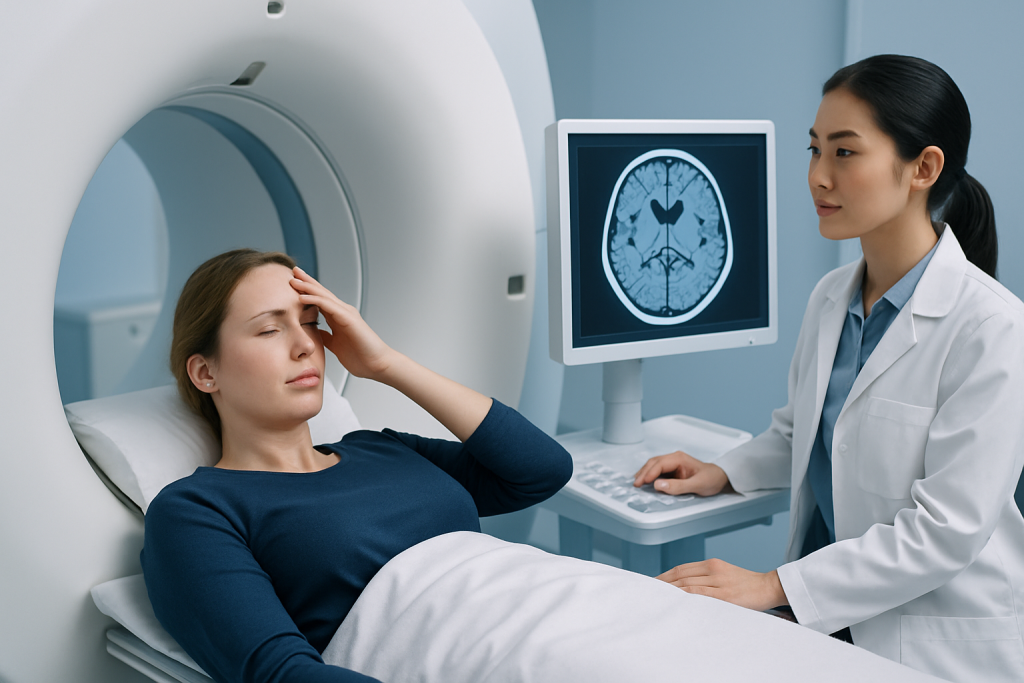
A typical migraine often has recurring features. Pain may be throbbing or pulsating, may affect one side or both sides of the head, and may worsen with physical activity. Many people also have nausea, vomiting, sensitivity to light, sensitivity to sound, or a need to rest in a dark and quiet place. Some experience aura, such as temporary visual zigzags, flashing lights, or tingling that develops gradually and then resolves.
When these symptoms occur in a consistent pattern over time, and the person returns to their usual neurological baseline between attacks, the diagnosis is often straightforward. In this setting, the medical evaluation focuses on confirming migraine, identifying triggers, and discussing symptom relief and prevention rather than looking for a structural brain problem.
Doctors still ask detailed questions because not every severe headache is migraine. Headache disorders can overlap, and some conditions may mimic migraine symptoms. Careful assessment helps distinguish migraine from other primary headaches and from less common but important secondary causes, including migraine variants that may need more specialized evaluation.
Red Flags That Can Change the Workup

Certain warning signs make doctors think beyond typical migraine and consider imaging or additional testing. One of the most important is a sudden, explosive headache that reaches maximum intensity within seconds or minutes, often called a thunderclap headache. This can signal bleeding around the brain or other urgent problems and should be assessed immediately.
Other red flags include a new headache after age 50, a major change in the usual headache pattern, headaches that are steadily worsening, or headaches triggered by coughing, exertion, or changes in position. A headache that wakes someone from sleep is not automatically dangerous, but it may need closer evaluation when combined with other concerning features.
Neurological symptoms are another key reason to reconsider the diagnosis. These include weakness, persistent numbness, difficulty speaking, confusion, fainting, double vision, new imbalance, or a seizure. Fever, neck stiffness, cancer, immune suppression, pregnancy or the postpartum period, recent significant head trauma, or use of blood thinners can also shift the concern toward a secondary cause. Doctors may also investigate if headaches begin soon after starting a new medication or if there are signs suggesting a brain tumor or another intracranial condition.
- Sudden severe headache or thunderclap onset
- First or worst headache of a person’s life
- New headache pattern or rapid progression
- Abnormal neurological examination
- Headache with fever, stiff neck, or altered mental status
- Headache after trauma
- Headache in a person with cancer, immune suppression, or clotting risks
How Doctors Decide Whether Imaging Is Needed
The decision starts with the history. A clinician asks when the headaches began, how long they last, where the pain is felt, what the associated symptoms are, and whether the attacks are similar each time. They also review medical conditions, family history, medications, pregnancy status, injuries, and whether there are symptoms between attacks. This helps identify whether the headache looks like a primary disorder or whether there are clues pointing elsewhere.
The neurological examination is equally important. It may include checking vision, eye movements, facial strength, speech, sensation, coordination, reflexes, gait, and signs of raised pressure inside the skull. Blood pressure, temperature, and a general physical examination can add useful information, especially when infection, inflammation, or vascular causes are possible.
Doctors often use evidence-based red flag frameworks to guide decisions, but imaging is not ordered from a checklist alone. The full context matters. For example, a person with long-standing migraine aura that always behaves the same way may not need imaging, whereas a person with a first-ever aura lasting unusually long, or symptoms that do not fully resolve, may need urgent evaluation to rule out stroke or other causes. In some situations, further testing such as blood tests, lumbar puncture, or vascular imaging may be considered alongside neurology evaluation.
MRI or CT: Which Scan Is Used and Why?
When migraine brain imaging is needed, the choice of scan depends on the situation. CT is fast and widely used in emergency settings, especially for a sudden severe headache, recent trauma, or concern about acute bleeding. It can quickly detect hemorrhage and some other urgent abnormalities, which is why it is often the first test in the emergency department.
MRI provides more detailed images of the brain and is often preferred when the situation is less urgent but a structural cause still needs to be excluded. MRI can be more sensitive than CT for many brain abnormalities, including some tumors, inflammation, demyelinating disease, and small areas of stroke. In headache medicine, MRI is commonly chosen for new concerning headache patterns or unexplained neurological findings when the patient is stable.
Sometimes imaging is done with contrast dye, and sometimes special blood vessel studies are added, such as MR angiography or CT angiography, if doctors are concerned about aneurysm, dissection, venous sinus thrombosis, or other vascular problems. The test is selected to answer a specific clinical question. In more complex cases, the workup may involve MRI or other medical imaging studies tailored to the symptoms.
What Imaging Can and Cannot Show
Brain imaging can help detect problems such as bleeding, stroke, mass lesions, hydrocephalus, some infections, and certain inflammatory or vascular conditions. In the right clinical setting, this information is essential. It may explain why a headache is happening and guide urgent treatment decisions.
At the same time, a normal scan does not rule out migraine, because migraine is usually diagnosed clinically rather than by imaging findings. Many people with migraine have normal MRI or CT results. Some may also have incidental findings that are unrelated to their symptoms, such as small benign cysts or tiny nonspecific white matter spots. These can be unsettling but often do not represent a dangerous problem.
This is one reason imaging is used thoughtfully rather than routinely. The goal is not simply to do a scan, but to answer a meaningful medical question. Patients should feel comfortable asking why a scan is or is not recommended, what type of scan is being considered, and what the result would change about the next steps.
Treatment After the Workup
If imaging is not needed and the diagnosis is migraine, treatment usually focuses on symptom relief and prevention. Acute treatments may be used at the start of an attack, while preventive strategies may help reduce how often migraines happen. Lifestyle measures such as regular sleep, hydration, meals, exercise, and trigger awareness can also play an important role in long-term management.
If imaging reveals another cause, treatment depends on that diagnosis. For example, infection, bleeding, vascular disorders, pressure changes, or a mass lesion each require a different plan. This is why identifying the right patients for imaging matters: the purpose is to look for conditions that need a different and sometimes urgent approach than standard migraine care.
Patients with frequent, disabling, or unusual headaches may benefit from specialist care even when imaging is normal. Headache specialists and neurologists can review the diagnosis, adjust treatment, and identify patterns such as medication-overuse headache, vestibular migraine, or overlap with tension-type headache. Near the end of a patient’s diagnostic journey, it may be reassuring to know that Acibadem International’s multidisciplinary specialists and JCI-accredited hospitals evaluate and treat neurological conditions for international patients when more comprehensive assessment is needed.
When to See a Doctor Urgently
Many migraine attacks can be managed with an outpatient plan, but some symptoms need prompt medical attention. Sudden severe headache, confusion, fainting, seizure, weakness, trouble speaking, new vision loss, or a severe headache after head injury should be treated as urgent. The same is true for headache with fever and stiff neck, which can suggest an infection affecting the brain or its coverings.
People should also seek urgent care if a headache is very different from their usual migraine, if symptoms last longer than expected, or if neurological symptoms do not fully clear. Pregnant and postpartum patients, older adults with a first-time severe headache, and people with cancer or immune suppression should have a low threshold to get checked.
Even when symptoms are not emergent, a medical appointment is a good idea if headaches are becoming more frequent, medications are not working, or the diagnosis is uncertain. Timely evaluation helps clarify whether this is a primary headache disorder, whether migraine brain imaging is appropriate, and what the safest treatment path will be.
Frequently asked questions
Do most people with migraine need a brain scan?
No. Most people with a typical migraine history and a normal neurological examination do not need routine brain imaging. Doctors usually recommend imaging only when there are red flags, a major change in pattern, or findings that suggest a different cause.
What are the main red flags that suggest imaging may be needed?
Important red flags include a sudden thunderclap headache, new neurological symptoms, seizure, confusion, fever, neck stiffness, head trauma, or a new severe headache later in life. A rapidly worsening pattern or headache in someone with cancer, immune suppression, or blood-thinner use also deserves closer evaluation.
Is MRI better than CT for migraine evaluation?
It depends on the clinical situation. CT is often used first in emergencies because it is fast and good for detecting acute bleeding, while MRI is commonly preferred for a more detailed, non-emergency evaluation. The best test is the one that fits the suspected cause.
Can a normal MRI still mean the person has migraine?
Yes. Migraine is usually diagnosed from symptoms and examination, not from scan findings. A normal MRI or CT is common in migraine and does not mean the pain is not real or significant.
Should migraine with aura always be imaged?
Not always. If aura is typical, brief, and follows a familiar pattern, imaging may not be necessary. However, first-time aura, unusually prolonged symptoms, or symptoms that do not fully resolve should be assessed promptly.
When should someone go to the emergency department for a headache?
Emergency care is important for sudden severe headache, weakness, trouble speaking, seizure, confusion, fainting, vision loss, or headache after a significant injury. Headache with fever and stiff neck also needs urgent assessment.
References
- American Headache Society
- American Academy of Neurology
- National Institute of Neurological Disorders and Stroke
- American College of Radiology
- Mayo Clinic
This article is for general information only and is not a substitute for professional medical advice. Please consult a qualified doctor about your individual situation.
Migraine in Turkey — costs, top hospitals & a free quote
JCI-accredited · board-certified surgeons · reply within 24h
Add us as a Preferred Source to see more of our trusted health content across Google Search, AI Overviews and Discover.

More from the Health Library



Related Specialists

Assoc. Prof. Dr. Fahrettin Kılıç
Radiology
Dr. Ertuğrul Mehmetoğlu
Cardiology
Assoc. Prof. Dr. Emrullah Hayta
Physical Medicine & Rehabilitation
Dr. Seyfettin Aslan
Ear Nose & Throat