When Neurophysiology Results Are Normal but Symptoms Continue

A normal neurophysiology test does not always mean symptoms are imaginary or unimportant. EMG and nerve conduction studies assess specific parts of the nervous system and may miss some conditions.
Key Takeaways
- A normal neurophysiology test does not always mean symptoms are imaginary or unimportant.
- EMG and nerve conduction studies assess specific parts of the nervous system and may miss some conditions.
- Symptoms may come from small-fiber nerve problems, the brain or spinal cord, joints or muscles, blood flow, or other medical causes.
- A careful history, examination, and sometimes repeat or different tests help clarify the diagnosis.
- New weakness, breathing trouble, severe pain, or sudden neurological changes need prompt medical attention.
Normal neurophysiology results can be reassuring, but they do not always explain why a person still has symptoms. Some conditions are too early, too mild, intermittent, or outside the scope of standard nerve and muscle tests, so further evaluation may still be needed.
Overview: Why symptoms can continue after normal neurophysiology results
Neurophysiology tests, such as electromyography (EMG) and nerve conduction studies (NCS), are important tools for assessing how nerves and muscles are working. When these results are normal, many people expect a clear answer and may feel confused if numbness, tingling, pain, twitching, weakness, or fatigue continue. In many cases, a normal result is reassuring because it can help exclude major damage to large nerves or muscles, but it does not always provide the full explanation for ongoing symptoms.
These tests look at specific parts of the nervous system under specific conditions. They are very helpful, but they are not designed to detect every neurological or pain-related problem. Some disorders affect very small nerve fibers, come and go, are in an early stage, or are located in the brain or spinal cord rather than the peripheral nerves that standard studies measure. Symptoms can also arise from non-neurological conditions such as joint disease, vitamin deficiency, thyroid problems, poor sleep, or stress-related body responses.
For patients, the most important message is that persistent symptoms deserve to be taken seriously even when test results are normal. The next step is not to assume that nothing is wrong, but to review the full clinical picture with a qualified doctor. The person’s history, physical examination, symptom pattern, and any changes over time often guide what should happen next.
What neurophysiology tests can and cannot show
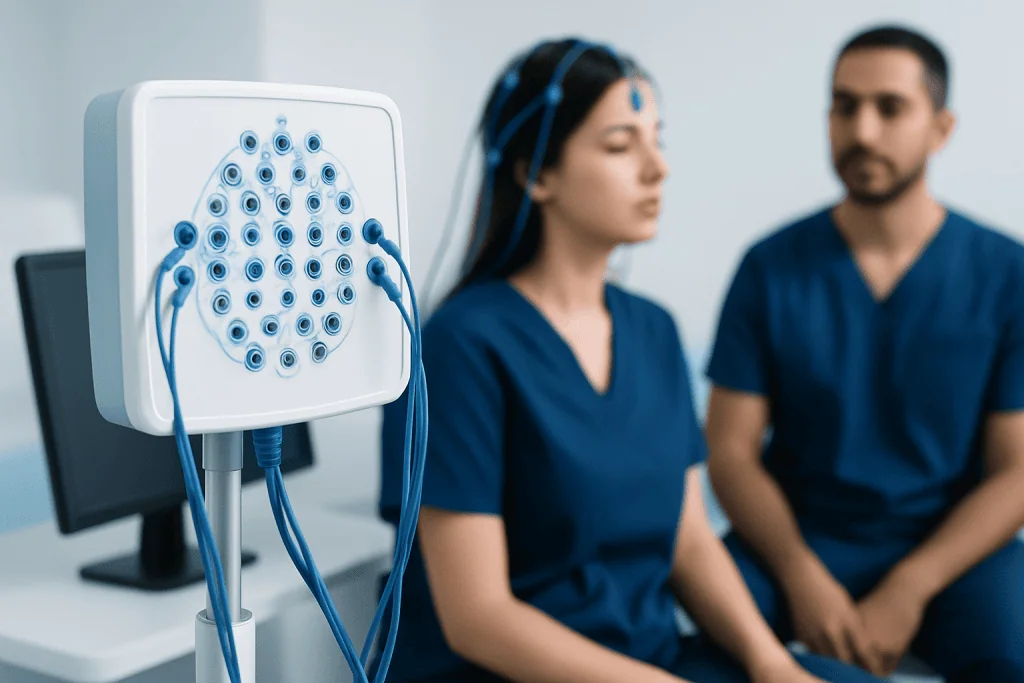
Standard neurophysiology testing usually includes nerve conduction studies and needle EMG. Nerve conduction studies measure how quickly and strongly electrical signals travel through larger peripheral nerves. EMG examines the electrical activity of muscles and can provide clues about whether weakness or other symptoms may be coming from the muscle itself, the nerve supplying it, or the motor neurons involved in movement.
These tests are especially useful in conditions such as carpal tunnel syndrome, some pinched nerves, many peripheral neuropathies that affect large fibers, muscle disorders, and disorders of the nerve-muscle connection. They can also support the diagnosis of some peripheral neuropathy patterns or help evaluate symptoms suggestive of carpal tunnel syndrome. When abnormal, they often help narrow down where the problem is located and how severe it may be.
However, normal findings do not rule out every cause of symptoms. Routine studies may be normal in small-fiber neuropathy, many forms of chronic pain, very early nerve compression, some intermittent conditions, and disorders that primarily affect the central nervous system. Results can also depend on timing, the exact nerves tested, the skill of interpretation, and whether symptoms were active during the evaluation.
Because of these limits, neurophysiology findings are always interpreted alongside symptoms and the neurological examination. A normal test is one part of the assessment, not the whole diagnosis.
Possible reasons for persistent symptoms despite normal results

One common reason is that the problem affects structures not captured well by standard testing. Small-fiber neuropathy, for example, may cause burning pain, tingling, temperature sensitivity, or altered sweating, yet routine NCS can still be normal because these tests mainly assess large nerve fibers. Likewise, symptoms caused by the brain or spinal cord, such as migraine-related sensory symptoms, multiple sclerosis, or some forms of spinal cord disease, may not show up on peripheral nerve studies.
Another possibility is timing. If symptoms are very recent, the nerve or muscle changes may not yet be detectable. Some conditions are also intermittent, meaning the person experiences symptoms at certain times but the test is done during a quieter period. In other situations, mild compression or irritation of a nerve may produce symptoms before clear electrical abnormalities become measurable.
Persistent symptoms can also come from non-neurological causes. Examples include tendon or joint disorders, poor posture, neck or back strain, circulation problems, fibromyalgia, medication side effects, anxiety-related body sensations, sleep disorders, vitamin deficiencies, diabetes, or thyroid disease. This does not mean symptoms are “just stress”; rather, it means the body has many systems that can create similar sensations.
Sometimes symptoms arise from more than one factor at the same time. A person may have mild nerve irritation plus poor sleep and muscle tension, or neuropathic pain plus a vitamin deficiency. When symptoms continue, a broader medical review is often more helpful than relying on a single test result alone.
Common symptoms that may persist
People may continue to notice a wide range of symptoms after a normal study. These often include numbness, tingling, burning, electric-shock sensations, muscle twitching, cramping, heaviness, pain, clumsiness, balance problems, or a feeling of weakness even when strength appears normal on basic testing. Some symptoms are constant, while others flare with activity, stress, temperature changes, or certain body positions.
The exact symptom pattern can offer useful clues. Tingling in the hands at night may suggest a compression problem, while burning in the feet can point toward a small-fiber process or metabolic cause. Fluctuating symptoms linked to fatigue or overheating may suggest a different pathway altogether. Pain shooting from the neck or lower back into an arm or leg may raise concern for nerve root irritation, even if early studies are unrevealing.
Doctors often ask detailed questions about onset, location, triggers, progression, and associated symptoms. Important associated features include headaches, vision changes, bladder or bowel symptoms, falls, weight loss, fever, skin changes, and whether symptoms affect one side or both sides of the body. This information can be as valuable as the test itself.
- Symptoms that are spreading or worsening over time deserve follow-up.
- New objective weakness is more concerning than sensory symptoms alone.
- Pain, sleep disturbance, and anxiety can amplify one another and should all be addressed.
How doctors investigate further
If symptoms continue, the next step is usually a focused re-evaluation rather than repeating the same test immediately. A neurologist or neurophysiology specialist may review the symptom timeline, examine reflexes and strength, check sensation in detail, and look for patterns that suggest nerve, muscle, spinal, autoimmune, or metabolic causes. This helps determine whether repeat neurophysiology testing is likely to be useful or whether a different investigation would be better.
Depending on the situation, further tests may include blood work for vitamin deficiencies, thyroid disease, diabetes, inflammation, or autoimmune markers. Imaging studies such as MRI may be considered when symptoms suggest a problem in the spine, brain, or other structures not assessed by EMG/NCS. In selected cases, skin biopsy or autonomic testing may be used to investigate suspected small-fiber neuropathy.
When weakness, muscle disease, or structural nerve compression remains a possibility, doctors may combine imaging and neurophysiology findings. For some patients, EMG testing may be repeated later if the initial study was done very early in the course of symptoms. If spinal or root involvement is suspected, evaluation may also overlap with broader neurology care and rehabilitation planning.
The goal of further investigation is not to order every possible test, but to choose the tests that best fit the symptom pattern. A clear plan can reduce uncertainty and avoid unnecessary procedures.
Treatment and symptom management
Treatment depends on the underlying cause. If a vitamin deficiency, thyroid problem, diabetes, medication side effect, or nerve compression is identified, addressing that cause is the priority. When symptoms come from a musculoskeletal issue, physical therapy, posture changes, ergonomic adjustments, and targeted exercise may help. If symptoms suggest chronic neuropathic pain, treatment may include pain-management strategies, rehabilitation, and supportive lifestyle measures.
Even when the exact diagnosis is still being clarified, symptom relief matters. Doctors may recommend strategies for pain control, sleep support, pacing of activity, hydration, and stress management. These approaches do not replace medical evaluation, but they can improve day-to-day function and reduce the cycle in which pain, poor sleep, and worry make each other worse.
For many patients, reassurance is an important part of treatment. A normal neurophysiology result often means there is no evidence of major large-fiber nerve injury or severe muscle denervation at the time of testing. That can be comforting, even while the search for the reason behind the symptoms continues.
Near the end of a diagnostic journey, some patients benefit from care in a multidisciplinary setting. Acibadem International’s multidisciplinary specialists and JCI-accredited hospitals evaluate and treat neurological symptoms for international patients when broader assessment is needed.
Self-care, monitoring, and when to seek medical advice
People with ongoing symptoms can help their medical team by keeping a simple symptom diary. Noting when symptoms occur, what triggers them, how long they last, and whether they affect function can reveal patterns that are easy to miss in memory alone. It is also helpful to list medications, supplements, past illnesses, and any family history of neurological disease.
General self-care measures may support recovery and reduce symptom burden. These include regular sleep, balanced nutrition, adequate hydration, gentle physical activity within tolerance, limiting repetitive strain, and managing conditions such as diabetes or thyroid disease. Alcohol moderation and smoking cessation may also help nerve health over time.
Medical review should be arranged if symptoms persist, interfere with work or daily life, or clearly worsen. Prompt assessment is especially important if there is new weakness, falls, loss of hand function, changes in speech, double vision, difficulty swallowing, breathing problems, sudden severe headache, or loss of bladder or bowel control. These features need urgent attention because they may indicate a problem that goes beyond what routine neurophysiology testing can detect.
A normal test result is not the end of the conversation. It is a useful finding that should be combined with clinical judgment to decide whether observation, supportive care, repeat testing, or a different diagnostic pathway is most appropriate.
Frequently asked questions
Can EMG and nerve conduction studies be normal even if symptoms are real?
Yes. These tests assess specific aspects of nerve and muscle function, mainly involving larger peripheral nerve fibers. Symptoms can still be genuine and important even when routine studies are normal.
What conditions can be missed by standard neurophysiology testing?
Some examples include small-fiber neuropathy, very early nerve injury, intermittent nerve compression, certain central nervous system conditions, and some pain syndromes. This is why doctors combine test results with the medical history and examination.
Should neurophysiology testing be repeated?
Sometimes, yes. If the first test was done very early, symptoms have changed, or the initial clinical suspicion remains strong, a doctor may recommend repeating the study later. In other cases, different tests may be more useful than repeating the same one.
If the test is normal, does that mean there is no nerve problem?
Not necessarily. A normal result often means there is no clear evidence of a large-fiber nerve or muscle abnormality on that particular test at that time. It does not completely exclude all nerve-related conditions.
What other tests might be needed after normal results?
The next steps depend on the symptoms. Doctors may consider blood tests, MRI, skin biopsy for suspected small-fiber neuropathy, autonomic testing, or referral to another specialist such as rehabilitation, pain medicine, or rheumatology.
When should persistent symptoms be treated urgently?
Urgent medical attention is important for sudden weakness, trouble speaking, difficulty breathing or swallowing, severe imbalance, loss of bladder or bowel control, or sudden major changes in sensation. These symptoms can signal a condition that needs prompt assessment.
References
- National Institute of Neurological Disorders and Stroke
- American Association of Neuromuscular & Electrodiagnostic Medicine
- National Institute for Health and Care Excellence
- Mayo Clinic
- World Health Organization
This article is for general information only and is not a substitute for professional medical advice. Please consult a qualified doctor about your individual situation.
Neurophysiology in Turkey — costs, top hospitals & a free quote
JCI-accredited · board-certified surgeons · reply within 24h
Add us as a Preferred Source to see more of our trusted health content across Google Search, AI Overviews and Discover.