Where Are Your Kidneys Located? Anatomy, Function, and Pain Patterns

The kidneys are located in the back of the upper abdomen, one on each side of the spine. The right kidney usually sits slightly lower than the left because of the liver.
Key Takeaways
- The kidneys are located in the back of the upper abdomen, one on each side of the spine.
- The right kidney usually sits slightly lower than the left because of the liver.
- Kidneys filter waste, balance fluids and minerals, and help control blood pressure.
- Kidney pain is often felt in the flank or back rather than the center of the abdomen.
- Pain in the kidney area does not always mean kidney disease, so proper diagnosis matters.
- Medical review is important if kidney-area pain comes with fever, burning urination, blood in urine, or swelling.
The kidneys are two bean-shaped organs located toward the back of the upper abdomen, just below the rib cage on either side of the spine. Understanding where they sit, what they do, and how kidney pain may feel can help people recognize when symptoms need medical attention.
Overview: Where the Kidneys Are in the Body
If someone asks, “where are your kidneys located,” the simplest answer is that the kidneys sit toward the back of the upper abdomen, just below the rib cage. There are normally two kidneys, one on the right side and one on the left side of the spine. Because they are positioned deep inside the body, they cannot usually be felt from the outside.
The kidneys are considered “retroperitoneal,” which means they lie behind the lining of the abdominal cavity rather than inside it with many digestive organs. This helps explain why kidney discomfort is often felt in the back or side, especially in the area between the lower ribs and the hips, known as the flank.
The left kidney usually sits a little higher than the right kidney. The right kidney is often slightly lower because the liver takes up more space on the right side of the body. Although this difference is normal, the two kidneys are similar in shape and function.
Kidney Anatomy: Size, Shape, and Nearby Structures
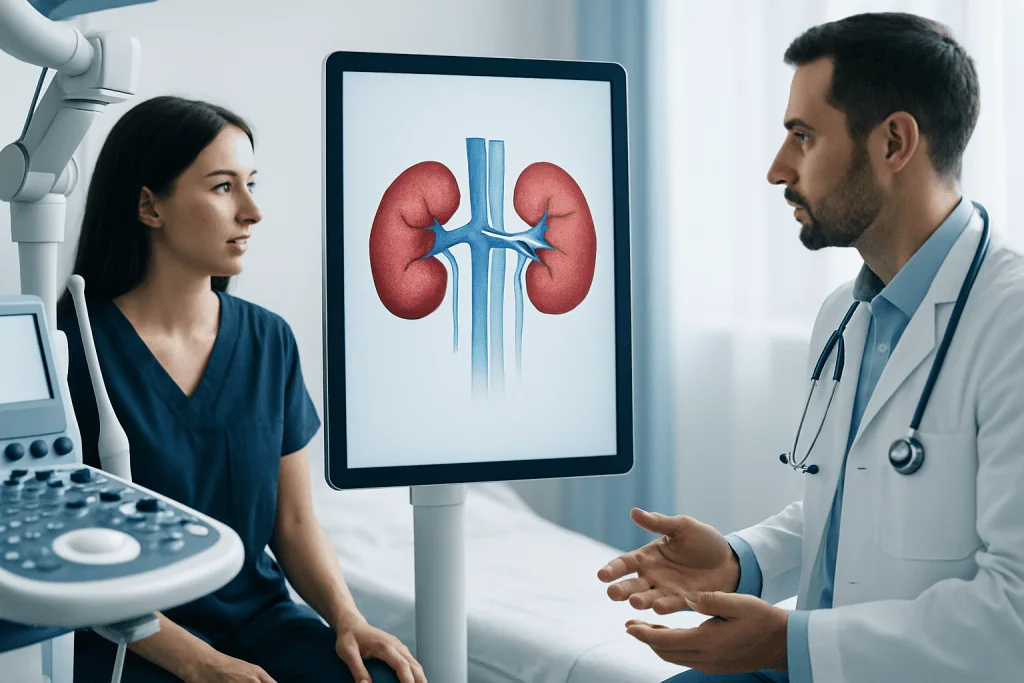
Each kidney is roughly bean-shaped and about the size of a fist in an adult, though exact size varies from person to person. They are protected partly by the lower ribs, layers of muscle, and surrounding fat. This position gives them some protection, but injuries can still happen, especially after major trauma.
At the inner side of each kidney is an area called the hilum, where important structures enter or leave the organ. These include the renal artery, which brings blood to the kidney, the renal vein, which carries filtered blood away, and the ureter, the tube that drains urine to the bladder.
Inside the kidney are several layers and chambers that help it work efficiently. The outer cortex and inner medulla contain tiny filtering units called nephrons. Urine formed by these filters collects in the renal pelvis and then flows into the ureter. This is why a blockage, such as a stone, can cause pressure and pain in the kidney area.
Because the kidneys sit close to muscles, ribs, the spine, and abdominal organs, pain from these structures may sometimes be mistaken for kidney pain. That is one reason a medical evaluation is helpful when discomfort is persistent or severe.
What the Kidneys Do

The kidneys do much more than make urine. Their main job is to filter the blood, removing waste products and extra water so the body can maintain a healthy balance. These wastes and excess fluids leave the body as urine.
The kidneys also help regulate important minerals such as sodium, potassium, and calcium. Keeping these substances in balance is essential for normal nerve, muscle, and heart function. Even small changes in kidney function can affect the whole body.
In addition, the kidneys help control blood pressure, support red blood cell production, and activate vitamin D for bone health. This means kidney problems may lead to symptoms that seem unrelated at first, such as fatigue, swelling, or high blood pressure.
When kidney function becomes reduced over time, it may be linked to conditions such as chronic kidney disease. Early changes often cause no obvious symptoms, which is why routine checkups and urine or blood tests can be important for people at higher risk.
How Kidney Pain Usually Feels and Where It Is Felt
Kidney pain is usually felt in the flank, which is the side of the back between the lower ribs and the hip. It may affect one side or both, depending on the cause. Some people describe it as a deep, dull ache, while others feel sharp or wave-like pain.
The pattern of pain can offer clues. A constant ache may occur with infection, inflammation, or swelling of the kidney. Sudden severe pain that comes in waves and may move toward the lower abdomen or groin is more typical of a kidney stone. This type of pain can be intense and may be accompanied by nausea.
It is important to know that not all pain in the kidney area comes from the kidneys. Muscle strain, spine problems, rib injury, or nerve irritation can also cause discomfort in the same region. Kidney pain is more likely when back or side pain occurs together with urinary symptoms such as burning, frequent urination, blood in the urine, fever, or chills.
Kidney pain can sometimes be related to conditions such as kidney stones or a urinary infection that has spread upward. Because symptoms can overlap, a doctor may need tests to identify the exact source.
Common Causes of Kidney-Area Pain and Kidney Problems
There are several possible reasons for pain around the kidneys. Common kidney-related causes include infections, stones, swelling due to a blockage, cysts, and less commonly bleeding or injury. Not every kidney problem causes pain, and not every painful episode means there is damage to the kidneys.
A kidney infection often causes flank pain along with fever, chills, nausea, and painful or frequent urination. Kidney stones may cause sudden severe pain, restlessness, nausea, and blood in the urine. A urinary blockage can lead to pressure in the kidney and may require prompt care to protect kidney function.
Some long-term kidney conditions cause few symptoms until they are more advanced. Risk factors for kidney disease include diabetes, high blood pressure, smoking, obesity, family history, older age, and repeated urinary tract problems. Certain medications and dehydration can also affect the kidneys in some situations.
Other conditions outside the kidneys can mimic kidney pain. These include muscle strain, disc problems, gallbladder disease, bowel conditions, and gynecologic causes. That is why diagnosis focuses on the whole symptom pattern, not just the location of pain.
How Doctors Diagnose Kidney Problems
Diagnosis usually begins with a medical history and physical examination. A doctor may ask where the pain is felt, whether it moves, how long it lasts, and whether there are urinary symptoms, fever, vomiting, or swelling. They may also ask about medications, previous stones or infections, and family history.
Basic tests often include a urine test to check for blood, infection, or protein, and blood tests to measure kidney function and look for signs of inflammation. These tests provide important information about whether the kidneys are filtering properly and whether an infection or another problem may be present.
Imaging tests are often helpful when the diagnosis is uncertain or when a stone, blockage, or structural issue is suspected. Ultrasound can show swelling, cysts, or some stones without radiation. CT scans are commonly used for severe flank pain or suspected stones because they can provide a detailed view of the kidneys and urinary tract.
Depending on the findings, treatment may involve monitoring, antibiotics, pain control, hydration, or a procedure. Some patients may need specialist evaluation in urology or nephrology, especially if there are repeated infections, recurrent stones, or reduced kidney function.
Treatment Options and Protecting Kidney Health
Treatment depends on the cause. A bacterial kidney infection is often treated with antibiotics and careful follow-up. Kidney stones may pass on their own if small, but some require medical procedures if they are too large, too painful, or blocking urine flow. In selected cases, treatment may include kidney stone treatment to remove or break up the stone.
If there is a blockage affecting urine drainage, doctors may need to relieve the obstruction promptly. Some structural or advanced kidney problems may require specialized care. For people with severe loss of kidney function, supportive treatments may include dialysis as part of a broader kidney care plan.
Protecting kidney health often starts with everyday habits. Drinking enough fluids, managing blood pressure and blood sugar, avoiding smoking, using medicines responsibly, and maintaining a healthy weight can all support kidney function. People with diabetes or hypertension should keep up with regular monitoring because these conditions are major causes of kidney damage.
If symptoms suggest an infection or stone, it is best not to delay care. Near the end of the care journey, some people may also benefit from specialist services such as nephrology evaluation. Acibadem International’s multidisciplinary specialists and JCI-accredited hospitals diagnose and treat kidney conditions for international patients.
When to See a Doctor
Medical advice is important if pain in the kidney area is severe, persistent, or keeps returning. A person should also seek care if flank or back pain comes with fever, chills, painful urination, frequent urination, blood in the urine, vomiting, or visible swelling.
Urgent attention may be needed if there is very intense pain, inability to pass urine, confusion, fainting, or signs of dehydration. These symptoms can suggest a significant infection, a blockage, or another condition that should be assessed promptly.
Even mild symptoms deserve attention when they happen repeatedly or in someone with known kidney disease, diabetes, high blood pressure, or a history of stones. Early treatment can help reduce complications and support better long-term kidney health.
Frequently asked questions
Are the kidneys in the back or the stomach area?
The kidneys are located toward the back of the upper abdomen, not in the front of the stomach area. They sit on either side of the spine, just below the rib cage.
Why is the right kidney lower than the left?
The right kidney is usually slightly lower because the liver takes up space above it. This difference is a normal part of human anatomy.
How can someone tell if pain is from the kidney or a muscle?
Kidney pain is often felt deeper in the flank and may come with urinary symptoms, fever, nausea, or blood in the urine. Muscle pain is more likely to worsen with movement, pressing on the area, or certain positions, but a doctor may still be needed to tell the difference.
Can kidney problems happen without pain?
Yes. Many kidney conditions, especially chronic kidney disease, can develop quietly and cause no pain in the early stages. That is why blood pressure checks and urine or blood tests are important for people at risk.
Do both kidneys have to work equally well?
Not always. One healthy kidney can often do enough work for the body if the other is absent or not functioning normally. Even so, changes in kidney function should be followed by a qualified doctor.
When is kidney-area pain an emergency?
Kidney-area pain needs urgent evaluation if it is severe, comes with fever, vomiting, inability to pass urine, or blood in the urine, or if the person feels faint or very unwell. These signs may point to an infection, stone, or blockage that needs prompt treatment.
References
- National Institute of Diabetes and Digestive and Kidney Diseases
- National Kidney Foundation
- Mayo Clinic
- American Urological Association
- Kidney Disease: Improving Global Outcomes
This article is for general information only and is not a substitute for professional medical advice. Please consult a qualified doctor about your individual situation.
Joint and spine care in Turkey — expert assessment & treatment
JCI-accredited · board-certified surgeons · reply within 24h
Add us as a Preferred Source to see more of our trusted health content across Google Search, AI Overviews and Discover.
Check your numbers in seconds
BMI, calories, due date, blood pressure and 30+ more clinical calculators — free, instant, doctor-reviewed ranges.

More from the Health Library



Related Specialists

Prof. Dr. Sedef Şahin
Dermatology
Prof. Dr. Mehmet Veli Karaaltın
Aesthetic Plastic & Reconstructive Surgery
Assoc. Prof. Dr. Emir Çapkınoğlu
General Surgery
Dr. İsmail Beşiroviç
Inpatient Clinic Physicians Clinical Service