Where Is the Clit: What Patients Need to Know

The visible part of the clitoris is usually a small structure under the clitoral hood at the top of the vulva. Most of the clitoris is internal and includes erectile tissue that extends deeper into the pelvis.
Key Takeaways
- The visible part of the clitoris is usually a small structure under the clitoral hood at the top of the vulva.
- Most of the clitoris is internal and includes erectile tissue that extends deeper into the pelvis.
- Normal anatomy varies widely in size, shape, color, and sensitivity from person to person.
- Pain, swelling, itching, bleeding, or a new lump in the vulvar area should be assessed by a qualified clinician.
- Good vulvar care means gentle hygiene, avoiding irritants, and seeking medical advice for persistent symptoms.
The clitoris is located at the top of the vulva, just above the urethral opening, where the inner labia meet and form the clitoral hood. While a small external part may be visible, most of the clitoris is internal, extending beneath the skin on both sides of the vaginal opening.
Overview: where is the clit?
The clitoris is located at the top of the vulva, where the inner labia meet. The small external part, called the glans clitoris, usually sits under or just below a fold of skin known as the clitoral hood. It is above the urethral opening, which is the opening where urine leaves the body, and above the vaginal opening.
A common reason this area can be confusing is that only a small portion of the clitoris is visible from the outside. Most of the clitoris is internal. It includes a body, paired crura that extend downward along the pubic bones, and bulbs of erectile tissue beside the vaginal opening. In other words, the clitoris is not just a “small button,” but a larger organ with internal structures.
The clitoris is part of the vulva, which is the correct term for the external genital area. The vulva includes the labia majora, labia minora, clitoris, urethral opening, and vaginal opening. Understanding these terms can make it easier to describe symptoms accurately and to discuss anatomy with a healthcare professional in a calm, informed way.
Understanding clitoral anatomy
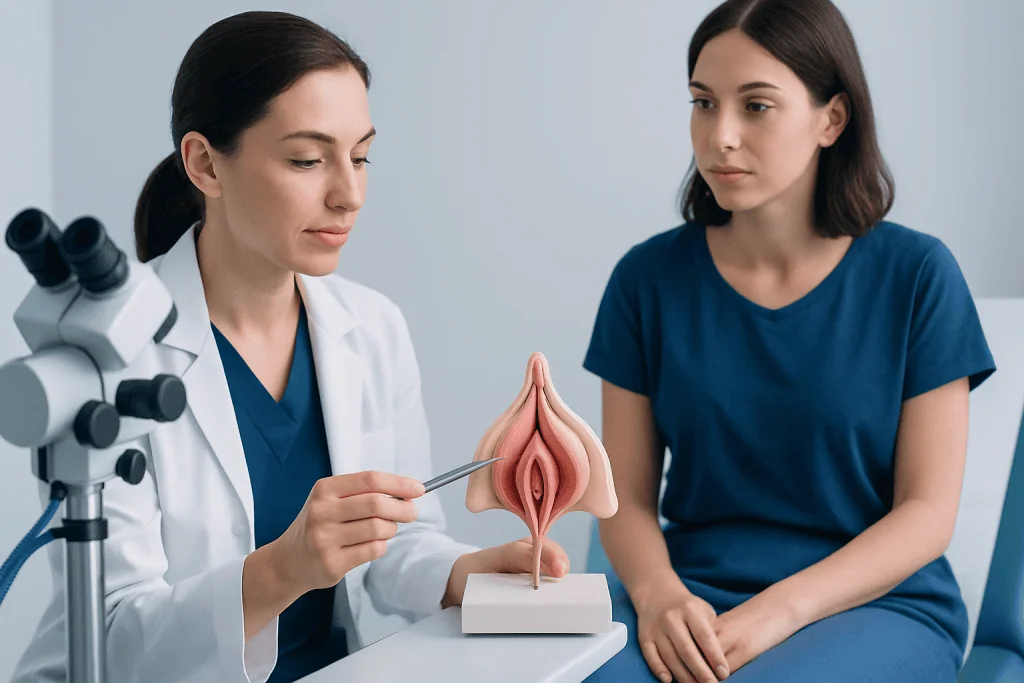
The external portion of the clitoris is called the glans. This is the part most people mean when they ask where the clit is. It is typically small, highly sensitive, and covered partly or completely by the clitoral hood, a normal fold of skin formed by the inner labia.
Internally, the clitoris continues beneath the surface. The clitoral body extends backward from the glans, then divides into two crura, sometimes described as “legs,” which anchor along the pubic bones. On either side of the vaginal opening are the vestibular bulbs, which are related structures made of erectile tissue. These tissues can become more engorged during sexual arousal.
The clitoris has a rich nerve supply and blood supply. Its primary biological role is sexual sensation. Like other body structures, however, its appearance can vary naturally. Some people have a more prominent clitoral hood, a more visible glans, or asymmetry in the surrounding labia, all of which can be completely normal.
- The clitoris is above the urethral opening and vaginal opening.
- The visible part is only a small portion of the full structure.
- Normal size, shape, and sensitivity vary from person to person.
- The clitoral hood may partly or fully cover the glans.
What is normal and why finding it can be difficult

There is no single “standard” look for the vulva or clitoris. Skin tone, size, the amount of visible tissue, and the shape of the labia all differ widely. In some people, the glans is easy to identify. In others, it is mostly covered by the hood or blends visually with surrounding tissues. This variation is normal and does not usually indicate a medical problem.
Hormonal changes across life can also affect the tissue. Puberty, pregnancy, breastfeeding, menopause, and some medications may influence sensitivity, lubrication, or the appearance of the vulvar area. Mild day-to-day changes related to temperature, arousal, and pressure from clothing are also expected.
It can also be hard to identify the clitoris because anatomy education is often incomplete. Many people are taught about the uterus and vagina but not the full structure of the vulva or clitoris. A mirror, a calm setting, and correct anatomical terms can help a person become more familiar with their own body. If there is uncertainty, a gynecologist can explain anatomy during a routine exam in a respectful, matter-of-fact way.
Symptoms that are not just anatomy
Knowing where the clitoris is can also help a person notice when something feels different. The clitoral area should not usually have persistent pain, marked swelling, ongoing itching, discharge from a lesion, bleeding unrelated to injury, or a new hard lump. These symptoms are not simply “normal anatomy” and deserve medical attention if they continue.
Discomfort in this area can be caused by several conditions, including skin irritation, infections, cysts, inflammation, hormonal changes, nerve-related pain, or dermatologic disorders affecting the vulva. Pain with touch, burning, or sensitivity may sometimes overlap with vaginismus or other pelvic floor conditions, although those conditions involve broader symptoms than the clitoris alone.
Some people may also notice changes because of friction, tight clothing, hair removal, soaps, scented products, or sexual activity. While temporary irritation may settle with gentle care, ongoing or unexplained symptoms should not be self-diagnosed. A clinician may evaluate the vulva, clitoris, pelvic floor, and nearby tissues to identify the cause.
How doctors assess clitoral or vulvar concerns
A medical evaluation usually starts with a history of symptoms. The clinician may ask where the discomfort is located, when it began, whether there is itching or burning, whether symptoms occur with touch or urination, and whether there have been recent changes in skin products, medications, sexual activity, or menstrual patterns. Clear descriptions can help, and patients do not need to know exact medical terms to be understood.
The physical examination is generally focused on the external genital area and is often enough to identify irritation, infection, skin changes, cysts, or visible lesions. If needed, the doctor may recommend testing for infection, assessment for dermatologic conditions, or a gynecologic exam to look for related causes of pain. Imaging is not routinely needed just to locate the clitoris, but it may be used if another condition is suspected.
If symptoms relate to pain, sexual discomfort, or pelvic muscle tightness, the doctor may consider referral for pelvic floor therapy or to a gynecology specialist. In some cases, evaluation in a dedicated gynecology clinic can help clarify whether the issue involves the clitoris itself, surrounding vulvar tissues, hormones, or the pelvic floor.
Care, self-awareness, and treatment options
For people without symptoms, no treatment is needed. The clitoris does not require special cleaning beyond normal gentle vulvar hygiene. Washing the outer genital area with lukewarm water and avoiding harsh soaps, deodorants, douches, or fragranced products is usually sufficient. The internal vagina cleans itself, and aggressive washing can increase irritation.
If there is mild irritation, simple measures such as avoiding tight clothing, switching to breathable underwear, stopping scented products, and reducing friction may help. However, persistent symptoms should be assessed before trying over-the-counter treatments, because different conditions can look similar but require different care.
Treatment depends on the cause. Infections may need targeted therapy, inflammatory skin conditions may require prescription treatment, and pain related to pelvic floor dysfunction may improve with physical therapy and rehabilitation. When a structural issue, cyst, or another gynecologic condition is identified, treatment is directed at that diagnosis rather than at the clitoris alone.
Patients who are worried about appearance may benefit from reassurance and accurate anatomy education. Most differences in vulvar or clitoral appearance are normal. Medical advice is most useful when there is pain, a new change, or functional symptoms rather than cosmetic concern alone.
When to seek medical care
Medical care is appropriate if there is ongoing pain, swelling, itching, a rash, ulcer, discharge, bleeding, numbness, or a new lump near the clitoris or elsewhere on the vulva. It is also wise to seek evaluation if there is pain with sex, pain when sitting, burning with urination, or symptoms that return repeatedly. These signs may be unrelated to anatomy itself and may point to a treatable condition.
Urgent assessment may be needed for severe pain, rapidly increasing swelling, fever, injury, or sudden changes after a procedure or trauma. Even when symptoms feel embarrassing, vulvar concerns are common clinical issues, and healthcare professionals are trained to assess them respectfully.
For people seeking specialist evaluation, Acibadem International’s multidisciplinary specialists and JCI-accredited hospitals diagnose and treat gynecologic and pelvic health concerns for international patients. A qualified doctor can help distinguish normal anatomical variation from conditions that need treatment and, when relevant, evaluate related issues such as ovarian cysts or other causes of pelvic discomfort.
Frequently asked questions
Where exactly is the clit located?
The clitoris is at the top of the vulva, where the inner labia meet. Its small external part sits under the clitoral hood, above the urethral opening and above the vaginal opening.
Is the clitoris the same as the vulva?
No. The vulva is the whole external genital area, including the labia, clitoris, urethral opening, and vaginal opening. The clitoris is one part of the vulva.
Why can it be hard to find the clitoris?
Only a small part of the clitoris is visible from the outside, and it may be partly covered by the clitoral hood. Normal differences in anatomy also mean that the visible portion may be more or less prominent from one person to another.
Is it normal for the clitoris to look different from pictures in textbooks?
Yes. Medical illustrations are simplified and do not show the full range of normal anatomy. Real vulvar tissue varies naturally in size, shape, color, and symmetry.
Should the clitoral area hurt or itch?
Persistent pain, itching, burning, or swelling is not something to ignore. Temporary irritation can happen, but symptoms that continue, recur, or interfere with daily life should be checked by a qualified clinician.
Can hormonal changes affect the clitoral area?
Yes. Puberty, pregnancy, breastfeeding, menopause, and some medications can affect vulvar tissue, sensitivity, and comfort. These changes are often manageable, but troublesome symptoms should be discussed with a doctor.
References
- American College of Obstetricians and Gynecologists
- Cleveland Clinic
- Mayo Clinic
- National Health Service
- International Society for the Study of Women's Sexual Health
This article is for general information only and is not a substitute for professional medical advice. Please consult a qualified doctor about your individual situation.
Explore treatments in Turkey — costs, top hospitals & a free quote
JCI-accredited · board-certified surgeons · reply within 24h
Add us as a Preferred Source to see more of our trusted health content across Google Search, AI Overviews and Discover.