White Marks on Gums Pain: Possible Causes and When to Seek Care

Painful white marks on the gums may come from friction, canker sores, burns, fungal infection, or gum disease. A short-lived sore after minor irritation is common, but patches that last more than two weeks need evaluation.
Key Takeaways
- Painful white marks on the gums may come from friction, canker sores, burns, fungal infection, or gum disease.
- A short-lived sore after minor irritation is common, but patches that last more than two weeks need evaluation.
- Redness, swelling, bleeding, fever, bad breath, loose teeth, or trouble eating suggest a need for prompt dental care.
- Good oral hygiene, avoiding tobacco, and correcting irritating dental appliances can help prevent recurrence.
- Diagnosis may involve a mouth exam and, if needed, tests such as swabs, dental imaging, or biopsy.
White marks on the gums that hurt are often caused by irritation, minor ulcers, infection, or inflammation of the gum tissue. Many cases improve with gentle oral care, but persistent, worsening, or widespread white patches should be assessed by a dentist or doctor.
Overview: what white marks on gums pain can mean
White marks on gums pain usually means the gum tissue has been irritated, inflamed, or affected by a local condition in the mouth. Common reasons include a canker sore, friction from braces or dentures, a mild burn from hot food, plaque-related gum inflammation, or a fungal infection such as oral thrush. In some cases, the white area is not the main problem itself but a surface change caused by swelling, tissue peeling, or healing after injury.
The exact cause often depends on how the area looks and feels. A single painful white spot may suggest an ulcer or trauma, while a wipeable white coating can point to yeast infection. White patches with bleeding gums, bad breath, or tenderness around the teeth may be related to gum disease. Less commonly, persistent white patches can be linked to chronic irritation or precancerous changes, which is why patches that do not heal should not be ignored.
Because many mouth conditions can look similar, the safest approach is to notice the pattern: when it started, whether it is getting bigger, and whether there are other symptoms such as fever, swelling, difficulty chewing, or sore throat. This information helps a dentist or doctor narrow the cause and decide whether treatment is needed.
How the symptoms may appear
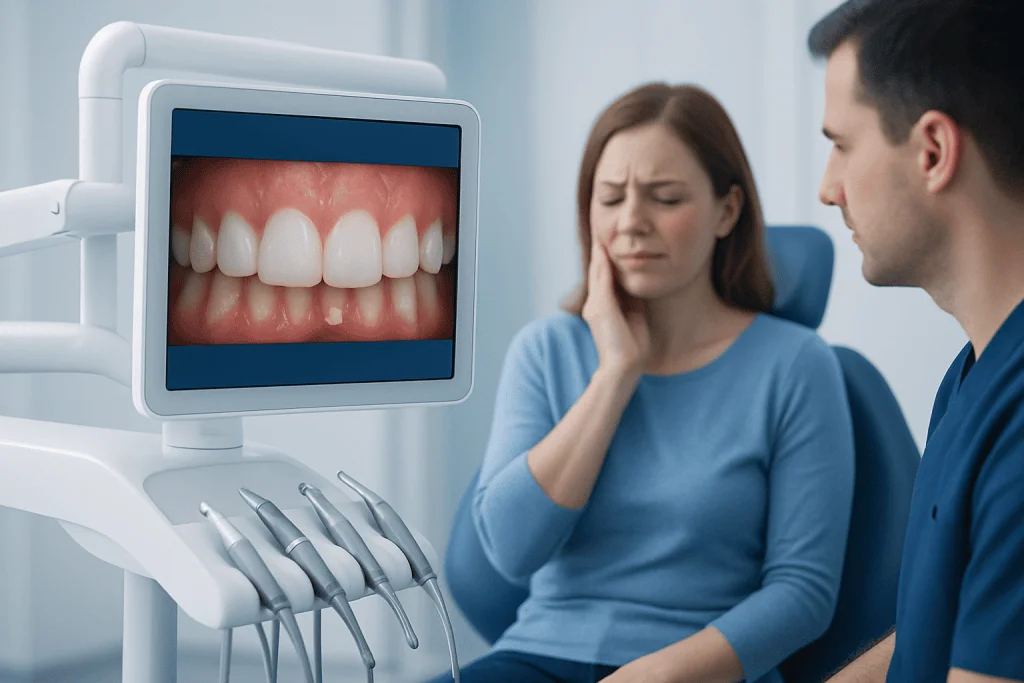
Painful white gum changes can look different from person to person. Some people notice a small round sore with a white or yellow center and a red edge. Others see a flat white patch, a stringy film, or a raw area where the top layer of tissue seems to have peeled away. The discomfort may range from mild tenderness to sharp pain when brushing, eating spicy foods, or drinking something acidic.
White marks may appear on the front gums, between the teeth, or along the inner mouth near the cheeks and lips. Symptoms that may occur at the same time include:
- Redness or swelling of the gums
- Bleeding during brushing or flossing
- Burning or stinging with food
- Bad breath or unpleasant taste
- Mouth dryness
- Sensitivity around a tooth or denture area
- Small ulcers elsewhere in the mouth
The way the patch behaves also matters. A sore that improves within several days often reflects minor irritation. A white lesion that stays in the same place, thickens, spreads, or keeps returning deserves a more careful examination.
Possible causes of painful white marks on the gums

One of the most common causes is minor trauma. The gums can develop a painful white area after biting the mouth, brushing too hard, using a rough toothpaste, or rubbing against braces, retainers, or dentures. Hot foods can also cause a small burn, leaving a pale or peeling patch that becomes sore for a few days.
Canker sores are another frequent reason. These are small ulcers that can form on the gums and other soft tissues of the mouth. They are not contagious, but they can be quite painful. Stress, minor injury, acidic foods, and some nutritional deficiencies may contribute. In contrast, a cold sore from herpes usually affects the lips or border of the mouth more than the attached gums, though mouth herpes can involve gum tissue in some cases.
Infections can also produce white painful lesions. Oral thrush is a yeast infection that may create creamy white patches that can rub off, sometimes leaving a red tender base. It is more likely after antibiotics, inhaled steroids, dry mouth, diabetes, or reduced immunity. Bacterial gum inflammation and periodontal infection may cause painful pale areas along with redness, swelling, bleeding, or pus. Patients with signs of advanced gum inflammation may need assessment for gum disease.
Inflammatory and chronic conditions are another possibility. Lichen planus, leukoplakia from chronic irritation or tobacco exposure, and autoimmune blistering disorders can affect the gums and mouth lining. Some of these conditions are painful; some are not. A white patch that cannot be wiped away and does not heal is especially important to have checked, because a small number of persistent lesions may need biopsy to exclude early oral cancer or precancerous change.
Risk factors that make white gum lesions more likely
Several everyday factors can increase the chance of developing sore white patches on the gums. Poor-fitting dentures, braces, sharp tooth edges, and aggressive brushing can repeatedly irritate delicate tissue. Tobacco use, vaping, frequent alcohol use, and very spicy or acidic foods may make inflammation worse or slow healing.
Some medical and medication-related factors also matter. Antibiotic use can disturb the normal balance of microorganisms in the mouth, making thrush more likely. Inhaled corticosteroids, if the mouth is not rinsed after use, can have a similar effect. Dry mouth, whether related to dehydration, medications, or salivary gland problems, can leave the gums more vulnerable to soreness and infection.
General health can also influence oral symptoms. Diabetes, iron or vitamin deficiencies, immune suppression, and high stress levels may contribute to recurrent mouth ulcers or delayed healing. When white painful gum lesions happen often, are severe, or occur alongside other health changes, a broader medical review may be helpful.
How dentists and doctors diagnose the cause
Diagnosis usually starts with a careful history and mouth examination. The clinician will ask when the white mark began, whether it is one lesion or many, whether it wipes off, and whether there was recent trauma, illness, antibiotic use, new dental work, or tobacco exposure. They may also ask about fever, weight loss, recurrent ulcers, rashes, digestive symptoms, or medicines that can affect the mouth.
During the exam, the dentist or doctor looks at the color, shape, and texture of the lesion and checks the teeth, tongue, inner cheeks, and throat. They may look for plaque buildup, gum pockets, signs of denture irritation, or patterns suggesting infection or autoimmune disease. If a tooth problem is suspected, imaging may be useful, such as dental X-ray evaluation.
Not every white patch needs special testing, especially if the cause is clear and the area is already healing. However, persistent, unusual, or recurrent lesions may require additional tests. Depending on the situation, these can include a fungal swab, blood tests, periodontal assessment, or a small tissue sample for biopsy. If symptoms suggest a deeper dental source, treatment may involve periodontal care or other dental treatment.
Treatment options and what may help
Treatment depends on the cause. If the white sore comes from irritation, the main step is to remove the trigger. This may mean adjusting a denture, smoothing a sharp tooth edge, switching to a softer toothbrush, or avoiding very hot, spicy, or acidic foods while the area heals. Simple traumatic sores often settle within one to two weeks with gentle care.
Canker sores are usually managed with pain-relieving and protective measures, such as avoiding irritating foods and using clinician-recommended topical products. If the sores are frequent, very painful, or unusually large, a doctor or dentist may look for underlying triggers such as vitamin deficiency, stress, or inflammatory disease. Thrush is treated with antifungal medication after confirmation of the diagnosis, and any contributing factors, such as inhaler technique or dry mouth, should also be addressed.
If gum disease or a tooth-related infection is causing pain, treatment may include professional cleaning, improved home oral hygiene, and targeted therapy based on the severity of the problem. Some patients may benefit from periodontal treatment to manage inflamed or infected gum tissue. When a lesion is suspicious, persistent, or linked to chronic irritation, the clinician may recommend close follow-up or biopsy rather than watchful waiting alone.
It is best to avoid self-treating with aspirin placed on the gums, harsh mouth rinses, or unverified online remedies, as these can worsen irritation. A qualified professional can help distinguish a simple sore from a condition that needs specific treatment.
Self-care and prevention
Gentle daily oral care is one of the most effective ways to prevent many painful gum problems. Brushing twice daily with a soft-bristled toothbrush, cleaning between the teeth, and attending regular dental checkups can reduce inflammation and allow early treatment of irritated areas. If a toothpaste or mouthwash seems to sting, a dentist may suggest switching to a milder product.
It can also help to protect the mouth from repeated irritation. People who wear dentures, aligners, or braces should mention rubbing or pressure points early, before small sores become larger. Letting hot drinks cool slightly, chewing carefully, and addressing broken fillings or sharp tooth edges may prevent recurring injury.
Lifestyle measures matter as well. Avoiding tobacco, limiting alcohol, staying hydrated, and eating a balanced diet support healthy oral tissues. For people using inhaled steroids, rinsing the mouth after each use can reduce the risk of thrush. If mouth ulcers keep returning, it is sensible to discuss this with a clinician instead of relying only on home remedies.
When to seek medical care
Many sore white gum marks are minor and improve within a few days, but medical or dental review is important if the patch lasts more than two weeks, keeps coming back, or seems to be getting larger. Care is also recommended if there is marked swelling, bleeding, pus, fever, trouble swallowing, difficulty opening the mouth, or pain that makes it hard to eat and drink.
Prompt assessment is especially important for people with diabetes, reduced immunity, ongoing tobacco use, or recent unexplained weight loss. A persistent white patch that cannot be rubbed away should be examined to rule out chronic inflammatory conditions or abnormal tissue change. If a clinician suspects a broader problem involving the mouth lining, further evaluation for conditions such as oral cancer may be needed, although many white lesions are not cancerous.
For international patients who need evaluation, Acibadem International’s multidisciplinary specialists and JCI-accredited hospitals diagnose and treat oral and dental conditions using coordinated dental and medical care. The most appropriate specialist may be a dentist, periodontist, oral medicine clinician, or doctor depending on the pattern of symptoms.
Frequently asked questions
Why do I have a painful white spot on my gum?
A painful white spot on the gum is often caused by a canker sore, minor injury, irritation from dental appliances, or a mild burn from hot food. In some people, infection or gum inflammation is the cause. If it does not improve within about two weeks, it should be checked by a dentist or doctor.
Can gum disease cause white marks and pain?
Yes, gum disease can sometimes lead to tender pale or white-looking areas along with redness, swelling, bleeding, and bad breath. The white appearance may reflect inflamed tissue, plaque buildup, or surface changes from irritation. A dental exam can determine whether gum disease is the main problem.
Are white patches on the gums always thrush?
No. Thrush is only one possible cause of white patches in the mouth. White gum lesions can also come from ulcers, friction, burns, chronic irritation, inflammatory conditions, or less commonly abnormal tissue changes.
When should someone worry about a white patch on the gums?
A white patch deserves medical attention if it lasts more than two weeks, cannot be wiped away, grows, bleeds easily, or keeps returning. It should also be assessed sooner if there is severe pain, swelling, fever, or difficulty eating and drinking. Persistent lesions need professional evaluation even when they do not look dramatic.
Can stress cause white marks on the gums?
Stress can contribute indirectly, especially by increasing the likelihood of canker sores or teeth grinding that irritates the mouth. It does not explain every white lesion, though. Recurrent sores should still be discussed with a clinician to look for other triggers.
What can help a sore white gum mark heal?
Gentle brushing with a soft toothbrush, avoiding spicy or acidic foods, staying hydrated, and removing sources of friction often help minor sores heal. Denture or brace irritation should be corrected rather than tolerated. It is best not to use harsh rinses or place aspirin directly on the gum.
References
- American Dental Association
- National Institute of Dental and Craniofacial Research
- Mayo Clinic
- MedlinePlus
- Centers for Disease Control and Prevention
This article is for general information only and is not a substitute for professional medical advice. Please consult a qualified doctor about your individual situation.
Persistent digestive symptoms? Get evaluated in Turkey
JCI-accredited · board-certified surgeons · reply within 24h
Add us as a Preferred Source to see more of our trusted health content across Google Search, AI Overviews and Discover.

More from the Health Library



Related Specialists

Dr. Fulya Coşan
Anesthesiology
Assoc. Prof. Dr. Bahar Sevimli Dikicier
Dermatology
Dr. G. Pınar Özeren
Gynecology & Obstetrics
Dr. Bengü Kasım
Physical Medicine & Rehabilitation