Whooping Cough in Children: How to Recognize It and Why Early Diagnosis Matters
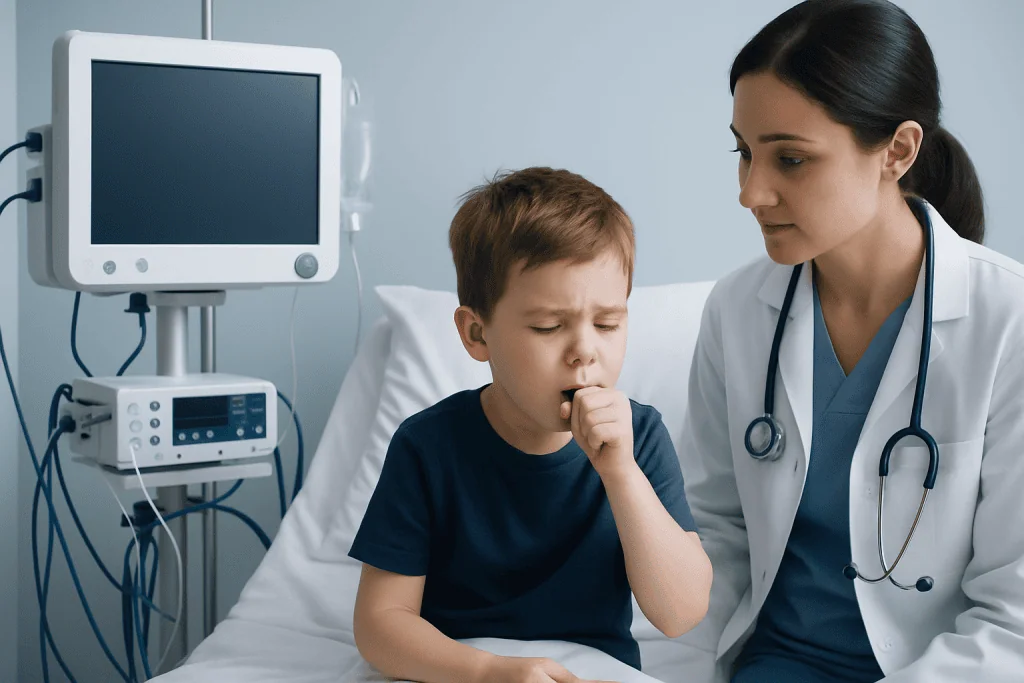
Whooping cough is caused by Bordetella pertussis and spreads easily through respiratory droplets. Early symptoms often resemble a common cold before severe coughing fits begin.
Key Takeaways
- Whooping cough is caused by Bordetella pertussis and spreads easily through respiratory droplets.
- Early symptoms often resemble a common cold before severe coughing fits begin.
- Infants and young babies are at the highest risk of serious complications.
- Diagnosis may include a medical exam, history of exposure, and laboratory testing.
- Treatment usually involves antibiotics, supportive care, and close monitoring when needed.
- Vaccination during childhood and pregnancy is the best protection against pertussis.
Whooping cough in children, also called pertussis, is a highly contagious bacterial infection that can cause intense coughing spells and breathing difficulty. Recognizing symptoms early can help children receive prompt care, reduce complications, and limit spread to others, especially babies.
Overview of Whooping Cough in Children
Whooping cough in children is a respiratory infection caused by the bacterium Bordetella pertussis. It is often known as pertussis. The infection irritates the airways and can lead to repeated, forceful coughing attacks that may make it hard for a child to catch their breath. In some children, especially infants, the classic “whoop” sound after coughing may be heard, but not every child makes this sound.
Pertussis usually develops in stages. It often begins with mild cold-like symptoms, which can make it easy to mistake for a routine viral illness. After one to two weeks, the cough may become more severe, longer-lasting, and more exhausting. Because the early stage looks so ordinary, families may not realize that the child has a contagious infection that needs medical attention.
Early diagnosis matters because children can spread pertussis before the typical cough becomes obvious. Quick recognition allows doctors to start treatment sooner, advise families on reducing transmission, and pay close attention to children at higher risk, particularly babies under 1 year of age.
Symptoms and Early Warning Signs
In the first stage of illness, pertussis may look similar to a common cold. A child may have a runny nose, sneezing, mild fever, watery eyes, and a light cough. During this phase, the child may still seem fairly well, which is one reason the infection can spread easily in homes, schools, and daycare settings.
As the illness progresses, the cough often becomes more intense. Children may have rapid coughing fits followed by a deep breath in, which can create a high-pitched whooping sound. Some children vomit after coughing or look very tired afterward. The coughing spells are often worse at night and can continue for weeks.
Infants may show different signs. Instead of a clear whoop, a baby may pause breathing, turn bluish, struggle to feed, or appear unusually weak. This age group needs careful medical attention because their airways are smaller and they can become seriously unwell more quickly.
- Cold-like symptoms at first
- Coughing fits that come in bursts
- Whooping sound after coughing in some children
- Vomiting after coughing
- Exhaustion after coughing spells
- Breathing pauses or color change in infants
Causes, Spread, and Risk Factors
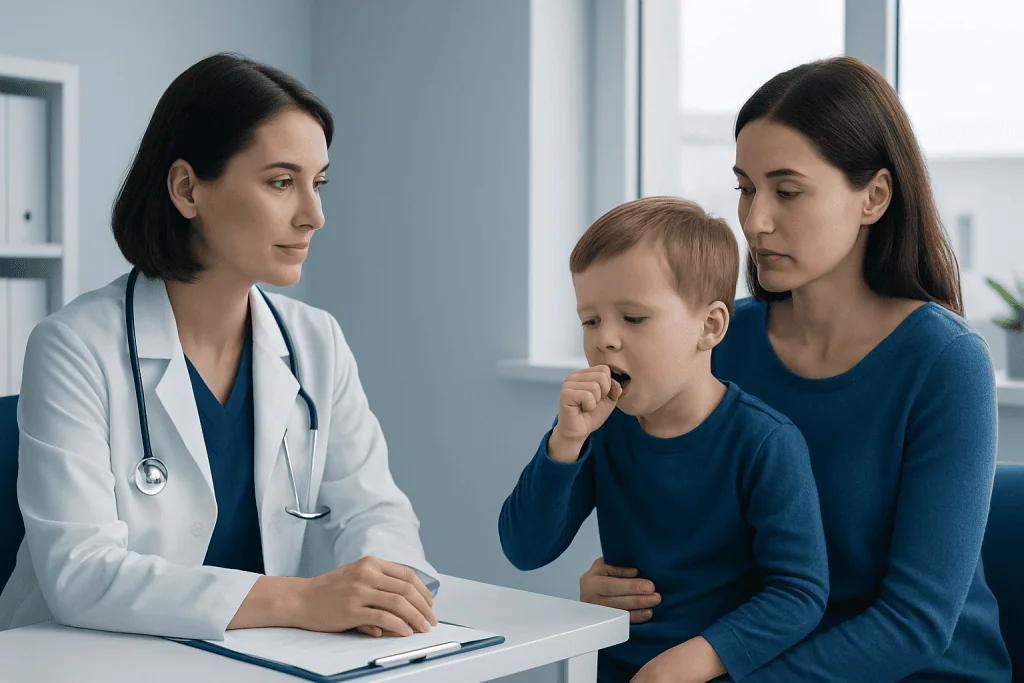
Whooping cough is caused by a specific bacterium, not by cold weather or ordinary irritation of the throat. The infection spreads through tiny droplets released when an infected person coughs or sneezes. Children can catch it through close contact with someone who is infected, including family members who may have only a mild cough.
Although anyone can get pertussis, some children are more vulnerable to severe illness. Babies who are too young to be fully vaccinated face the greatest risk. Children with incomplete vaccination, chronic lung disease, or conditions that affect immunity may also need closer observation.
Risk can also increase in crowded environments and during outbreaks in schools or communities. Protection from vaccination can decrease over time, which is why booster doses are important. Doctors may also consider other cough-related conditions when evaluating a child, including bronchitis or other respiratory infections, but pertussis has a characteristic pattern that deserves prompt assessment.
How Doctors Diagnose Pertussis
Diagnosis begins with a careful medical history and physical examination. The doctor will ask how long the cough has been present, whether the child has coughing fits, vomiting, a whooping sound, fever, or known exposure to someone with pertussis. Vaccination history is also important because it helps estimate risk, although vaccinated children can still become infected.
To confirm the diagnosis, doctors may use a swab from the nose or throat area to look for the bacteria. Depending on the stage of illness, testing may include polymerase chain reaction testing or culture. Sometimes blood tests may also support the evaluation, especially in longer-lasting illness.
In some children, doctors may order additional tests to assess complications or rule out other conditions. If there are concerns about breathing difficulty or pneumonia, the child may need further assessment, which can include a chest X-ray or other supportive investigations. Accurate diagnosis is helpful not only for treatment but also for protecting siblings, classmates, and other close contacts.
Treatment Options and Supportive Care
Treatment for whooping cough usually includes antibiotics, especially when the illness is recognized early. Antibiotics help reduce the spread of infection and may lessen symptoms if started in the earlier stages. Even when coughing has already become severe, treatment can still be important to limit transmission to others.
Supportive care is also a key part of recovery. Children may need rest, fluids, smaller and more frequent meals, and a calm environment that reduces triggers for coughing. Smoke, strong odors, and sudden temperature changes can make coughing spells worse. Parents should follow the doctor’s guidance on symptom monitoring and hydration.
Some children, especially infants or those with breathing problems, may need hospital care for observation, oxygen, or feeding support. If complications such as pneumonia are suspected, children may require evaluation by pediatric respiratory specialists and additional care such as pediatric pulmonology assessment. Severe breathing distress should always be treated as urgent.
Over-the-counter cough medicines are generally not very helpful for pertussis in young children unless a doctor specifically recommends them. Families should avoid giving any medication without medical advice, particularly in babies and toddlers.
Prevention and Self-Care at Home
Vaccination is the most effective way to prevent whooping cough. Children should receive pertussis-containing vaccines according to the routine immunization schedule, and booster doses are important because protection fades over time. Vaccination during pregnancy also helps protect newborns in the first months of life, when they are most vulnerable.
If a child is diagnosed with pertussis, reducing spread at home is essential. Good hand hygiene, covering coughs, cleaning commonly touched surfaces, and avoiding close contact with babies or high-risk individuals can help. A doctor may recommend preventive antibiotics for household members or other close contacts in some situations.
At home, parents can help by keeping the child hydrated, encouraging rest, and watching for breathing changes. It may help to use a humidified environment if recommended by the doctor and to avoid tobacco smoke exposure. Families should also ensure that other possible respiratory issues, such as pneumonia, are recognized early if symptoms change or worsen.
When to See a Doctor
A child should see a doctor if a cough is becoming severe, lasting longer than expected, or occurring in sudden fits. Medical advice is especially important if coughing leads to vomiting, trouble sleeping, poor feeding, or obvious exhaustion. Because the early stage can look mild, it is wise to seek assessment when there has been known exposure to pertussis.
Urgent medical care is needed if a baby has breathing pauses, turns blue, cannot feed well, seems unusually sleepy, or is struggling to breathe. Older children also need prompt help if they develop chest pain, dehydration, fainting, or signs of complications. In some cases, doctors may evaluate ongoing breathing problems with services such as a pediatric check-up and targeted follow-up care.
Near the end of the care pathway, families may wish to know that Acibadem International’s multidisciplinary specialists and JCI-accredited hospitals diagnose and treat respiratory infections in children, including pertussis, for international patients. A qualified pediatrician can guide testing, treatment, and preventive steps for the whole family.
Frequently asked questions
What is whooping cough in children?
Whooping cough, or pertussis, is a bacterial infection of the airways that causes severe coughing spells. It often starts like a common cold and then develops into repeated coughing fits that can last for weeks.
How can a parent tell if a child may have pertussis?
A parent may notice that a mild cough becomes more intense, comes in bursts, or is followed by vomiting or a gasp for air. In babies, warning signs may include pauses in breathing, poor feeding, or a bluish color around the lips.
Why is early diagnosis important?
Early diagnosis helps doctors begin treatment sooner and reduce the spread of infection to others. It is especially important for protecting infants, who are more likely to develop serious complications.
Can vaccinated children still get whooping cough?
Yes, vaccinated children can still get pertussis, but vaccination usually lowers the risk of severe illness. Because protection can decrease over time, booster doses remain important.
How is whooping cough treated in children?
Doctors commonly treat pertussis with antibiotics and supportive care such as fluids, rest, and monitoring. Some infants and children with breathing difficulties may need hospital care for closer observation.
How long does whooping cough last?
The cough from pertussis can last for several weeks and sometimes longer, even after the infection itself is improving. Recovery may be gradual, with coughing fits becoming less frequent over time.
When should a child with cough go to the hospital?
Immediate medical care is needed if a child has trouble breathing, turns blue, cannot drink, becomes very sleepy, or has pauses in breathing. Babies with suspected pertussis should be assessed promptly because they can become seriously ill quickly.
References
- World Health Organization
- Centers for Disease Control and Prevention
- American Academy of Pediatrics
- NHS
- European Centre for Disease Prevention and Control
This article is for general information only and is not a substitute for professional medical advice. Please consult a qualified doctor about your individual situation.
Whooping Cough in Turkey — costs, top hospitals & a free quote
JCI-accredited · board-certified surgeons · reply within 24h
Add us as a Preferred Source to see more of our trusted health content across Google Search, AI Overviews and Discover.

More from the Health Library



Related Specialists

Assoc. Prof. Dr. Yeşim Çimen
Physical Medicine & Rehabilitation
Merve Güvendi
Physical Medicine & Rehabilitation
Dr. Emine Çiğdem Kırçiçeği Çiçekdağ
Anesthesiology
Prof. Dr. Lütfi Telci
Anesthesiology