Why Are My Knees Black? Causes, Explanations, and Next Steps

Dark knees are often due to extra melanin production after friction, irritation, dryness, or inflammation. Kneeling, tight clothing, repeated rubbing, and harsh scrubbing can make knee skin appear darker over time.
Key Takeaways
- Dark knees are often due to extra melanin production after friction, irritation, dryness, or inflammation.
- Kneeling, tight clothing, repeated rubbing, and harsh scrubbing can make knee skin appear darker over time.
- Dark, thickened or velvety skin in body folds may sometimes be associated with insulin resistance and deserves medical evaluation.
- A doctor can usually diagnose the cause through a skin examination and may recommend targeted tests when signs suggest an underlying condition.
- Gentle skin care, moisturising, sun protection, and reducing friction are safer first steps than aggressive bleaching or exfoliation.
Darkened knees are commonly caused by harmless hyperpigmentation related to friction, pressure, dryness, sun exposure, or normal skin variation. A new, rapidly changing, painful, itchy, swollen, or widespread darkening should be assessed by a qualified clinician to identify the cause and guide treatment.
Why are my knees black?
Dark or “black” knees are usually caused by hyperpigmentation, meaning the skin has produced or retained more pigment than the surrounding area. This is often harmless and develops gradually because knees are exposed to frequent pressure, rubbing, dryness, and minor irritation. The naturally thicker skin over the knee can also make colour differences more noticeable.
In many people, darker knees are a normal variation in skin tone. However, it is sensible to arrange medical review if the colour change is sudden, spreading, very dark or velvety, or accompanied by itching, scaling, pain, swelling, sores, bruising, numbness, or other changes in health. A clinician can distinguish common pigmentation changes from skin conditions or, less often, signs of an underlying medical issue.
The appearance alone cannot confirm the cause. Looking at when the change began, whether both knees are affected, daily skin exposures, medicines, medical history, and symptoms elsewhere on the body helps clarify the next steps.
How normal pigmentation and daily habits affect knees
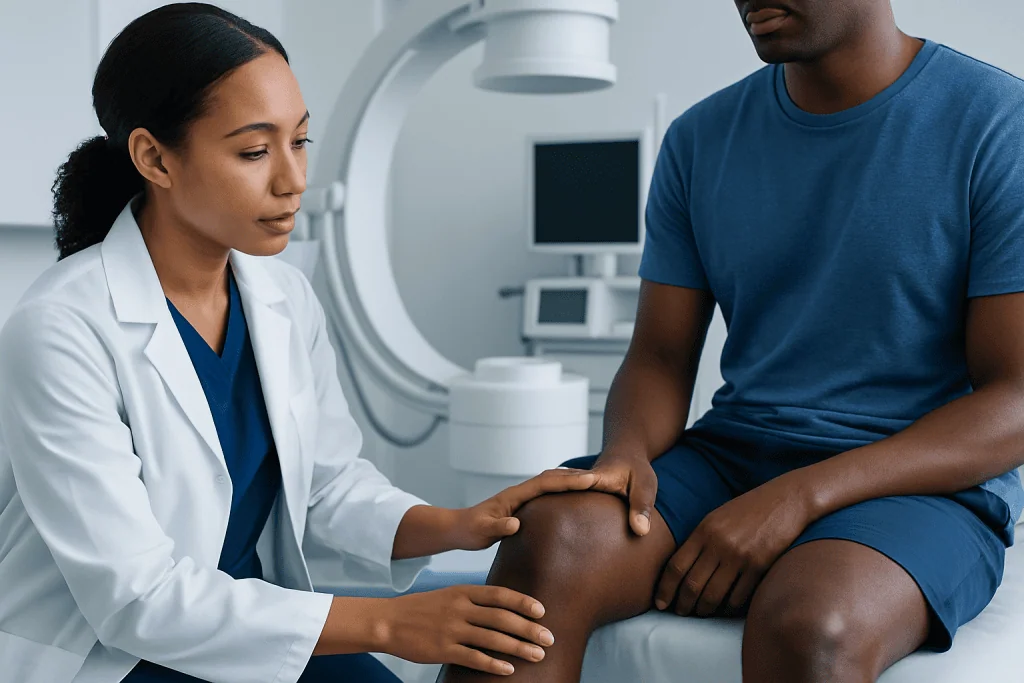
The knees are high-contact areas. Sitting or praying on the knees, exercise, certain work activities, crawling, and repeated pressure against surfaces can trigger low-grade irritation. In response, pigment-producing cells may increase melanin production, leaving the area darker over weeks or months. This process can occur in every skin tone, though it may be more visible or persistent in deeper skin tones.
Dryness can add to the effect. Dry skin may look dull, grey-brown, rough, or ashy, particularly over joints where skin is thicker. Hot showers, fragranced products, strong soaps, and frequent exfoliation may disrupt the skin barrier and worsen dryness or irritation rather than improving the colour.
Sun exposure can also deepen existing pigmentation. Although knees may be covered much of the time, shorts, skirts, outdoor sports, and beachwear can expose them to ultraviolet light. Pigment changes after a rash, insect bite, scratch, or minor injury are known as post-inflammatory hyperpigmentation and usually fade gradually, although this may take time.
Possible medical causes of dark knees

Several skin conditions can cause darker knee skin. Eczema, contact dermatitis, psoriasis, and repeated scratching may leave pigmentation changes after inflammation settles. Psoriasis often causes well-defined, thick, scaly patches on the knees or elbows; it can look different across skin tones and may appear darker, purple, grey, or reddish-brown. Persistent scaling, cracking, itching, or plaques should be evaluated rather than treated as simple dryness.
Acanthosis nigricans causes darker, thicker, sometimes velvety skin. It is more common on the neck, underarms, groin, and skin folds, but may also affect knees, knuckles, or elbows. It can be associated with insulin resistance, prediabetes, type 2 diabetes, polycystic ovary syndrome, excess body weight, some medicines, and other hormonal factors. It is not a diagnosis on its own, but it is a useful reason to discuss metabolic health with a doctor.
Less commonly, colour changes may result from medication reactions, chronic venous circulation problems, bruising, infection, or inflammatory disorders. A dark spot that is new, asymmetric, changing in size or colour, bleeding, crusting, or failing to heal needs timely dermatology assessment to exclude more serious skin disease.
People with long-standing joint symptoms may also notice skin changes from using topical products, braces, or repeated pressure around the knee. If knee pain, stiffness, warmth, or swelling is present, evaluation for a joint condition such as osteoarthritis may be appropriate.
What a doctor may check
A clinician will first ask about the timing and pattern of darkening. Helpful details include whether it started after a rash or injury, whether one or both knees are involved, any new skin-care products or medicines, frequent kneeling, sun exposure, family history, and symptoms such as itch, pain, fatigue, thirst, weight change, or menstrual irregularity.
During the examination, the clinician will assess the skin’s texture, borders, scale, thickness, warmth, and colour, and may look at the neck, underarms, elbows, hands, legs, and other areas. This can help differentiate dryness and friction-related pigmentation from dermatitis, psoriasis, acanthosis nigricans, bruising, or another skin condition.
Tests are not always needed. When the history or examination suggests a possible metabolic or hormonal contributor, a doctor may recommend blood tests such as glucose-related testing. If a rash is unclear, a dermatologist may use dermoscopy, take a small skin sample, or perform allergy-related assessment. The goal is to identify and address the cause rather than simply lighten the skin.
Safe skin care and practical next steps
For gradual, symptom-free darkening, gentle care is often the most useful starting point. Use a mild, fragrance-free cleanser, avoid vigorous scrubbing, and apply a plain moisturiser after bathing and whenever the skin feels dry. Creams containing ingredients such as urea, lactic acid, or salicylic acid may help rough, thickened skin for some people, but they should be introduced cautiously and stopped if they sting or cause a rash.
Reducing repeated friction and pressure may prevent worsening. This may include using knee pads for work or gardening, choosing softer fabrics, avoiding harsh loofahs or abrasive scrubs, and treating any itch rather than scratching. Broad-spectrum sunscreen on exposed knees can help prevent further darkening and support more even fading over time.
Over-the-counter bleaching products, unregulated “whitening” creams, and home remedies such as lemon juice or baking soda can irritate the skin and lead to more pigmentation. Prescription treatments for pigmentation, eczema, psoriasis, or another diagnosed condition should be selected by a doctor or dermatologist. Cosmetic concerns can be discussed safely during a dermatology consultation, including dermatology assessment and treatment.
Improvement is usually gradual because the skin needs time to renew itself. Consistent, non-irritating care and management of any underlying skin or metabolic condition are more effective than rapid or aggressive approaches.
When to seek medical care
Medical assessment is recommended when dark knees appear suddenly, become noticeably darker over a short period, spread to other areas, or do not have an obvious explanation. It is also important to seek advice if the skin is thick and velvety, especially when similar changes appear on the neck or underarms, as a clinician may wish to assess blood sugar and related health factors.
Prompt review is appropriate for pain, warmth, swelling, marked tenderness, open sores, discharge, fever, unexplained bruising, numbness, or a rapidly changing mole or patch. These features are not typical of uncomplicated friction-related hyperpigmentation and should not be managed only with cosmetic products.
People who have persistent itch, scaling, recurrent rashes, or a history of diabetes or hormonal conditions can benefit from planned review with a primary care clinician or dermatologist. Acibadem International’s multidisciplinary specialists and JCI-accredited hospitals diagnose and treat skin, metabolic, and joint concerns for international patients.
Supporting long-term skin and metabolic health
Skin colour changes are often influenced by several factors at once. Maintaining a regular moisturising routine, protecting exposed skin from the sun, and avoiding repeated irritation can support the skin barrier and reduce the chance of new post-inflammatory pigmentation. For individuals with eczema or psoriasis, following a personalised treatment plan may also reduce recurrent dark marks.
If acanthosis nigricans or insulin resistance is suspected, the priority is overall health rather than skin lightening alone. A clinician may discuss nutrition, physical activity, sleep, weight management where appropriate, and treatment of diabetes, polycystic ovary syndrome, or other contributing conditions. These decisions should be individualised and made without blame.
Dark knees are rarely an emergency, and many cases are manageable with appropriate skin care and time. A professional assessment offers reassurance when needed and helps ensure that a treatable skin, hormonal, or metabolic cause is not overlooked.
Frequently asked questions
Why are my knees darker than the rest of my legs?
The knee skin is thicker and is exposed to more rubbing, pressure, bending, and dryness than much of the leg. These factors can increase pigmentation or make the skin look rougher and darker. This is commonly harmless when it develops gradually and there are no other symptoms.
Can friction make knees black?
Yes. Repeated kneeling, exercise, tight or rough clothing, and frequent rubbing can irritate the skin and lead to hyperpigmentation. Reducing friction and using gentle moisturising care may help prevent further darkening.
Do dark knees mean diabetes?
Dark knees alone do not mean a person has diabetes. However, dark, thickened, velvety skin in several areas, especially the neck or underarms, can be associated with insulin resistance. A doctor can decide whether blood sugar testing or other assessment is appropriate.
How can dark knees be lightened safely?
The safest approach is to address dryness, irritation, friction, and sun exposure while treating any diagnosed skin condition. Gentle moisturisers and sun protection may help over time, but results are gradual. Strong bleaching creams, harsh scrubs, and irritating home remedies can worsen pigmentation.
Should a person exfoliate dark knees?
Gentle exfoliation may be suitable for some people with rough, dry skin, but aggressive scrubbing can cause inflammation and make pigmentation worse. It is best to avoid abrasive tools and stop any product that burns, stings, or causes redness. A dermatologist can recommend suitable products for persistent roughness or discoloration.
When should dark knees be checked by a doctor?
A doctor should assess darkening that is sudden, rapidly spreading, painful, itchy, scaly, swollen, or associated with sores or changing spots. Review is also sensible when the skin becomes thick and velvety or when similar darkening develops on the neck, underarms, or other areas. These features may need treatment or evaluation for an underlying condition.
References
- American Academy of Dermatology Association
- National Institute of Diabetes and Digestive and Kidney Diseases
- Mayo Clinic
- National Health Service
- American Diabetes Association
This article is for general information only and is not a substitute for professional medical advice. Please consult a qualified doctor about your individual situation.
Joint and spine care in Turkey — expert assessment & treatment
JCI-accredited · board-certified surgeons · reply within 24h
Add us as a Preferred Source to see more of our trusted health content across Google Search, AI Overviews and Discover.

More from the Health Library



Related Specialists

Fzt. Elif Tokgöz Nizam
Physical Medicine & Rehabilitation
Dr. Ecem Sevim Akı
Otorhinolaryngology
Prof. Dr. Arzu Tatlıpınar
Otorhinolaryngology
Dyt. Hüda Sevimli
Nutrition & Diet