Why Do My Breasts Feel Heavy and Sore? Causes, Explanations, and Next Steps

Hormone-related breast tenderness is common and often follows a menstrual-cycle pattern. Breast pain alone is usually not a sign of breast cancer, especially when it is felt in both breasts and comes and goes.
Key Takeaways
- Hormone-related breast tenderness is common and often follows a menstrual-cycle pattern.
- Breast pain alone is usually not a sign of breast cancer, especially when it is felt in both breasts and comes and goes.
- Pregnancy, breastfeeding, some medicines, chest-wall strain, and poorly fitting bras can also cause heaviness or soreness.
- A new persistent lump, bloody nipple discharge, breast redness with fever, or changes to the skin or nipple need prompt medical attention.
- Keeping a symptom diary can help identify patterns and support an accurate medical assessment.
Breasts may feel heavy and sore because breast tissue responds to normal hormone changes, fluid retention, pregnancy, breastfeeding, medications, or factors such as an unsupportive bra. Most breast pain is not caused by cancer, but persistent one-sided symptoms, a new lump, nipple discharge, or skin changes should be assessed by a clinician.
Why breasts can feel heavy and sore
Breasts can feel heavy and sore when normal hormone fluctuations cause breast tissue to retain fluid and become more sensitive. This is especially common in the days or weeks before a period, when both breasts may feel fuller, achy, swollen, or tender. For many people, the discomfort improves once menstruation begins or ends.
Breast pain, also called mastalgia, is very common and is usually benign. It can be cyclical, meaning it is linked to the menstrual cycle, or non-cyclical, meaning it occurs without a predictable pattern. The feeling of heaviness may come from temporary swelling, while soreness may affect the whole breast or a more localized area.
Although breast pain by itself is rarely a sign of cancer, it is still important to notice new or changing symptoms. A clinician can assess any symptom that is persistent, clearly limited to one area, or accompanied by a lump, nipple change, skin change, or unusual discharge.
Patterns that can help explain the symptom
The timing and location of symptoms often provide useful clues. Cyclical breast pain typically affects both breasts, is worse before a period, and may include a sense of fullness or lumpiness. It most often occurs during the reproductive years, but hormonal changes around perimenopause can also make breast symptoms less predictable.
Non-cyclical pain may be felt in one breast or in one specific spot. It can result from a breast-related cause, but pain can also begin in the chest wall muscles, ribs, neck, shoulder, or upper back and be felt as though it is in the breast. Exercise, lifting, an injury, prolonged posture, or a strained chest muscle can contribute.
During pregnancy, breast heaviness and tenderness are common early changes. While breastfeeding, fullness may occur when milk builds up. Localized pain with a warm, red area of the breast and flu-like symptoms may suggest an inflammation or infection that needs timely assessment.
Common causes and contributing factors

Hormonal variation is the most frequent explanation for heavy, sore breasts. Estrogen and progesterone influence breast ducts and supporting tissue, which can lead to swelling and tenderness. Hormonal contraception, menopausal hormone therapy, fertility treatments, and some other medicines may also change how the breasts feel.
Other possible contributors include weight changes, breast cysts, benign fibrous or glandular tissue changes, and a bra that does not provide enough support. Large breasts may also cause pulling sensations or discomfort in the shoulders, neck, and upper back. Caffeine is sometimes reported as a trigger, though its effect differs from person to person and reducing it does not help everyone.
Breast symptoms can sometimes be related to conditions that need targeted care, including breast cancer, although pain alone is not a typical early sign. For this reason, clinicians focus on the complete picture: the pain pattern, examination findings, personal and family history, and whether any other breast changes are present.
- Menstrual-cycle and perimenopausal hormone changes
- Pregnancy, breastfeeding, or milk engorgement
- Hormonal medicines and certain other prescriptions
- Breast cysts or benign breast-tissue changes
- Muscle strain, rib irritation, or referred pain from the chest wall
- Inadequate bra support or pressure from clothing
Red flags and when to seek medical care
Medical review is recommended for a new breast symptom that persists beyond one or two menstrual cycles, becomes more severe, or affects daily activities. It is particularly important to arrange an appointment if pain is consistently in one breast or one small area rather than being a familiar, cyclical pattern.
Seek prompt medical care for a new lump or firm area, nipple discharge that is bloody or occurs without squeezing, dimpling or puckering of the skin, a new inverted nipple, or a rash or scaling around the nipple. Breast redness, warmth, swelling, fever, or feeling unwell should also be assessed quickly, particularly during breastfeeding, as infection may require treatment.
Urgent assessment is appropriate for severe breast or chest pain accompanied by shortness of breath, sweating, faintness, or pain spreading to the arm, jaw, or back. These symptoms may not be breast-related and can require emergency evaluation.
How a doctor investigates breast pain
A doctor will begin by asking when the heaviness and soreness started, whether it changes with the menstrual cycle, and whether there are associated symptoms. They may ask about pregnancy or breastfeeding, medicines and supplements, recent injuries or exercise, prior breast conditions, and family history of breast or ovarian cancer.
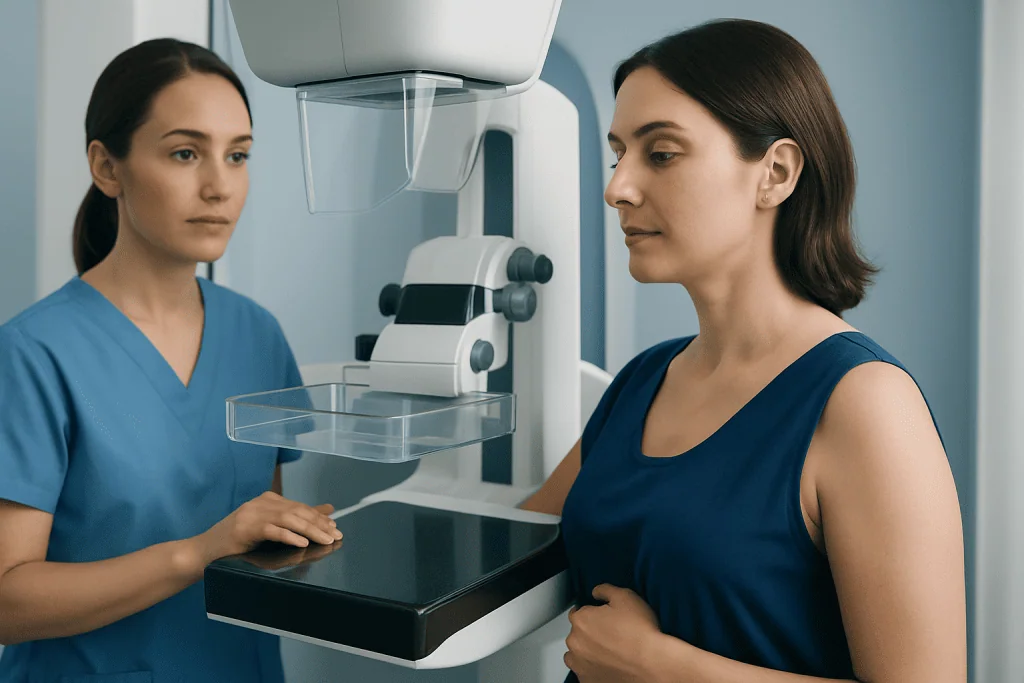
A clinical breast examination checks the breast tissue, nipples, underarm lymph nodes, and nearby chest wall. Depending on age, symptoms, examination findings, and screening history, imaging may be recommended. This may include a breast ultrasound, a mammogram, or occasionally further testing such as MRI. Imaging is not always needed for typical cyclical pain with a normal examination.
If a lump or suspicious change is found, a clinician may recommend a needle biopsy to clarify the diagnosis. The purpose of assessment is not only to rule out serious causes but also to identify manageable explanations such as cysts, infection, or musculoskeletal pain.
Relief measures and treatment options
For mild cyclical discomfort, practical measures may be enough. A well-fitting supportive bra, including during exercise, can reduce movement-related pain. Some people find that a warm or cool compress helps; the most comfortable choice can be used for short periods while protecting the skin.
Simple pain relief may be appropriate for some people, but it should be chosen with a pharmacist or clinician when there are medical conditions, pregnancy, breastfeeding, or regular medicines to consider. Maintaining usual activity where comfortable, addressing posture and chest-wall strain, and recording symptoms over several cycles can also be helpful.
Treatment depends on the underlying cause. An infection needs medical treatment, while a troublesome cyst or another breast finding may require further evaluation or a procedure. When symptoms are linked to a medicine or hormone treatment, the prescribing clinician can review whether a change is suitable; people should not stop prescribed medication on their own.
For patients needing specialist evaluation, Acibadem International’s multidisciplinary specialists and JCI-accredited hospitals diagnose and treat breast conditions for international patients, including through appropriate breast cancer treatment when indicated.
Self-care, monitoring, and prevention
Not every cause of breast soreness can be prevented, particularly when it is driven by normal hormonal changes. However, wearing supportive underwear, gradually building strength and mobility for the upper back and chest, and avoiding activities that worsen a strain can reduce physical contributors to discomfort.
A symptom diary is a useful starting point. It can record the location and severity of pain, menstrual dates, breast changes, exercise, medications, and anything that eases or worsens symptoms. This information helps distinguish a cyclical pattern from a new non-cyclical symptom and can make a medical appointment more productive.
People should continue breast screening according to the recommendations that apply to their age, country, and individual risk. Screening is intended for people without symptoms; anyone who notices a new breast change should seek clinical advice rather than waiting for their next routine screening appointment.
Frequently asked questions
Why do my breasts feel heavy and sore before my period?
Hormone levels change before menstruation, which can cause breast tissue to hold more fluid and become more sensitive. This often affects both breasts and improves after the period starts or ends. If the pattern changes or symptoms persist, a clinician can assess it.
Can breast pain be a sign of cancer?
Breast pain alone is usually not a sign of breast cancer. However, a persistent area of pain with a new lump, skin or nipple changes, or spontaneous bloody discharge should be checked by a doctor. Any new breast change deserves medical advice, even though most causes are benign.
Why is only one breast heavy and sore?
One-sided discomfort can occur with a cyst, injury, chest-wall strain, infection, or a localized change in breast tissue. It may also be caused by pain referred from the ribs, muscles, shoulder, or neck. Persistent or focal one-sided pain should be evaluated, especially if a lump or other change is present.
Can pregnancy cause heavy, tender breasts?
Yes. Hormonal changes early in pregnancy commonly make breasts feel fuller, heavier, and more tender. These changes are usually normal, but severe redness, localized warmth, fever, or a concerning lump should be discussed with a healthcare professional.
What can help sore, heavy breasts at home?
A supportive, well-fitting bra, gentle use of warm or cool compresses, and avoiding activities that aggravate chest-wall pain may help. Keeping a symptom diary can also show whether symptoms follow the menstrual cycle. Ask a clinician or pharmacist before using pain medicines if pregnant, breastfeeding, or taking regular medication.
When should breast soreness be checked urgently?
Seek prompt care for redness, warmth, swelling, fever, or feeling unwell, as these can suggest infection. Arrange medical review for a new lump, spontaneous bloody nipple discharge, dimpling of the skin, a new inverted nipple, or pain that persists or is localized to one area. Emergency assessment is needed if breast or chest pain occurs with shortness of breath, faintness, sweating, or pain spreading to the arm or jaw.
This article is for general information only and is not a substitute for professional medical advice. Please consult a qualified doctor about your individual situation.
Oncology care in Turkey — second opinion and treatment plan
JCI-accredited · board-certified surgeons · reply within 24h
Add us as a Preferred Source to see more of our trusted health content across Google Search, AI Overviews and Discover.

General Surgery Specialists at Acibadem





More from the Health Library

How Many Calories Do You Burn While Sleeping? A Doctor-Reviewed Answer

Is Nausea in Pregnancy a Sign of a Girl? Here Is What the Evidence Says

How Long Are Hard Boiled Eggs Good for? Here Is What the Evidence Says

Oura Ring vs Apple Watch: Key Differences and How Doctors Tell Them Apart

How to Soothe Razor Burn in Pubic Area? Causes, Explanations, and Next Steps