Why Do We Have Wisdom Teeth? Causes, Explanations, and Next Steps

Wisdom teeth are third molars that usually appear in the late teens or early twenties. They are considered an evolutionary remnant and may no longer be necessary for chewing in many people.
Key Takeaways
- Wisdom teeth are third molars that usually appear in the late teens or early twenties.
- They are considered an evolutionary remnant and may no longer be necessary for chewing in many people.
- Many wisdom teeth cause no problems, but some become impacted, crowded, decayed, or inflamed.
- Red flags include persistent pain, gum swelling, trouble opening the mouth, bad taste, fever, or facial swelling.
- A dentist typically evaluates wisdom teeth with an oral exam and dental X-rays before recommending monitoring or removal.
Why do we have wisdom teeth? In most people, wisdom teeth are simply the last molars to develop, and their presence is often harmless. They are thought to be an evolutionary leftover from a time when human jaws were larger and tougher foods caused more tooth wear, but symptoms such as pain, swelling, or repeated infection should be checked by a dentist or oral surgeon.
Why wisdom teeth exist in the first place
Most people have wisdom teeth because they are part of the normal human set of adult teeth. These teeth, also called third molars, sit at the very back of the mouth and usually develop later than the other permanent teeth. In many cases, they never cause trouble and are found only during routine dental care.
The simplest answer to why do we have wisdom teeth is that they are likely an evolutionary leftover. Earlier humans are thought to have had larger jaws and diets that included coarse, uncooked, or tougher foods. Extra molars may have helped with grinding food, and tooth wear over time may have made replacement chewing surfaces useful.
Today, human diets are generally softer and cooking reduces the need for heavy chewing. At the same time, modern jaws are often smaller, which means there may not be enough room for wisdom teeth to come in normally. That is why these teeth can be perfectly harmless in one person and problematic in another.
What wisdom teeth are and when they appear
Wisdom teeth are the last adult molars to develop. A person may have up to four wisdom teeth, one in each back corner of the upper and lower jaws. Some people have fewer than four, and some never develop any at all. This variation is normal.
They usually begin to emerge between the late teenage years and the mid-twenties, although the timing differs from person to person. Because they arrive after the rest of the teeth are already in place, they may have limited space to erupt. This late timing is one reason they are called “wisdom” teeth.
If there is enough room and they grow in a healthy position, wisdom teeth may function much like other molars. If they are trapped below the gum or bone, partially erupt, or tilt against neighboring teeth, they may become impacted teeth. Impacted wisdom teeth do not always cause symptoms, but they are more likely to need monitoring.
When wisdom teeth are harmless and when they cause symptoms

In many people, wisdom teeth are harmless. They may remain fully buried without affecting nearby teeth, or they may erupt normally and be cleaned like other molars. A dentist may simply watch them over time with periodic exams and X-rays.
Problems are more likely when a wisdom tooth partly breaks through the gum or pushes against surrounding teeth. This can create a hard-to-clean area where food and bacteria collect. Gum irritation around a partly erupted tooth can lead to tenderness, swelling, bad breath, or an unpleasant taste.
Symptoms that can happen with troublesome wisdom teeth include:
- Pain or pressure at the back of the mouth
- Red, swollen, or bleeding gums
- Jaw soreness or trouble opening the mouth
- Food trapping around the back molars
- Repeated gum infection around a partly erupted tooth
- Tooth decay or damage to a nearby molar
Not every ache near the back of the jaw is caused by wisdom teeth. Other dental problems, including cavities, gum disease, or nighttime clenching, can feel similar. That is why a dental exam is important if discomfort keeps returning.
Why some wisdom teeth become impacted or painful
The most common reason wisdom teeth cause trouble is lack of space. If the jaw does not have enough room for these final molars, they may stay trapped in bone, erupt only partway, or come in at an angle. A tilted or sideways tooth can press on the second molar or create an area that is difficult to keep clean.
Partly erupted wisdom teeth are especially prone to inflammation of the gum tissue around them. Bacteria and debris can collect under the gum flap, leading to repeated soreness or infection. In some cases, a cyst may form around an impacted tooth, which can affect nearby bone or teeth.
Other factors that influence whether a wisdom tooth becomes problematic include jaw shape, the position of the tooth bud, oral hygiene, and whether the opposing tooth has space to meet it properly. People who develop repeated infections, cavities, or gum disease around the area may be advised to consider wisdom tooth extraction.
Less commonly, pain near the wisdom tooth area may relate to nearby conditions such as gum disease or irritation in the jaw joint. A careful assessment helps identify the true cause and avoid unnecessary treatment.
How a dentist evaluates wisdom teeth
If symptoms appear, a dentist or oral and maxillofacial surgeon will usually begin with questions about pain, swelling, chewing, past infections, and how long the problem has been present. They will examine the gums, the position of the teeth, the bite, and how widely the mouth opens.
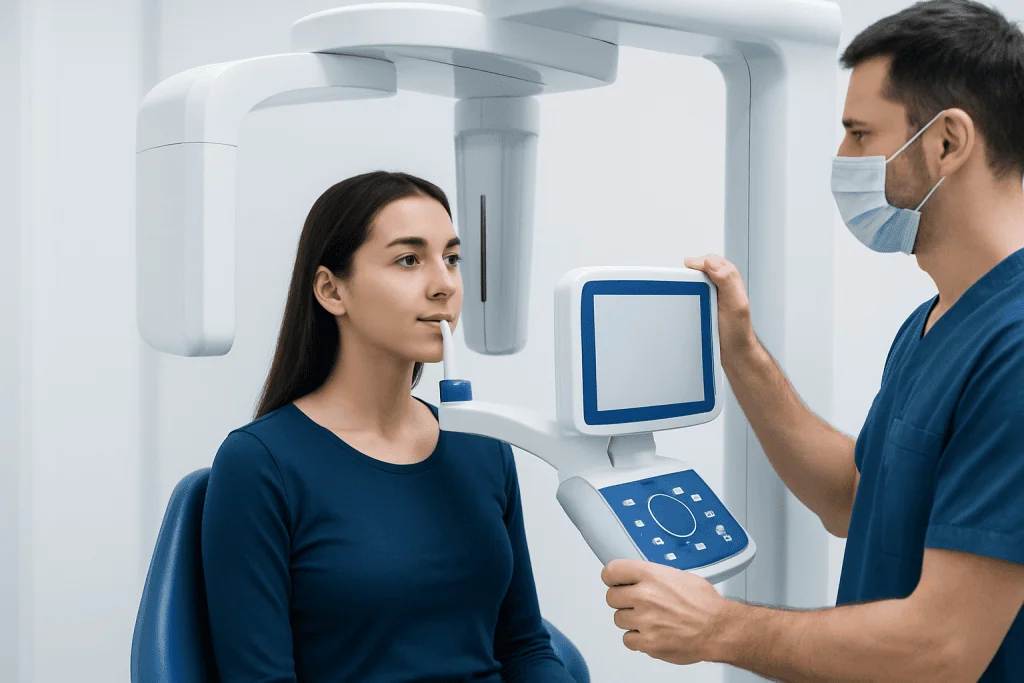
Dental X-rays are a key part of the assessment because they show whether the wisdom teeth are erupting normally, impacted, pressing on nearby teeth, or affecting the surrounding bone. Panoramic imaging is often used to see all four wisdom teeth and their relationship to the jaw and nearby structures. In selected cases, more detailed imaging may be needed before a procedure.
This evaluation helps the clinician answer practical questions rather than focusing only on the fact that wisdom teeth are present. Are they healthy and easy to clean? Are they causing repeated inflammation or damaging the next molar? Is there a reason to monitor them or a reason to remove them? For some patients, a broader dental assessment may also include care such as root canal treatment if a neighboring tooth has already been affected by decay or infection.
Treatment options: monitoring, symptom relief, and removal
Treatment depends on whether the wisdom teeth are healthy, symptomatic, or likely to cause future problems. If the teeth are not painful, are fully erupted, and can be cleaned well, the dentist may recommend observation with routine follow-up. Monitoring is also common when wisdom teeth are buried but not harming adjacent structures.
For short-term symptom relief, a clinician may suggest measures such as careful cleaning around the area, gentle salt-water rinses, and appropriate pain relief. If there is infection or significant inflammation, the dentist will treat that problem directly and decide whether the tooth should remain or be removed. People should avoid self-treating ongoing swelling or repeated pain without professional advice.
Removal is often recommended when wisdom teeth are repeatedly infected, impacted in a harmful position, causing crowding concerns, damaging a neighboring tooth, or developing decay that cannot be managed well. The procedure may be straightforward for a fully erupted tooth or more involved for a deeply impacted one. Recovery needs vary, but patients are typically given clear aftercare instructions about eating, cleaning, and what to expect as healing progresses.
Near the end of the care journey, some patients benefit from a team approach that includes dentists, oral surgeons, and imaging specialists. Acibadem International’s multidisciplinary specialists and JCI-accredited hospitals diagnose and treat wisdom tooth problems for international patients when needed.
What to do at home and how to lower the risk of problems
Good oral hygiene can reduce the chance of irritation or decay around wisdom teeth that have partially or fully erupted. Brushing twice daily with fluoride toothpaste, cleaning between teeth, and paying special attention to the back molars can help. Many people find that a small-headed toothbrush makes it easier to reach the area.
Regular dental checkups are important because wisdom teeth can be difficult to assess without an exam and X-rays. Even when there is no pain, routine follow-up can identify changes early. This is useful because some complications, such as decay in the neighboring molar, may develop quietly at first.
At home, it may help to rinse gently with warm salt water if the gum around a partly erupted tooth feels mildly irritated. Soft foods can be more comfortable during short periods of soreness. However, home care should support professional advice rather than replace it, especially if symptoms keep returning.
When to seek medical care
Because wisdom teeth are often harmless, occasional mild awareness of a tooth erupting is not always an emergency. Still, persistent symptoms deserve review. A dentist should assess ongoing pain, repeated swelling, bleeding gums at the back of the mouth, difficulty chewing, or food trapping that is hard to clean.
More urgent review is advisable if there is facial swelling, fever, pus, a foul taste that does not go away, trouble opening the mouth, or pain that wakes a person from sleep. These signs can suggest infection or another dental problem that needs timely treatment.
It is also sensible to book an appointment if a wisdom tooth seems to be pushing against another tooth, if there is a new cavity in a back molar, or if symptoms return in cycles. Early evaluation often makes treatment more straightforward and helps protect nearby teeth and gums.
Frequently asked questions
Do wisdom teeth serve any purpose today?
They can still function as chewing teeth if they erupt in a healthy position and are easy to clean. However, many people do not need them because modern jaws often have less space and modern diets place less demand on extra molars.
Is it normal to have no wisdom teeth?
Yes. Some people naturally develop fewer than four wisdom teeth, and some never develop any at all. This is a normal human variation and usually does not affect oral health.
Do all wisdom teeth need to be removed?
No. Wisdom teeth do not need removal simply because they exist. They are usually removed only if they are impacted in a harmful way, repeatedly infected, decayed, damaging another tooth, or difficult to monitor safely.
At what age do wisdom teeth usually come in?
They most often appear in the late teens or early twenties, but timing varies. Some erupt earlier or later, and others remain below the gums without ever fully coming through.
Can wisdom teeth cause headaches or jaw pain?
They can contribute to pain felt in the jaw, ear area, or head, especially if there is infection, gum inflammation, or pressure on nearby tissues. But headaches and jaw pain have many causes, so a dental exam is needed to confirm whether wisdom teeth are responsible.
How does a dentist know if a wisdom tooth is impacted?
The dentist combines an oral examination with dental X-rays to see the tooth’s position under the gum or bone. This shows whether it is trapped, partly erupted, tilted, or pressing on nearby teeth.
References
- American Dental Association
- National Institute of Dental and Craniofacial Research
- NHS
- Mayo Clinic
- Merck Manual Consumer Version
This article is for general information only and is not a substitute for professional medical advice. Please consult a qualified doctor about your individual situation.
Wisdom Teeth in Turkey — costs, top hospitals & a free quote
JCI-accredited · board-certified surgeons · reply within 24h
Add us as a Preferred Source to see more of our trusted health content across Google Search, AI Overviews and Discover.