Why Do We Yawn? Causes, Explanations, and Next Steps
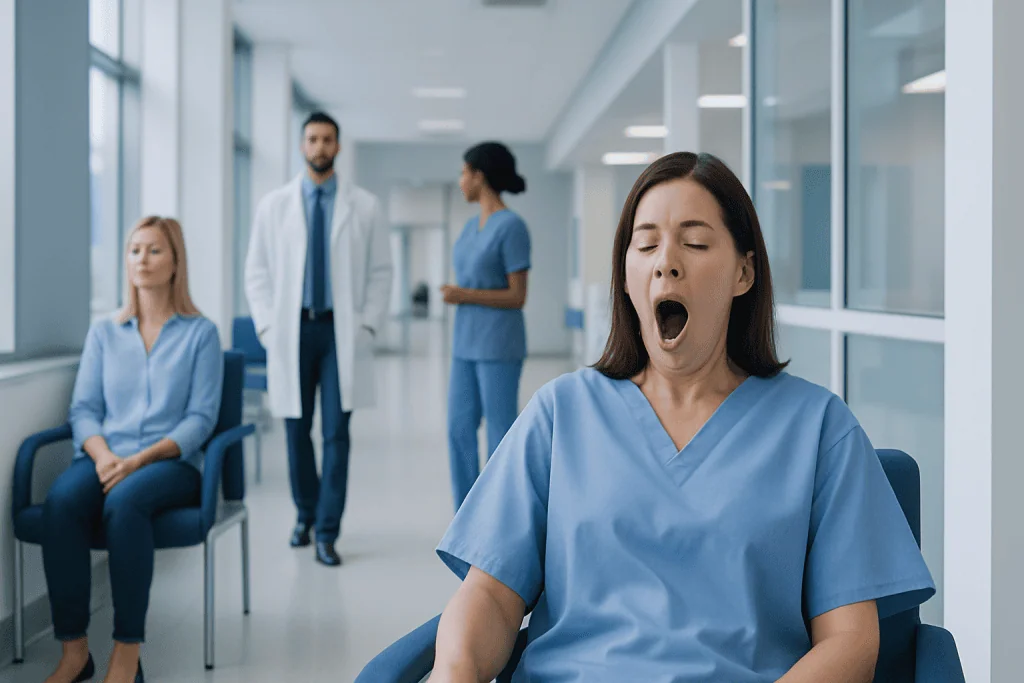
Yawning is usually a normal body reflex and not a sign of disease. Common triggers include sleepiness, boredom, stress, changes in alertness, and contagious yawning.
Key Takeaways
- Yawning is usually a normal body reflex and not a sign of disease.
- Common triggers include sleepiness, boredom, stress, changes in alertness, and contagious yawning.
- Frequent or excessive yawning may be linked to poor sleep, medicines, sleep disorders, or less commonly neurological or heart-related problems.
- Doctors assess yawning by reviewing sleep, medications, symptoms, and overall health rather than the yawn itself alone.
- Medical care is important if yawning is new, excessive, or happens with fainting, chest pain, shortness of breath, or neurological symptoms.
Most yawning is harmless. People usually yawn when they are sleepy, bored, changing alertness, or sometimes in response to seeing someone else yawn, but persistent or excessive yawning can occasionally point to an underlying sleep, neurological, medication-related, or medical issue that deserves evaluation.
Overview: Why people yawn
When people ask, “why do we yawn,” the answer is usually reassuring: yawning is most often a normal reflex. It commonly happens during sleepiness, boredom, fatigue, or moments when the brain is shifting between states of alertness. A yawn may help the body respond to these transitions, and by itself it usually does not mean something is wrong.
Researchers are still learning exactly why yawning happens. Several explanations are supported by evidence, including changes in brain arousal, a role in social communication, and possible brain temperature regulation. In other words, yawning is not caused by one single factor; it is better understood as a body response influenced by sleep, attention, emotion, and the nervous system.
Yawning can also be contagious. Seeing, hearing, or even reading about yawning may trigger it in another person. This appears to be related to social and brain network responses rather than a medical problem. Because of that, occasional yawning throughout the day is common in healthy adults and children.
The question becomes more important when yawning feels excessive, starts suddenly, or appears along with other symptoms. In those situations, a doctor looks beyond the yawn itself and considers sleep quality, medications, stress, and possible underlying conditions.
What happens during a yawn

A yawn is a patterned reflex involving a wide opening of the mouth, a deep inward breath, a brief stretch of the jaw and facial muscles, and then a shorter exhalation. The eyes may water, the ears may feel as though they shift pressure, and the person may naturally stretch at the same time. This coordinated action involves the brain, muscles, breathing system, and autonomic nervous system.
Although people often associate yawning only with being tired, the reflex is more complex than that. Yawning may appear when a person is waking up, winding down, losing focus, waiting passively, or moving from one activity level to another. This is one reason it is frequently seen before sleep, after waking, and during long periods of inactivity.
Scientists have also studied whether yawning helps cool the brain slightly or support alertness. These theories may explain why yawning sometimes happens in warm environments or during mental fatigue. However, yawning should be viewed as a normal biological behavior rather than something a person can fully control.
Common causes of yawning and frequent yawning

The most common reason for yawning is sleepiness. Too little sleep, poor-quality sleep, jet lag, shift work, or an irregular sleep schedule can all increase yawning. Boredom and under-stimulation are also familiar triggers, especially during quiet tasks, long meetings, or extended screen time.
Emotions and body state can matter too. Stress, anxiety, and mental fatigue may increase yawning in some people. In these cases, yawning does not necessarily mean a person is relaxed or ready to sleep; it can also happen during transitions in arousal, such as before a performance, while concentrating intensely, or after prolonged tension.
Some medicines can contribute to frequent yawning. Drugs that affect serotonin, dopamine, or the central nervous system may increase yawning in certain people. This can include some antidepressants, sleep medicines, pain medicines, or other treatments that influence alertness. A person should not stop prescribed medication without medical advice, but a doctor can review whether a medicine could be playing a role.
There are also medical explanations for persistent yawning. These may include sleep deprivation, sleep apnea, insomnia, vasovagal responses, migraine, and less commonly neurological conditions affecting brain function. In rare cases, excessive yawning has been reported with heart-related issues or after certain brain injuries. Usually, other symptoms are present as well, which is why context matters more than the yawn alone.
When yawning may signal an underlying problem
Yawning deserves more attention when it is excessive, difficult to explain, or clearly different from a person’s usual pattern. There is no single number that defines “too much,” but concern grows if yawning is frequent every day, interferes with activities, or appears despite getting enough rest. The broader picture is what guides the next step.
Doctors often ask whether frequent yawning is accompanied by daytime sleepiness, loud snoring, witnessed pauses in breathing during sleep, morning headaches, poor concentration, or unrefreshing sleep. That pattern may point toward a sleep disorder. Evaluation may include sleep assessment and, when appropriate, tests such as a sleep study.
Other symptoms can suggest a different cause. Examples include fainting or near-fainting, chest discomfort, palpitations, shortness of breath, new severe headache, weakness, speech changes, confusion, seizures, or unusual episodes of staring or loss of awareness. In these settings, yawning may simply be one clue among several, and medical review is important.
Persistent yawning may also be seen alongside anxiety, depression, medication side effects, and some gastrointestinal or autonomic symptoms. A careful history helps separate a harmless pattern from one that needs targeted investigation.
How doctors evaluate excessive yawning
If a person seeks care for frequent yawning, the evaluation usually starts with questions about sleep, daily routine, stress, medications, caffeine, alcohol, and overall health. A doctor will want to know when the yawning began, whether it occurs at certain times of day, and whether there are accompanying symptoms such as fatigue, dizziness, snoring, headaches, or trouble concentrating.
The physical examination may include checking blood pressure, heart rate, breathing, and a focused neurological exam. Depending on the story, the doctor may also assess mood, medication effects, and signs of sleep deprivation. Most people do not need extensive testing right away; tests are guided by symptoms and risk factors.
Possible next steps can include blood tests to look for contributors such as anemia or metabolic problems, heart evaluation if there are cardiovascular symptoms, or imaging and neurological assessment if there are concerning brain-related signs. If sleep problems are suspected, referral for neurology or sleep medicine review may be helpful.
The key point is that doctors do not diagnose based on yawning alone. They use yawning as a symptom that can provide clues about sleep health, nervous system function, medications, or other medical conditions.
Treatment and self-care: what can help
Treatment depends on the cause. If yawning is related to not getting enough sleep, improving sleep duration and sleep habits is usually the first step. A regular sleep schedule, a dark and quiet bedroom, limiting alcohol near bedtime, and reducing late-evening screen exposure may help. Daytime alertness often improves when sleep is more consistent.
If a medicine seems to be contributing, a doctor may review alternatives or timing adjustments. People should not stop antidepressants, sedatives, pain medicines, or other prescriptions on their own. A careful medication review is often enough to identify likely triggers.
When a sleep disorder is present, treating it can reduce yawning and daytime fatigue. Depending on the diagnosis, this might involve weight management, positional changes during sleep, airway support devices, or other targeted care. For people with persistent snoring or breathing-related sleep symptoms, assessment for sleep apnea treatment may be appropriate.
Stress management can also play a role. Regular physical activity, scheduled breaks, hydration, and simple relaxation techniques may help if yawning is associated with fatigue or tension. If symptoms are linked to migraines, mood symptoms, or neurological concerns, treating the underlying condition is the most effective approach.
When to seek medical care
Most people do not need urgent care for yawning alone. It is reasonable to mention it at a routine appointment if it has become frequent, is bothering daily life, or seems to happen even after adequate rest. A doctor can look for common explanations such as poor sleep, medication effects, or stress.
More prompt medical evaluation is important if frequent yawning appears with chest pain, shortness of breath, fainting, an irregular heartbeat, severe sleepiness while driving, or signs of a neurological problem such as weakness, numbness, confusion, trouble speaking, or seizures. Those symptoms should not be ignored, even if yawning seems minor compared with the rest of the picture.
For children, medical review is sensible when yawning is persistent and associated with poor sleep, behavioral changes, pauses in breathing at night, headaches, or decline in school performance. In adults, loud snoring, witnessed breathing pauses, and morning fatigue are especially important clues that deserve attention.
At centers such as Acibadem International, multidisciplinary specialists in sleep medicine, neurology, cardiology, and general medicine work together in JCI-accredited hospitals to assess symptoms like persistent yawning in international patients. The goal is to identify whether it is a normal variation, a sleep-related issue, or a sign of a condition that needs treatment.
Frequently asked questions
Is yawning a sign of low oxygen?
Usually no. The old idea that yawning mainly happens because the body needs more oxygen is not well supported by current research. Most yawning is more closely linked to sleepiness, changes in alertness, and brain state transitions.
Why is yawning contagious?
Contagious yawning appears to be related to the brain's social and attention networks. Seeing, hearing, or thinking about a yawn can trigger the reflex in another person. This is considered normal and is not usually a health concern.
Can anxiety cause yawning?
Yes, anxiety and stress can be associated with more frequent yawning in some people. Yawning may occur during shifts in arousal, tension, or hyperawareness of breathing. If anxiety is affecting sleep or daily functioning, a doctor or mental health professional can help.
When is excessive yawning a problem?
Excessive yawning becomes more concerning when it is new, persistent, disruptive, or unexplained by tiredness. It should be evaluated sooner if it comes with fainting, chest symptoms, severe daytime sleepiness, or neurological changes such as weakness or confusion.
Can medications make a person yawn more?
Yes. Some antidepressants, sedating medicines, pain medicines, and other drugs that affect the nervous system may increase yawning. A doctor can review medication timing, side effects, and whether an adjustment might help.
Does frequent yawning mean a sleep disorder?
Not always, but poor sleep and sleep disorders are common explanations. If yawning is paired with snoring, pauses in breathing during sleep, morning headaches, or daytime fatigue, a sleep evaluation may be useful. Treatment of the sleep problem often improves the yawning as well.
References
- National Institute of Neurological Disorders and Stroke
- American Academy of Sleep Medicine
- Mayo Clinic
- Cleveland Clinic
- MedlinePlus
This article is for general information only and is not a substitute for professional medical advice. Please consult a qualified doctor about your individual situation.
Explore treatments in Turkey — costs, top hospitals & a free quote
JCI-accredited · board-certified surgeons · reply within 24h
Add us as a Preferred Source to see more of our trusted health content across Google Search, AI Overviews and Discover.