Why Does My Eye Hurt When I Blink? Here Is What the Evidence Says

Pain when blinking is commonly linked to dryness, irritation, a stye, blepharitis, or a corneal scratch. Blinking can hurt because the eyelid moves over an inflamed or sensitive part of the eye.
Key Takeaways
- Pain when blinking is commonly linked to dryness, irritation, a stye, blepharitis, or a corneal scratch.
- Blinking can hurt because the eyelid moves over an inflamed or sensitive part of the eye.
- Red flags include blurred vision, light sensitivity, severe redness, discharge, swelling, chemical exposure, or eye injury.
- Doctors diagnose the cause with a symptom history, vision check, and examination of the eyelids and eye surface.
- Avoid rubbing the eye or using contact lenses until the cause is clear and symptoms improve.
Eye pain when blinking is often caused by a minor surface problem such as dryness, irritation, a stye, or a small scratch. Most cases improve with simple care, but pain with vision changes, marked redness, discharge, or recent injury should be assessed by an eye doctor.
Overview: why blinking can make the eye hurt
If a person wonders, “why does my eye hurt when I blink,” the answer is often reassuring. In many cases, blinking hurts because the eyelid is passing over a dry, irritated, inflamed, or slightly injured area on the surface of the eye or along the eyelid margin. Common examples include dry eye, a stye, blepharitis, a trapped eyelash, or a small corneal abrasion.
Blinking is a normal movement that spreads tears across the eye and helps protect vision. When the eye surface or eyelid is inflamed, that same movement can create a sharp, scratchy, burning, or tender sensation. The location of the pain matters: discomfort at the eyelid edge may suggest an eyelid problem, while pain deeper in the eye may point to a different cause.
Although many causes are minor and temporary, some symptoms deserve prompt medical review. Pain when blinking should be assessed more urgently if it comes with reduced vision, strong light sensitivity, significant redness, thick discharge, swelling around the eye, fever, a contact lens problem, or recent trauma or chemical exposure.
A doctor usually starts by asking when the pain began, whether one or both eyes are affected, and whether there is itching, discharge, blurred vision, or a history of contact lens use. The eye and eyelids are then examined carefully to identify whether the problem is on the surface, in the eyelid, or deeper in the eye.
Common symptoms that may occur with eye pain when blinking
Eye pain with blinking can feel different depending on the cause. Some people describe a gritty or sandy sensation, as if something is in the eye. Others notice tenderness in the eyelid, sharp pain in one spot, burning, watering, or discomfort that is worse first thing in the morning or after screen time.
Associated symptoms often give helpful clues. Dry eye may cause fluctuating discomfort, watering, and tired eyes. A stye may cause a small, painful bump near the eyelash line. Blepharitis often causes crusting at the lashes, itchiness, and irritation. A corneal scratch may cause sudden pain, tearing, redness, and light sensitivity.
- Redness of the eye or eyelid
- Watery eyes or discharge
- Swelling of the eyelid
- Blurred vision or a feeling of film over the eye
- Sensitivity to light
- Itching, burning, or a foreign-body sensation
- Pain that is limited to one spot or worsens with contact lens wear
Symptoms that are mild and improving are often less concerning. However, persistent pain, worsening redness, increasing swelling, or trouble keeping the eye open may mean the eye needs a closer examination. If symptoms are severe or sudden, it is safer not to wait.
What can cause eye pain when blinking?

The most common causes affect the eyelid or the clear front surface of the eye. Dry eye is one of the leading reasons. When there is not enough healthy tear film, the eyelid rubs over a dry, sensitive surface, causing discomfort with each blink. Dryness may be more likely with aging, screen use, some medications, air conditioning, wind, or certain health conditions.
Eyelid conditions are also common. A stye is a tender, inflamed lump caused by blockage and infection of an eyelid gland. Blepharitis is inflammation along the eyelid margin that can lead to crusting, irritation, and painful blinking. An ingrown eyelash or a tiny bit of dust can also scrape the eye surface and make blinking uncomfortable.
The cornea, the clear front window of the eye, is especially sensitive. A small scratch, called a corneal abrasion, can happen from rubbing the eye, getting debris in it, or wearing contact lenses too long. Contact lens misuse can also raise the risk of a more serious infection of the cornea. In some cases, painful blinking is related to conjunctivitis or another eye inflammation affecting the surface tissues.
Less commonly, pain with blinking may reflect a deeper problem such as uveitis, glaucoma, or inflammation inside or around the eye. These conditions are usually accompanied by other warning signs such as decreased vision, severe redness, headache, nausea, or marked light sensitivity. Because these causes need prompt treatment, it is important not to assume all painful blinking is from minor irritation.
Risk factors and red flags
Certain factors make painful blinking more likely. Contact lens use is an important one, especially if lenses are worn overnight, not cleaned properly, or used while swimming or showering. Heavy screen time can reduce blink rate and worsen dryness. Makeup, false eyelashes, eyelid cosmetics, smoke, dust, and seasonal allergies may also irritate the eyelids and eye surface.
Medical conditions can contribute too. Rosacea, eczema, autoimmune disease, previous eye surgery, and chronic dry eye can all increase the chance of irritation or eyelid inflammation. People who have recurrent styes or blepharitis may notice repeated episodes of tenderness when blinking.
Some symptoms are red flags and should not be ignored. These include sudden vision loss, a curtain or shadow over vision, intense pain, severe light sensitivity, a very red eye, thick pus-like discharge, worsening swelling, fever, a new severe headache, or pain after a chemical splash, metal fragment, or other injury.
When these warning signs are present, an ophthalmology assessment is important because treatment may need to begin quickly. Serious conditions are less common than minor irritation, but they are the reason eye pain should be judged by both its severity and the symptoms around it, not by pain alone.
How doctors diagnose the cause
Diagnosis begins with a careful history. The doctor asks when the pain started, whether it is constant or only with blinking, and whether there has been trauma, contact lens use, recent illness, allergy symptoms, or exposure to chemicals or dust. They also ask about vision changes, discharge, light sensitivity, and whether one or both eyes are involved.
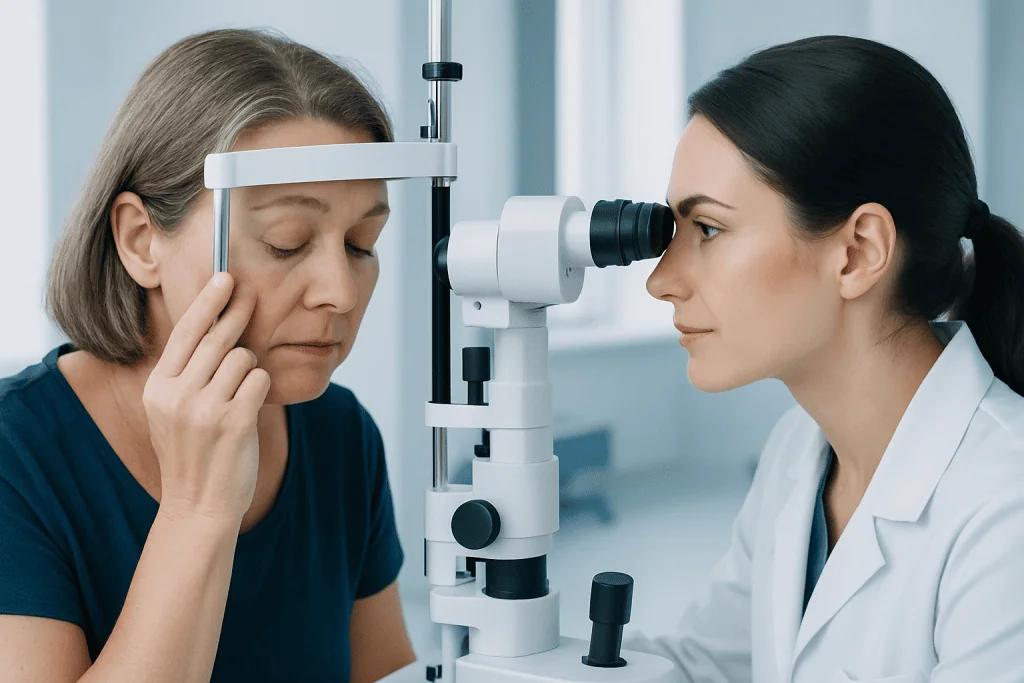
The exam usually includes a vision check and inspection of the eyelids, eyelashes, and eye surface. The doctor may gently turn the eyelid to look for a hidden eyelash or debris. They may also look for signs of a stye, blepharitis, swelling, or a tear film problem. If needed, a slit-lamp microscope allows a much closer view of the cornea and front of the eye.
Fluorescein dye may be used to highlight a scratch or damaged area on the cornea. Eye pressure testing may be done if there is concern about deeper causes of pain. These simple steps often identify whether the problem is dryness, infection, abrasion, inflammation, or another cause needing specific care.
If symptoms are ongoing or the diagnosis is uncertain, a person may be referred for specialist evaluation in ophthalmology care. The goal is not only to relieve pain, but also to protect the eye surface and preserve clear vision.
Treatment options and what may help
Treatment depends on the cause. Dry eye is often managed with preservative-free artificial tears, reducing screen-related eye strain, and addressing environmental triggers such as wind or dry indoor air. Warm compresses and good eyelid hygiene can help blepharitis and some styes. If a trapped eyelash or surface debris is the problem, removing the irritant can bring quick relief.
Doctors may prescribe medication when needed. Antibiotic ointment or drops may be used for bacterial eyelid infection or some corneal abrasions. Anti-inflammatory treatment may be recommended for certain inflammatory causes, but steroid eye drops should only be used under medical supervision because they can worsen some infections and raise eye pressure.
Contact lenses should usually be stopped until the eye feels normal and a clinician confirms it is safe to restart. A painful red eye in a contact lens wearer deserves special caution because corneal infection can develop quickly. Depending on the cause, care may involve advanced eye treatment or monitoring by specialists, though surgery is not needed for most simple cases of painful blinking.
If the pain is linked to an underlying problem such as recurrent eyelid disease or chronic dry eye, longer-term treatment may be needed. In complex cases, care from cornea-focused treatment may help evaluate persistent surface pain or recurrent abrasions. The right treatment is guided by the exact source of irritation, not by the symptom alone.
Self-care, prevention, and when to seek medical care
Simple steps can often ease mild symptoms and reduce repeat episodes. A person should avoid rubbing the eye, as this can worsen irritation or create a scratch. Artificial tears may help if the eye feels dry or gritty. Warm compresses can soothe a stye or eyelid inflammation. It is also wise to take breaks from screens, blink more often, and use protective eyewear in dusty or windy settings.
Good contact lens habits are especially important. Lenses should be used exactly as instructed, cleaned properly, and never worn longer than recommended. Eye makeup should be removed gently, and old cosmetics should be replaced regularly to lower the risk of irritation or infection.
Medical care should be sought promptly if pain does not improve within a day or two, if symptoms are getting worse, or if there is blurred vision, increasing redness, discharge, swelling, or sensitivity to light. Same-day assessment is advisable after an eye injury, chemical exposure, or if a contact lens wearer develops a painful red eye.
For international patients who need further evaluation, Acibadem International’s multidisciplinary specialists in JCI-accredited hospitals diagnose and treat eye conditions, including dry eye and other causes of ocular discomfort. Early assessment can help confirm whether the problem is a simple surface irritation or something that needs more specific treatment.
Frequently asked questions
Is eye pain when blinking usually serious?
Often, no. Many cases are caused by dryness, mild irritation, a stye, or eyelid inflammation. It becomes more concerning when it happens with blurred vision, severe redness, light sensitivity, discharge, or recent injury.
Can dry eye really make blinking hurt?
Yes. Dry eye can leave parts of the eye surface less protected, so the eyelid rubs over a sensitive area with each blink. This can cause burning, grittiness, watering, and discomfort that may be worse during screen use or in dry air.
Should contact lenses be removed if blinking hurts?
Yes, in most cases contact lenses should be removed until the cause is clear and symptoms improve. Pain, redness, or light sensitivity in a contact lens wearer should be taken seriously because corneal infection is possible.
What does a stye feel like when blinking?
A stye often causes tenderness at the eyelid edge and may feel like a sore bump that hurts more when the lid moves. The area may look red, swollen, and sometimes develop a small yellow point.
How do doctors check for a scratch on the eye?
Doctors usually examine the eye surface with a special light and may use fluorescein dye. This dye helps highlight a corneal abrasion so the damaged area can be seen more clearly.
Can I use over-the-counter eye drops for painful blinking?
Artificial tears may help if dryness or minor irritation is the cause. However, redness-relief drops are not always helpful, and steroid drops should never be used without medical advice. If pain is significant or persistent, an eye doctor should guide treatment.
References
- American Academy of Ophthalmology
- National Eye Institute
- American Optometric Association
- Mayo Clinic
- Merck Manual Professional Edition
This article is for general information only and is not a substitute for professional medical advice. Please consult a qualified doctor about your individual situation.
Explore treatments in Turkey — costs, top hospitals & a free quote
JCI-accredited · board-certified surgeons · reply within 24h
Add us as a Preferred Source to see more of our trusted health content across Google Search, AI Overviews and Discover.