Why Is My Eyeball Swollen? Causes, Explanations, and Next Steps

Many cases of eye swelling are linked to allergies, irritation, dryness, or mild infection. Pain, reduced vision, light sensitivity, fever, bulging, or trauma are important warning signs.
Key Takeaways
- Many cases of eye swelling are linked to allergies, irritation, dryness, or mild infection.
- Pain, reduced vision, light sensitivity, fever, bulging, or trauma are important warning signs.
- Doctors diagnose the cause by asking about symptoms, examining the eye closely, and checking vision and eye pressure when needed.
- Treatment depends on the cause and may include lubricating drops, allergy treatment, antibiotics, or urgent specialist care.
- Contact lens misuse and rubbing the eyes can worsen swelling and increase infection risk.
A swollen-looking eyeball is often caused by irritation, allergy, dryness, or an eye-surface problem rather than a dangerous emergency. However, swelling with pain, vision changes, discharge, fever, or recent injury should be assessed promptly by an eye doctor or emergency service.
Overview: what a swollen eyeball usually means
If a person wonders, “why is my eyeball swollen,” the answer is often reassuring: many cases are caused by common problems such as irritation, allergies, dryness, or inflammation on the eye’s surface. Sometimes the eye itself is not truly enlarged, but the white part of the eye, the clear covering over it, or the tissues around the eye become swollen and make the eye look puffy or raised.
That said, not every swollen eye should be ignored. If swelling comes with moderate to severe pain, blurred vision, double vision, marked redness, pus-like discharge, sensitivity to light, fever, a bulging appearance, or recent injury, medical assessment is important. These features can point to a deeper infection, pressure problem, inflammation inside the eye, or damage to the eye surface.
A helpful way to think about this symptom is to separate harmless-looking irritation from conditions that can threaten vision. Doctors usually begin by clarifying exactly what is swollen: the eyelid, the clear surface of the eye, the white part of the eye, or the deeper tissues behind the eye. This distinction often guides the next steps quickly and safely.
What can make the eyeball look swollen?
Several eye conditions can create the impression of a swollen eyeball. One common cause is chemosis, which is swelling of the thin clear membrane covering the white of the eye. Chemosis may happen with allergies, viral infections, irritation from smoke or dust, or rubbing the eyes. The eye may look puffy, watery, and mildly red.
Another possibility is conjunctivitis, often called pink eye. This can be viral, bacterial, or allergic. In these cases, the eye may appear red and swollen, and there may be itching, tearing, crusting, or discharge. Dry eye can also lead to inflammation and a swollen, irritated feeling, especially after screen use, air travel, or exposure to dry environments.
Contact lens wear can trigger surface swelling if lenses are overworn, not cleaned properly, or used while sleeping. A scratch on the cornea, a foreign body, or chemical irritation may cause sudden discomfort and the feeling that the eye is enlarged. In some people, a burst blood vessel under the eye surface causes dramatic redness but usually does not create true swelling or serious danger.
Less commonly, a swollen-looking eye can be related to deeper inflammation or pressure changes, such as uveitis, scleritis, keratitis, glaucoma, or infection in the tissues around the eye. If symptoms suggest one of these problems, early medical review matters. Some patients may need evaluation for conditions such as glaucoma or retinal detachment if vision symptoms are also present.
Symptoms that help identify the cause

The details of the symptoms often provide important clues. Itching strongly suggests allergy, especially when both eyes are affected and there is watering or a history of seasonal allergies. Burning, grittiness, and fluctuating blurry vision are more typical of dryness or irritation. Thick discharge and crusting, especially after sleep, can occur with bacterial conjunctivitis.
Pain is more concerning than simple discomfort. Sharp pain, a strong foreign-body sensation, or pain when blinking may happen with a scratch on the cornea or a trapped particle. Deep aching pain, pain with eye movement, or significant tenderness can suggest inflammation in deeper tissues and should not be self-treated without medical advice.
Changes in vision are especially important. Blurring that does not clear with blinking, new floaters, flashes of light, halos around lights, or a curtain-like shadow need urgent review. Redness concentrated around the colored part of the eye, sensitivity to light, or a visibly cloudy cornea may also point to a more serious condition than simple irritation.
- Common lower-risk features: mild redness, itching, watering, dryness, and temporary puffiness
- Warning signs: severe pain, reduced vision, light sensitivity, bulging, fever, worsening swelling, or recent trauma
- Special caution: contact lens use, recent eye surgery, immune suppression, or chemical exposure
Causes and risk factors
Allergies are among the most frequent reasons the eye surface becomes swollen. Pollen, pet dander, dust mites, cosmetics, and skin-care products around the eyes can all trigger inflammation. People with eczema, asthma, or hay fever may be more prone to recurrent episodes.
Infections are another major group of causes. Viral conjunctivitis often spreads after a cold and may affect one eye first, then the other. Bacterial infections can produce thicker discharge. Contact lens users have a higher risk of corneal infection, also called keratitis, especially if lenses are not handled hygienically or are worn overnight. Eye-surface infection may require prompt specialist treatment, and in selected cases a doctor may discuss cornea treatment options if there is significant corneal damage, although this is not the usual outcome.
Irritants and physical triggers are also common. Smoke, chlorinated water, wind, prolonged screen time, lack of sleep, rubbing the eyes, and accidental exposure to chemicals can all inflame the eye surface. A scratch from a fingernail, makeup brush, or contact lens edge can cause sudden redness and swelling.
Less common but important causes include autoimmune inflammation, thyroid eye disease, elevated eye pressure, and infections or inflammation behind the eye. These are more likely if there is pain with eye movement, protrusion of the eye, double vision, severe redness, or general illness. In rare cases, swelling around or behind the eye may need imaging and urgent treatment.
How doctors diagnose a swollen eye
When assessing a swollen-looking eye, a doctor first asks about timing, pain, itching, discharge, injury, contact lens use, chemical exposure, recent illness, and vision changes. These details help narrow the cause quickly. It also matters whether one eye or both eyes are affected and whether symptoms began suddenly or gradually.
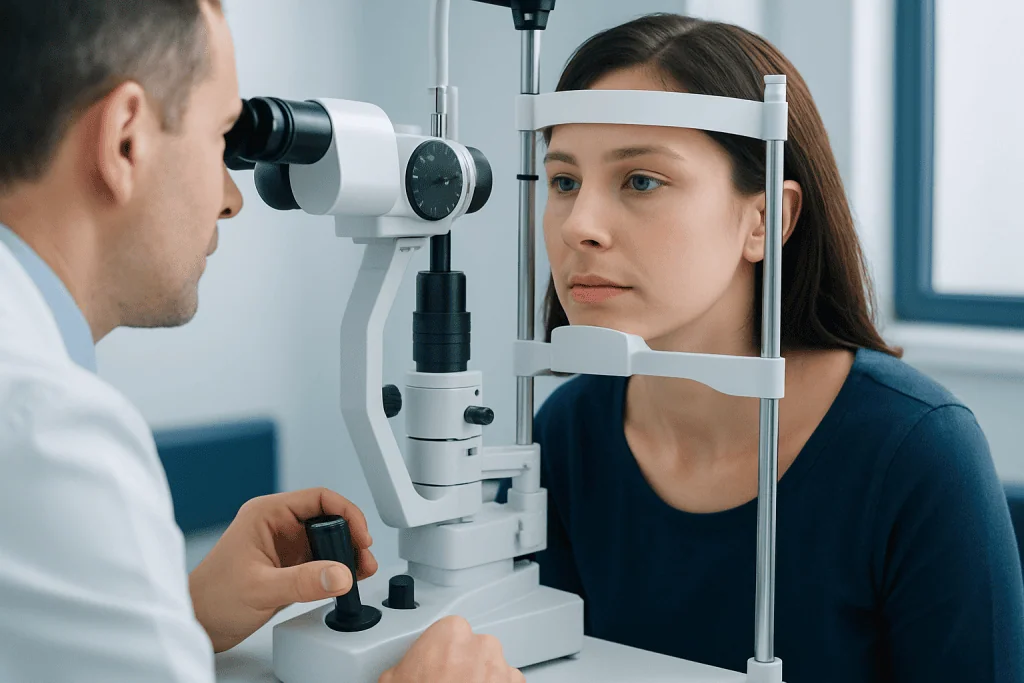
The examination usually includes checking visual acuity, looking at the eye with magnification, and examining the eyelids, conjunctiva, cornea, pupils, and eye movements. Fluorescein dye may be used to reveal scratches or ulcers on the cornea. In some cases, the doctor measures eye pressure, especially if there is pain, halos, headache, or nausea.
If a deeper problem is suspected, more testing may be needed. This can include a slit-lamp exam by an ophthalmologist, cultures for unusual infections, blood tests for inflammatory conditions, or imaging such as CT or MRI if there is concern about orbital infection, injury, or bulging of the eye. If there are structural or retinal concerns, specialist evaluation may include tests used in a comprehensive eye examination or a closer look at the back of the eye with services related to retinal examination.
Treatment options and what to do at home
Treatment depends on the cause, so it is best not to use old prescription eye drops without guidance. Mild irritation or dryness may improve with preservative-free artificial tears, a break from contact lenses, avoiding eye rubbing, and resting the eyes from screens. A cool compress can soothe itching and puffiness, especially when allergies are involved.
Allergic swelling may be treated with avoidance of triggers and doctor-recommended allergy eye drops or oral antihistamines. Viral conjunctivitis is usually managed with supportive care and hygiene measures, while bacterial infections may need antibiotic drops or ointment. Corneal scratches and contact lens-related problems should be assessed professionally because some can become infected quickly.
More serious causes need targeted treatment. Inflammation inside the eye may require prescription anti-inflammatory medicines under specialist supervision. Raised eye pressure, corneal infection, or infection around the eye can require urgent treatment to protect vision. Patients with significant or recurrent symptoms may be referred to an ophthalmologist for closer follow-up.
It is safest to avoid wearing contact lenses, sharing towels, using redness-relief drops repeatedly, or placing non-sterile substances in the eye. Home care is supportive, but it should not delay prompt evaluation if warning signs are present.
When to seek medical care
A person should seek prompt medical care if eye swelling is accompanied by vision loss, severe pain, light sensitivity, a cloudy-looking cornea, marked redness, fever, new double vision, or the sense that the eye is bulging forward. Immediate care is also important after chemical exposure, a penetrating injury, or a blow to the eye.
Same-day assessment is advisable for contact lens wearers with a red or painful swollen eye, because corneal infection can progress quickly. Medical review is also sensible if discharge is heavy, symptoms are getting worse rather than better, or the swelling does not improve within a day or two of simple supportive measures.
For milder symptoms, a doctor can still help if episodes keep returning, if over-the-counter lubricating drops are not enough, or if the person is unsure whether the problem is in the eyelid or the eye itself. Near the end of the care pathway, patients seeking coordinated evaluation may choose centers such as Acibadem International, where multidisciplinary specialists in JCI-accredited hospitals diagnose and treat eye conditions for international patients.
Prevention and practical next steps
Prevention starts with protecting the eye surface. Frequent hand washing, avoiding touching or rubbing the eyes, and following good contact lens hygiene can reduce the risk of irritation and infection. Eye makeup should be replaced regularly, and shared cosmetics should be avoided.
People who are prone to dryness may benefit from regular breaks during screen use, staying well hydrated, using a humidifier in dry environments, and discussing long-term dry eye management with a clinician. Those with allergies can lower exposure by keeping windows closed during high-pollen periods, washing the face after outdoor activity, and using treatments recommended by a healthcare professional.
If the cause is unclear, the next best step is usually to stop contact lens use, avoid eye rubbing, use lubricating drops, and arrange medical advice if there is any pain or vision change. In eye care, early assessment is often simple and can prevent a small problem from becoming a more serious one.
Frequently asked questions
Why does my eyeball look swollen but my eyelid does not?
This can happen when the eye’s surface tissues become inflamed or puffy, especially the conjunctiva, which covers the white of the eye. Allergies, irritation, dryness, or mild infection are common reasons. A doctor can confirm whether the swelling is on the eye surface or deeper inside the eye.
Can allergies make the eyeball itself look swollen?
Yes. Allergies often cause chemosis, a swelling of the membrane over the white of the eye, which can make the eyeball look puffy or waterlogged. Itching, tearing, and symptoms in both eyes make allergy more likely.
Is a swollen eyeball an emergency?
Not always. Many cases are mild and related to irritation or allergy, but it can be urgent if there is pain, reduced vision, light sensitivity, fever, bulging, or recent injury. Contact lens wearers with a painful red swollen eye should also seek prompt care.
Should contact lenses be removed if the eye is swollen?
Yes, contact lenses should usually be removed at once if the eye becomes red, painful, or swollen. They should not be worn again until the eye has recovered and a clinician says it is safe. Continuing to wear lenses can worsen irritation and increase the risk of infection.
What home remedies are safe for a swollen eye?
Safe supportive steps include a cool compress, preservative-free artificial tears, avoiding eye rubbing, and resting from contact lenses and screen strain. It is best to avoid leftover prescription drops or non-sterile home remedies. If symptoms are more than mild or do not improve, a medical review is the safest next step.
How long does eye swelling usually last?
It depends on the cause. Mild irritation or allergy may improve within hours to a couple of days, while infections or inflammatory conditions can last longer and may worsen without treatment. Persistent, worsening, or painful swelling should be checked by a doctor.
References
- American Academy of Ophthalmology
- National Eye Institute
- Mayo Clinic
- NHS
- Merck Manual Consumer Version
This article is for general information only and is not a substitute for professional medical advice. Please consult a qualified doctor about your individual situation.
Explore treatments in Turkey — costs, top hospitals & a free quote
JCI-accredited · board-certified surgeons · reply within 24h
Add us as a Preferred Source to see more of our trusted health content across Google Search, AI Overviews and Discover.

More from the Health Library



Related Specialists

Dr. Cevat Rifat Cündübey
Gynecology & Obstetrics
Assoc. Prof. Dr. Şevket Tolga Tombul
Urology
Dt. İlkay Toptan Köne
Dentistry
Dr. Alper Albayrak
Family Medicine