Yag Laser: An Evidence-Based Guide for Patients

YAG laser refers to a family of medical lasers, including Nd:YAG, used in different specialties. In eye care, YAG laser is commonly used after cataract surgery to treat cloudy vision caused by posterior capsule opacification.
Key Takeaways
- YAG laser refers to a family of medical lasers, including Nd:YAG, used in different specialties.
- In eye care, YAG laser is commonly used after cataract surgery to treat cloudy vision caused by posterior capsule opacification.
- YAG laser may also be used in dermatology for certain pigmented lesions, vascular concerns, hair reduction, and tattoo removal, depending on the wavelength and indication.
- Most YAG laser procedures are outpatient treatments with little downtime, but risks and aftercare vary by body area and treatment goal.
- The best candidate, expected results, and safety profile should always be discussed with a qualified specialist.
YAG laser is a precise medical laser used in several specialties, most commonly in eye care, skin treatments, and some dental procedures. For patients, the key question is not only what YAG laser is, but when it is appropriate, what benefits it offers, and what risks and recovery to expect.
Overview: what YAG laser means for patients
YAG laser is a type of medical laser technology used to treat selected conditions with controlled, targeted energy. The term usually refers to a yttrium aluminum garnet laser, most often the Nd:YAG laser, which can be adapted for different medical purposes depending on how the energy is delivered. In practical terms, this means the same broad technology may be used in eye care, dermatology, and some dental or surgical settings.
For many patients, YAG laser is best known as an eye procedure performed after cataract surgery when vision becomes cloudy again. In that setting, the laser creates a small opening in a thin membrane behind the artificial lens to let light pass through clearly. This treatment is often called YAG laser capsulotomy and is a well-established outpatient procedure.
Outside eye care, YAG laser may be used on the skin for carefully selected concerns such as pigmentation, blood vessels, unwanted hair, or tattoo ink. Whether it is the right option depends on the exact condition, skin type, treatment goals, and the specialist’s assessment. YAG laser is a tool rather than a single treatment, so understanding the purpose of the procedure is essential before deciding.
How YAG laser works and where it is used
Lasers work by producing focused light energy at a specific wavelength. That energy is absorbed by a target in the body, such as pigment, blood vessels, or tissue, while trying to limit effects on surrounding structures. With YAG systems, the wavelength and pulse settings can be adjusted for the intended use. This is why one form of YAG laser can help improve cloudy vision after cataract surgery, while another may be used for skin treatment.
In ophthalmology, YAG laser is commonly used for posterior capsule opacification, a frequent cause of blurred vision months or years after cataract surgery. It can also be used in selected glaucoma-related procedures. Patients exploring laser-based eye care may also come across laser eye surgery, although that is a different category of treatment with different goals.
In dermatology, Nd:YAG laser may be chosen because it can reach deeper structures and can be suitable for some darker skin tones when used appropriately by experienced clinicians. It may be considered for concerns such as superficial veins, certain pigmented lesions, or hair reduction. In some cases, related skin concerns are evaluated alongside skin cancer screening to make sure a lesion is appropriate for laser treatment rather than biopsy or another form of care.
Some surgical and dental applications also exist, but these are more specialized. The exact benefits, limitations, and safety considerations depend on the tissue being treated. Patients should therefore ask not only whether a YAG laser is being used, but why that particular laser was chosen over other options.
Common reasons a doctor may recommend YAG laser

The most common eye-related reason for YAG laser is posterior capsule opacification, sometimes described as a secondary cataract, although it is not a new cataract. After cataract surgery, the thin capsule that supports the artificial lens can become cloudy over time, causing blurred vision, glare, and trouble reading or driving at night. A YAG laser capsulotomy can often restore clearer vision by opening the cloudy part of that capsule.
In skin care, a specialist may recommend YAG laser when a laser-based approach offers precision and relatively limited damage to surrounding tissue. Depending on the device and settings, it may be used for vascular lesions, some pigmented changes, hair reduction, and tattoo removal. Patients with chronic or inflammatory skin concerns may also need evaluation for underlying psoriasis or other conditions before cosmetic treatment is considered.
Doctors may also discuss YAG laser as one of several options rather than the only option. For example, a patient with a skin lesion may be better served by monitoring, biopsy, topical treatment, or another laser platform. A patient with cloudy vision may need an exam first to confirm that the problem is indeed posterior capsule opacification and not another eye condition.
- Blurred vision after previous cataract surgery
- Glare or halos caused by a cloudy posterior capsule
- Selected vascular or pigmented skin concerns
- Some cases of laser hair reduction or tattoo removal
- Specialized dental or surgical uses in selected centers
What to expect before, during, and after a YAG laser procedure
Preparation depends on the treatment area. Before an eye procedure, the ophthalmologist usually performs an eye exam, checks vision, and confirms that the symptoms are caused by posterior capsule opacification rather than another problem such as retinal disease or glaucoma. Eye drops may be used to dilate the pupil and sometimes to control eye pressure. The procedure itself is usually done in an outpatient setting and often takes only a few minutes.
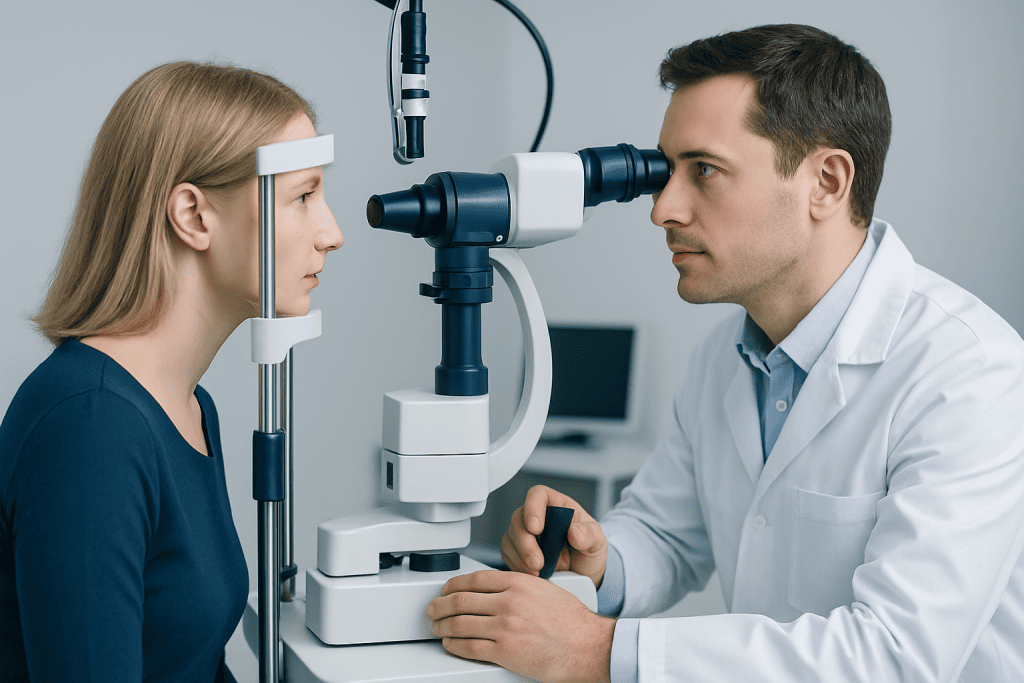
During a YAG laser capsulotomy, the patient sits at a laser machine similar to the one used for an eye examination. The doctor focuses the laser behind the artificial lens and creates a small opening in the cloudy capsule. The treatment is generally painless, although some patients notice bright flashes of light and mild temporary discomfort.
For skin treatment, the process varies more. The area may be cleansed, photographed, and sometimes numbed or cooled before treatment. Patients may feel snapping or warming sensations during the laser pulses. Afterward, mild redness, swelling, or temporary darkening of pigment can occur, and several sessions may be needed depending on the indication.
Recovery after eye treatment is often quick, with many people returning to normal activities soon after, though vision may be temporarily blurry from drops or floaters. Recovery after skin treatment depends on intensity and treatment type. Following aftercare instructions carefully is important to reduce irritation, pigment changes, and sun-related complications.
Benefits, limitations, and possible risks
The main benefit of YAG laser is precision. When used for the right indication, it allows specialists to treat a specific target while limiting effects on nearby tissues. In eye care, YAG capsulotomy often improves vision rapidly when posterior capsule opacification is the cause. In dermatology, YAG systems can be useful for selected patients because of their depth of penetration and versatility across several treatment goals.
At the same time, YAG laser is not appropriate for every patient or every diagnosis. The result depends on the underlying problem, the device settings, the clinician’s experience, and the body’s response. Some patients may need repeat sessions, and some may not achieve the degree of improvement they hoped for, especially if the problem is complex or has more than one cause.
Risks vary by procedure. After an eye YAG procedure, possible complications can include temporary floaters, increased eye pressure, inflammation, lens pitting, or rarely retinal problems. After skin treatment, risks may include redness, swelling, blistering, changes in skin color, scarring, or incomplete response. These complications are not common in experienced hands, but they are important to discuss in advance.
Good communication before treatment helps set realistic expectations. Patients should tell their doctor about eye disease, prior retinal problems, skin sensitivity, medication use, recent tanning, infections, pregnancy status when relevant, and any history of abnormal scarring. That information helps the specialist weigh benefits against risks and tailor treatment safely.
Who may be a good candidate and who may need another approach
A good candidate for YAG laser is someone with a clearly defined problem that this technology is known to treat. In eye care, that usually means symptoms and examination findings consistent with posterior capsule opacification after cataract surgery. In dermatology, it means a lesion or concern that has been properly assessed and judged suitable for laser treatment based on color, depth, location, and skin type.
Some patients need caution or a different treatment plan. For example, a person with active eye inflammation, retinal risk factors, or uncontrolled glaucoma may need closer evaluation before eye laser treatment. In skin care, active infection, certain photosensitive disorders, recent sun exposure, or a suspicious pigmented lesion may mean treatment should be postponed or replaced with another option.
Diagnosis matters because symptoms can overlap. Cloudy vision may have causes other than capsule opacification, and a dark skin spot may be benign, inflammatory, or occasionally more concerning. For this reason, a specialist may recommend additional testing or referral before treatment. When broader assessment or procedures are needed, patients may also be guided toward services such as cataract surgery follow-up or specialist dermatology evaluation.
Self-care, recovery tips, and when to seek medical care
After any YAG laser procedure, following the specialist’s instructions is the most important part of recovery. For eye treatment, this may include prescribed drops, avoiding rubbing the eye, and attending follow-up if advised. For skin treatment, aftercare commonly includes gentle cleansing, moisturization when recommended, avoiding picking or scrubbing, and consistent sun protection to reduce the chance of irritation or pigment changes.
Patients should also protect the treatment area from unnecessary stress. After skin laser sessions, this often means avoiding tanning, excessive heat, and harsh skincare products until the skin settles. It is helpful to ask when makeup, exercise, swimming, or work can be resumed, because the answer depends on the type and intensity of treatment.
Medical review is advisable if symptoms are stronger than expected or do not improve as discussed. After an eye YAG procedure, urgent assessment is needed for sudden vision loss, increasing eye pain, flashing lights, a curtain-like shadow, or a marked rise in floaters. After skin treatment, patients should contact their doctor for severe pain, spreading redness, significant blistering, signs of infection, or unexpected skin color changes that persist.
For international patients who need evaluation or treatment planning, Acibadem International’s multidisciplinary specialists and JCI-accredited hospitals diagnose and treat a wide range of eye and skin conditions using evidence-based approaches.
Frequently asked questions
What is the difference between YAG laser and Nd:YAG laser?
YAG laser is a broad term referring to a laser that uses a yttrium aluminum garnet crystal. Nd:YAG means the crystal is doped with neodymium, which gives it properties useful in many medical treatments. In everyday patient information, the two terms are often used interchangeably, but the exact system and settings matter.
Is YAG laser after cataract surgery painful?
A YAG laser capsulotomy is usually not painful. Most patients notice bright lights and may feel mild pressure or brief discomfort, but the procedure is generally quick and well tolerated. The doctor may use eye drops before and after treatment.
How long does it take to recover from a YAG laser procedure?
Recovery depends on the body area being treated. After eye YAG treatment, many people return to normal activities quickly, although temporary blur or floaters can occur. Skin recovery varies more and may range from mild redness for a short period to several days of visible healing, depending on the treatment intensity.
Can YAG laser treat all skin problems?
No. YAG laser can help with selected skin concerns, but it is not the best option for every lesion, scar, pigment change, or vascular condition. A dermatologist should first confirm the diagnosis and decide whether laser treatment is appropriate and safe.
Are the results of YAG laser permanent?
Some results can be long lasting, but permanence depends on the reason for treatment. After YAG laser capsulotomy, the cloudy capsule problem usually does not return in the same way. In skin care, results may be partial, may require multiple sessions, and can be influenced by sun exposure, hormones, aging, and the nature of the original condition.
Who should avoid YAG laser treatment?
People with certain active infections, uncontrolled eye or skin inflammation, suspicious untreated lesions, or specific medical risk factors may need to avoid or delay YAG laser treatment. The decision depends on the treatment area and the person's medical history. A qualified specialist can explain whether another approach would be safer.
This article is for general information only and is not a substitute for professional medical advice. Please consult a qualified doctor about your individual situation.
Explore treatments in Turkey — costs, top hospitals & a free quote
JCI-accredited · board-certified surgeons · reply within 24h
Add us as a Preferred Source to see more of our trusted health content across Google Search, AI Overviews and Discover.

More from the Health Library

Tesamorelin: An Evidence-Based Guide for Patients

Mark Cuban Pharmacy: A Complete Medical Overview

Emotional Abuse: An Evidence-Based Guide for Patients

Underarm Ingrown: An Evidence-Based Guide for Patients

Baking soda and foot odor: A Complete Medical Guide for Patients