Yellow Spot in Skin: What Patients Need to Know

A yellow spot in skin is a symptom, not a diagnosis, and the cause depends on its appearance and location. Common explanations include healing bruises, cholesterol deposits called xanthomas, and benign skin changes.
Key Takeaways
- A yellow spot in skin is a symptom, not a diagnosis, and the cause depends on its appearance and location.
- Common explanations include healing bruises, cholesterol deposits called xanthomas, and benign skin changes.
- Yellow spots around the eyes or on tendons may be linked to high cholesterol and should be evaluated.
- Medical assessment may include a skin exam, blood tests, and sometimes a biopsy if the cause is unclear.
- Prompt review is important if the spot grows, becomes painful, bleeds, or appears with jaundice or unexplained weight loss.
A yellow spot in skin can have several causes, ranging from harmless pigment or healing changes to cholesterol-related deposits and, less commonly, signs of an underlying health problem. The best next step is to look at the spot’s color, texture, location, and whether it changes over time, then seek medical advice if it persists or comes with other symptoms.
Overview: what a yellow spot in skin can mean
A yellow spot in skin is not one single condition. It is a descriptive term for an area of skin that looks more yellow than the surrounding skin, and this can happen for different reasons. In many people, the explanation is minor, such as a bruise changing color as it heals, a localized buildup of skin oils or keratin, or a benign deposit under the skin.
In other cases, a yellow spot may point to a medical issue that deserves attention. Cholesterol deposits called xanthomas can create yellow bumps or plaques, especially around the eyes, elbows, knees, hands, or tendons. More generalized yellowing of the skin may suggest jaundice, which is different from one isolated spot and is linked to changes in bilirubin levels.
Because the possible causes are varied, it helps to assess the spot carefully rather than assume the worst. Doctors usually consider the spot’s size, texture, location, number, and how long it has been present. They also ask about personal and family history, including cholesterol disorders, liver disease, diabetes, and skin conditions.
How to recognize the different types of yellow skin spots
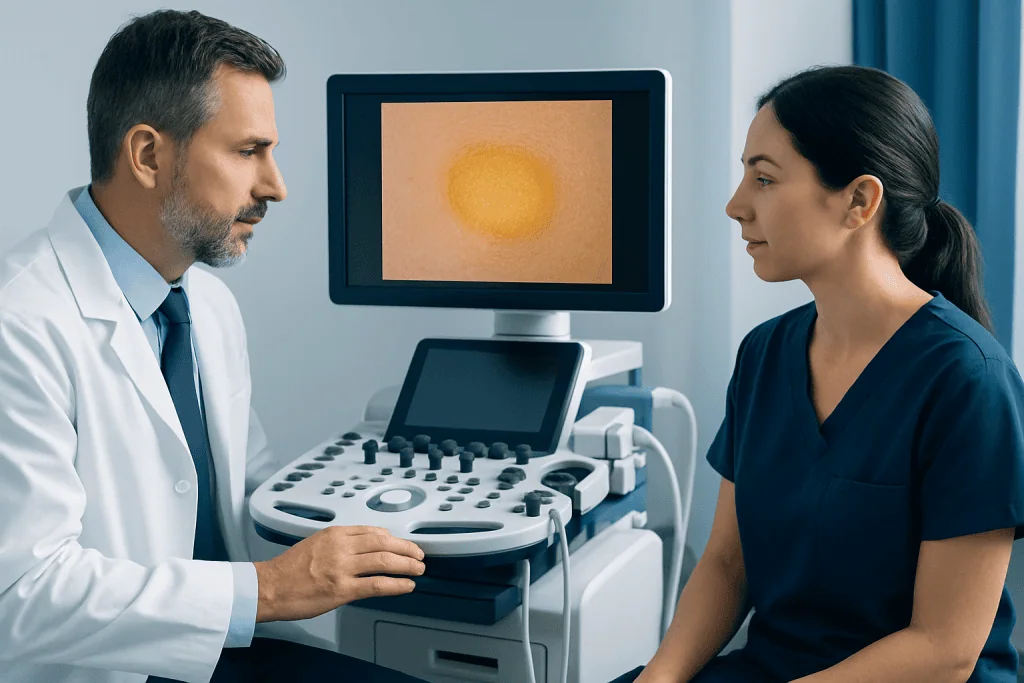
Not all yellow spots look the same. Some are flat patches, while others are raised, waxy, firm, or slightly soft to the touch. A yellow mark that appears after minor trauma and then gradually fades is more suggestive of a healing bruise. A persistent yellow plaque on the eyelids may be more typical of xanthelasma, a form of cholesterol deposit.
Texture often gives useful clues. A smooth, flat yellow patch may differ from a tiny cyst, a thickened scaly area, or a cluster of small dome-shaped bumps. The location matters as well. Yellow lesions around the eyes commonly raise suspicion for xanthelasma, while bumps over joints or tendons may suggest other forms of xanthoma.
It is also important to notice whether the change is limited to one area or part of a wider pattern. Diffuse yellowing of the skin, especially if the whites of the eyes also look yellow, is not the same as an isolated spot and may need evaluation for liver or bile duct problems such as liver disease. A doctor can help distinguish a local skin issue from a whole-body condition.
Common causes and risk factors

One common cause of a yellow spot in skin is a healing bruise. Bruises often change from red or purple to green and yellow before they disappear. This color shift happens as blood under the skin breaks down and is usually harmless if there was a known injury and the spot fades over days to weeks.
Another important cause is xanthoma, a term for fatty deposits that collect in the skin or tendons. Xanthomas may be linked to high cholesterol, high triglycerides, diabetes, thyroid disease, liver disease, certain medications, or inherited lipid disorders. Around the eyelids, these deposits are often called xanthelasma and may be associated with abnormal blood fats, though some people have normal cholesterol levels.
Other possible causes include benign cysts, milia, sebaceous changes, post-inflammatory color changes after a rash, and less commonly localized skin conditions that alter pigment or texture. People with metabolic conditions may also have related disorders that need assessment, including diabetes. Risk factors that make medical review more important include a personal or family history of early heart disease, high cholesterol, jaundice, or multiple new lesions appearing over a short period.
- Healing bruises after minor trauma
- Xanthelasma and other xanthomas
- Benign cysts or keratin-filled bumps
- Post-inflammatory skin color change
- Metabolic or liver-related causes
When a yellow spot may suggest an underlying health issue
Some yellow skin spots are mainly cosmetic, but others can act as a clue to a broader medical problem. For example, xanthomas may reflect elevated cholesterol or triglycerides. When these blood fat levels are significantly abnormal, the goal is not only to address the skin lesion but also to reduce long-term cardiovascular risk.
A different concern is generalized yellow discoloration, especially when it involves the eyes, dark urine, pale stools, itching, or abdominal discomfort. That pattern may reflect jaundice rather than a simple skin spot. Jaundice can be related to liver, gallbladder, pancreatic, or blood disorders and should be assessed promptly.
Doctors may also consider whether a yellow spot is part of another skin problem that can mimic more common causes. If there is uncertainty, referral to specialists in dermatology care or to internal medicine may help clarify the diagnosis and determine whether blood tests or imaging are needed.
How doctors diagnose a yellow spot in skin
Diagnosis begins with a clinical examination. A doctor usually asks when the spot first appeared, whether it has changed, and if there is itching, pain, bleeding, scaling, or swelling. They may ask about medicines, recent injuries, cholesterol results, liver problems, alcohol use, diabetes, and family history.
The appearance of the spot often guides the next steps. If the doctor suspects xanthoma, blood tests may be recommended to measure cholesterol, triglycerides, blood sugar, liver function, and sometimes thyroid function. These tests help identify underlying conditions that may contribute to the skin change.
If the diagnosis is not clear from the exam, additional testing may be needed. This can include dermatoscopic assessment, imaging for deeper lumps, or a skin biopsy to examine a small tissue sample under the microscope. If systemic disease is suspected, evaluation may also involve a medical check-up or more focused investigations.
Treatment options and what to expect
Treatment depends entirely on the cause. A healing bruise usually does not need medical treatment and fades on its own. Benign superficial lesions may only need observation if they are not bothersome and there are no warning signs.
When the yellow spot is a xanthoma or xanthelasma, treatment has two parts. First, doctors look for and manage any underlying lipid disorder, diabetes, thyroid disease, or liver problem. Second, if the lesion is cosmetically bothersome or symptomatic, removal or reduction may be considered through procedures selected by a skin specialist.
Possible options can include prescription treatment for blood lipid abnormalities, minor procedural removal, or targeted care depending on the lesion type. For people whose yellow spots are linked to broader health issues, treatment may involve cardiovascular risk assessment or other specialist input. Near the end of the care pathway, patients who travel for treatment may wish to know that Acibadem International’s multidisciplinary specialists and JCI-accredited hospitals diagnose and treat skin and metabolic conditions for international patients.
Self-care and ways to reduce future risk
Self-care starts with watching the spot rather than picking or trying home procedures. Squeezing, scraping, or using unverified chemical products can irritate the skin, lead to infection, or leave scarring. Taking a photograph every few weeks can help track whether the area is changing in size, color, or shape.
If cholesterol-related deposits are suspected or confirmed, lifestyle measures may support overall treatment. These include a balanced eating pattern, regular physical activity, avoiding tobacco, and following medical advice for cholesterol, blood pressure, or diabetes. These steps may not remove an existing lesion, but they can be important for general health.
Basic skin care also helps. Gentle cleansing, sun protection, and avoiding repeated friction on the area may reduce irritation. If a person develops frequent unexplained bruises, generalized yellowing, or multiple new lesions, self-care is not enough and a medical review is the safer choice.
When to seek medical care
A person should seek medical care if a yellow spot in skin does not go away, keeps enlarging, becomes painful, or starts to bleed or ulcerate. Review is also important if several new yellow spots appear, especially around the eyes, on the hands, elbows, knees, or tendons, because this can sometimes be linked to cholesterol disorders.
Prompt assessment is advisable when the skin change occurs along with yellow eyes, dark urine, pale stools, itching, fever, abdominal pain, unexplained weight loss, or unusual fatigue. These symptoms may suggest jaundice or another internal condition rather than a simple skin lesion.
Even when the spot seems minor, a clinician can help distinguish harmless causes from those needing follow-up. If there is any doubt, it is reasonable to arrange a medical evaluation, and in selected cases a specialist in minor surgical assessment or dermatology may be involved depending on the lesion’s features.
Frequently asked questions
Is a yellow spot in skin always a sign of high cholesterol?
No. A yellow spot in skin can happen for several reasons, including a healing bruise, benign skin changes, or cholesterol deposits called xanthomas. High cholesterol is one possible cause, especially if the spot is persistent and located around the eyes or over tendons.
What is the difference between a yellow skin spot and jaundice?
A yellow skin spot is usually a localized area, while jaundice typically causes more widespread yellowing and often affects the whites of the eyes as well. Jaundice is related to bilirubin buildup and may point to liver, bile duct, pancreatic, or blood-related problems.
Can a healing bruise look yellow?
Yes. Bruises often turn yellow or yellow-green as they heal, which is a normal part of blood breakdown under the skin. If the mark follows an injury and gradually fades, it is usually less concerning than a persistent unexplained lesion.
Do yellow spots on the eyelids need treatment?
Yellow eyelid plaques may be xanthelasma, which is usually benign but can be associated with abnormal cholesterol or triglyceride levels. A doctor may suggest blood tests and discuss whether treatment is needed for cosmetic reasons or underlying metabolic risk.
How is the cause of a yellow spot diagnosed?
Doctors usually start with a skin examination and questions about symptoms, timing, family history, and medical conditions. Depending on the appearance, they may recommend blood tests, a specialist assessment, or occasionally a skin biopsy.
Should a yellow skin spot be removed at home?
No. Home removal attempts can irritate the skin, cause infection, and make diagnosis harder. It is safer to let a qualified doctor examine the lesion first, especially if it is new, changing, or located near the eyes.
This article is for general information only and is not a substitute for professional medical advice. Please consult a qualified doctor about your individual situation.
Explore treatments in Turkey — costs, top hospitals & a free quote
JCI-accredited · board-certified surgeons · reply within 24h
Add us as a Preferred Source to see more of our trusted health content across Google Search, AI Overviews and Discover.
Check your numbers in seconds
BMI, calories, due date, blood pressure and 30+ more clinical calculators — free, instant, doctor-reviewed ranges.

More from the Health Library

Hydrocortisone Cream for Newborn: An Evidence-Based Guide for Patients

OCD: What Patients Need to Know

Radiation Poisoning — Explained by Medical Evidence, Not Myths

Aripiprazole: A Complete Medical Overview

Dyskinesia Definition: Understanding Involuntary Movements