Yergason’s Test: What Patients Need to Know

Yergason's test helps assess the long head of the biceps tendon and the groove where it sits. A positive test may cause pain or a snapping sensation in the front of the shoulder during resisted movement.
Key Takeaways
- Yergason's test helps assess the long head of the biceps tendon and the groove where it sits.
- A positive test may cause pain or a snapping sensation in the front of the shoulder during resisted movement.
- The test is only one part of a full shoulder evaluation and is often combined with other physical exam maneuvers.
- Ultrasound or MRI may be used if symptoms persist or the diagnosis is unclear.
- Treatment depends on the underlying cause and may include rest, physiotherapy, medication, or, less often, surgery.
Yergason's test is a simple physical exam maneuver clinicians use to assess the biceps tendon at the front of the shoulder, especially when a person has pain, clicking, or weakness with arm movement. It does not confirm a diagnosis on its own, but it can help guide whether further examination or imaging is needed.
What is Yergason's test?
Yergason’s test is a clinical shoulder examination used to evaluate pain around the biceps tendon, particularly the long head of the biceps tendon that runs through the front of the shoulder. A clinician performs the test by asking the patient to bend the elbow to about 90 degrees and then try to rotate the forearm outward while the examiner applies resistance. At the same time, the clinician observes whether this movement causes pain, tenderness, or a snapping feeling over the bicipital groove.
For patients, the most important point is that Yergason’s test is not a treatment and not a scan. It is a hands-on exam maneuver used during an office visit to help identify whether shoulder symptoms may be related to biceps tendinopathy, inflammation, tendon instability, or nearby shoulder problems. Because several structures in the shoulder can cause similar symptoms, the test is best understood as one clue rather than a final answer.
This matters because front shoulder pain can come from more than one source. In some people, the issue is irritation of the biceps tendon itself. In others, the pain may be linked to rotator cuff problems, labral injury, or shoulder impingement. A careful exam helps the doctor decide whether the findings fit a condition such as shoulder impingement syndrome or another cause of shoulder pain.
Why doctors use this test
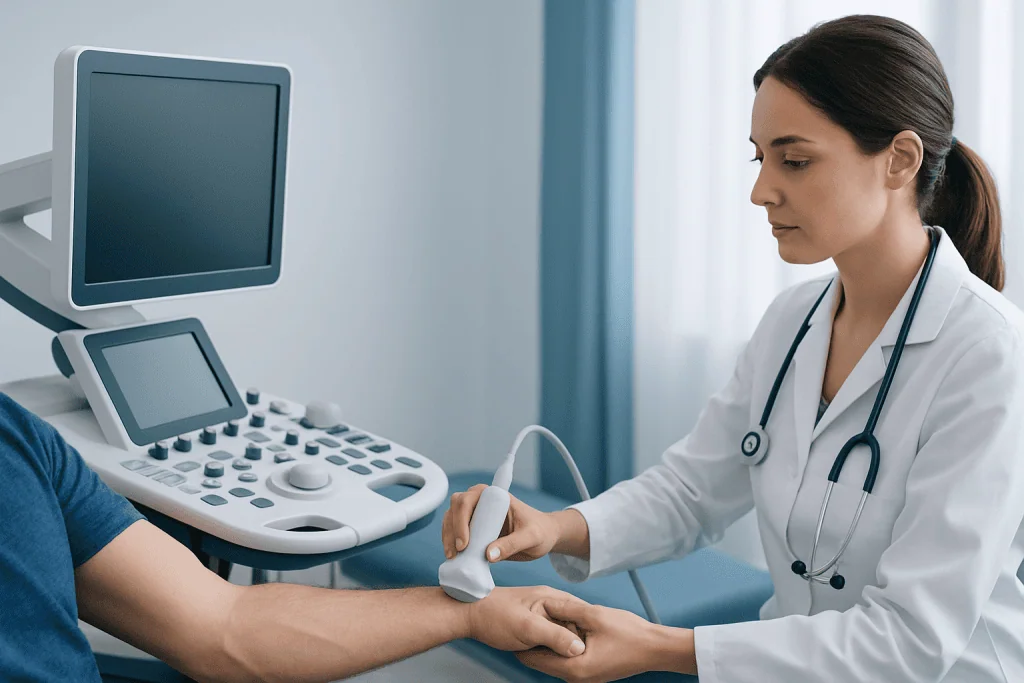
Doctors use Yergason’s test when a patient reports pain at the front of the shoulder, discomfort when lifting or carrying, weakness with turning the arm, or a catching or clicking sensation. The movement in the test places controlled stress on the biceps tendon and the tissues that help hold it in place. If those tissues are inflamed or unstable, symptoms may be reproduced during the exam.
The test can also help narrow the possible cause of symptoms. Pain during resisted forearm supination or external rotation may suggest irritation of the long head of the biceps tendon. A palpable snap or shift in the tendon can raise concern for tendon subluxation, meaning the tendon is slipping out of its normal groove. However, because shoulder anatomy is complex, doctors generally compare the results with the patient’s history, tenderness on exam, range of motion, strength testing, and other maneuvers.
In practical terms, Yergason’s test is useful because it is quick, inexpensive, and can be done during a routine physical examination. It may help the clinician decide whether conservative treatment is reasonable first or whether additional workup is needed. Patients should know that a normal test does not always rule out shoulder disease, and a positive test does not automatically mean surgery will be necessary.
What a positive Yergason's test may mean

A positive Yergason’s test usually means the movement has reproduced pain or an abnormal sensation at the front of the shoulder. Most often, this suggests irritation involving the long head of the biceps tendon or the structures that guide and stabilize it. Tenderness over the bicipital groove is another finding that may support this possibility.
Possible conditions associated with a positive test include biceps tendinitis or tendinopathy, tenosynovitis, partial tendon injury, or instability of the biceps tendon. In some cases, shoulder problems nearby may also contribute, including rotator cuff disease, labral injury, or impingement. This is why the test is interpreted in context rather than in isolation.
Patients are often concerned that a positive test means there is a tear. In reality, it does not provide that level of certainty. A positive result simply tells the clinician that the movement stresses a painful structure. If symptoms and exam findings point to deeper tissue damage, imaging such as ultrasound or MRI may be considered to look more closely at the tendon and surrounding shoulder anatomy.
Some people with persistent shoulder symptoms may eventually need specialist assessment or procedures such as shoulder arthroscopy if non-surgical treatment does not help and imaging identifies a repairable problem. Even then, the decision is based on the full clinical picture, not on Yergason’s test alone.
How the shoulder is evaluated beyond one test
A thorough shoulder assessment usually begins with a medical history. The doctor may ask when the pain started, whether there was an injury, what movements make it worse, whether there is night pain, and whether the shoulder feels weak, stiff, or unstable. Sports, repetitive work overhead, and previous shoulder problems can all provide useful clues.
The physical exam often includes inspection, palpation, range-of-motion testing, and strength testing. Yergason’s test may be combined with Speed’s test, impingement signs, rotator cuff maneuvers, and tests for instability or labral injury. Looking at the neck and upper back may also be important because pain can sometimes be referred from other areas.
If the diagnosis remains uncertain, imaging may help. Ultrasound can be useful for assessing the biceps tendon in motion and may show inflammation, fluid, or tendon displacement. MRI offers a more detailed view of soft tissues, including the labrum and rotator cuff, and is often considered when symptoms are ongoing or surgery is being discussed.
When shoulder pain is complex or related to more than one structure, a patient may benefit from a broader orthopedic evaluation. Depending on findings, treatment pathways may overlap with care used for rotator cuff tear and other common shoulder conditions.
Treatment after an abnormal test result
Treatment depends on the diagnosis behind the test result rather than the test itself. For many patients, first-line care is conservative. This may include temporary activity modification, avoiding painful overhead or repetitive movements, using cold packs after activity, and taking doctor-recommended pain-relieving or anti-inflammatory medication when appropriate.
Physiotherapy is often a central part of treatment. Exercises may focus on improving shoulder mechanics, strengthening the rotator cuff and shoulder blade muscles, and gently loading the biceps tendon as symptoms allow. Posture, work setup, and sports technique may also be addressed to reduce repeated strain. Many patients improve gradually with a structured rehabilitation plan.
If pain continues despite conservative care, the doctor may consider additional options. These can include a more targeted imaging workup, referral to an orthopedic specialist, or selected procedures for tendon or joint-related problems. In some situations, treatment may overlap with physical therapy and rehabilitation programs designed to restore motion, function, and comfort.
Surgery is usually reserved for specific cases, such as significant tendon instability, associated rotator cuff or labral injury, or symptoms that do not improve with non-surgical care. Procedures vary depending on the cause and may involve tendon stabilization, tenodesis, or treatment of other shoulder pathology found on imaging or arthroscopy.
Self-care and prevention
Not every case of front shoulder pain can be prevented, but shoulder-friendly habits can lower strain on the tendon and surrounding tissues. Gradual training, proper warm-up, and avoiding sudden increases in lifting, throwing, or repetitive overhead activity are sensible steps. Paying attention to technique during exercise and manual work can also reduce stress on the front of the shoulder.
Strength and flexibility play a role as well. Balanced conditioning of the shoulder blade muscles, rotator cuff, chest, and upper back may improve mechanics and reduce overload on the biceps tendon. People who spend long hours at a desk may benefit from posture breaks and workstation adjustments to avoid prolonged shoulder rounding and neck tension.
When symptoms appear, early rest and activity modification may help prevent worsening. Continuing a painful movement pattern for too long can prolong recovery. If a doctor or physiotherapist has recommended exercises, doing them consistently is often more helpful than returning too quickly to high-demand activity.
For patients who need specialized support, treatment plans may sometimes include coordinated orthopedic assessment and rehabilitation. Acibadem International’s multidisciplinary specialists in JCI-accredited hospitals evaluate and treat shoulder conditions for international patients when further diagnosis or management is needed.
When to seek medical care
Medical assessment is appropriate if shoulder pain lasts more than a few days, keeps returning, or limits normal activity. A patient should also seek care if there is weakness, reduced range of motion, visible swelling, repeated clicking or snapping, or pain that interferes with sleep. These symptoms do not always mean a serious injury, but they do deserve a proper evaluation.
Urgent care is more important after a fall, sudden injury, or lifting event that causes immediate severe pain, major weakness, deformity, or inability to use the arm. Numbness, fever, redness, or rapidly increasing swelling should also be assessed promptly because they may point to a different or more urgent problem.
If the source of pain is not clear, a doctor may recommend a full shoulder examination and, if needed, imaging such as MRI to clarify whether the biceps tendon, rotator cuff, labrum, or another structure is involved. Early assessment can help guide the right treatment and may shorten recovery time.
Frequently asked questions
Is Yergason's test painful?
It can be uncomfortable if the biceps tendon or nearby shoulder tissues are irritated. The test is brief, and the examiner usually stops if pain is significant. Mild temporary discomfort during the maneuver does not always indicate a serious injury.
Can Yergason's test diagnose a torn tendon?
No. Yergason's test cannot confirm a tear by itself. It may suggest that the biceps tendon or surrounding structures are involved, but imaging and a full examination are often needed for a clear diagnosis.
What does a negative Yergason's test mean?
A negative test means the maneuver did not reproduce the expected pain or tendon movement. That may make biceps tendon involvement less likely, but it does not completely rule it out. Other shoulder conditions can still be present.
How is Yergason's test different from Speed's test?
Both tests are used during shoulder examination and can stress the long head of the biceps tendon. Speed's test typically focuses more on pain with resisted forward arm elevation, while Yergason's test uses resisted forearm rotation and elbow flexion-related tension. Doctors often use both as part of a broader assessment.
Will I need imaging after Yergason's test?
Not always. If symptoms are mild and the examination strongly suggests a simple overuse problem, a doctor may begin conservative treatment first. Imaging is more likely if pain persists, weakness is present, injury is suspected, or the diagnosis is uncertain.
What kind of doctor evaluates a positive Yergason's test?
A primary care doctor, sports medicine physician, physiotherapist, or orthopedic specialist may assess this finding. The right choice depends on symptom severity, how long the pain has lasted, and whether there was an injury. Persistent or function-limiting symptoms often benefit from orthopedic review.
References
- American Academy of Orthopaedic Surgeons
- American Academy of Family Physicians
- National Institute of Arthritis and Musculoskeletal and Skin Diseases
- MedlinePlus
- American College of Radiology
This article is for general information only and is not a substitute for professional medical advice. Please consult a qualified doctor about your individual situation.
Joint and spine care in Turkey — expert assessment & treatment
JCI-accredited · board-certified surgeons · reply within 24h
Add us as a Preferred Source to see more of our trusted health content across Google Search, AI Overviews and Discover.