Yoga Aerial Yoga: A Complete Medical Overview

Yoga aerial yoga combines supported stretching, balance training, and strength work using a suspended hammock. Potential benefits include improved mobility, posture awareness, grip and core strength, and stress relief.
Key Takeaways
- Yoga aerial yoga combines supported stretching, balance training, and strength work using a suspended hammock.
- Potential benefits include improved mobility, posture awareness, grip and core strength, and stress relief.
- It is not appropriate for everyone, especially people with certain eye, heart, spine, or blood pressure conditions.
- Proper supervision, gradual progression, and attention to warning symptoms are important for injury prevention.
- Anyone with chronic medical conditions, recent surgery, or pain should speak with a qualified clinician before starting.
Yoga aerial yoga is a form of movement practice that uses a suspended fabric hammock to support traditional yoga-inspired poses, balance work, and gentle inversions. For many people it can be an enjoyable way to build flexibility, strength, and body awareness, but safe participation depends on proper instruction, suitable equipment, and individual health factors.
Overview: what yoga aerial yoga is
Yoga aerial yoga is a style of exercise that uses a fabric hammock suspended from the ceiling to support movement. Depending on the class, it may include yoga-inspired poses, stretching, core exercises, balance drills, and partial or full inversions. The hammock can reduce pressure on some joints during certain movements, but it also adds a coordination challenge that is different from floor-based yoga.
From a medical point of view, aerial yoga is best understood as a form of physical activity rather than a medical treatment. It may contribute to general fitness, flexibility, and relaxation for some people, but it does not replace evaluation or care for pain, dizziness, joint instability, or other health concerns. The experience can vary widely because class intensity, instructor training, and rigging quality are not always the same.
One reason aerial yoga attracts interest is that the hammock allows movement patterns that may feel lighter or more playful than exercise on the floor. At the same time, the body must respond to instability, changes in pressure, and altered orientation in space. This means the practice can be rewarding for healthy participants, yet unsuitable or uncomfortable for others.
Possible health benefits and what the evidence suggests
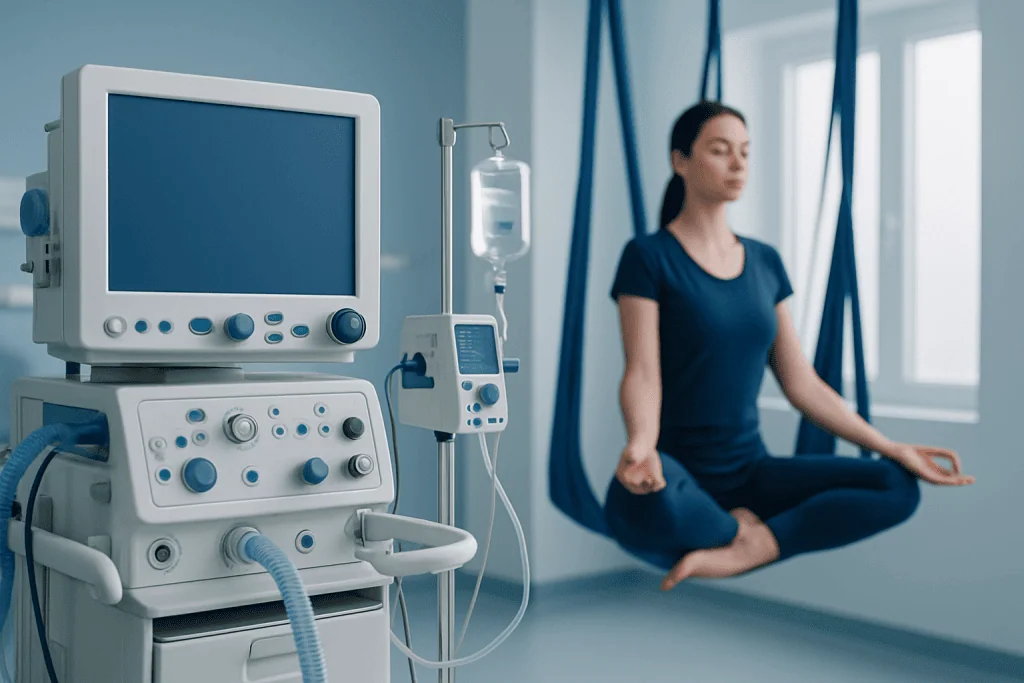
People who practice yoga aerial yoga often report improved flexibility, better posture awareness, and increased confidence with movement. The hammock can assist stretches of the hips, shoulders, and back, and some poses require the core and upper body to work in a sustained way. For beginners who find floor exercises uncomfortable, supported positions may sometimes feel more accessible.
There may also be mental well-being benefits. Like many forms of exercise, aerial yoga can encourage focused breathing, concentration, and a sense of enjoyment. These effects may help with stress management and body awareness, although responses differ from person to person and are influenced by comfort level, instructor style, and prior experience with exercise.
Current evidence for aerial yoga specifically is still limited compared with research on general physical activity or traditional yoga. It is reasonable to view it as one possible way to stay active rather than a proven therapy for a disease. For people seeking exercise to support spine health, balance, or recovery, a clinician may recommend a structured program such as physical therapy and rehabilitation instead of, or before, starting aerial classes.
Who may enjoy it and who should be cautious

Healthy adults with basic mobility and no major medical restrictions may enjoy aerial yoga as a recreational activity. It can appeal to people who want variety, like suspended movement, or are looking for a class that combines stretching and strength. Beginners usually do best in an introductory class that emphasizes safe entries, exits, and body positioning.
However, caution is important for people with conditions that may be affected by inversions, pressure, balance demands, or hanging positions. This includes some individuals with glaucoma or other eye diseases, uncontrolled high blood pressure, heart rhythm problems, severe osteoporosis, recent fractures, hernias, vertigo, advanced arthritis, chronic neck or back pain, pregnancy, or recent surgery. Anyone with known spinal problems may need medical guidance before trying movements that place the body in traction or extension, especially if there is a history of scoliosis or disc-related symptoms.
Some people may also find the practice physically or emotionally uncomfortable. Motion sensitivity, fear of falling, skin sensitivity from pressure of the fabric, or difficulty gripping and stabilizing the shoulders can limit participation. If a person already has joint laxity or frequent dislocations, aerial classes may increase strain unless the program is carefully adapted.
Risks, side effects, and common injuries
Most risks in yoga aerial yoga are mechanical rather than medical emergencies. Common problems include muscle soreness, bruising from pressure of the hammock, overstretching, wrist or shoulder strain, and aggravation of neck or low back pain. Falls are uncommon in supervised settings but can happen if the equipment is used incorrectly, if the participant loses grip or balance, or if fatigue affects control.
Inversions deserve special attention because they temporarily change how pressure is distributed in the body and can worsen symptoms in susceptible individuals. Some people develop headache, facial pressure, dizziness, nausea, or eye discomfort during or after inverted positions. These symptoms are a reason to stop and seek guidance, especially if they are new, severe, or recurrent.
People with pre-existing musculoskeletal conditions may be at higher risk of flaring pain. Shoulder impingement, rotator cuff irritation, tendon strain, and back pain can occur when flexibility exceeds stability or when a pose is forced beyond the body’s control. Individuals who already live with herniated disc symptoms or nerve pain should be particularly cautious, because traction-like or hanging positions may help some people feel looser but can worsen symptoms in others.
- Minor bruising and delayed-onset muscle soreness are common, especially early on.
- Sharp pain, numbness, weakness, faintness, or visual symptoms are not expected and should not be ignored.
- Poorly installed or poorly maintained equipment increases risk significantly.
How to practice more safely
Safety starts before the class begins. A reputable studio should have professionally installed rigging, clear weight limits, and instructors who teach step by step. Participants should wear clothing that covers the backs of the knees and underarms to reduce skin friction, remove jewelry that could catch on the fabric, and avoid rushing into advanced poses seen on social media.
Warm-up and progression matter. It is safer to begin with low-height, well-supported positions before trying deep backbends, drops, or prolonged inversions. Good instruction emphasizes shoulder control, core engagement, breathing, and how to exit a pose safely. If a movement causes pinching, tingling, or a sense of instability, it should be modified or stopped rather than pushed through.
Hydration, rest, and timing also play a role. Practicing while exhausted, after alcohol use, or when recovering from illness raises the chance of poor balance and strain. People managing chronic pain, rehabilitation after injury, or reduced physical conditioning may benefit from an individualized assessment and exercise plan such as orthopedic rehabilitation before returning to more demanding suspended exercise.
When to seek medical care
Medical advice is important if symptoms begin during or after yoga aerial yoga and do not settle quickly with rest. This includes persistent neck pain, severe back pain, shoulder weakness, joint swelling, significant bruising, numbness, tingling, or pain that radiates into an arm or leg. New dizziness, fainting, chest discomfort, shortness of breath, severe headache, or vision changes should be assessed promptly.
People should also seek care before starting aerial yoga if they have a known heart, eye, spine, or balance disorder; recent surgery; pregnancy-related concerns; or a history of recurrent falls or fractures. A clinician can help decide whether the activity is reasonable, whether modifications are needed, or whether a different form of exercise would be safer.
If pain appears to be related to a bone, joint, or tendon problem, evaluation by specialists may be useful. In appropriate cases, diagnosis may involve a physical examination and MRI or other imaging to clarify the cause of ongoing symptoms. Near the end of the care pathway, Acibadem International’s multidisciplinary specialists and JCI-accredited hospitals provide diagnosis and treatment for international patients when musculoskeletal or neurological assessment is needed.
How doctors evaluate problems linked to aerial yoga
When someone develops symptoms after aerial yoga, doctors usually begin by asking what movement caused the pain, whether there was a fall or sudden traction event, and whether symptoms include weakness, numbness, headache, or changes in vision. The pattern helps distinguish simple muscle soreness from an injury that may need closer attention. Timing is also useful, because some strains hurt later while nerve irritation may be felt immediately.
The physical examination may assess range of motion, joint stability, nerve function, balance, and areas of tenderness. For shoulder, neck, or back complaints, the clinician may look for signs of tendon injury, muscle spasm, spinal irritation, or compression of a nerve root. Imaging is not always necessary, but it may be considered if pain is severe, persistent, or associated with trauma or neurological findings.
Treatment depends on the problem identified. Many mild overuse injuries improve with activity modification, temporary rest, cold or heat as advised, and guided exercises. If symptoms are more complex, referral to orthopedics, neurology, ophthalmology, cardiology, or rehabilitation medicine may be appropriate so that the return to exercise is safe and individualized.
Frequently asked questions
Is yoga aerial yoga safe for beginners?
It can be safe for beginners when classes are taught by a qualified instructor using properly installed equipment and gradual progressions. Beginners should start with low-intensity sessions and avoid advanced inversions or drops until they have learned safe technique.
Can aerial yoga help back pain?
Some people feel temporary relief because supported stretching can reduce stiffness and improve body awareness. However, back pain has many causes, and suspended or traction-like positions may worsen symptoms in some individuals, especially if there is disc, nerve, or spinal instability.
Who should avoid aerial yoga?
People with certain eye conditions such as glaucoma, uncontrolled high blood pressure, recent surgery, severe osteoporosis, significant balance problems, pregnancy-related restrictions, or serious neck and back disorders should seek medical advice first. It may also be unsuitable for anyone with acute pain, recent injury, or a history of fainting.
Are inversions in aerial yoga beneficial?
Inversions may feel decompressing or energizing for some participants and can add variety to movement practice. They are not medically necessary for health, and they may cause discomfort or risk in people with eye, cardiovascular, or balance-related conditions.
What are common side effects after an aerial yoga class?
Mild muscle soreness and small bruises from hammock pressure are fairly common, especially in the first few sessions. Persistent pain, numbness, marked dizziness, severe headache, or vision changes are not typical and should be medically assessed.
Can older adults do yoga aerial yoga?
Some older adults may participate safely if they have good baseline mobility, strength, and balance, and if the class is adapted to their needs. Because fracture risk, blood pressure changes, and joint degeneration become more relevant with age, medical clearance may be helpful before starting.
This article is for general information only and is not a substitute for professional medical advice. Please consult a qualified doctor about your individual situation.
Explore treatments in Turkey — costs, top hospitals & a free quote
JCI-accredited · board-certified surgeons · reply within 24h
Add us as a Preferred Source to see more of our trusted health content across Google Search, AI Overviews and Discover.
Check your numbers in seconds
BMI, calories, due date, blood pressure and 30+ more clinical calculators — free, instant, doctor-reviewed ranges.

More from the Health Library

Skin Tags Around Eyes: What Patients Need to Know

Sartorius — Explained by Medical Evidence, Not Myths

Apple cider vinegar benefits: A Complete Medical Guide for Patients

Cortical Cataract: A Complete Medical Overview

Potassium Bicarbonate: An Evidence-Based Guide for Patients