

After Surgery in Turkey: When Pain, Swelling, or Fever Should Prompt an Urgent Call

Normal recovery after surgery in Turkey follows a trend: pain, swelling and tiredness ease gradually, even if they fluctuate day to day. Surgical teams pay closest attention when that trend reverses — pain that intensifies, swelling that spreads quickly, persistent fever, or wound changes. Your discharge instructions set the specific thresholds for your operation, and they are the reference worth keeping close throughout your stay and the journey home.
Is this pain normal, or is something wrong? That question keeps many patients awake in a hotel room a few nights after an operation, a long way from their usual doctor.
Most discomfort after surgery is expected, and most of it fades along a fairly predictable curve. Some symptoms sit outside that curve, and surgical teams treat them differently. This guide explains how recovery normally behaves after surgery in Turkey, which changes clinicians watch most closely, and how aftercare contact is organised for international patients — so that when you read your own discharge instructions, you understand the reasoning behind them. It is background information, not personal triage: the thresholds that apply to you are the ones your surgical team wrote down for your operation.
At a glance
- What this guide covers: Telling routine recovery apart from a developing complication
- The core principle: The trend matters more than any single symptom
- Symptoms clinicians watch closely: Worsening pain, spreading swelling, persistent fever, wound changes, breathing problems
- Where your personal thresholds live: The discharge instructions written for your specific operation
- What to keep with you: Discharge summary, medication list, and your care team’s contact details
- Support in place: Interpreter services and international patient coordination throughout the stay and after discharge
What normal recovery after surgery in Turkey looks like
After almost any operation, some pain, mild swelling, bruising, tiredness and a temporary drop in energy are part of the expected picture. Recovery is rarely a smooth line. Discomfort tends to be stronger when the previous dose of pain medicine is wearing off. Swelling often increases towards the evening and after time on your feet. Stiffness is common after sleep or long periods of sitting. None of these daily fluctuations, on their own, indicates that something has gone wrong.
What surgical teams actually assess is the direction of travel. A symptom that is uncomfortable but slowly improving belongs to normal healing. A symptom that is intensifying hour by hour, spreading beyond the expected area, resisting the prescribed medication, or arriving together with fever, wound drainage or breathlessness belongs to a different category — the category clinicians want to hear about early. The trend is the signal; the snapshot rarely is.
This is why discharge instructions after surgery in Turkey are written for the specific procedure you had, not copied from a general leaflet. They typically state the temperature threshold your team considers significant, what amount and colour of drainage is expected, how your dressings should be handled, and which numbers are staffed around the clock. At Acibadem hospitals, international patients also receive interpreter support and a named coordination contact, so that language does not stand between a symptom and the clinician who needs to hear about it.
Pain: how surgical teams read it
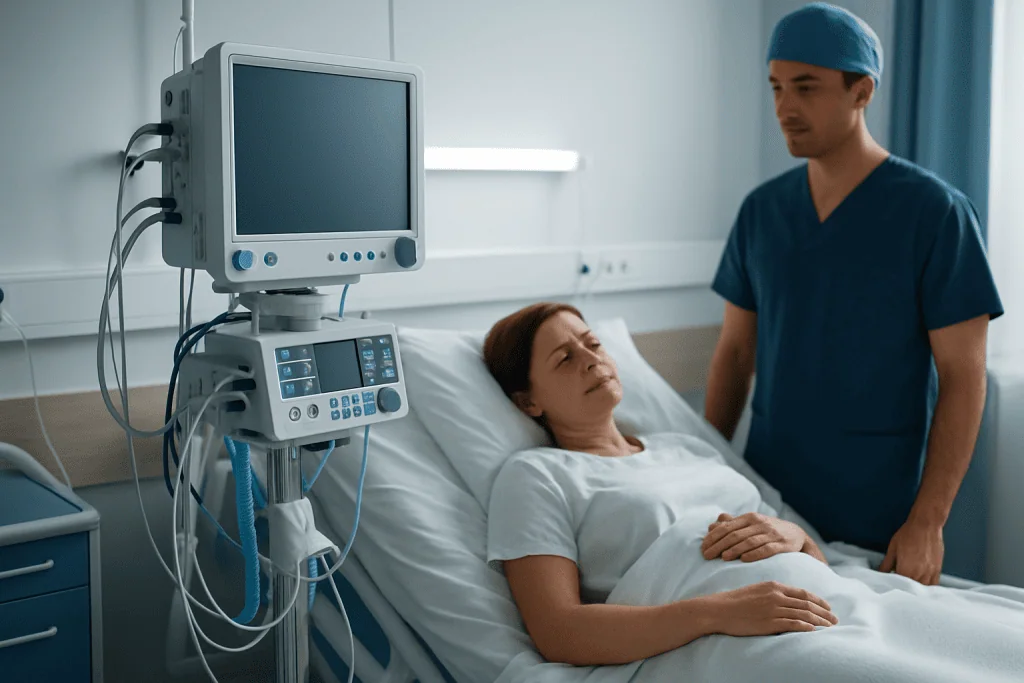
Some pain is expected even after an operation that has gone entirely to plan. In a normal recovery it stays manageable with the medicines prescribed at discharge and becomes gradually easier to control over the following days. It may still arrive in waves — after walking, coughing, dressing changes, or a night spent in an awkward position — without that meaning anything has changed underneath.
The patterns that make surgeons look harder are different in character. Pain that suddenly becomes severe after a period of improvement, pain that is clearly escalating rather than settling, pain in a new location, or pain that no longer responds to the prescribed medication all carry more clinical weight than steady, familiar discomfort. Paired with swelling, spreading redness, numbness, light-headedness or bleeding, escalating pain can point towards bleeding under the skin, infection, a blocked drain or pressure building in a closed space — the kinds of problems that are assessed in person rather than managed from a hotel bed. How teams plan and adjust analgesia is covered in more depth in what patients can expect from pain control after surgery in Turkey.
One point deserves emphasis because it causes real problems: decisions about additional painkillers, herbal products, leftover antibiotics or anything that affects bleeding belong to the treating doctor, not the pharmacy shelf. Some over-the-counter products interact with surgical medication plans, and a tablet that quietens pain can also quieten the very signal a clinician needed to hear.
Swelling, bruising and wound changes

Mild to moderate swelling and bruising follow many operations, and they can look worse before they look better. Bruises migrate with gravity, change colour as they resolve, and sometimes appear in places some distance from the incision. Swelling usually responds to rest, elevation, prescribed compression and the gentle movement your team has approved. This normal course is described in detail in our guide to managing swelling and bruising during recovery.
The pattern clinicians treat as significant is again about pace and asymmetry rather than appearance alone. Swelling that expands rapidly, one side becoming markedly larger than the other, an area turning tight, hard, hot or shiny — these can indicate bleeding, a fluid collection, infection or a circulation problem. The same logic applies to the wound itself: edges that begin to separate, thick yellow or green drainage, a foul odour, dressings soaking through, or skin darkening around the incision are changes that surgical teams review promptly rather than leaving until the next routine appointment.
- Within the normal range: mild bruising, mild warmth, swelling that is stable or slowly settling, a small amount of drainage if your team told you to expect it
- Outside it: rapidly expanding swelling, spreading redness, thick discoloured drainage, foul odour, a wound opening, darkening skin
Photographs have a real place in remote follow-up when a team has set up a secure channel for them, but they carry limits: a photo shows colour and size, not warmth, tension or smell. Wounds also heal best when handled least — repeated pressing, massaging or re-dressing outside the instructions you were shown tends to create problems rather than reveal them.
Fever, chills and feeling generally unwell
A small, short-lived rise in temperature can occur in the first day or two after an operation as part of the body’s response to surgery itself. What changes the clinical picture is persistence and company. A fever that continues, returns, or arrives alongside chills, shivering, growing weakness, body aches, confusion or a general flu-like feeling is treated as a possible sign of infection or another developing problem, and reviewed rather than watched.
Discharge instructions state a specific temperature threshold precisely because “fever” means different things after different operations; the number written on your paperwork is the one that applies to you. Two further points are worth understanding. First, feeling distinctly feverish and unwell carries weight even before a thermometer confirms anything. Second, fever-reducing tablets lower the number on the thermometer without addressing whatever caused it — which is why a fever that only stays down while medication is active is read by clinicians as still present.
Fever combined with worsening pain, spreading redness, foul-smelling drainage, burning on passing urine, a productive cough or breathlessness narrows the picture further, because each pairing points towards a different source that assessment can identify and treat.
The symptoms every health system treats as emergencies
Every health system draws a line between symptoms that can wait for a phone conversation and symptoms that belong in an emergency department, in person, in any country. On the emergency side of that line sit chest pain, sudden shortness of breath, blue lips, coughing up blood, fainting, seizures, sudden confusion, stroke-like changes such as facial droop or slurred speech, and bleeding that soaks through dressings faster than they can be changed. These are not judged by trend; they are judged immediately.
Two further patterns matter particularly for patients who have travelled. A calf that becomes swollen, painful or hot on one side — especially in the days around a long flight — is treated as a possible blood clot until assessment proves otherwise, because a clot in the leg can move to the lungs. And after abdominal surgery or a general anaesthetic, persistent vomiting, an inability to keep fluids down, many hours without passing urine, or severe abdominal swelling can turn urgent quickly, because dehydration and pressure compound each other.
A small proportion of postoperative complications are managed in intensive care, where monitoring and support are continuous. That prospect worries families more than it usually needs to; what patients and families should expect from intensive care explains when it is used and what it actually looks like.
How aftercare contact is organised for international patients
Hospitals that treat international patients build their aftercare around one assumption: the person recovering may be in a hotel, an airport or another country when a question arises. In practice that means discharge paperwork lists numbers staffed around the clock, coordinators bridge language and time-zone gaps, and interpreter support is available for clinical conversations, not just administrative ones.
It helps to know what a clinician on the other end of a call actually needs, because the most useful conversations follow the same shape. The team will want to know which operation you had and on which date, where you are staying now, when the symptom started and whether it is worsening, your temperature if you have measured it, what medication you have taken and when, and whether there is bleeding, drainage, breathlessness, dizziness or difficulty eating and drinking. Words matter alongside any photos: how large an area is, whether a dressing is soaked, whether there is an odour, whether the skin feels hot.
A conversation like that typically ends in one of three dispositions: continue monitoring with specific things to watch, attend a same-day review, or go for immediate emergency assessment. Clinicians also routinely clarify what should happen with food, drink, dressings, drains and travel plans until the review — and writing the answers down at the time beats reconstructing them from memory at 3 a.m. If pain management is on your mind before the operation rather than after it, questions worth asking about pain control before your operation sets out how to prepare that conversation.
Flying home, and what changes when you land
Travel is the variable that makes recovery after surgery in Turkey different from recovery at home. Surgeons generally ask patients to remain nearby until the first follow-up review is complete — commonly somewhere between several days and two weeks depending on the operation — because that review is where sutures or drains are checked, healing is inspected, and the flight itself is approved. The date on the airline booking is a plan; the fit-to-fly assessment is the decision. Cabin pressure changes and hours of immobility are exactly the conditions under which swelling worsens and clot risk is taken most seriously, which is why teams prefer to see a stable, improving picture before a patient boards. The specific changes worth raising before departure are set out in warning signs you should report before flying home.
Once home, follow-up becomes a shared arrangement. A local doctor can examine you in person, which no remote team can replace; the operating team in Turkey holds the procedural detail — what was done, what was expected, what the discharge plan assumed — that makes a local assessment faster and better informed. The practical bridge between the two is documentation: digital copies of the discharge summary, operative note, medication list and any imaging, kept on a phone and in email, mean neither side is working blind. Acibadem’s international patient services commonly support this stage by helping patients share reports and updates with the treating team after they have left the country.
Step by step
- Read the discharge instructions before leaving the ward. Read them while the team is still in front of you and anything unclear can be explained — the temperature threshold, the wound care plan, the expected drainage, the follow-up date.
- Save the contact numbers in your phone. The surgical team’s number, the ward, and the international patient coordination line, labelled clearly enough to find while feverish at night. Paper copies get lost; contacts do not.
- Keep your documents digitally. Photograph or download the discharge summary, operative note and medication list. They travel with you through hotels, airports and any clinic you might sit in later.
- Ask what your normal should look like. Before discharge, ask what days two, four and seven typically feel like after your specific procedure. Knowing the expected curve makes deviations from it obvious.
- Track the trend daily. A brief note each day — pain, swelling, temperature if advised, what the wound looks like — turns a vague worry into a clear before-and-after picture that a clinician can act on.
- Keep travel plans flexible until the pre-flight review. Book with change options where possible. The follow-up appointment, not the original itinerary, determines when flying makes sense.
Your checklist
- Discharge summary and medication list saved on your phone and in email
- Surgeon, ward and international patient service numbers stored and labelled
- The fever threshold from your discharge instructions noted somewhere visible
- A daily record of whether pain and swelling are improving or worsening overall
- Wound photos taken only through the secure channel your team set up
- No new medicines, supplements or leftover antibiotics added without your doctor’s decision
- Follow-up appointment attended before any flight is confirmed
- Travel documents and discharge papers kept together and accessible throughout the stay
Key takeaways
- Pain, swelling, bruising and tiredness are part of normal recovery, and they fluctuate — but the overall direction should be improvement.
- Clinicians pay closest attention to reversals of trend: escalating pain, rapidly expanding swelling, persistent fever, discoloured or foul drainage, and wounds that open or darken.
- Chest pain, sudden breathlessness, fainting, confusion, stroke-like changes and heavy bleeding sit on the emergency side of the line in every health system, judged immediately rather than by trend.
- Your discharge instructions carry the thresholds written for your operation; they, plus your team’s contact numbers, are the documents to keep within reach from ward to airport.
- Flying home is a clinical decision made at the follow-up review, not a date fixed by the original booking — and interpreter and coordination support exist so language never delays a concern.
Frequently asked questions
What should you eat after rhinoplasty surgery in Turkey?
In the first days, most surgeons suggest soft, cool, easy-to-chew foods — yoghurt, lukewarm soups, eggs, smoothies, well-cooked grains — because heavy chewing and very hot or spicy food can aggravate swelling around the nose and mouth. Steady hydration helps, and alcohol is generally kept off the menu during early healing. Your own surgeon’s written guidance takes precedence over any general list, since it reflects what was done inside your nose.
How long do you need to stay in Turkey after aesthetic surgery?
Long enough for the first follow-up review, which is where healing is checked, any sutures or drains are dealt with, and the flight home is approved. For many aesthetic procedures that means roughly a week nearby; combined or larger operations often need longer. The honest answer is that the surgeon’s assessment at that review sets the date, so flexible travel bookings are worth more than optimistic ones.
How long do you stay in Turkey for breast surgery?
Most surgeons ask breast surgery patients to remain until the first wound review is complete — commonly around five to seven days, though the exact timing depends on the procedure, on drains if any were placed, and on how healing looks at review. The clearance to fly comes from that assessment, not from a standard number.
What surgeries is Turkey known for?
Internationally, Turkey is best known for hair transplantation, rhinoplasty and other aesthetic surgery, dental treatment, eye surgery and bariatric procedures. Its larger hospital groups also run full-service medicine well beyond aesthetics — including oncology, orthopaedics, neurosurgery and cardiovascular surgery — which matters, because complex aftercare depends on the depth of the institution behind the operating theatre.
Are surgeries in Turkey safe?
Safety is a property of a specific hospital and team, not of a country. What separates safer choices from riskier ones is the setting: a full hospital with anaesthesiology and intensive care on site, structured follow-up after discharge, clear written discharge documentation, and interpreter support so nothing is lost in translation. Researching the individual facility and asking how aftercare is organised tells you far more than any general reputation does.
How much pain is normal after surgery?
Enough to notice, not enough to overwhelm the medication prescribed at discharge — and easing, on the whole, from one day to the next. Pain that arrives in waves after activity fits the normal pattern. What surgical teams treat as a signal is pain that escalates after improving, appears in a new location, or stops responding to the prescribed plan.
Is swelling always a sign of a complication?
No. Mild to moderate swelling is part of normal healing after many operations and often looks worst in the evenings before slowly settling. The pattern clinicians take seriously is different: swelling that expands rapidly, is markedly one-sided, feels tight or hard, or comes with spreading redness, heat, or changes in the wound itself.
When does fever after surgery matter?
A brief, mild temperature rise in the first day or two can be part of the body’s response to surgery. Fever carries more weight when it persists, returns, exceeds the threshold written in the discharge instructions, or arrives with chills, worsening pain, wound drainage, urinary symptoms, cough or growing weakness. Fever-reducing tablets lower the reading without addressing the cause, which is why clinicians look past the number to the whole picture.
Add us as a Preferred Source to see more of our trusted health content across Google Search, AI Overviews and Discover.

Update history
- PublishedAugust 6, 2026
- Medical review approvedSeptember 1, 2026
- Last content updateSeptember 1, 2026
References3
More Patient Guides

Aftercare Abroad: How to Prepare for Recovery Once You Return Home
Aftercare abroad planning helps you return home safely with clear follow-up, medication, travel and support arrangements after treatment in Turkey.
8 min read
How to Prepare Your Home for Recovery Before Leaving Turkey
Prepare your home for recovery before leaving Turkey with practical planning for mobility, medicines, support and follow-up after treatment.
8 min read
When Recovery Does Not Go as Planned in Turkey: Signs You Should Contact Your Care Team
Recovery problems in Turkey can include new pain, fever, bleeding, or breathing changes. Contact your care team promptly for safe aftercare advice.
9 min read
When Is It Safe to Resume Exercise After Treatment in Turkey?
Resume exercise after treatment in Turkey only when your surgeon or care team clears you. Start gently, watch for warning signs, and…
8 min read