

CPAP Machine Travel Guide for Patients Coming to Turkey

Carry your CPAP machine, mask and tubing in hand luggage, never in checked bags. Turkey uses 220V, 50Hz electricity with Type C and Type F plugs, so check your device label and bring an adapter. Confirm airline rules early, especially for in-flight use or batteries, and bring a medical letter, your prescription and a note of your pressure settings.
Will your CPAP machine get through security? Does it count against your hand luggage allowance? Will it plug in once you reach your hotel room in Istanbul? These are the questions international patients ask most often, and every one of them has a practical answer. A little preparation before departure keeps your sleep apnoea therapy uninterrupted from your front door to your hospital appointment.
This CPAP machine travel guide for patients coming to Turkey walks you through the whole journey in order: preparing the device and documents, handling airline and airport rules, sorting out power and plugs, setting up in your accommodation, and bringing the machine into a hospital stay if one is planned.
At a glance
- Best carry method: Keep your CPAP machine, mask, tubing and power supply in hand luggage, not checked bags.
- Power in Turkey: Turkey uses 220V, 50Hz electricity and Type C or Type F plugs. Most modern machines are dual voltage, but check your device label.
- Airport note: CPAP devices are usually treated as medical equipment at security and by airlines, but individual airline rules vary and are worth confirming early.
- Helpful documents: A prescription or medical letter, a written note of your pressure settings, and any airline approval forms if in-flight use is planned.
- Support in Turkey: International patient teams can coordinate interpreters, accommodation communication and appointment logistics for patients travelling with medical devices.
Why this CPAP machine travel guide for patients coming to Turkey matters
When you rely on a CPAP machine to manage sleep apnoea, the device is essential travel equipment, not just another electronic item in your bag. Long flights, dry cabin air, time zone changes, unfamiliar hotel rooms and hospital schedules can all unsettle a sleep routine that works well at home. The point of planning is simple: you want your therapy to continue every night of the trip, without gaps caused by a lost bag, a missing adapter or a rule you did not know about.
Any cpap machine travel guide for patients coming to Turkey has to cover more than the flight, because a medical trip involves several settings in sequence. There is your departure airport, the aircraft cabin, arrival at Istanbul or another Turkish airport, a hotel or serviced apartment, and one or more hospital visits. Each setting raises its own practical questions: plug compatibility, access to suitable water for humidification, a stable surface near the bed, and clear communication with staff who may not speak your language.
Your own sleep physician remains the right person to advise on your CPAP settings, your suitability to fly and anything specific to your condition. What a guide like this can do is map the logistics, so that the medical conversation with your doctor and the practical preparation for the journey both happen in good time. If you are still assembling your plans, the broader pre-travel health checklist for international patients is a useful companion to this page.
What to pack with your CPAP machine
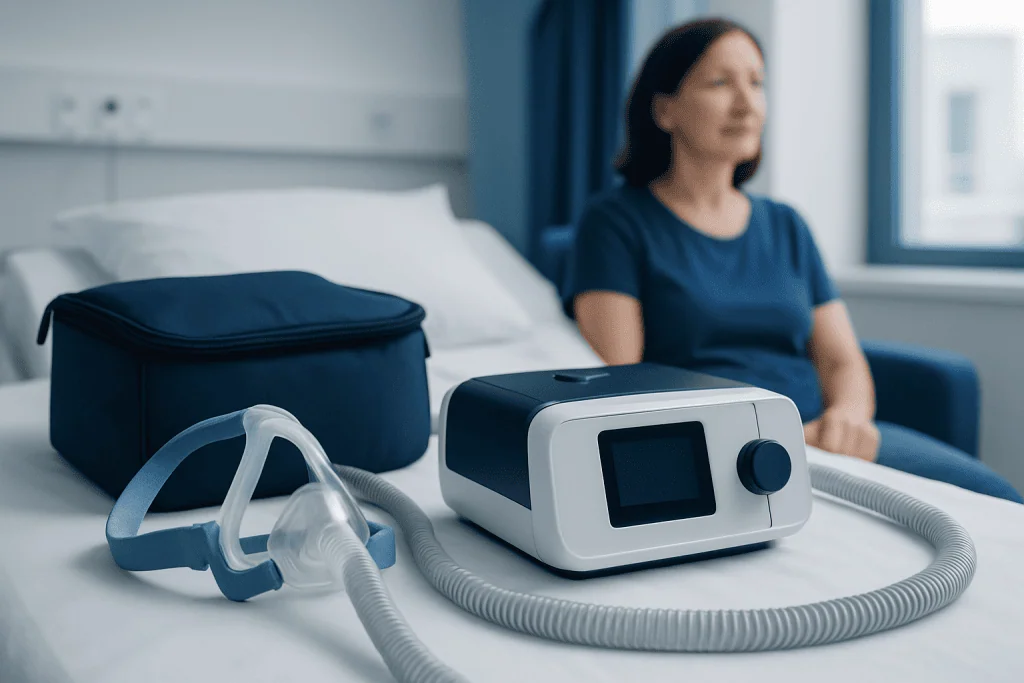
Pack as if you could be separated from your checked suitcase for a day or two, because occasionally that is exactly what happens. The safest approach is to keep the machine, mask, headgear, tubing, power supply, filters and any essential accessories together in your cabin bag. If your suitcase is delayed on arrival, you still have everything you need for the first night.
A short, deliberate packing list makes the difference between a smooth setup and an uncomfortable evening. Include the CPAP unit itself, your mask and headgear, the tubing, the power cord and brick, a plug adapter suitable for Turkey, at least one spare filter, small manufacturer-approved cleaning supplies, and the humidifier or water chamber if you use one. If you own a travel CPAP, bring the accessories specific to that model rather than assuming full-size parts will fit.
Documents worth carrying
Bring a copy of your CPAP prescription, a short medical letter stating that the device is required for sleep apnoea, and a written note of your current pressure settings. English versions make communication easier at airports, hotels and hospitals in Turkey. Store digital copies on your phone as a backup, and keep a photo of the device label or power brick showing its voltage range. None of this is always demanded, but each item removes friction when questions arise.
Humidifier water while abroad
If you use heated humidification, ask your sleep clinic or equipment provider what water is acceptable while travelling. Many patients use distilled water at home, and availability abroad varies by location and shop. For a short trip, some patients carry a small sealed bottle in checked luggage where airline liquid rules permit; others plan to buy locally after arrival. Your device manual usually states what the manufacturer accepts for occasional use, and that guidance takes priority over habit.
For a deeper dive into pre-flight preparation, see what patients should arrange before flying with a CPAP machine.
Airline, airport and security considerations
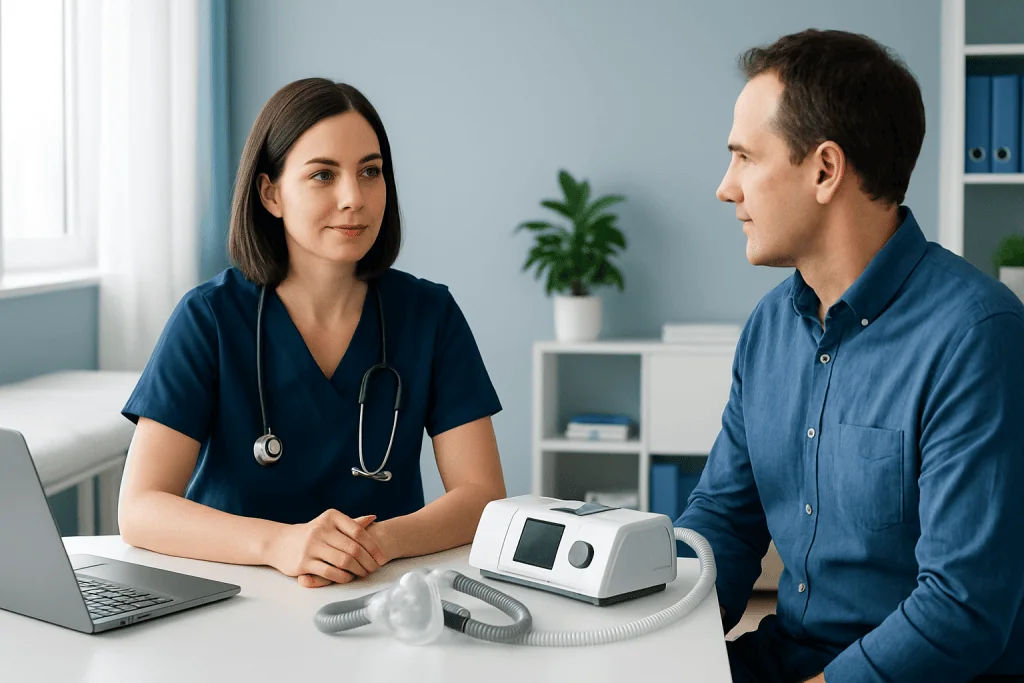
Check your airline’s policy for CPAP and other respiratory devices before you book, or as soon after booking as possible. Many airlines allow CPAP equipment in the cabin in addition to your standard hand luggage allowance, because it is medical equipment. This is common practice but not universal, and it can depend on the route, the aircraft type and the fare. A short call or written enquiry settles the question, and a written confirmation is worth keeping with your travel documents.
Using CPAP during the flight
If you intend to use the machine on board, confirm this specifically and early. Some airlines require advance approval or a medical form. Even where seat power exists, it may not support all devices reliably, so airlines often expect passengers to bring a compliant battery instead. Lithium battery rules are strict: watt-hour limits, carriage in the cabin rather than the hold, and terminal protection are typical requirements. Ask the airline directly rather than relying on general advice, because limits differ between carriers. The guide on flying to Turkey with a CPAP machine covers in-flight planning in more detail.
At security screening
Your CPAP machine may need to be taken out of its bag and screened separately, much like a laptop. Keep it in a clean case, and put small accessories in clear pouches so they can be inspected without being scattered or misplaced. Security staff at major airports see medical devices every day, but a medical letter in English shortens any conversation. During long travel days, protect the mask and tubing from crushing, avoid packing them under heavy items, and keep the CPAP bag light enough to carry comfortably through connections.
Power, plugs and using CPAP safely in Turkey
Turkey uses 220V, 50Hz electricity with Type C and Type F plugs, the two round-pin styles common across continental Europe. Most modern CPAP machines are dual voltage and accept anything from 100 to 240V, but confirm this on your device label or power brick before you travel rather than assuming. If your machine is not dual voltage, ask your equipment provider which converter is appropriate, because an unsuitable converter can damage medical equipment.
In practice, most patients need only a plug adapter, not a voltage converter. Bring one reliable adapter and consider a spare, since adapters are small, cheap and easy to lose. A short extension cord in good condition can help in hotel rooms where the nearest outlet is not beside the bed, provided it is rated appropriately for your device.
Once you arrive, set the machine on a stable bedside surface with free air circulation around the unit. Keep it away from curtains, loose bedding and anything that could spill. If you use a humidifier chamber, fill and empty it carefully, and never carry or pack the machine with water still inside; residual water is one of the most common causes of avoidable damage on trips.
Test the full setup on your first evening, well before you are ready to sleep. That leaves time to solve an adapter, outlet or mask problem while shops and reception desks are still available, rather than discovering it at midnight.
Hotels, hospital visits and overnight stays
Before arrival, it is worth asking your hotel whether the room has a bedside outlet and whether an extension cable can be provided if needed. If noise, light or room temperature affect your sleep, mention that too; better sleep supports your general comfort during a treatment trip. If you travel with a companion, walk them through your CPAP routine so they understand the setup, the cleaning steps and where the spare parts live.
If your visit includes consultations, tests or a procedure, the clinical team should know that you have sleep apnoea and use a device at night. This is standard information for anaesthetists and ward teams, and sharing it early lets them plan around it. Bring the device to the hospital if you are advised to, particularly when an overnight stay is possible. For admissions, staff may ask about your diagnosis, pressure settings, mask type and whether you use humidification or oxygen. Do not change your pressure settings yourself; any adjustment belongs to your treating physician.
Where language is a barrier, interpreter support helps make sure your routine is explained accurately rather than approximately. At Acibadem, international patient coordinators handle this kind of practical coordination, interpreter arrangements, communication with departments and general travel logistics, so that device-related needs such as bedside electricity or appointment timing are known in advance. Coordinators do not replace your sleep specialist or your equipment provider; their role is the practical layer around your care. Patients who use oxygen as well as CPAP will find the combined CPAP and oxygen travel checklist useful alongside this page.
Cleaning, comfort and troubleshooting while away
Travel interrupts routines, but a few simple habits keep CPAP equipment comfortable to use abroad. Wash your hands before handling the mask or tubing, keep the mask off hotel bathroom surfaces, and let washed parts dry in a clean, ventilated spot. Follow your manufacturer’s instructions on cleaning frequency and approved products; they vary by mask and machine.
Pack gentle supplies suited to your device: travel-size mild soap, CPAP-approved mask wipes, and a clean drying cloth. Avoid strong fragrances, harsh chemicals and alcohol-based products unless the manufacturer specifically approves them, because they can degrade mask cushions and tubing.
The most common travel problems are predictable: a missing adapter, a mask that leaks after being compressed in a bag, a dry nose or mouth from cabin and hotel air, and lighter sleep in an unfamiliar room. The single most effective precaution is a full dress rehearsal at home before departure, machine, adapter, travel case and battery if you use one, all tested together. If your mask seal is already unreliable, resolve it with your equipment provider before you travel rather than hoping it settles abroad.
If the machine stops working while you are in Turkey, your equipment provider or your travel insurance assistance line is the right first contact for device-specific guidance; a hospital can support the medical side of your care but may not be able to repair or replace a particular CPAP model quickly. This is exactly why spare parts and documentation earn their place in your bag. It is also worth checking in advance whether your policy covers medical equipment; the guide on travel insurance for treatment in Turkey explains what to look for.
Step by step
- Confirm your travel fitness and CPAP settings. Before booking or flying, ask your sleep physician or treating doctor whether any travel precautions apply to you. Confirm your current pressure settings, mask type and what documentation to carry.
- Contact your airline early. Ask whether the CPAP counts as medical equipment carried in addition to your cabin bag, and whether you may use it on board. If a battery is needed, confirm the rules on battery type, watt-hour capacity and packaging.
- Prepare a dedicated CPAP carry-on kit. Keep the machine, mask, tubing, filters, power cord, adapter and medical letter together in one accessible bag. Put essential parts in checked luggage only if you carry duplicates in the cabin.
- Check voltage and plug compatibility. Confirm on the device label or power brick that your machine supports 220V, 50Hz. Turkey uses Type C and Type F plugs, so bring the correct adapter and, ideally, a spare.
- Share practical needs in advance. Ask your accommodation about bedside electricity for a medical device. If your treatment is coordinated through an international patient team, telling your coordinator that you use CPAP lets practical arrangements be made ahead of you.
- Pack cleaning and backup supplies. Bring spare filters, a backup mask cushion if you have one, and manufacturer-approved cleaning items. Small parts are easy to lose and may not be quickly available for your exact model in Turkey.
- Set up and test on arrival. Place the CPAP on a stable surface near the bed, away from spills and soft bedding, and run it before bedtime so any adapter, outlet or mask issue surfaces while it can still be fixed.
Your checklist
- CPAP machine in hand luggage, not checked luggage
- Mask, headgear, tubing and power cord
- Turkey plug adapter for Type C or Type F outlets, plus a spare
- Prescription or medical letter for sleep apnoea and CPAP use, in English if possible
- Written or digital note of your CPAP pressure settings
- Spare filters, mask cushion or small replacement parts if available
- Manufacturer-approved cleaning supplies and a clean drying cloth
- Airline approval or medical clearance documents if in-flight use is planned
- Battery pack only if airline-approved and genuinely needed for the journey
- Travel insurance details and equipment provider contact information
Key takeaways
- Keep the CPAP machine and its essential accessories in your carry-on bag so a delayed suitcase cannot interrupt your therapy.
- Turkey uses 220V, 50Hz electricity with Type C and Type F plugs; check your device label and pack the right adapter.
- Airline policies vary, especially for in-flight CPAP use and lithium batteries, so confirm directly and keep written approval.
- A medical letter, prescription and note of your settings smooth communication at airports, hotels and hospitals.
- Test the complete travel setup at home before departure, and again on your first evening in Turkey.
Frequently asked questions
Can I bring my CPAP machine on the plane to Turkey?
In many cases, CPAP machines are allowed in the cabin as medical equipment, often in addition to your standard hand luggage. Policies differ between airlines and sometimes between routes, so confirm before departure and keep any approval email or medical form with your travel documents.
Can I use my CPAP machine during the flight?
Possibly, but only with the airline’s confirmation. Some carriers require advance medical clearance, and not all seats have suitable power, so a compliant battery is often expected. Lithium battery rules cover capacity limits and cabin carriage, and they vary by airline, so ask directly.
Will my CPAP machine work with Turkish electricity?
Turkey uses 220V, 50Hz electricity with Type C and Type F plugs. Most modern CPAP machines are dual voltage and accept 100 to 240V, but check the label on your device or power brick. If your machine is not dual voltage, ask your equipment provider about a suitable converter before travelling.
Should I put my CPAP machine in checked luggage?
It is better kept in your carry-on. Checked luggage can be delayed, lost or handled roughly, and a missing machine means a missed night of therapy. If you must check any accessories, keep enough equipment with you in the cabin for at least the first night.
Do I need a doctor letter to travel with CPAP?
A letter is strongly recommended even where it is not formally required. It should state that you use CPAP for sleep apnoea and that the device is medically necessary. An English version makes airline, airport, hotel and hospital communication noticeably easier.
Can I find distilled water for my humidifier in Turkey?
Availability varies by city and shop, so do not rely on finding a specific product on the first evening. Ask your sleep clinic or equipment provider what water is acceptable for occasional travel use, and follow the manufacturer’s guidance in your device manual.
What happens if I am admitted to hospital while in Turkey?
Tell the clinical team that you use CPAP and bring the device if an overnight stay is possible or you are advised to. Staff may ask about your diagnosis, pressure settings, mask type and humidification. Do not adjust your settings yourself; that decision belongs to your treating physician. Interpreters can help explain your routine accurately.
Can Acibadem International help with CPAP-related travel needs?
The international patient team supports practical coordination: interpreter services, appointment logistics, communication with accommodation and general planning for patients travelling with medical devices. The team does not replace your sleep physician or equipment provider, but it can make the practical side of the stay run more smoothly.
Add us as a Preferred Source to see more of our trusted health content across Google Search, AI Overviews and Discover.

Update history
- PublishedJune 8, 2026
- Medical review approvedSeptember 13, 2026
- Last content updateSeptember 12, 2026
References3
- NHS: Sleep apnoea nhs.uk
- MedlinePlus: Positive airway pressure treatment medlineplus.gov
- Cleveland Clinic: CPAP Machine my.clevelandclinic.org
More Patient Guides

Airport Wheelchair Assistance: How to Book It for a Medical Trip
Airport wheelchair assistance is free, it exists at every commercial airport, and airlines are legally required to provide it, yet half…

Travelling With a Stoma: Flights, Supplies and Airport Screening
Traveling to Turkey with a stoma is manageable with the right supplies, airport screening plan, and recovery support in Istanbul or Turkey.
Mobility Aids in Turkey: Renting a Wheelchair, Walker, or Crutches
Mobility aids in Turkey can be rented through medical suppliers, pharmacies, and hospital-linked services in Istanbul and other cities.

Traveling to Turkey with Food Allergies or Special Diet Needs
Traveling to Turkey with food allergies or special diet needs is manageable with planning, translated allergy cards, and hotel and hospital support…